Interleukin-6 deficiency affects bone marrow stromal precursors, resulting in defective hematopoietic support.
Interleukin-6 (IL-6) is a critical factor in the regulation of stromal function and hematopoiesis. In vivo bromodeoxyuridine incorporation analysis indicates that the percentage of Lin(-)Sca-1(+) hematopoietic progenitors undergoing DNA synthesis is diminished in IL-6-deficient (IL-6(-/-)) bone marrow (BM) compared with wild-type BM. Reduced proliferation of IL-6(-/-) BM progenitors is also observed in IL-6(-/-) long-term BM cultures,which show defective hematopoietic support as measured by production of total cells,granulocyte macrophage-colony-forming units (CFU-GMs),and erythroid burst-forming units (BFU-Es). Seeding experiments of wild-type and IL-6(-/-) BM cells on irradiated wild-type or IL-6-deficient stroma indicate that the hematopoietic defect can be attributed to the stromal and not to the hematopoietic component. In IL-6(-/-) BM,stromal mesenchymal precursors,fibroblast CFUs (CFU-Fs),and stroma-initiating cells (SICs) are reduced to almost 50% of the wild-type BM value. Moreover,IL-6(-/-) stromata show increased CD34 and CD49e expression and reduced expression of the membrane antigens vascular cell adhesion molecule-1 (VCAM-1),Sca-1,CD49f,and Thy1. These data strongly suggest that IL-6 is an in vivo growth factor for mesenchymal precursors,which are in part implicated in the reduced longevity of the long-term repopulating stem cell compartment of IL-6(-/-) mice.
View Publication
产品类型:
产品号#:
03534
28600
产品名:
MethoCult™GF M3534
L-Calc™有限稀释软件
Selleri C et al. (MAR 2005)
Blood 105 5 2198--205
Involvement of the urokinase-type plasminogen activator receptor in hematopoietic stem cell mobilization.
We investigated the involvement of the urokinase-type plasminogen-activator receptor (uPAR) in granulocyte-colony-stimulating factor (G-CSF)-induced mobilization of CD34+ hematopoietic stem cells (HSCs) from 16 healthy donors. Analysis of peripheral blood mononuclear cells (PBMNCs) showed an increased uPAR expression after G-CSF treatment in CD33+ myeloid and CD14+ monocytic cells,whereas mobilized CD34+ HSCs remained uPAR negative. G-CSF treatment also induced an increase in serum levels of soluble uPAR (suPAR). Cleaved forms of suPAR (c-suPAR) were released in vitro by PBMNCs and were also detected in the serum of G-CSF-treated donors. c-suPAR was able to chemoattract CD34+ KG1 leukemia cells and CD34+ HSCs,as documented by their in vitro migratory response to a chemotactic suPAR-derived peptide (uPAR84-95). uPAR84-95 induced CD34+ KG1 and CD34+ HSC migration by activating the high-affinity fMet-Leu-Phe (fMLP) receptor (FPR). In addition,uPAR84-95 inhibited CD34+ KG1 and CD34+ HSC in vitro migration toward the stromal-derived factor 1 (SDF1),thus suggesting the heterologous desensitization of its receptor,CXCR4. Finally,uPAR84-95 treatment significantly increased the output of clonogenic progenitors from long-term cultures of CD34+ HSCs. Our findings demonstrate that G-CSF-induced upregulation of uPAR on circulating CD33+ and CD14+ cells is associated with increased uPAR shedding,which leads to the appearance of serum c-suPAR. c-suPAR could contribute to the mobilization of HSCs by promoting their FPR-mediated migration and by inducing CXCR4 desensitization.
View Publication
Generation, expansion and functional analysis of endothelial cells and pericytes derived from human pluripotent stem cells.
Human endothelial cells (ECs) and pericytes are of great interest for research on vascular development and disease,as well as for future therapy. This protocol describes the efficient generation of ECs and pericytes from human pluripotent stem cells (hPSCs) under defined conditions. Essential steps for hPSC culture,differentiation,isolation and functional characterization of ECs and pericytes are described. Substantial numbers of both cell types can be derived in only 2-3 weeks: this involves differentiation (10 d),isolation (1 d) and 4 or 10 d of expansion of ECs and pericytes,respectively. We also describe two assays for functional evaluation of hPSC-derived ECs: (i) primary vascular plexus formation upon coculture with hPSC-derived pericytes and (ii) incorporation in the vasculature of zebrafish xenografts in vivo. These assays can be used to test the quality and drug sensitivity of hPSC-derived ECs and model vascular diseases with patient-derived hPSCs.
View Publication
产品类型:
产品号#:
85850
85857
产品名:
mTeSR™1
mTeSR™1
H. Wang et al. ( 2019)
Theranostics 9 6 1683--1697
Characterization and Therapeutic Application of Mesenchymal Stem Cells with Neuromesodermal Origin from Human Pluripotent Stem Cells.
Rationale: Mesenchymal stem cells (MSC) hold great promise in the treatment of various diseases including autoimmune diseases,inflammatory diseases,etc.,due to their pleiotropic properties. However,largely incongruent data were obtained from different MSC-based clinical trials,which may be partially due to functional heterogeneity among MSC. Here,we attempt to derive homogeneous mesenchymal stem cells with neuromesodermal origin from human pluripotent stem cells (hPSC) and evaluate their functional properties. Methods: Growth factors and/or small molecules were used for the differentiation of human pluripotent stem cells (hPSC) into neuromesodermal progenitors (NMP),which were then cultured in animal component-free and serum-free induction medium for the derivation and long-term expansion of MSC. The resulted NMP-MSC were detailed characterized by analyzing their surface marker expression,proliferation,migration,multipotency,immunomodulatory activity and global gene expression profile. Moreover,the in vivo therapeutic potential of NMP-MSC was detected in a mouse model of contact hypersensitivity (CHS). Results: We demonstrate that NMP-MSC express posterior HOX genes and exhibit characteristics similar to those of bone marrow MSC (BMSC),and NMP-MSC derived from different hPSC lines show high level of similarity in global gene expression profiles. More importantly,NMP-MSC display much stronger immunomodulatory activity than BMSC in vitro and in vivo,as revealed by decreased inflammatory cell infiltration and diminished production of pro-inflammatory cytokines in inflamed tissue of CHS models. Conclusion: Our results identify NMP as a new source of MSC and suggest that functional and homogeneous NMP-MSC could serve as a candidate for MSC-based therapies.
View Publication
Al-Ali H et al. (MAY 2013)
ACS chemical biology 8 5 1027--36
Applications for ROCK kinase inhibition.
ROCK kinases,which play central roles in the organization of the actin cytoskeleton,are tantalizing targets for the treatment of human diseases. Deletion of ROCK I in mice revealed a role in the pathophysiological responses to high blood pressure,and validated ROCK inhibition for the treatment of specific types of cardiovascular disease. To date,the only ROCK inhibitor employed clinically in humans is fasudil,which has been used safely in Japan since 1995 for the treatment of cerebral vasospasm. Clinical trials,mostly focusing on the cardiovascular system,have uncovered beneficial effects of fasudil for additional indications. Intriguing recent findings also suggest significant potential for ROCK inhibitors in the production and implantation of stem cells for disease therapies.
View Publication
产品类型:
产品号#:
73802
73804
产品名:
Rho激酶抑制剂IV (Dihydrochloride)
Rho激酶抑制剂IV (Dihydrochloride)
Sequiera GL et al. (JAN 2013)
Life Sciences 92 1 63--71
Ontogenic development of cardiomyocytes derived from transgene-free human induced pluripotent stem cells and its homology with human heart
Aim: Reprogramming of somatic cells utilizing viral free methods provide a remarkable method to generate human induced pluripotent stem cells (hiPSCs) for regenerative medicine. In this study,we evaluate developmental ontogeny of cardiomyocytes following induced differentiation of hiPSCs. Main Methods: Fibroblasts were reprogrammed with episomal vectors to generate hiPSC and were subsequently differentiated to cardiomyocytes. Ontogenic development of cardiomyocytes was studied by real-time PCR. Key findings: Human iPSCs derived from episomal based vectors maintain classical pluripotency markers,generate teratomas and spontaneously differentiate into three germ layers in vitro. Cardiomyogenic induction of these hiPSCs efficiently generated cardiomyocytes. Ontogenic gene expression studies demonstrated that differentiation of cardiomyocytes was initiated by increased expression of mesodermal markers,followed by early cardiac committed markers,structural and ion channel genes. Furthermore,our correlation analysis of gene expression studies with human heart demonstrated that pivotal structural genes like cardiac troponin,actinin,myosin light chain maintained a high correlation with ion channel genes indicating coordinated activation of cardiac transcriptional machinery. Finally,microelectrode recordings show that these cardiomyocytes could respond aptly to pharmacologically active drugs. Cardiomyocytes showed a chronotropic response to isoproterenol,reduced Na+ influx with quinidine,prolongation of beating rate corrected field potential duration (cFPD) with E-4031 and reduced beating frequency and shortened cFPD with verapamil. Significance: Our study shows that viral free hiPSCs efficiently differentiate into cardiomyocytes with cardiac-specific molecular,structural,and functional properties that recapitulate developmental ontogeny of cardiogenesis. These results,coupled with the potential to generate patient-specific hiPSC lines hold great promise for the development of in vitro platform for drug pharmacogenomics; disease modeling and regenerative medicine. textcopyright 2012 Elsevier Inc. All rights reserved.
View Publication
产品类型:
产品号#:
85850
85857
产品名:
mTeSR™1
mTeSR™1
Kuç et al. (FEB 2003)
Blood 101 3 869--76
Identification of a novel class of human adherent CD34- stem cells that give rise to SCID-repopulating cells.
Here we describe the in vitro generation of a novel adherent cell fraction derived from highly enriched,mobilized CD133(+) peripheral blood cells after their culture with Flt3/Flk2 ligand and interleukin-6 for 3 to 5 weeks. These cells lack markers of hematopoietic stem cells,endothelial cells,mesenchymal cells,dendritic cells,and stromal fibroblasts. However,all adherent cells expressed the adhesion molecules VE-cadherin,CD54,and CD44. They were also positive for CD164 and CD172a (signal regulatory protein-alpha) and for a stem cell antigen defined by the recently described antibody W7C5. Adherent cells can either spontaneously or upon stimulation with stem cell factor give rise to a transplantable,nonadherent CD133(+)CD34(-) stem cell subset. These cells do not generate in vitro hematopoietic colonies. However,their transplantation into nonobese diabetic/severe combined immunodeficiency (NOD/SCID) mice induced substantially higher long-term multilineage engraftment compared with that of freshly isolated CD34(+) cells,suggesting that these cells are highly enriched in SCID-repopulating cells. In addition to cells of the myeloid lineage,nonadherent CD34(-) cells were able to give rise to human cells with B-,T-,and natural killer-cell phenotype. Hence,these cells possess a distinct in vivo differentiation potential compared with that of CD34(+) stem cells and may therefore provide an alternative to CD34(+) progenitor cells for transplantation.
View Publication
产品类型:
产品号#:
09500
09600
09650
产品名:
BIT 9500血清替代物
StemSpan™ SFEM
StemSpan™ SFEM
Hattermann K et al. (MAY 2007)
FASEB journal : official publication of the Federation of American Societies for Experimental Biology 21 7 1575--85
The Toll-like receptor 7/8-ligand resiquimod (R-848) primes human neutrophils for leukotriene B4, prostaglandin E2 and platelet-activating factor biosynthesis.
Toll-like receptors (TLR) recognize pathogen-associated molecular patterns and play important roles in the innate immune system. While single-stranded viral RNA is the natural ligand of TLR7/TLR8,the imidazoquinoline resiquimod (R-848) is recognized as a potent synthetic agonist of TLR7/TLR8. We investigated the effects of TLR7/8 activation on lipid mediator production in polymorphonuclear leukocytes exposed to R-848. Although R-848 had minimal effects by itself,it strongly enhanced leukotriene B4 formation on subsequent stimulation by fMLP,platelet-activating factor,and the ionophore A23187. R-848 acted via TLR8 but not TLR7 as shown by the lack of effect of the TLR7-specific ligand imiquimod. Priming with R-848 also resulted in enhanced arachidonic acid release and platelet-activating factor formation following fMLP stimulation,as well as enhanced prostaglandin E2 synthesis following the addition of arachidonic acid. Western blot analysis demonstrated that R-848 induced the phosphorylation of the cytosolic phospholipase A2alpha,promoted 5-lipoxygenase translocation and potently stimulated the expression of the type 2 cyclooxygenase. Bafilomycin A1,an inhibitor of endosomal acidification,efficiently inhibited all R-848-induced effects. These studies demonstrate that TLR8 signaling strongly promotes inflammatory lipid mediator biosynthesis and provide novel insights on innate immune response to viral infections.
View Publication
产品类型:
产品号#:
73782
73784
产品名:
R848
R848
Chan LY-T et al. (FEB 2012)
Tissue Engineering Part C: Methods 19 2 120914060918004
Normalized Median Fluorescence: An Alternative Flow Cytometry Analysis Method for Tracking Human Embryonic Stem Cell States During Differentiation
Human embryonic stem cells (hESCs) are a promising cell source for tissue engineering and regenerative medicine,but before they can be used in therapies,we must be able to accurately identify the state and progeny of hESCs. One of the most commonly used methods for identification is flow cytometry. Many flow cytometry applications use antibodies to detect the amount of antigen present on/in a cell. This allows for the identification of unique cell populations or the tracking of expression changes within a population during differentiation. The results are typically presented as a percentage of positively expressing cells (%Pos) for a marker of choice,relative to a negative control. However,this reporting term is vulnerable to distortion from outliers and inaccuracy from loss of information about the population's fluorescence intensity. In this article,we describe an alternate strategy that uses the normalized median fluorescence intensity (nMFI),in which the MFI of the stained sample is normalized to the MFI of the negative control,as the reporting term to more accurately describe a population of cells in culture. We observed that nMFI provides a more accurate representation for the quality of a starting population and comparing data of different experimental runs. In addition,we demonstrated that the nMFI is a more sensitive measure of pluripotent and differentiation markers expression changes during hESC differentiation into three germ layer lineages.
View Publication
TLR7/8 signaling activation enhances the potency of human pluripotent stem cell-derived eosinophils in cancer immunotherapy for solid tumors
Efficient tumor T-cell infiltration is crucial for the effectiveness of T-cell-based therapies against solid tumors. Eosinophils play crucial roles in recruiting T cells in solid tumors. Our group has previously generated induced eosinophils (iEOs) from human pluripotent stem cells and exhibited synergistic efficacy with CAR-T cells in solid tumor inhibition. However,administrated eosinophils might influx into inflammatory lungs,posing a potential safety risk. Mitigating the safety concern and enhancing efficacy is a promising development direction for further application of eosinophils.MethodsWe developed a new approach to generate eosinophils with enhanced potency from human chemically reprogrammed induced pluripotent stem cells (hCiPSCs) with the Toll-like receptor (TLR) 7/8 signaling agonist R848.ResultsR848-activated iEOs (R-iEOs) showed significantly decreased influx to the inflamed lungs,indicating a lower risk of causing airway disorders. Furthermore,these R-iEOs had enhanced anti-tumor functions,preferably accumulated at tumor sites,and further increased T-cell infiltration. The combination of R-iEOs and CAR-T cells suppressed tumor growth in mice. Moreover,the chemo-trafficking signaling increased in R-iEOs,which may contribute to the decreased lung influx of R-iEOs and the increased tumor recruitment of T cells.ConclusionOur study provides a novel approach to alleviate the potential safety concerns associated with eosinophils while increasing T-cell infiltration in solid tumors. This finding offers a prospective strategy for incorporating eosinophils to improve CAR-T-cell immunotherapy for solid tumors in the future.
View Publication


 EasySep™小鼠TIL(CD45)正选试剂盒




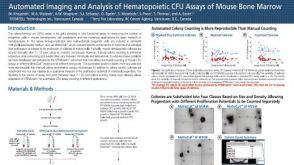 科学海报Automated Imaging and Analysis of Hematopoietic CFU Assays of Mouse Bone Marrow
 产品手册qPCR Arrays for Cell Characterization
 沪公网安备31010102008431号