Attenuation of Hind-Limb Ischemia in Mice with Endothelial-Like Cells Derived from Different Sources of Human Stem Cells
Functional endothelial-like cells (EC) have been successfully derived from different cell sources and potentially used for treatment of cardiovascular diseases; however,their relative therapeutic efficacy remains unclear. We differentiated functional EC from human bone marrow mononuclear cells (BM-EC),human embryonic stem cells (hESC-EC) and human induced pluripotent stem cells (hiPSC-EC),and compared their in-vitro tube formation,migration and cytokine expression profiles,and in-vivo capacity to attenuate hind-limb ischemia in mice. Successful differentiation of BM-EC was only achieved in 1/6 patient with severe coronary artery disease. Nevertheless,BM-EC,hESC-EC and hiPSC-EC exhibited typical cobblestone morphology,had the ability of uptaking DiI-labeled acetylated low-density-lipoprotein,and binding of Ulex europaeus lectin. In-vitro functional assay demonstrated that hiPSC-EC and hESC-EC had similar capacity for tube formation and migration as human umbilical cord endothelial cells (HUVEC) and BM-EC (Ptextgreater0.05). While increased expression of major angiogenic factors including epidermal growth factor,hepatocyte growth factor,vascular endothelial growth factor,placental growth factor and stromal derived factor-1 were observed in all EC cultures during hypoxia compared with normoxia (Ptextless0.05),the magnitudes of cytokine up-regulation upon hypoxic were more dramatic in hiPSC-EC and hESC-EC (Ptextless0.05). Compared with medium,transplanting BM-EC (n = 6),HUVEC (n = 6),hESC-EC (n = 8) or hiPSC-EC (n = 8) significantly attenuated severe hind-limb ischemia in mice via enhancement of neovascularization. In conclusion,functional EC can be generated from hECS and hiPSC with similar therapeutic efficacy for attenuation of severe hind-limb ischemia. Differentiation of functional BM-EC was more difficult to achieve in patients with cardiovascular diseases,and hESC-EC or iPSC-EC are readily available as off-the-shelf" format for the treatment of tissue ischemia."
View Publication
Identification of human chronic myelogenous leukemia progenitor cells with hemangioblastic characteristics.
Overwhelming evidence from leukemia research has shown that the clonal population of neoplastic cells exhibits marked heterogeneity with respect to proliferation and differentiation. There are rare stem cells within the leukemic population that possess extensive proliferation and self-renewal capacity not found in the majority of the leukemic cells. These leukemic stem cells are necessary and sufficient to maintain the leukemia. Interestingly,the BCR/ABL fusion gene,which is present in chronic myelogenous leukemia (CML),was also detected in the endothelial cells of patients with CML,suggesting that CML might originate from hemangioblastic progenitor cells that can give rise to both blood cells and endothelial cells. Here we isolated fetal liver kinase-1-positive (Flk1+) cells carrying the BCR/ABL fusion gene from the bone marrow of 17 Philadelphia chromosome-positive (Ph+) patients with CML and found that these cells could differentiate into malignant blood cells and phenotypically defined endothelial cells at the single-cell level. These findings provide direct evidence for the first time that rearrangement of the BCR/ABL gene might happen at or even before the level of hemangioblastic progenitor cells,thus resulting in detection of the BCR/ABL fusion gene in both blood and endothelial cells.
View Publication
产品类型:
产品号#:
04435
04445
产品名:
MethoCult™H4435富集
MethoCult™H4435富集
Al-Ali H et al. (MAY 2013)
ACS chemical biology 25 5 1027--36
A ROCK inhibitor permits survival of dissociated human embryonic stem cells.
Poor survival of human embryonic stem (hES) cells after cell dissociation is an obstacle to research,hindering manipulations such as subcloning. Here we show that application of a selective Rho-associated kinase (ROCK) inhibitor,Y-27632,to hES cells markedly diminishes dissociation-induced apoptosis,increases cloning efficiency (from approximately 1% to approximately 27%) and facilitates subcloning after gene transfer. Furthermore,dissociated hES cells treated with Y-27632 are protected from apoptosis even in serum-free suspension (SFEB) culture and form floating aggregates. We demonstrate that the protective ability of Y-27632 enables SFEB-cultured hES cells to survive and differentiate into Bf1(+) cortical and basal telencephalic progenitors,as do SFEB-cultured mouse ES cells.
View Publication
产品类型:
产品号#:
100-1044
72302
72304
72307
72308
73802
73804
产品名:
Y-27632(二盐酸盐)
Y-27632(二盐酸盐)
Y-27632(二盐酸盐)
Y-27632(二盐酸盐)
Y-27632(二盐酸盐)
Rho激酶抑制剂IV (Dihydrochloride)
Rho激酶抑制剂IV (Dihydrochloride)
Fernandes AM et al. (JAN 2010)
Cell Transplantation 19 5 509--23
Worldwide survey of published procedures to culture human embryonic stem cells
Since their derivation 11 years ago,human embryonic stem (hES) cells have become a powerful tool in both basic biomedical research and developmental biology. Their capacity for self-renewal and differentiation into any tissue type has also brought interest from fields such as cell therapy and drug screening. We conducted an extensive analysis of 750 papers (51% of the total published about hES cells between 1998 and 2008) to present a spectrum of hES cell research including culture protocols developed worldwide. This review may stimulate discussions about the importance of having unvarying methods to culture hES cells,in order to facilitate comparisons among data obtained by research groups elsewhere,especially concerning preclinical studies. Moreover,the description of the most widely used cell lines,reagents,and procedures adopted internationally will help newcomers on deciding the best strategies for starting their own studies. Finally,the results will contribute with the efforts of stem cell researchers on comparing the performance of different aspects related to hES cell culture methods.
View Publication
产品类型:
产品号#:
85850
85857
产品名:
mTeSR™1
mTeSR™1
Varum S et al. (JUN 2011)
PLoS ONE 6 6 e20914
Energy metabolism in human pluripotent stem cells and their differentiated counterparts.
BACKGROUND: Human pluripotent stem cells have the ability to generate all cell types present in the adult organism,therefore harboring great potential for the in vitro study of differentiation and for the development of cell-based therapies. Nonetheless their use may prove challenging as incomplete differentiation of these cells might lead to tumoregenicity. Interestingly,many cancer types have been reported to display metabolic modifications with features that might be similar to stem cells. Understanding the metabolic properties of human pluripotent stem cells when compared to their differentiated counterparts can thus be of crucial importance. Furthermore recent data has stressed distinct features of different human pluripotent cells lines,namely when comparing embryo-derived human embryonic stem cells (hESCs) and induced pluripotent stem cells (IPSCs) reprogrammed from somatic cells.backslashnbackslashnMETHODOLOGY/PRINCIPAL FINDINGS: We compared the energy metabolism of hESCs,IPSCs,and their somatic counterparts. Focusing on mitochondria,we tracked organelle localization and morphology. Furthermore we performed gene expression analysis of several pathways related to the glucose metabolism,including glycolysis,the pentose phosphate pathway and the tricarboxylic acid (TCA) cycle. In addition we determined oxygen consumption rates (OCR) using a metabolic extracellular flux analyzer,as well as total intracellular ATP levels by high performance liquid chromatography (HPLC). Finally we explored the expression of key proteins involved in the regulation of glucose metabolism.backslashnbackslashnCONCLUSIONS/FINDINGS: Our results demonstrate that,although the metabolic signature of IPSCs is not identical to that of hESCs,nonetheless they cluster with hESCs rather than with their somatic counterparts. ATP levels,lactate production and OCR revealed that human pluripotent cells rely mostly on glycolysis to meet their energy demands. Furthermore,our work points to some of the strategies which human pluripotent stem cells may use to maintain high glycolytic rates,such as high levels of hexokinase II and inactive pyruvate dehydrogenase (PDH).
View Publication
产品类型:
产品号#:
85850
85857
产品名:
mTeSR™1
mTeSR™1
Agrawal P et al. (APR 2016)
ACS applied materials & interfaces 8 14 8870--8874
Fast, Efficient, and Gentle Transfection of Human Adherent Cells in Suspension
We demonstrate a highly efficient method for gene delivery into clinically relevant human cell types,such as induced pluripotent stem cells (iPSCs) and fibroblasts,reducing the protocol time by one full day. To preserve cell physiology during gene transfer,we designed a microfluidic strategy,which facilitates significant gene delivery in a short transfection time (textless1 min) for several human cell types. This fast,optimized and generally applicable cell transfection method can be used for rapid screening of different delivery systems and has significant potential for high-throughput cell therapy applications.
View Publication
产品类型:
产品号#:
85850
85857
产品名:
mTeSR™1
mTeSR™1
Panula S et al. ( 2016)
PloS one 11 10 e0165268
Over Expression of NANOS3 and DAZL in Human Embryonic Stem Cells.
The mechanisms underlying human germ cell development are largely unknown,partly due to the scarcity of primordial germ cells and the inaccessibility of the human germline to genetic analysis. Human embryonic stem cells can differentiate to germ cells in vitro and can be genetically modified to study the genetic requirements for germ cell development. Here,we studied NANOS3 and DAZL,which have critical roles in germ cell development in several species,via their over expression in human embryonic stem cells using global transcriptional analysis,in vitro germ cell differentiation,and in vivo germ cell formation assay by xenotransplantation. We found that NANOS3 over expression prolonged pluripotency and delayed differentiation. In addition,we observed a possible connection of NANOS3 with inhibition of apoptosis. For DAZL,our results suggest a post-transcriptional regulation mechanism in hES cells. In addition,we found that DAZL suppressed the translation of OCT4,and affected the transcription of several genes associated with germ cells,cell cycle arrest,and cell migration. Furthermore,DAZL over expressed cells formed spermatogonia-like colonies in a rare instance upon xenotransplantation. These data can be used to further elucidate the role of NANOS3 and DAZL in germ cell development both in vitro and in vivo.
View Publication
Gifford CA et al. (MAY 2013)
Cell 153 5 1149--1163
Transcriptional and epigenetic dynamics during specification of human embryonic stem cells
Differentiation of human embryonic stem cells (hESCs) provides a unique opportunity to study the regulatory mechanisms that facilitate cellular transitions in a human context. To that end,we performed comprehensive transcriptional and epigenetic profiling of populations derived through directed differentiation of hESCs representing each of the three embryonic germ layers. Integration of whole-genome bisulfite sequencing,chromatin immunoprecipitation sequencing,and RNA sequencing reveals unique events associated with specification toward each lineage. Lineage-specific dynamic alterations in DNA methylation and H3K4me1 are evident at putative distal regulatory elements that are frequently bound by pluripotency factors in the undifferentiated hESCs. In addition,we identified germ-layer-specific H3K27me3 enrichment at sites exhibiting high DNA methylation in the undifferentiated state. A better understanding of these initial specification events will facilitate identification of deficiencies in current approaches,leading to more faithful differentiation strategies as well as providing insights into the rewiring of human regulatory programs during cellular transitions. ?? 2013 Elsevier Inc.
View Publication


 EasySep™小鼠TIL(CD45)正选试剂盒




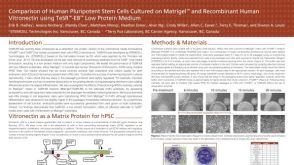 科学海报Comparison of Human Pluripotent Stem Cells Cultured on Matrigel™ and Recombinant Human Vitronectin Using TeSR™-E8™ Low Protein Medium
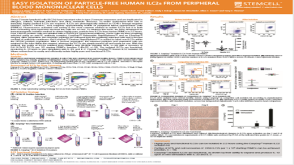 科学海报Easy Isolation of Particle-Free Human ILC2s from Peripheral Blood Mononuclear Cells
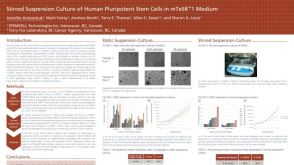 科学海报Stirred Suspension Culture of Human Pluripotent Stem Cells in mTeSR™1 Medium

 沪公网安备31010102008431号