Saraiya M et al. (APR 2010)
Tissue engineering. Part A 16 4 1443--55
Reversine enhances generation of progenitor-like cells by dedifferentiation of annulus fibrosus cells.
The aim of this study was to determine if treatment with reversine,a purine analog,promoted generation of skeletal progenitor cells from lineage-committed annulus fibrosus cells. Reversine modulated cell growth,morphology,and the actin cytoskeleton of annulus fibrosus cells. Microarray profiling coupled with Ingenuity Pathway Analysis revealed that reversine treatment resulted in a significant expression change in many genes including those required for cell-cell interaction,cell movement,cell growth,and development. Further analysis revealed that there was involvement of gene networks concerned with cellular assembly and organization,DNA replication and repair,tissue morphology,and cell-to-cell signaling. The gene expression profile was dependent on reversine concentration. In osteogenic media,cells pretreated with 300 nM reversine exhibited an increased induction in alkaline phosphatase activity and enhanced expression of alkaline phosphatase,bone sialoprotein,osteocalcin,and collagen type I mRNA. Maintained in adipogenic media,the reversine-pretreated annulus cells displayed evidence of adipogenic differentiation: accumulation of cytosolic lipid droplets and increased expression of PPAR-gamma2,LPL,and Fabp mRNA. In chondrogenic media,cells pretreated with reversine exhibited marked increase in the induction of aggrecan,collagen types II,IX,and XI,and versican. It is concluded that reversine treatment induced annulus fibrosus cell plasticity and promoted their differentiation along mesenchymal lineages. This agent could be used to generate skeletal progenitor cells to orchestrate the repair of the intervertebral disc.
View Publication
产品类型:
产品号#:
72612
72614
产品名:
Reversine
逆转素(Reversine)
Moore RN et al. (JAN 2012)
Stem cells and development 21 1 30--41
E-cadherin-expressing feeder cells promote neural lineage restriction of human embryonic stem cells.
Human embryonic stem cells (hESCs) represent a promising source of tissues of different cell lineages because of their high degree of self-renewal and their unique ability to give rise to most somatic cell lineages. In this article,we report on a new approach to differentiate hESCs into neural stem cells that can be differentiated further into neuronal restricted cells. We have rapidly and efficiently differentiated hESCs into neural stem cells by presenting the cell adhesion molecule,E-cadherin,to undifferentiated hESCs via E-cadherin transfected fibroblast monolayers. The neural restricted progenitor cells rapidly express nestin and beta-III-tubulin,but not glial fibrillary acidic protein (GFAP) during the 1-week E-cadherin induction phase,suggesting that E-cadherin promotes rapid neuronal differentiation. Further,these cells are able to achieve enhanced neuronal differentiation with the addition of exogenous growth factors. Cadherin-induced hESCs show a loss in Oct4 and nestin expression associated with positive staining for vimentin,neurofilament,and neural cell adhesion molecule. Moreover,blocking by functional E-cadherin antibody and failure of paracrine stimulation suggested that direct E-cadherin engagement is necessary to induce neural restriction. By providing hESCs with molecular cues to promote differentiation,we are able to utilize a specific cell-cell adhesion molecule,E-cadherin,to influence the nature and degree of neural specialization.
View Publication
Xia Y et al. (DEC 2013)
Nature Cell Biology 15 12 1507--1515
Directed differentiation of human pluripotent cells to ureteric bud kidney progenitor-like cells
Diseases affecting the kidney constitute a major health issue worldwide. Their incidence and poor prognosis affirm the urgent need for the development of new therapeutic strategies. Recently,differentiation of pluripotent cells to somatic lineages has emerged as a promising approach for disease modelling and cell transplantation. Unfortunately,differentiation of pluripotent cells into renal lineages has demonstrated limited success. Here we report on the differentiation of human pluripotent cells into ureteric-bud-committed renal progenitor-like cells. The generated cells demonstrated rapid and specific expression of renal progenitor markers on 4-day exposure to defined media conditions. Further maturation into ureteric bud structures was accomplished on establishment of a three-dimensional culture system in which differentiated human cells assembled and integrated alongside murine cells for the formation of chimeric ureteric buds. Altogether,our results provide a new platform for the study of kidney diseases and lineage commitment,and open new avenues for the future application of regenerative strategies in the clinic.
View Publication
产品类型:
产品号#:
85850
85857
产品名:
mTeSR™1
mTeSR™1
A. S. Smith et al. (jan 2022)
Journal for immunotherapy of cancer 10 1
B cells imprint adoptively transferred CD8+ T cells with enhanced tumor immunity.
BACKGROUND Adoptive T cell transfer (ACT) therapy improves outcomes in patients with advanced malignancies,yet many individuals relapse due to the infusion of T cells with poor function or persistence. Toll-like receptor (TLR) agonists can invigorate antitumor T cell responses when administered directly to patients,but these responses often coincide with toxicities. We posited that TLR agonists could be repurposed ex vivo to condition T cells with remarkable potency in vivo,circumventing TLR-related toxicity. METHODS In this study we investigated how tumor-specific murine CD8+ T cells and human tumor infiltrating lymphocytes (TILs) are impacted when expanded ex vivo with the TLR9 agonist CpG. RESULTS Herein we reveal a new way to reverse the tolerant state of adoptively transferred CD8+ T cells against tumors using TLR-activated B cells. We repurposed the TLR9 agonist,CpG,commonly used in the clinic,to bolster T cell-B cell interactions during expansion for ACT. T cells expanded ex vivo from a CpG-treated culture demonstrated potent antitumor efficacy and prolonged persistence in vivo. This antitumor efficacy was accomplished without in vivo administration of TLR agonists or other adjuvants of high-dose interleukin (IL)-2 or vaccination,which are classically required for effective ACT therapy. CpG-conditioned CD8+ T cells acquired a unique proteomic signature hallmarked by an IL-2R$\alpha$highICOShighCD39low phenotype and an altered metabolic profile,all reliant on B cells transiently present in the culture. Likewise,human TILs benefitted from expansion with CpG ex vivo,as they also possessed the IL-2R$\alpha$highICOShighCD39low phenotype. CpG fostered the expansion of potent CD8+ T cells with the signature phenotype and antitumor ability via empowering a direct B-T cell interaction. Isolated B cells also imparted T cells with the CpG-associated phenotype and improved tumor immunity without the aid of additional antigen-presenting cells or other immune cells in the culture. CONCLUSIONS Our results demonstrate a novel way to use TLR agonists to improve immunotherapy and reveal a vital role for B cells in the generation of potent CD8+ T cell-based therapies. Our findings have immediate implications in the clinical treatment of advanced solid tumors.
View Publication
Huff CA and Matsui W (JUN 2008)
Journal of clinical oncology : official journal of the American Society of Clinical Oncology 26 17 2895--900
Multiple myeloma cancer stem cells.
Multiple myeloma is characterized by the clonal expansion of neoplastic plasma cells within the bone marrow,elevated serum immunoglobulin,and osteolytic bone disease. The disease is highly responsive to a wide variety of anticancer treatments including conventional cytotoxic chemotherapy,corticosteroids,radiation therapy,and a growing number of agents with novel mechanisms of action. However,few if any patients are cured with these modalities and relapse remains a critical issue. A better understanding of clonogenic multiple myeloma cells is essential to ultimately improving long-term outcomes,but the nature of the cells responsible for myeloma regrowth and disease relapse is unclear. We review evidence that functional heterogeneity exists in multiple myeloma and discuss potential strategies and clinical implications of the stem-cell model of cancer in this disease.
View Publication
产品类型:
产品号#:
产品名:
Bielawska-Pohl A et al. (MAY 2005)
Journal of immunology (Baltimore,Md. : 1950) 174 9 5573--82
Human NK cells lyse organ-specific endothelial cells: analysis of adhesion and cytotoxic mechanisms.
Human organ-specific microvascular endothelial cells (ECs) were established and used in the present study to investigate their susceptibility to natural killer cell line (NKL)-induced lysis. Our data indicate that although IL-2-stimulated NKL (NKL2) cells adhered to the human peripheral (HPLNEC.B3),mesenteric lymph node (HMLNEC),brain (HBrMEC),and lung (HLMEC) and skin (HSkMEC.2) ECs,they significantly killed these cells quite differently. A more pronounced lysis of OSECs was also observed when IL-2-stimulated,purified peripheral blood NK cells were used as effector cells. In line with the correlation observed between adhesion pattern and the susceptibility to NKL2-mediated killing,we demonstrated using different chelators that the necessary adhesion step was governed by an Mg(2+)-dependent,but Ca(2+)-independent,mechanism as opposed to the subsequent Ca(2+)-dependent killing. To identify the cytotoxic pathway used by NKL2 cells,the involvement of the classical and alternate pathways was examined. Blocking of the Ca(2+)-dependent cytotoxicity pathway by EGTA/MgCl(2) significantly inhibited endothelial target cell killing,suggesting a predominant role for the perforin/granzyme pathway. Furthermore,using confocal microscopy,we demonstrated that the interaction between NKL2 effectors and ECs induced cytochrome c release and Bid translocation in target cells,indicating an involvement of the mitochondrial pathway in NKL2-induced EC death. In addition,although all tested cells were sensitive to the cytotoxic action of TNF,no susceptibility to TRAIL or anti-Fas mAb was observed. The present studies emphasize that human NK cell cytotoxicity toward ECs may be a potential target to block vascular injury.
View Publication
产品类型:
产品号#:
15025
15065
产品名:
RosetteSep™人NK细胞富集抗体混合物
RosetteSep™人NK细胞富集抗体混合物
Meierovics AI et al. (OCT 2016)
The Journal of experimental medicine
MAIT cells promote inflammatory monocyte differentiation into dendritic cells during pulmonary intracellular infection.
Mucosa-associated invariant T (MAIT) cells are a unique innate T cell subset that is necessary for rapid recruitment of activated CD4(+) T cells to the lungs after pulmonary F. tularensis LVS infection. Here,we investigated the mechanisms behind this effect. We provide evidence to show that MAIT cells promote early differentiation of CCR2-dependent monocytes into monocyte-derived DCs (Mo-DCs) in the lungs after F. tularensis LVS pulmonary infection. Adoptive transfer of Mo-DCs to MAIT cell-deficient mice (MR1(-/-) mice) rescued their defect in the recruitment of activated CD4(+) T cells to the lungs. We further demonstrate that MAIT cell-dependent GM-CSF production stimulated monocyte differentiation in vitro,and that in vivo production of GM-CSF was delayed in the lungs of MR1(-/-) mice. Finally,GM-CSF-deficient mice exhibited a defect in monocyte differentiation into Mo-DCs that was phenotypically similar to MR1(-/-) mice. Overall,our data demonstrate that MAIT cells promote early pulmonary GM-CSF production,which drives the differentiation of inflammatory monocytes into Mo-DCs. Further,this delayed differentiation of Mo-DCs in MR1(-/-) mice was responsible for the delayed recruitment of activated CD4(+) T cells to the lungs. These findings establish a novel mechanism by which MAIT cells function to promote both innate and adaptive immune responses.
View Publication
J. Hu et al. (jan 2022)
Journal for immunotherapy of cancer 10 1
Cell membrane-anchored and tumor-targeted IL-12 (attIL12)-T cell therapy for eliminating large and heterogeneous solid tumors.
BACKGROUND Adoptive T-cell transfer has become an attractive therapeutic approach for hematological malignancies but shows poor activity against large and heterogeneous solid tumors. Interleukin-12 (IL-12) exhibits potent antitumor efficacy against solid tumors,but its clinical application has been stalled because of toxicity. Here,we aimed to develop a safe approach to IL-12 T-cell therapy for eliminating large solid tumors. METHODS We generated a cell membrane-anchored IL-12 (aIL12),a tumor-targeted IL-12 (ttIL12),and a cell membrane-anchored and ttIL-12 (attIL12) and a cell membrane-anchored and tumor-targeted ttIL-12 (attIL12) armed T cells,chimeric antigen receptor-T cells,and T cell receptor-T (TCR-T) cells with each. We compared the safety and efficacy of these armed T cells in treating osteosarcoma patient-derived xenograft tumors and mouse melanoma tumors after intravenous infusions of the armed T cells. RESULTS attIL12-T cell infusion showed remarkable antitumor efficacy in human and mouse large solid tumor models. Mechanistically,attIL12-T cells targeted tumor cells expressing cell-surface vimentin,enriching effector T cell and interferon $\gamma$ production in tumors,which in turn stimulates dendritic cell maturation for activating secondary T-cell responses and tumor antigen spreading. Both attIL12- and aIL12-T-cell transfer eliminated peripheral cytokine release and the associated toxic effects. CONCLUSIONS This novel approach sheds light on the safe application of IL-12-based T-cell therapy for large and heterogeneous solid tumors.
View Publication


 EasySep™小鼠TIL(CD45)正选试剂盒




 44:40
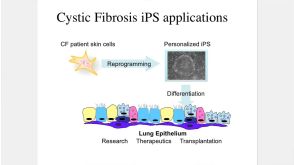
线上讲座Making Lung Cells from Pluripotent Stem Cells: Disease Modeling and Future Therapies发布日期: 08/12/2016
44:40
线上讲座Making Lung Cells from Pluripotent Stem Cells: Disease Modeling and Future Therapies发布日期: 08/12/2016


 沪公网安备31010102008431号