Globin switches in yolk sac-like primitive and fetal-like definitive red blood cells produced from human embryonic stem cells.
We have previously shown that coculture of human embryonic stem cells (hESCs) for 14 days with immortalized fetal hepatocytes yields CD34(+) cells that can be expanded in serum-free liquid culture into large numbers of megaloblastic nucleated erythroblasts resembling yolk sac-derived cells. We show here that these primitive erythroblasts undergo a switch in hemoglobin (Hb) composition during late terminal erythroid maturation with the basophilic erythroblasts expressing predominantly Hb Gower I (zeta(2)epsilon(2)) and the orthochromatic erythroblasts hemoglobin Gower II (alpha(2)epsilon(2)). This suggests that the switch from Hb Gower I to Hb Gower II,the first hemoglobin switch in humans is a maturation switch not a lineage switch. We also show that extending the coculture of the hESCs with immortalized fetal hepatocytes to 35 days yields CD34(+) cells that differentiate into more developmentally mature,fetal liver-like erythroblasts,that are smaller,express mostly fetal hemoglobin,and can enucleate. We conclude that hESC-derived erythropoiesis closely mimics early human development because the first 2 human hemoglobin switches are recapitulated,and because yolk sac-like and fetal liver-like cells are sequentially produced. Development of a method that yields erythroid cells with an adult phenotype remains necessary,because the most mature cells that can be produced with current systems express less than 2% adult beta-globin mRNA.
View Publication
产品类型:
产品号#:
09600
09650
产品名:
StemSpan™ SFEM
StemSpan™ SFEM
Rezania A et al. (NOV 2013)
STEM CELLS 31 11 2432--2442
Enrichment of human embryonic stem cell-derived NKX6.1-expressing pancreatic progenitor cells accelerates the maturation of insulin-secreting cells in vivo
Human embryonic stem cells (hESCs) are considered a potential alternative to cadaveric islets as a source of transplantable cells for treating patients with diabetes. We previously described a differentiation protocol to generate pancreatic progenitor cells from hESCs,composed of mainly pancreatic endoderm (PDX1/NKX6.1-positive),endocrine precursors (NKX2.2/synaptophysin-positive,hormone/NKX6.1-negative),and polyhormonal cells (insulin/glucagon-positive,NKX6.1-negative). However,the relative contributions of NKX6.1-negative versus NKX6.1-positive cell fractions to the maturation of functional β-cells remained unclear. To address this question,we generated two distinct pancreatic progenitor cell populations using modified differentiation protocols. Prior to transplant,both populations contained a high proportion of PDX1-expressing cells (˜85%-90%) but were distinguished by their relatively high (˜80%) or low (˜25%) expression of NKX6.1. NKX6.1-high and NKX6.1-low progenitor populations were transplanted subcutaneously within macroencapsulation devices into diabetic mice. Mice transplanted with NKX6.1-low cells remained hyperglycemic throughout the 5-month post-transplant period whereas diabetes was reversed in NKX6.1-high recipients within 3 months. Fasting human C-peptide levels were similar between groups throughout the study,but only NKX6.1-high grafts displayed robust meal-,glucose- and arginine-responsive insulin secretion as early as 3 months post-transplant. NKX6.1-low recipients displayed elevated fasting glucagon levels. Theracyte devices from both groups contained almost exclusively pancreatic endocrine tissue,but NKX6.1-high grafts contained a greater proportion of insulin-positive and somatostatin-positive cells,whereas NKX6.1-low grafts contained mainly glucagon-expressing cells. Insulin-positive cells in NKX6.1-high,but not NKX6.1-low grafts expressed nuclear MAFA. Collectively,this study demonstrates that a pancreatic endoderm-enriched population can mature into highly functional β-cells with only a minor contribution from the endocrine subpopulation.
View Publication
产品类型:
产品号#:
85850
85857
产品名:
mTeSR™1
mTeSR™1
Ko J-Y et al. (AUG 2014)
Stem cells and development 23 15 1788--1797
Osteogenesis from human induced pluripotent stem cells: an in vitro and in vivo comparison with mesenchymal stem cells.
The purpose of this study was to examine the in vitro and in vivo osteogenic potential of human induced pluripotent stem cells (hiPSCs) against that of human bone marrow mesenchymal stem cells (hBMMSCs). Embryoid bodies (EBs),which were formed from undifferentiated hiPSCs,were dissociated into single cells and underwent osteogenic differentiation using the same medium as hBMMSCs for 14 days. Osteoinduced hiPSCs were implanted on the critical-size calvarial defects and long bone segmental defects in rats. The healing of defects was evaluated after 8 weeks and 12 weeks of implantation,respectively. Osteoinduced hiPSCs showed relatively lower and delayed in vitro expressions of the osteogenic marker COL1A1 and bone sialoprotein,as well as a weaker osteogenic differentiation through alkaline phosphatase staining and mineralization through Alizarin red staining compared with hBMMSCs. Calvarial defects treated with osteoinduced hiPSCs had comparable quality of new bone formation,including full restoration of bone width and robust formation of trabeculae,to those treated with hBMMSCs. Both osteoinduced hiPSCs and hBMMSCs persisted in regenerated bone after 8 weeks of implantation. In critical-size long bone segmental defects,osteoinduced hiPSC treatment also led to healing of segmental defects comparable to osteoinduced hBMMSC treatment after 12 weeks. In conclusion,despite delayed in vitro osteogenesis,hiPSCs have an in vivo osteogenic potential as good as hBMMSCs.
View Publication
产品类型:
产品号#:
85850
85857
产品名:
mTeSR™1
mTeSR™1
Lee J-HJBJH et al. (APR 2015)
Stem Cells 33 4 1142--1152
Reversible lineage-specific priming of human embryonic stem cells can be exploited to optimize the yield of differentiated cells.
The clinical use of human embryonic stem cells (hESCs) requires efficient cellular expansion that must be paired with an ability to generate specialized progeny through differentiation. Self-renewal and differentiation are deemed inherent hallmarks of hESCs and a growing body of evidence suggests that initial culture conditions dictate these two aspects of hESC behavior. Here,we reveal that defined culture conditions using commercial mTeSR1 media augment the expansion of hESCs and enhance their capacity for neural differentiation at the expense of hematopoietic lineage competency without affecting pluripotency. This culture-induced modification was shown to be reversible,as culture in mouse embryonic fibroblast-conditioned media (MEF-CM) in subsequent passages allowed mTeSR1-expanded hESCs to re-establish hematopoietic differentiation potential. Optimal yield of hematopoietic cells can be achieved by expansion in mTeSR1 followed by a recovery period in MEF-CM. Furthermore,the lineage propensity to hematopoietic and neural cell types could be predicted via analysis of surrogate markers expressed by hESCs cultured in mTeSR1 versus MEF-CM,thereby circumventing laborious in vitro differentiation assays. Our study reveals that hESCs exist in a range of functional states and balance expansion with differentiation potential,which can be modulated by culture conditions in a predictive and quantitative manner. Stem Cells 2015;33:1142-1152.
View Publication
Preuss E et al. ( 2013)
The Journal of biological chemistry 288 49 35287--35296
Pan-mammalian target of rapamycin (mTOR) inhibitor AZD8055 primes rhabdomyosarcoma cells for ABT-737-induced apoptosis by down-regulating Mcl-1 protein.
The PI3K/mammalian Target of Rapamycin (mTOR) pathway is often aberrantly activated in rhabdomyosarcoma (RMS) and represents a promising therapeutic target. Recent evaluation of AZD8055,an ATP-competitive mTOR inhibitor,by the Preclinical Pediatric Testing Program showed in vivo antitumor activity against childhood solid tumors,including RMS. Therefore,in the present study,we searched for AZD8055-based combination therapies. Here,we identify a new synergistic lethality of AZD8055 together with ABT-737,a BH3 mimetic that antagonizes Bcl-2,Bcl-xL,and Bcl-w but not Mcl-1. AZD8055 and ABT-737 cooperate to induce apoptosis in alveolar and embryonal RMS cells in a highly synergistic fashion (combination index textless 0.2). Synergistic induction of apoptosis by AZD8055 and ABT-737 is confirmed on the molecular level,as AZD8055 and ABT-737 cooperate to trigger loss of mitochondrial membrane potential,activation of caspases,and caspase-dependent apoptosis that is blocked by the pan-caspase inhibitor Z-VAD-fmk. Similar to AZD8055,the PI3K/mTOR inhibitor NVP-BEZ235,the PI3K inhibitor NVP-BKM120 and Akt inhibitor synergize with ABT-737 to trigger apoptosis,whereas no cooperativity is found for the mTOR complex 1 inhibitor RAD001. Interestingly,molecular studies reveal a correlation between the ability of different PI3K/mTOR inhibitors to potentiate ABT-737-induced apoptosis and to suppress Mcl-1 protein levels. Importantly,knockdown of Mcl-1 increases ABT-737-induced apoptosis similar to AZD8055/ABT-737 cotreatment. This indicates that AZD8055-mediated suppression of Mcl-1 protein plays an important role in the synergistic drug interaction. By identifying a novel synergistic interaction of AZD8055 and ABT-737,our findings have important implications for the development of molecular targeted therapies for RMS.
View Publication
产品类型:
产品号#:
73002
73004
产品名:
AZD8055
AZD8055
C. P. Pacini et al. (Dec 2025)
European Journal of Immunology 55 12
Selection and Characterisation of Minor Histocompatibility Antigen‐Specific Regulatory T Cells in Fully HLA‐Matched Setting for GVHD Therapy
Graft‐versus‐host disease is mediated by donor‐derived T cells reactive against the recipient's broadly expressed minor histocompatibility antigens (mHA). Regulatory T cells (Treg) have been explored as a therapeutic approach for chronic GVHD (cGVHD). The promising results from polyclonal Treg trials in this setting have led us to develop a Treg product specific for mismatched minor antigens between patient and donor (mTreg),circumventing broad immune suppression risks. HLA‐matched siblings of opposite sexes were used to obtain the sister's CD4+CD25hiCD127low Treg for co‐culture with the respective brother's dendritic cells as a source of mismatched mHA. We have established the optimal culture conditions resulting in the highest mTreg proliferation and viability. Comprehensive phenotyping during the ex vivo selection shows PD‐1,CTLA‐4,CD39 and HLA‐DR expression. Transcriptomic analysis revealed a switch in metabolic process,and up‐regulation of functional Treg genes. Furthermore,mTreg possess specific and potent suppressive activity,in which there is a dependency on cell‐to‐cell contact and a role for HLA class II expression on mTreg. This protocol would allow the generation of Treg specific to an array of mHA from the recipient's healthy tissues,likely providing a directed and strong suppression of cGVHD. We optimised a protocol for mHA‐specific Treg (mTreg) selection in an HLA‐matched context while defining its phenotype,transcriptional state and function. mTreg were highly activated and exerted specific,HLA class II‐,contact‐dependent suppression. This protocol can be explored as a highly personalised antigen‐specific Treg‐based therapy in future clinical trials for cGVHD.
View Publication
产品类型:
产品号#:
100-0694
100-0784
10971
10991
17858
17858RF
产品名:
EasySep™人CD14正选试剂盒II
ImmunoCult™ 人CD3/CD28 T细胞激活剂
ImmunoCult™ 人CD3/CD28 T细胞激活剂
ImmunoCult™ 人CD3/CD28 T细胞激活剂
EasySep™人CD14正选试剂盒II
RoboSep™ 人CD14正选试剂盒II
Ounpuu L et al. (MAY 2017)
Biochimica et biophysica acta
2102Ep embryonal carcinoma cells have compromised respiration and shifted bioenergetic profile distinct from H9 human embryonic stem cells.
Recent studies have shown that cellular bioenergetics may be involved in stem cell differentiation. Considering that during cancerogenesis cells acquire numerous properties of stem cells,it is possible to assume that the energy metabolism in tumorigenic cells might be differently regulated. The aim of this study was to compare the mitochondrial bioenergetic profile of normal pluripotent human embryonic stem cells (hESC) and relatively nullipotent embryonal carcinoma cells (2102Ep cell line). We examined three parameters related to cellular bioenergetics: phosphotransfer system,aerobic glycolysis,and oxygen consumption. Activities and expression levels of main enzymes that facilitate energy transfer were measured. The oxygen consumption rate studies were performed to investigate the respiratory capacity of cells. 2102Ep cells showed a shift in energy distribution towards adenylate kinase network. The total AK activity was almost 3 times higher in 2102Ep cells compared to hESCs (179.85±5.73 vs 64.39±2.55mU/mg of protein) and the expression of AK2 was significantly higher in these cells,while CK was downregulated. 2102Ep cells displayed reduced levels of oxygen consumption and increased levels of aerobic glycolysis compared to hESCs. The compromised respiration of 2102Ep cells is not the result of increased mitochondrial mass,increased proton leak,and reduced respiratory reserve capacity of the cells or impairment of respiratory chain complexes. Our data showed that the bioenergetic profile of 2102Ep cells clearly distinguishes them from normal hESCs. This should be considered when this cell line is used as a reference,and highlight the importance of further research concerning energy metabolism of stem cells.
View Publication
产品类型:
产品号#:
85850
85857
产品名:
mTeSR™1
mTeSR™1
Orlandi A et al. (APR 2008)
American journal of physiology. Heart and circulatory physiology 294 4 H1541--9
Functional properties of cells obtained from human cord blood CD34+ stem cells and mouse cardiac myocytes in coculture.
Prior in vitro studies suggested that different types of hematopoietic stem cells may differentiate into cardiomyocytes. The present work examined whether human CD34(+) cells from the human umbilical cord blood (hUCB),cocultured with neonatal mouse cardiomyocytes,acquire the functional properties of myocardial cells and express human cardiac genes. hUCB CD34(+) cells were cocultured onto cardiomyocytes following an infection with a lentivirus-encoding enhanced green fluorescent protein (EGFP). After 7 days,mononucleated EGFP(+) cells were tested for their electrophysiological features by patch clamp and for cytosolic [Ca(2+)] ([Ca(2+)](i)) homeostasis by [Ca(2+)](i) imaging of X-rhod1-loaded cells. Human Nkx2.5 and GATA-4 expression was examined in cocultured cell populations by real-time RT-PCR. EGFP(+) cells were connected to surrounding cells by gap junctions,acquired electrophysiological properties similar to those of cardiomyocytes,and showed action potential-associated [Ca(2+)](i) transients. These cells also exhibited spontaneous sarcoplasmic reticulum [Ca(2+)](i) oscillations and the associated membrane potential depolarization. However,RT-PCR of both cell populations showed no upregulation of human-specific cardiac genes. In conclusion,under our experimental conditions,hUCB CD34(+) cells cocultured with murine cardiomyocytes formed cells that exhibited excitation-contraction coupling features similar to those of cardiomyocytes. However,the expression of human-specific cardiac genes was undetectable by RT-PCR.
View Publication
产品类型:
产品号#:
09600
09650
产品名:
StemSpan™ SFEM
StemSpan™ SFEM
Gonzalez-Velasquez FJ and Moss MA (JAN 2008)
Journal of neurochemistry 104 2 500--13
Soluble aggregates of the amyloid-beta protein activate endothelial monolayers for adhesion and subsequent transmigration of monocyte cells.
Increasing evidence suggests that the deposition of amyloid plaques,composed primarily of the amyloid-beta protein (Abeta),within the cerebrovasculature is a frequent occurrence in Alzheimer's disease and may play a significant role in disease progression. Accordingly,the pathogenic mechanisms by which Abeta can alter vascular function may have therapeutic implications. Despite observations that Abeta elicits a number of physiological responses in endothelial cells,ranging from alteration of protein expression to cell death,the Abeta species accountable for these responses remains unexplored. In the current study,we show that isolated soluble Abeta aggregation intermediates activate human brain microvascular endothelial cells for both adhesion and subsequent transmigration of monocyte cells in the absence of endothelial cell death and monolayer disruption. In contrast,unaggregated Abeta monomer and mature Abeta fibril fail to induce any change in endothelial adhesion or transmigration. Correlations between average Abeta aggregate size and observed increases in adhesion illustrate that smaller soluble aggregates are more potent activators of endothelium. These results support previous studies demonstrating heightened neuronal activity of soluble Abeta aggregates,including Abeta-derived diffusible ligands,oligomers,and protofibrils,and further show that soluble aggregates also selectively exhibit activity in a vascular cell model.
View Publication
A novel role for ??-secretase in the formation of primitive streak-like intermediates from ES cells in culture
gamma-Secretase is a membrane-associated protease with multiple intracellular targets,a number of which have been shown to influence embryonic development and embryonic stem (ES) cell differentiation. This paper describes the use of the gamma-secretase inhibitor N-[N-(3,5-difluorophenacetyl)-L-alanyl]-S-phenylglycine t-butyl ester (DAPT) to evaluate the role of gamma-secretase in the differentiation of pluripotent stem cells to the germ lineages. The addition of DAPT did not prevent the formation of primitive ectoderm-like cells from ES cells in culture. In contrast,the addition of DAPT during primitive ectoderm-like cell differentiation interfered with the ability of both serum and BMP4 to induce a primitive streak-like intermediate and resulted in the preferential formation of neurectoderm. Similarly,DAPT reduced the formation of primitive streak-like intermediates from differentiating human ES cells; the culture conditions used resulted in a population enriched in human surface ectoderm. These data suggest that gamma-secretase may form part of the general pathway by which mesoderm is specified within the primitive streak. The addition of an E-cadherin neutralizing antibody was able to partially reverse the effect of DAPT,suggesting that DAPT may be preventing the formation of primitive streak-like intermediates and promoting neurectoderm differentiation by stabilizing E-cadherin and preventing its proteolysis.
View Publication
产品类型:
产品号#:
85850
85857
产品名:
mTeSR™1
mTeSR™1
Sun S and Wang Z (JUN 2010)
Biochemical and biophysical research communications 396 4 843--8
ALDH high adenoid cystic carcinoma cells display cancer stem cell properties and are responsible for mediating metastasis.
The cancer stem cell (CSC) theory has been proposed to explain the tumor heterogeneity and carcinogenesis process. Recent studies indicate that aldehyde dehydrogenase (ALDH) activity represents a promising CSC marker. Here,we aimed to determine whether human adenoid cystic carcinoma (AdCC) also follows CSC model by exploring the CSC properties of AdCC cells expressing high level of ALDH activity. Utilizing in-vivo series transplantation assays,we found ALDH(high) AdCC cells were capable of self-renewal and of generating tumors that recapitulate the heterogeneity of the parental tumor. Utilizing in-vitro assay,we found only ALDH(high) AdCC cells have tumorsphere-forming ability in anchorage-independent cultures. Finally,we showed ALDH(high) AdCC cells possess highly invasive capability and are responsible for mediating metastasis. These findings suggest the existence of a developmental hierarchy within human AdCC and further elucidation of the unique survival mechanism of AdCC derived CSC population may provide novel therapeutic strategies to treat AdCC.
View Publication


 EasySep™小鼠TIL(CD45)正选试剂盒




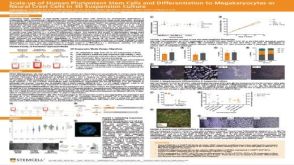 科学海报Scale-up of Human Pluripotent Stem Cells and Differentiation to Megakaryocytes or Neural Crest Cells in 3D Suspension Culture
 沪公网安备31010102008431号