Haase D et al. ( )
Journal of immunotherapy (Hagerstown,Md. : 1997) 38 6 250--8
Large-scale Isolation of Highly Pure Untouched" Regulatory T Cells in a GMP Environment for Adoptive Cell Therapy."
Adoptive cell therapy is an emerging treatment strategy for a number of serious diseases. Regulatory T (Treg) cells represent 1 cell type of particular interest for therapy of inflammatory conditions,as they are responsible for controlling unwanted immune responses. Initial clinical trials of adoptive transfer of Treg cells in patients with graft-versus-host disease were shown to be safe. However,obtaining sufficient numbers of highly pure and functional Treg cells with minimal contamination remains a challenge. We developed a novel approach to isolate untouched" human Treg cells from healthy donors on the basis of negative selection using the surface markers CD49d and CD127. This procedure�
View Publication
产品类型:
产品号#:
20119
20155
21000
产品名:
RoboSep™ 吸头组件抛光剂
RoboSep™分选试管套装(9个塑料管+吸头保护器)
RoboSep™- S
Xu H et al. (JUL 2016)
Organic & biomolecular chemistry 14 26 6179--83
Cellular thermal shift and clickable chemical probe assays for the determination of drug-target engagement in live cells.
Proof of drug-target engagement in physiologically-relevant contexts is a key pillar of successful therapeutic target validation. We developed two orthogonal technologies,the cellular thermal shift assay (CETSA) and a covalent chemical probe reporter approach (harnessing sulfonyl fluoride tyrosine labeling and subsequent click chemistry) to measure the occupancy of the mRNA-decapping scavenger enzyme DcpS by a small molecule inhibitor in live cells. Enzyme affinity determined using isothermal dose response fingerprinting (ITDRFCETSA) and the concentration required to occupy 50% of the enzyme (OC50) using the chemical probe reporter assay were very similar. In this case,the chemical probe method worked well due to the long offset kinetics of the reversible inhibitor (determined using a fluorescent dye-tagged probe). This work suggests that CETSA could become the first choice assay to determine in-cell target engagement due to its simplicity.
View Publication
产品类型:
产品号#:
70025
70025.1
70025.2
70025.3
产品名:
冻存的人外周血单个核细胞
冻存的人外周血单个核细胞
冻存的人外周血单个核细胞
冻存的人外周血单个核细胞
L. S. Cruz et al. (Oct 2024)
Cancer Research Communications 4 10
Chemotherapy Enriches for Proinflammatory Macrophage Phenotypes that Support Cancer Stem-Like Cells and Disease Progression in Ovarian Cancer
High-grade serous ovarian cancer remains a poorly understood disease with a high mortality rate. Although most patients respond to cytotoxic therapies,a majority will experience recurrence. This may be due to a minority of drug-resistant cancer stem-like cells (CSC) that survive chemotherapy and are capable of repopulating heterogeneous tumors. It remains unclear how CSCs are supported in the tumor microenvironment (TME) particularly during chemotherapy exposure. Tumor-associated macrophages (TAM) make up half of the immune population of the ovarian TME and are known to support CSCs and contribute to cancer progression. TAMs are plastic cells that alter their phenotype in response to environmental stimuli and thus may influence CSC maintenance during chemotherapy. Given the plasticity of TAMs,we studied the effects of carboplatin on macrophage phenotypes using both THP1- and peripheral blood mononuclear cell (PBMC)–derived macrophages and whether this supports CSCs and ovarian cancer progression following treatment. We found that carboplatin exposure induces an M1-like proinflammatory phenotype that promotes SOX2 expression,spheroid formation,and CD117 + ovarian CSCs,and that macrophage-secreted CCL2/MCP-1 is at least partially responsible for this effect. Depletion of TAMs during carboplatin exposure results in fewer CSCs and prolonged survival in a xenograft model of ovarian cancer. This study supports a role for platinum-based chemotherapies in promoting a transient proinflammatory M1-like TAM that enriches for CSCs during treatment. Improving our understanding of TME responses to cytotoxic drugs and identifying novel mechanisms of CSC maintenance will enable the development of better therapeutic strategies for high-grade serous ovarian cancer. Significance: We show that chemotherapy enhances proinflammatory macrophage phenotypes that correlate with ovarian cancer progression. Given that macrophages are the most prominent immune cell within these tumors,this work provides the foundation for future translational studies targeting specific macrophage populations during chemotherapy,a promising approach to prevent relapse in ovarian cancer.
View Publication
产品类型:
产品号#:
01700
产品名:
ALDEFLUOR™ 试剂盒
Pepper J-P et al. (MAY 2017)
JAMA facial plastic surgery 19 3 197--205
Human Induced Pluripotent Stem Cell-Derived Motor Neuron Transplant for Neuromuscular Atrophy in a Mouse Model of Sciatic Nerve Injury.
Importance Human motor neurons may be reliably derived from induced pluripotent stem cells (iPSCs). In vivo transplant studies of human iPSCs and their cellular derivatives are essential to gauging their clinical utility. Objective To determine whether human iPSC-derived motor neurons can engraft in an immunodeficient mouse model of sciatic nerve injury. Design,Setting,and Subjects This nonblinded interventional study with negative controls was performed at a biomedical research institute using an immunodeficient,transgenic mouse model. Induced pluripotent stem cell-derived motor neurons were cultured and differentiated. Cells were transplanted into 32 immunodeficient mice with sciatic nerve injury aged 6 to 15 weeks. Tissue analysis was performed at predetermined points after the mice were killed humanely. Animal experiments were performed from February 24,2015,to May 2,2016,and data were analyzed from April 7,2015,to May 27,2016. Interventions Human iPSCs were used to derive motor neurons in vitro before transplant. Main Outcomes and Measures Evidence of engraftment based on immunohistochemical analysis (primary outcome measure); evidence of neurite outgrowth and neuromuscular junction formation (secondary outcome measure); therapeutic effect based on wet muscle mass preservation and/or electrophysiological evidence of nerve and muscle function (exploratory end point). Results In 13 of the 32 mice undergoing the experiment,human iPSC-derived motor neurons successfully engrafted and extended neurites to target denervated muscle. Human iPSC-derived motor neurons reduced denervation-induced muscular atrophy (mean [SD] muscle mass preservation,54.2% [4.0%]) compared with negative controls (mean [SD] muscle mass preservation,33.4% [2.3%]) (P = .04). No electrophysiological evidence of muscle recovery was found. Conclusions and Relevance Human iPSC-derived motor neurons may have future use in the treatment of peripheral motor nerve injury,including facial paralysis. Level of Evidence NA.
View Publication
产品类型:
产品号#:
85850
85857
产品名:
mTeSR™1
mTeSR™1
Hakala H et al. (JUL 2009)
Tissue engineering Part A 15 7 1775--85
Comparison of biomaterials and extracellular matrices as a culture platform for multiple, independently derived human embryonic stem cell lines
Long-term in vitro culture of undifferentiated human embryonic stem cells (hESCs) traditionally requires a fibroblast feeder cell layer. Using feeder cells in hESC cultures is highly laborious and limits large-scale hESC production for potential application in regenerative medicine. Replacing feeder cells with defined human extracellular matrix (ECM) components or synthetic biomaterials would be ideal for large-scale production of clinical-grade hESCs. We tested and compared different feeder cell-free hESC culture methods based on different human ECM proteins,human and animal sera matrices,and a Matrigel matrix. Also selected biomaterials were tested for feeder cell-free propagation of undifferentiated hESCs. The matrices were tested together with conventional and modified hESC culture media,human foreskin fibroblast-conditioned culture medium,chemically defined medium,TeSR1,and modified TeSR1 media. The results showed the undefined,xenogeneic Matrigel to be a superior matrix for hESC culture compared with the purified human ECM proteins,serum matrices,and the biomaterials tested. A long-term,feeder cell-free culture system was successful on Matrigel in combination with mTeSR1 culture medium,but a xeno-free,fully defined,and reproducible feeder cell-free hESC culture method still remains to be developed.
View Publication
Non-integrating episomal plasmid-based reprogramming of human amniotic fluid stem cells into induced pluripotent stem cells in chemically defined conditions.
Amniotic fluid stem cells (AFSC) represent an attractive potential cell source for fetal and pediatric cell-based therapies. However,upgrading them to pluripotency confers refractoriness toward senescence,higher proliferation rate and unlimited differentiation potential. AFSC were observed to rapidly and efficiently reacquire pluripotency which together with their easy recovery makes them an attractive cell source for reprogramming. The reprogramming process as well as the resulting iPSC epigenome could potentially benefit from the unspecialized nature of AFSC. iPSC derived from AFSC also have potential in disease modeling,such as Down syndrome or $\$-thalassemia. Previous experiments involving AFSC reprogramming have largely relied on integrative vector transgene delivery and undefined serum-containing,feeder-dependent culture. Here,we describe non-integrative oriP/EBNA-1 episomal plasmid-based reprogramming of AFSC into iPSC and culture in fully chemically defined xeno-free conditions represented by vitronectin coating and E8 medium,a system that we found uniquely suited for this purpose. The derived AF-iPSC lines uniformly expressed a set of pluripotency markers Oct3/4,Nanog,Sox2,SSEA-1,SSEA-4,TRA-1-60,TRA-1-81 in a pattern typical for human primed PSC. Additionally,the cells formed teratomas,and were deemed pluripotent by PluriTest,a global expression microarray-based in-silico pluripotency assay. However,we found that the PluriTest scores were borderline,indicating a unique pluripotent signature in the defined condition. In the light of potential future clinical translation of iPSC technology,non-integrating reprogramming and chemically defined culture are more acceptable.
View Publication
产品类型:
产品号#:
07180
07183
07930
07931
07940
07952
07955
07959
100-0763
100-1061
85850
85857
产品名:
Vitronectin XF™
CellAdhere™ 稀释缓冲液
CryoStor® CS10
CryoStor® CS10
CryoStor® CS10
CryoStor® CS10
CryoStor® CS10
CryoStor® CS10
Vitronectin XF™
CryoStor® CS10
mTeSR™1
mTeSR™1
Hidalgo LG et al. (MAR 2008)
American journal of transplantation : official journal of the American Society of Transplantation and the American Society of Transplant Surgeons 8 3 627--36
The transcriptome of human cytotoxic T cells: similarities and disparities among allostimulated CD4(+) CTL, CD8(+) CTL and NK cells.
Transcripts expressed in cytotoxic T lymphocytes (CTL) have mechanistic and diagnostic importance in transplantation. We used microarrays to select CTL-associated transcripts (CATs) expressed in human CD4(+) CTL,CD8(+) CTL and NK cells,excluding transcripts expressed in B cells,monocytes and kidney. This generated three transcript sets: CD4(+)-associated,CD8(+)-associated and NK-associated. Surprisingly,many CATs were expressed in effector memory cells e.g. granzyme B/GZMB,interferon-gamma/IFNG. Transcript expression was very similar between CD4(+) and CD8(+) CTL. There were no transcripts highly selective for CD4(+) CTL or CD8(+) CTL: for example,cytotoxic molecule transcripts (perforin,granzymes,granulysin) were shared between CD8(+) CTL and CD4(+) CTL although expression remained higher in CD8(+) CTL. Transcripts that differentiated between CD8(+) CTL and CD4(+) CTL were primarily those shared between CD8(+) CTL and NK cells (e.g. NK receptors KLRC1,KLRC3,KLRD1,KLRK1). No transcripts could differentiate CD4(+) CTL from CD8(+) CTL but NK cell-associated transcripts could differentiate NK cells from CTL. This study serves as a foundation for the interpretation of CATs in rejecting allografts and highlights the extensive sharing of CATs among CD4(+) CTL,CD8(+) CTL and effector memory T cells.
View Publication
产品类型:
产品号#:
19052
19052RF
19053
19053RF
19054
19054RF
19055
19055RF
产品名:
EasySep™人CD4+ T细胞富集试剂盒
RoboSep™ 人CD4+ T细胞富集试剂盒含滤芯吸头
EasySep™人CD8+ T细胞富集试剂盒
RoboSep™ 人CD8+ T细胞富集试剂盒含滤芯吸头
EasySep™人B细胞富集试剂盒
RoboSep™ 人B细胞富集试剂盒含滤芯吸头
EasySep™人NK细胞富集试剂盒
RoboSep™ 人NK细胞富集试剂盒含滤芯吸头
Crispí et al. (OCT 2009)
Journal of immunology (Baltimore,Md. : 1950) 183 7 4675--81
Human TCR-alpha beta+ CD4- CD8- T cells can derive from CD8+ T cells and display an inflammatory effector phenotype.
The origin and function of human double negative (DN) TCR-alphabeta+ T cells is unknown. They are thought to contribute to the pathogenesis of systemic lupus erythematosus because they expand and accumulate in inflamed organs. In this study,we provide evidence that human TCR-alphabeta+ CD4- CD8- DN T cells can derive from activated CD8+ T cells. Freshly isolated TCR-alphabeta+ DN T cells display a distinct gene expression and cytokine production profile. DN cells isolated from peripheral blood as well as DN cells derived in vitro from CD8+ T cells produce a defined array of proinflammatory mediators that includes IL-1beta,IL-17,IFN-gamma,CXCL3,and CXCL2. These results indicate that,upon activation,CD8+ T cells have the capacity to acquire a distinct phenotype that grants them inflammatory capacity.
View Publication
产品类型:
产品号#:
15021
15061
产品名:
RosetteSep™人T细胞富集抗体混合物
RosetteSep™人T细胞富集抗体混合物
Rybtsov S et al. (JUN 2011)
The Journal of experimental medicine 208 6 1305--15
Hierarchical organization and early hematopoietic specification of the developing HSC lineage in the AGM region.
The aorta-gonad-mesonephros region plays an important role in hematopoietic stem cell (HSC) development during mouse embryogenesis. The vascular endothelial cadherin�?� CD45�?� (VE-cad�?�CD45�?�) population contains the major type of immature pre-HSCs capable of developing into long-term repopulating definitive HSCs. In this study,we developed a new coaggregation culture system,which supports maturation of a novel population of CD45-negative (VE-cad�?�CD45�?�CD41�?�) pre-HSCs into definitive HSCs. The appearance of these pre-HSCs precedes development of the VE-cad�?�CD45�?� pre-HSCs (termed here type I and type II pre-HSCs,respectively),thus establishing a hierarchical directionality in the developing HSC lineage. By labeling the luminal surface of the dorsal aorta,we show that both type I and type II pre-HSCs are distributed broadly within the endothelial and subendothelial aortic layers,in contrast to mature definitive HSCs which localize to the aortic endothelial layer. In agreement with expression of CD41 in pre-HSCs,in vivo CD41-Cre-mediated genetic tagging occurs in embryonic pre-HSCs and persists in all lymphomyeloid lineages of the adult animal.
View Publication
产品类型:
产品号#:
03434
03444
产品名:
MethoCult™GF M3434
MethoCult™GF M3434
Huang J et al. ( 2016)
Purinergic Signalling 1--14
Coupling switch of P2Y-IP3 receptors mediates differential Ca2+ signaling in human embryonic stem cells and derived cardiovascular progenitor cells
Purinergic signaling mediated by P2 receptors (P2Rs) plays important roles in embryonic and stem cell development. However,how it mediates Ca2+ signals in human embryonic stem cells (hESCs) and derived cardiovascular progenitor cells (CVPCs) remains unclear. Here,we aimed to determine the role of P2Rs in mediating Ca2+ mobilizations of these cells. hESCs were induced to differentiate into CVPCs by our recently established methods. Gene expression of P2Rs and inositol 1,4,5-trisphosphate receptors (IP3Rs) was analyzed by quantitative/RT-PCR. IP3R3 knockdown (KD) or IP3R2 knockout (KO) hESCs were established by shRNA- or TALEN-mediated gene manipulations,respectively. Confocal imaging revealed that Ca2+ responses in CVPCs to ATP and UTP were more sensitive and stronger than those in hESCs. Consistently,the gene expression levels of most P2YRs except P2Y1 were increased in CVPCs. Suramin or PPADS blocked ATP-induced Ca2+ transients in hESCs but only partially inhibited those in CVPCs. Moreover,the P2Y1 receptor-specific antagonist MRS2279 abolished most ATP-induced Ca2+ signals in hESCs but not in CVPCs. P2Y1 receptor-specific agonist MRS2365 induced Ca2+ transients only in hESCs but not in CVPCs. Furthermore,IP3R2KO but not IP3R3KD decreased the proportion of hESCs responding to MRS2365. In contrast,both IP3R2 and IP3R3 contributed to UTP-induced Ca2+ responses while ATP-induced Ca2+ responses were more dependent on IP3R2 in the CVPCs. In conclusion,a predominant role of P2Y1 receptors in hESCs and a transition of P2Y-IP3R coupling in derived CVPCs are responsible for the differential Ca2+ mobilization between these cells.
View Publication


 EasySep™小鼠TIL(CD45)正选试剂盒




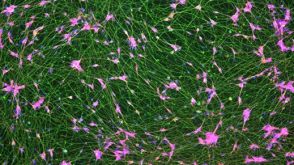 实验方案How to Culture Human Pluripotent Stem Cell (hPSC)-Derived Induced Forebrain Neurons for MEA Analysis Using the Maestro MEA™ System
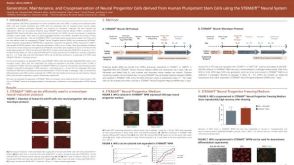 科学海报Generation, Maintenance and Cryopreservation of Neural Progenitor Cells Derived from Human Pluripotent Stem Cells Using the STEMdiff™ Neural System
 沪公网安备31010102008431号