Qu X et al. (OCT 2013)
Biochemical and Biophysical Research Communications 439 4 552--558
Differentiation of reprogrammed human adipose mesenchymal stem cells toward neural cells with defined transcription factors
Somatic cell reprogramming may become a powerful approach to generate specific human cell types for cell-fate determination studies and potential transplantation therapies of neurological diseases. Here we report a reprogramming methodology with which human adipose stem cells (hADSCs) can be differentiated into neural cells. After being reprogrammed with polycistronic plasmid carrying defined factor OCT3/4,SOX2,KLF4 and c-MYC,and further treated with neural induce medium,the hADSCs switched to differentiate toward neural cell lineages. The generated cells had normal karyotypes and exogenous vector sequences were not inserted in the genomes. Therefore,this cell lineage conversion methodology bypasses the risk of mutation and gene instability,and provides a novel strategy to obtain patient-specific neural cells for basic research and therapeutic application.
View Publication
产品类型:
产品号#:
05711
100-1281
产品名:
NeuroCult™ SM1 神经添加物
NeuroCult™ SM1 神经添加物
O. V. Halaidych et al. (MAY 2018)
Stem cell reports 10 5 1642--1656
Inflammatory Responses and Barrier Function of Endothelial Cells Derived from Human Induced Pluripotent Stem Cells.
Several studies have reported endothelial cell (EC) derivation from human induced pluripotent stem cells (hiPSCs). However,few have explored their functional properties in depth with respect to line-to-line and batch-to-batch variability and how they relate to primary ECs. We therefore carried out accurate characterization of hiPSC-derived ECs (hiPSC-ECs) from multiple (non-integrating) hiPSC lines and compared them with primary ECs in various functional assays,which included barrier function using real-time impedance spectroscopy with an integrated assay of electric wound healing,endothelia-leukocyte interaction under physiological flow to mimic inflammation and angiogenic responses in in vitro and in vivo assays. Overall,we found many similarities but also some important differences between hiPSC-derived and primary ECs. Assessment of vasculogenic responses in vivo showed little difference between primary ECs and hiPSC-ECs with regard to functional blood vessel formation,which may be important in future regenerative medicine applications requiring vascularization.
View Publication
Rapid and Efficient Direct Conversion of Human Adult Somatic Cells into Neural Stem Cells by HMGA2/let-7b.
A recent study has suggested that fibroblasts can be converted into mouse-induced neural stem cells (miNSCs) through the expression of defined factors. However,successful generation of human iNSCs (hiNSCs) has proven challenging to achieve. Here,using microRNA (miRNA) expression profile analyses,we showed that let-7 microRNA has critical roles for the formation of PAX6/NESTIN-positive colonies from human adult fibroblasts and the proliferation and self-renewal of hiNSCs. HMGA2,a let-7-targeting gene,enables induction of hiNSCs that displayed morphological/molecular features and in vitro/in vivo differentiation potential similar to H9-derived NSCs. Interestingly,HMGA2 facilitated the efficient conversion of senescent somatic cells or blood CD34+ cells into hiNSCs through an interaction with SOX2,whereas other combinations or SOX2 alone showed a limited conversion ability. Taken together,these findings suggest that HMGA2/let-7 facilitates direct reprogramming toward hiNSCs in minimal conditions and maintains hiNSC self-renewal,providing a strategy for the clinical treatment of neurological diseases.
View Publication
产品类型:
产品号#:
05750
05752
产品名:
NeuroCult™ NS-A 基础培养基(人)
NeuroCult™ NS-A 分化试剂盒 (人)
Balkow S et al. (SEP 2010)
Blood 116 11 1885--94
LFA-1 activity state on dendritic cells regulates contact duration with T cells and promotes T-cell priming.
A key event in the successful induction of adaptive immune responses is the antigen-specific activation of T cells by dendritic cells (DCs). Although LFA-1 (lymphocyte function-associated antigen 1) on T cells is considered to be important for antigen-specific T-cell activation,the role for LFA-1 on DCs remains elusive. Using 2 different approaches to activate LFA-1 on DCs,either by deletion of the αL-integrin cytoplasmic GFFKR sequence or by silencing cytohesin-1-interacting protein,we now provide evidence that DCs are able to make use of active LFA-1 and can thereby control the contact duration with naive T cells. Enhanced duration of DC/T-cell interaction correlates inversely with antigen-specific T-cell proliferation,generation of T-helper 1 cells,and immune responses leading to delayed-type hypersensitivity. We could revert normal interaction time and T-cell proliferation to wild-type levels by inhibition of active LFA-1 on DCs. Our data further suggest that cytohesin-1-interacting protein might be responsible for controlling LFA-1 deactivation on mature DCs. In summary,our findings indicate that LFA-1 on DCs needs to be in an inactive state to ensure optimal T-cell activation and suggest that regulation of LFA-1 activity allows DCs to actively control antigen-driven T-cell proliferation and effective immune responses.
View Publication
产品类型:
产品号#:
20119
20155
21000
产品名:
RoboSep™ 吸头组件抛光剂
RoboSep™分选试管套装(9个塑料管+吸头保护器)
RoboSep™- S
Lu H-EE et al. (AUG 2011)
Experimental cell research 317 13 1895--1903
Selection of alkaline phosphatase-positive induced pluripotent stem cells from human amniotic fluid-derived cells by feeder-free system
Generation of induced pluripotent stem (iPS) cells from somatic cells has been successfully achieved by ectopic expression of four transcription factors,Oct4,Sox2,Klf4 and c-Myc,also known as the Yamanaka factors. In practice,initial iPS colonies are picked based on their embryonic stem (ES) cell-like morphology,but often may go on to fail subsequent assays,such as the alkaline phosphate (AP) assay. In this study,we co-expressed through lenti-viral delivery the Yamanaka factors in amniotic fluid-derived (AF) cells. ES-like colonies were picked onto a traditional feeder layer and a high percentage AF-iPS with partial to no AP activity was found. Interestingly,we obtained an overwhelming majority of fully stained AP positive (AP+) AF-iPS colonies when colonies were first seeded on a feeder-free culture system,and then transferred to a feeder layer for expansion. Furthermore,colonies with no AP activity were not detected. This screening step decreased the variation seen between morphology and AP assay. We observed the AF-iPS colonies grown on the feeder layer with 28% AP+ colonies,45% AP partially positive (AP+/-) colonies and 27% AP negative (AP-) colonies,while colonies screened by the feeder-free system were 84% AP+ colonies,16% AP+/- colonies and no AP- colonies. The feeder-free screened AP+ AF-iPS colonies were also positive for pluripotent markers,OCT4,SOX2,NANOG,TRA-1-60,TRA-1-81,SSEA-3 and SSEA-4 as well as having differentiation abilities into three germ layers in vitro and in vivo. In this study,we report a simplistic,one-step method for selection of AP+ AF-iPS cells via feeder-free screening.
View Publication
产品类型:
产品号#:
85850
85857
产品名:
mTeSR™1
mTeSR™1
Ji J et al. (MAR 2012)
Stem cells (Dayton,Ohio) 30 3 435--40
Elevated coding mutation rate during the reprogramming of human somatic cells into induced pluripotent stem cells.
Mutations in human induced pluripotent stem cells (iPSCs) pose a risk for their clinical use due to preferential reprogramming of mutated founder cell and selection of mutations during maintenance of iPSCs in cell culture. It is unknown,however,if mutations in iPSCs are due to stress associated with oncogene expression during reprogramming. We performed whole exome sequencing of human foreskin fibroblasts and their derived iPSCs at two different passages. We found that in vitro passaging contributed 7% to the iPSC coding point mutation load,and ultradeep amplicon sequencing revealed that 19% of the mutations preexist as rare mutations in the parental fibroblasts suggesting that the remaining 74% of the mutations were acquired during cellular reprogramming. Simulation suggests that the mutation intensity during reprogramming is ninefold higher than the background mutation rate in culture. Thus the factor induced reprogramming stress contributes to a significant proportion of the mutation load of iPSCs.
View Publication
产品类型:
产品号#:
85850
85857
产品名:
mTeSR™1
mTeSR™1
Ohlemacher SK et al. (MAR 2016)
Stem Cells 34 6 1553--1562
Stepwise Differentiation of Retinal Ganglion Cells from Human Pluripotent Stem Cells Enables Analysis of Glaucomatous Neurodegeneration
Human pluripotent stem cells (hPSCs),including both embryonic and induced pluripotent stem cells,possess the unique ability to readily differentiate into any cell type of the body,including cells of the retina. Although previous studies have demonstrated the ability to differentiate hPSCs to a retinal lineage,the ability to derive retinal ganglion cells (RGCs) from hPSCs has been complicated by the lack of specific markers with which to identify these cells from a pluripotent source. In the current study,the definitive identification of hPSC-derived RGCs was accomplished by their directed,stepwise differentiation through an enriched retinal progenitor intermediary,with resultant RGCs expressing a full complement of associated features and proper functional characteristics. These results served as the basis for the establishment of induced pluripotent stem cells (iPSCs) from a patient with a genetically inherited form of glaucoma,which results in damage and loss of RGCs. Patient-derived RGCs specifically exhibited a dramatic increase in apoptosis,similar to the targeted loss of RGCs in glaucoma,which was significantly rescued by the addition of candidate neuroprotective factors. Thus,the current study serves to establish a method by which to definitively acquire and identify RGCs from hPSCs and demonstrates the ability of hPSCs to serve as an effective in vitro model of disease progression. Moreover,iPSC-derived RGCs can be utilized for future drug screening approaches to identify targets for the treatment of glaucoma and other optic neuropathies. Stem Cells 2016.
View Publication
产品类型:
产品号#:
85850
85857
产品名:
mTeSR™1
mTeSR™1
Massa MG et al. ( 2016)
PLoS ONE 11 5 e0155274
Multiple sclerosis patient-specific primary neurons differentiated from urinary renal epithelial cells via induced pluripotent stem cells
As multiple sclerosis research progresses,it is pertinent to continue to develop suitable paradigms to allow for ever more sophisticated investigations. Animal models of multiple sclerosis,despite their continuing contributions to the field,may not be the most prudent for every experiment. Indeed,such may be either insufficient to reflect the functional impact of human genetic variations or unsuitable for drug screenings. Thus,we have established a cell- and patient-specific paradigm to provide an in vitro model within which to perform future genetic investigations. Renal proximal tubule epithelial cells were isolated from multiple sclerosis patients' urine and transfected with pluripotency-inducing episomal factors. Subsequent induced pluripotent stem cells were formed into embryoid bodies selective for ectodermal lineage,resulting in neural tube-like rosettes and eventually neural progenitor cells. Differentiation of these precursors into primary neurons was achieved through a regimen of neurotrophic and other factors. These patient-specific primary neurons displayed typical morphology and functionality,also staining positive for mature neuronal markers. The development of such a non-invasive procedure devoid of permanent genetic manipulation during the course of differentiation,in the context of multiple sclerosis,provides an avenue for studies with a greater cell- and human-specific focus,specifically in the context of genetic contributions to neurodegeneration and drug discovery.
View Publication
产品类型:
产品号#:
85850
85857
产品名:
mTeSR™1
mTeSR™1
O. Courtemanche et al. (oct 2022)
Respiratory research 23 1 275
Co-modulation of T cells and B cells enhances the inhibition of inflammation in experimental hypersensitivity pneumonitis.
BACKGROUND Hypersensitivity pneumonitis (HP) is an interstitial lung disease characterized by antigen-triggered neutrophilic exacerbations. Although CD4+ T cells are sufficient for HP pathogenesis,this never translated into efficient T cell-specific therapies. Increasing evidence shows that B cells also play decisive roles in HP. Here,we aimed to further define the respective contributions of B and T cells in subacute experimental HP. METHODS Mice were subjected to a protocol of subacute exposure to the archaeon Methanosphaera stadmanae to induce experimental HP. Using models of adoptive transfers of B cells and T cells in Rag1-deficient mice and of B cell-specific S1P1 deletion,we assessed the importance of B cells in the development of HP by evaluating inflammation in bronchoalveolar lavage fluid. We also aimed to determine if injected antibodies targeting B and/or T cells could alleviate HP exacerbations using a therapeutic course of intervention. RESULTS Even though B cells are not sufficient to induce HP,they strongly potentiate CD4+ T cell-induced HP?‘associated neutrophilic inflammation in the airways. However,the reduction of 85% of lung B cells in mice with a CD19-driven S1P1 deletion does not dampen HP inflammation,suggesting that lung B cells are not necessary in large numbers to sustain local inflammation. Finally,we found that injecting antibodies targeting B cells after experimental HP was induced does not dampen neutrophilic exacerbation. Yet,injection of antibodies directed against B cells and T cells yielded a potent 76% inhibition of neutrophilic accumulation in the lungs. This inhibition occurred despite partial,sometimes mild,depletion of B cells and T cells subsets. CONCLUSIONS Although B cells are required for maximal inflammation in subacute experimental HP,partial reduction of B cells fails to reduce HP-associated inflammation by itself. However,co-modulation of T cells and B cells yields enhanced inhibition of HP exacerbation caused by an antigenic rechallenge.
View Publication
Muthuswamy R et al. (JUL 2008)
Cancer research 68 14 5972--8
Ability of mature dendritic cells to interact with regulatory T cells is imprinted during maturation.
Preferential activation of regulatory T (Treg) cells limits autoimmune tissue damage during chronic immune responses but can also facilitate tumor growth. Here,we show that tissue-produced inflammatory mediators prime maturing dendritic cells (DC) for the differential ability of attracting anti-inflammatory Treg cells. Our data show that prostaglandin E(2) (PGE(2)),a factor overproduced in chronic inflammation and cancer,induces stable Treg-attracting properties in maturing DC,mediated by CCL22. The elevated production of CCL22 by PGE(2)-matured DC persists after the removal of PGE(2) and is further elevated after secondary stimulation of DC in a neutral environment. This PGE(2)-induced overproduction of CCL22 and the resulting attraction of FOXP3(+) Tregs are counteracted by IFN alpha,a mediator of acute inflammation,which also restores the ability of the PGE(2)-exposed DC to secrete the Th1-attracting chemokines: CXCL9,CXCL10,CXCL11,and CCL5. In accordance with these observations,different DCs clinically used as cancer vaccines show different Treg-recruiting abilities,with PGE(2)-matured DC,but not type 1-polarized DC,generated in the presence of type I and type II IFNs,showing high Treg-attracting activity. The current data,showing that the ability of mature DC to interact with Treg cells is predetermined at the stage of DC maturation,pave the way to preferentially target the regulatory versus proinflammatory T cells in autoimmunity and transplantation,as opposed to intracellular infections and cancer.
View Publication
产品类型:
产品号#:
19052
19052RF
产品名:
EasySep™人CD4+ T细胞富集试剂盒
RoboSep™ 人CD4+ T细胞富集试剂盒含滤芯吸头
Wang X et al. (FEB 2016)
Stem cells (Dayton,Ohio) 34 2 380--391
Immune modulatory mesenchymal stem cells derived from human embryonic stem cells through a trophoblast-like stage.
Mesenchymal stem/stromal cells (MSCs) have great clinical potential in modulating inflammation and promoting tissue repair. Human embryonic stem cells (hESCs) have recently emerged as a potentially superior cell source for MSCs. However,the generation methods reported so far vary greatly in quality and efficiency. Here,we describe a novel method to rapidly and efficiently produce MSCs from hESCs via a trophoblast-like intermediate stage in approximately 11-16 days. We term these cells T-MSCs" and show that T-MSCs express a phenotype and differentiation potential minimally required to define MSCs. T-MSCs exhibit potent immunomodulatory activity in vitro as they can remarkably inhibit proliferation of cocultured T and B lymphocytes. Unlike bone marrow MSCs�
View Publication


 EasySep™小鼠TIL(CD45)正选试剂盒




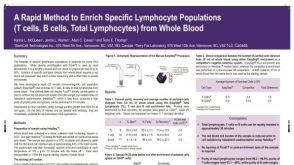 科学海报Cell Enrichment of Specific Lymphocyte Populations (T Cells, B Cells, Total Lymphocytes) from Whole Blood
 沪公网安备31010102008431号