Robust differentiation of human pluripotent stem cells into mural progenitor cells via transient activation of NKX3.1
Mural cells are central to vascular integrity and function. In this study,we demonstrate the innovative use of the transcription factor NKX3.1 to guide the differentiation of human induced pluripotent stem cells into mural progenitor cells (iMPCs). By transiently activating NKX3.1 in mesodermal intermediates,we developed a method that diverges from traditional growth factor-based differentiation techniques. This approach efficiently generates a robust iMPC population capable of maturing into diverse functional mural cell subtypes,including smooth muscle cells and pericytes. These iMPCs exhibit key mural cell functionalities such as contractility,deposition of extracellular matrix,and the ability to support endothelial cell-mediated vascular network formation in vivo. Our study not only underscores the fate-determining significance of NKX3.1 in mural cell differentiation but also highlights the therapeutic potential of these iMPCs. We envision these insights could pave the way for a broader use of iMPCs in vascular biology and regenerative medicine. Mural progenitor cells are crucial for vascular stability. Here,the authors generate these cells from human pluripotent stem cells using NKX3.1 and show that they can mature into various mural cell types and contribute to blood vessel formation.
View Publication
产品类型:
产品号#:
100-0276
100-1130
产品名:
mTeSR™ Plus
mTeSR™ Plus
A. Sivakoses et al. (Mar 2025)
PeerJ 13 1
Triple negative breast cancer cells acquire lymphocyte proteins and genomic DNA during trogocytosis with T cells
Trogocytosis is the process by which a recipient cell siphons small membrane fragments and proteins from a donor cell and can be utilized by cancer cells to avoid immune detection. We observed lymphocyte specific protein expressed by triple negative breast cancer (TNBC) cells via immunofluorescence imaging of patient samples. Image analysis of Cluster of Differentiation 45RA (CD45RA) expression,a naïve T cell specific protein,revealed that all stages of TNBCs express CD45RA. Flow cytometry revealed TNBC cells trogocytose CD45 protein from T cells. We also showed that the acquisition of these lymphoid markers is contact dependent. Confocal and super-resolution imaging further revealed CD45+ spherical structures containing T cell genomic DNA inside TNBC cells after co-culture. Trogocytosis between T cells and TNBC cells altered tumor cell expression of PTPRC,the gene that encodes for CD45. Our results revealed that CD45 is obtained by TNBC cells from T cells via trogocytosis and that TNBC cells express CD45 intracellularly and on the membrane.
View Publication
产品类型:
产品号#:
100-0785
10970
10990
产品名:
ImmunoCult™ 人CD3/CD28/CD2 T细胞激活剂
ImmunoCult™ 人CD3/CD28/CD2 T细胞激活剂
ImmunoCult™ 人CD3/CD28/CD2 T细胞激活剂
J. Li et al. (aug 2019)
Aging Cell e13026
Long‐term repopulation of aged bone marrow stem cells using young Sca‐1 cells promotes aged heart rejuvenation
Reduced quantity and quality of stem cells in aged individuals hinders cardiac repair and regeneration after injury. We used young bone marrow (BM) stem cell antigen 1 (Sca-1) cells to reconstitute aged BM and rejuvenate the aged heart,and examined the underlying molecular mechanisms. BM Sca-1+ or Sca-1- cells from young (2-3 months) or aged (18-19 months) GFP transgenic mice were transplanted into lethally irradiated aged mice to generate 4 groups of chimeras: young Sca-1+,young Sca-1-,old Sca-1+,and old Sca-1- . Four months later,expression of rejuvenation-related genes (Bmi1,Cbx8,PNUTS,Sirt1,Sirt2,Sirt6) and proteins (CDK2,CDK4) was increased along with telomerase activity and telomerase-related protein (DNA-PKcs,TRF-2) expression,whereas expression of senescence-related genes (p16INK4a,P19ARF,p27Kip1 ) and proteins (p16INK4a,p27Kip1 ) was decreased in Sca-1+ chimeric hearts,especially in the young group. Host cardiac endothelial cells (GFP- CD31+ ) but not cardiomyocytes were the primary cell type rejuvenated by young Sca-1+ cells as shown by improved proliferation,migration,and tubular formation abilities. C-X-C chemokine CXCL12 was the factor most highly expressed in homed donor BM (GFP+ ) cells isolated from young Sca-1+ chimeric hearts. Protein expression of Cxcr4,phospho-Akt,and phospho-FoxO3a in endothelial cells derived from the aged chimeric heart was increased,especially in the young Sca-1+ group. Reconstitution of aged BM with young Sca-1+ cells resulted in effective homing of functional stem cells in the aged heart. These young,regenerative stem cells promoted aged heart rejuvenation through activation of the Cxcl12/Cxcr4 pathway of cardiac endothelial cells.
View Publication
产品类型:
产品号#:
18756
18756RF
产品名:
EasySep™小鼠SCA1正选试剂盒
RoboSep™ 小鼠SCA1正选试剂盒含滤芯吸头
Konishi S et al. (DEC 2015)
Stem Cell Reports 6 1 6--13
Directed induction of functional multi-ciliated cells in proximal airway epithelial spheroids from human pluripotent stem cells.
Multi-ciliated airway cells (MCACs) play a role in mucociliary clearance of the lung. However,the efficient induction of functional MCACs from human pluripotent stem cells has not yet been reported. Using carboxypeptidase M (CPM) as a surface marker of NKX2-1(+)-ventralized anterior foregut endoderm cells (VAFECs),we report a three-dimensional differentiation protocol for generating proximal airway epithelial progenitor cell spheroids from CPM(+) VAFECs. These spheroids could be induced to generate MCACs and other airway lineage cells without alveolar epithelial cells. Furthermore,the directed induction of MCACs and of pulmonary neuroendocrine lineage cells was promoted by adding DAPT,a Notch pathway inhibitor. The induced MCACs demonstrated motile cilia with a 9 + 2" microtubule arrangement and dynein arms capable of beating and generating flow for mucociliary transport. This method is expected to be useful for future studies on human airway disease modeling and regenerative medicine."
View Publication
产品类型:
产品号#:
05001
05021
05022
产品名:
PneumaCult™-ALI 培养基
PneumaCult™-ALI 培养基含12 mm Transwell®插件
PneumaCult™-ALI 培养基含6.5 mm Transwell®插件
Yu C et al. ( )
In vivo (Athens,Greece) 25 1 69--76
ALDH activity indicates increased tumorigenic cells, but not cancer stem cells, in prostate cancer cell lines.
BACKGROUND: Cancer stem cells (CSCs) have been shown to be a small stem cell-like cell population which appears to drive tumorigenesis,tumor recurrence and metastasis. Thus,identification and characterization of CSCs may be critical to defining effective anticancer therapies. In prostate cancer (PCa),the CD44(+) cell population appears to have stem cell-like properties including being tumorigenic. The enzyme aldehyde dehydrogenase (ALDH) has been found to identify hematopoietic stem cells and our aim was to determine the utility of ALDH activity and CD44 in identifying PCa stem cell-like cells in PCa cell lines. MATERIALS AND METHODS: LNCaP cells and PC-3 cells were sorted based on their expression of CD44 and ALDH activity. The cell populations were investigated using colony-forming assays,invasion assays,sphere formation experiments in a non-adherent environment and 3-D Matrigel matrix culture to observe the in vitro stem-cell like properties. Different sorted cell populations were injected subcutaneously into NOD/SCID mice to determine the corresponding tumorigenic capacities. RESULTS: ALDH(hi) CD44(+) cells exhibit a higher proliferative,clonogenic and metastatic capacity in vitro and demonstrate higher tumorigenicity capacity in vivo than did ALDH(lo) CD44(-) cells. The tumors recapitulated the population of the original cell line. However,ALDHlo CD44(-) cells were able to develop tumors,albeit with longer latency periods. CONCLUSION: ALDH activity and CD44 do not appear to identify PCa stem cells; however,they do indicate increased tumorigenic and metastatic potential,indicating their potential importance for further exploration.
View Publication
产品类型:
产品号#:
01700
01705
01702
产品名:
ALDEFLUOR™ 试剂盒
ALDEFLUOR™ DEAB试剂
ALDEFLUOR™测定缓冲液
Selekman JA et al. (DEC 2013)
Tissue engineering. Part C,Methods 19 12 949--60
Efficient generation of functional epithelial and epidermal cells from human pluripotent stem cells under defined conditions.
Human pluripotent stem cells (hPSCs) have an unparalleled potential to generate limitless quantities of any somatic cell type. However,current methods for producing populations of various somatic cell types from hPSCs are generally not standardized and typically incorporate undefined cell culture components often resulting in variable differentiation efficiencies and poor reproducibility. To address this,we have developed a defined approach for generating epithelial progenitor and epidermal cells from hPSCs. In doing so,we have identified an optimal starting cell density to maximize yield and maintain high purity of K18+/p63+ simple epithelial progenitors. In addition,we have shown that the use of synthetic,defined substrates in lieu of Matrigel and gelatin can successfully facilitate efficient epithelial differentiation,maintaining a high (backslashtextgreater75%) purity of K14+/p63+ keratinocyte progenitor cells and at a two to threefold higher yield than a previously reported undefined differentiation method. These K14+/p63+ cells also exhibited a higher expansion potential compared to cells generated using an undefined differentiation protocol and were able to terminally differentiate and recapitulate an epidermal tissue architecture in vitro. In summary,we have demonstrated the production of populations of functional epithelial and epidermal cells from multiple hPSC lines using a new,completely defined differentiation strategy.
View Publication
产品类型:
产品号#:
85850
85857
产品名:
mTeSR™1
mTeSR™1
Jung L et al. (JUN 2014)
Molecular Human Reproduction 20 6 538--549
ONSL and OSKM cocktails act synergistically in reprogramming human somatic cells into induced pluripotent stem cells
The advent of human induced pluripotent stem cells (hiPSC) is revolutionizing many research fields including cell-replacement therapy,drug screening,physiopathology of specific diseases and more basic research such as embryonic development or diseases modeling. Despite the large number of reports on reprogramming methods,techniques in use remain globally inefficient. We present here a new optimized approach to improve this efficiency. After having tested different monocistronic vectors with poor results,we adopted a polycistronic cassette encoding Thomson's cocktail OCT4,NANOG,SOX2 and LIN28 (ONSL) separated by 2A peptides. This cassette was tested in various vector backbones,based on lentivirus or retrovirus under a LTR or EF1 alpha promoter. This allowed us to show that ONSL-carrier retrovectors reprogrammed adult fibroblast cells with a much higher efficiency (up to 0.6%) than any other tested. We then compared the reprogramming efficiencies of two different polycistronic genes,ONSL and OCT4,SOX2,KLF4 and cMYC (OSKM) placed in the same retrovector backbone. Interestingly,in this context ONSL gene reprograms more efficiently than OSKM but OSKM reprograms faster suggesting that the two cocktails may reprogram through distinct pathways. By equally mixing RV-LTR-ONSL and RV-LTR-OSKM,we indeed observed a remarkable synergy,yielding a reprogramming efficiency of textgreater2%. We present here a drastic improvement of the reprogramming efficiency,which opens doors to the development of automated and high throughput strategies of hiPSC production. Furthermore,non-integrative reprogramming protocols (i.e. mRNA) may take advantage of this synergy to boost their efficiency.
View Publication
Steward CG et al. (FEB 2005)
Biology of blood and marrow transplantation : journal of the American Society for Blood and Marrow Transplantation 11 2 115--21
High peripheral blood progenitor cell counts enable autologous backup before stem cell transplantation for malignant infantile osteopetrosis.
Autosomal recessive osteopetrosis (OP) is a rare,lethal disorder in which osteoclasts are absent or nonfunctional,resulting in a bone marrow cavity insufficient to support hematopoiesis. Because osteoclasts are derived from hematopoietic precursors,allogeneic hematopoietic cell transplantation can cure the bony manifestations of the disorder. However,high rates of graft failure have been observed in this population. It is not possible to harvest bone marrow from these patients for reinfusion should graft failure be observed. We report that 8 of 10 patients with OP had high numbers of circulating CD34(+) cells (3% +/- 0.9%). This increased proportion of peripheral CD34(+) cells made it possible to harvest 2 x 10(6) CD34(+) cells per kilogram with a total volume of blood ranging from 8.3 to 83.7 mL (1.3-11.6 mL/kg). In addition,colony-forming assays documented significantly more colony-forming unit-granulocyte-macrophage and burst-forming unit-erythroid in the blood of osteopetrotic patients compared with controls; the numbers of colony-forming units approximated those found in control marrow. We conclude that OP patients with high levels of circulating CD34(+) are candidates for peripheral blood autologous harvest by limited exchange transfusion. These cells are then available for reinfusion should graft failure be observed in patients for whom retransplantation is impractical.
View Publication
产品类型:
产品号#:
05401
05402
05411
产品名:
MesenCult™ MSC基础培养基 (人)
MesenCult™ MSC 刺激补充剂(人)
MesenCult™ 增殖试剂盒(人)
Schwartz C et al. (JUN 2015)
Blood 125 25 3896--904
Eosinophil-specific deletion of IκBα in mice reveals a critical role of NF-κB-induced Bcl-xL for inhibition of apoptosis.
Eosinophils are associated with type 2 immune responses to allergens and helminths. They release various proinflammatory mediators and toxic proteins on activation and are therefore considered proinflammatory effector cells. Eosinophilia is promoted by the cytokines interleukin (IL)-3,IL-5,and granulocyte macrophage-colony-stimulating factor (GM-CSF) and can result from enhanced de novo production or reduced apoptosis. In this study,we show that only IL-5 induces differentiation of eosinophils from bone marrow precursors,whereas IL-5,GM-CSF,and to a lesser extent IL-3 promote survival of mature eosinophils. The receptors for these cytokines use the common β chain,which serves as the main signaling unit linked to signal transducer and activator of transcription 5,p38 mitogen-activated protein kinase,and nuclear factor (NF)-κB pathways. Inhibition of NF-κB induced apoptosis of in vitro cultured eosinophils. Selective deletion of IκBα in vivo resulted in enhanced expression of Bcl-xL and reduced apoptosis during helminth infection. Retroviral overexpression of Bcl-xL promoted survival,whereas pharmacologic inhibition of Bcl-xL in murine or human eosinophils induced rapid apoptosis. These results suggest that therapeutic strategies targeting Bcl-xL in eosinophils could improve health conditions in allergic inflammatory diseases.
View Publication
产品类型:
产品号#:
73852
产品名:
STAT5抑制剂
Ramos P et al. (JAN 2011)
Blood 117 4 1379--89
Enhanced erythropoiesis in Hfe-KO mice indicates a role for Hfe in the modulation of erythroid iron homeostasis.
In hereditary hemochromatosis,mutations in HFE lead to iron overload through abnormally low levels of hepcidin. In addition,HFE potentially modulates cellular iron uptake by interacting with transferrin receptor,a crucial protein during erythropoiesis. However,the role of HFE in this process was never explored. We hypothesize that HFE modulates erythropoiesis by affecting dietary iron absorption and erythroid iron intake. To investigate this,we used Hfe-KO mice in conditions of altered dietary iron and erythropoiesis. We show that Hfe-KO mice can overcome phlebotomy-induced anemia more rapidly than wild-type mice (even when iron loaded). Second,we evaluated mice combining the hemochromatosis and β-thalassemia phenotypes. Our results suggest that lack of Hfe is advantageous in conditions of increased erythropoietic activity because of augmented iron mobilization driven by deficient hepcidin response. Lastly,we demonstrate that Hfe is expressed in erythroid cells and impairs iron uptake,whereas its absence exclusively from the hematopoietic compartment is sufficient to accelerate recovery from phlebotomy. In summary,we demonstrate that Hfe influences erythropoiesis by 2 distinct mechanisms: limiting hepcidin expression under conditions of simultaneous iron overload and stress erythropoiesis,and impairing transferrin-bound iron uptake by erythroid cells. Moreover,our results provide novel suggestions to improve the treatment of hemochromatosis.
View Publication


 EasySep™小鼠TIL(CD45)正选试剂盒




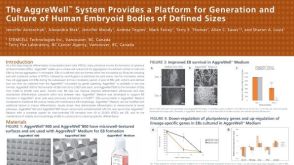 科学海报The Aggrewell™ System Provides a Platform for Generation and Culture of Human Embryoid Bodies of Defined Sizes

 沪公网安备31010102008431号