A. D. Mandi\'c et al. (feb 2019)
Scientific reports 9 1 1177
Clostridium ramosum regulates enterochromaffin cell development and serotonin release.
Peripheral serotonin (5-hydroxytryptamine: 5-HT) synthesized in the intestine by enterochromaffin cells (ECs),plays an important role in the regulation of peristaltic of the gut,epithelial secretion and promotes the development and maintenance of the enteric neurons. Recent studies showed that the indigenous gut microbiota modulates 5-HT signalling and that ECs use sensory receptors to detect dietary and microbiota-derived signals from the lumen to subsequently transduce the information to the nervous system. We hypothesized that Clostridium ramosum by increasing gut 5-HT availability consequently contributes to high-fat diet-induced obesity. Using germ-free mice and mice monoassociated with C. ramosum,intestinal cell lines and mouse organoids,we demonstrated that bacterial cell components stimulate host 5-HT secretion and program the differentiation of colonic intestinal stem progenitors toward the secretory 5-HT-producing lineage. An elevated 5-HT level regulates the expression of major proteins involved in intestinal fatty acid absorption in vitro,suggesting that the presence of C. ramosum in the gut promotes 5-HT secretion and thereby could facilitates intestinal lipid absorption and the development of obesity.
View Publication
产品类型:
产品号#:
06010
产品名:
IntestiCult™ 类器官生长培养基 (人)
(Sep 2024)
Frontiers in Immunology 15 10
Pregnancy-related factors induce immune tolerance through regulation of sCD83 release
A well-balanced maternal immune system is crucial to maintain fetal tolerance in case of infections during pregnancy. Immune adaptations include an increased secretion of soluble mediators to protect the semi-allogeneic fetus from excessive pro-inflammatory response. B lymphocytes acquire a higher capacity to express CD83 and secrete soluble CD83 (sCD83) upon exposure to bacteria-derived components such as LPS. CD83 possesses immune modulatory functions and shows a promising therapeutic potential against inflammatory conditions. The administration of sCD83 to pregnant mice reduces LPS-induced abortion rates. The increased CD83 expression by endometrial B cells as compared to peripheral blood B cells suggests its modulatory role in the fetal tolerance,especially in the context of infection. We postulate that in pregnancy,CD83 expression and release is controlled by pregnancy-related hormones. The intra- and extracellular expression of CD83 in leukocytes from peripheral blood or decidua basalis and parietalis at term were analyzed by flow cytometry. After treatment with pregnancy-related hormones and LPS,ELISA and qPCR were performed to study sCD83 release and CD83 gene expression,respectively. Cleavage prediction analysis was used to find potential proteases targeting CD83. Expression of selected proteases was analyzed by ELISA. Higher levels of CD83 were found in CD11c+ dendritic cells,CD3+ T cells and CD19+ B cells from decidua basalis and decidua parietalis after LPS-stimulation in vitro. An increase of intracellular expression of CD83 was also detected in CD19+ B cells from both compartments. Stimulated B cells displayed significantly higher percentages of CD83+ cells than dendritic cells and T cells from decidua basalis and peripheral blood. Treatment of B lymphocytes with pregnancy-related molecules (E2,P4,TGF-β1 and hCG) enhanced the LPS-mediated increase of CD83 expression,while dexamethasone led to a reduction. Similarly,the release of sCD83 was increased under TGF-β1 treatment but decreased upon dexamethasone stimulation. Finally,we found that the hormonal regulation of CD83 expression is likely a result from a balance between gene transcription from CD83 and the modulation of the metalloproteinase MMP-7. Thus,data supports and complements our previous murine studies on hormonal regulation of CD83 expression,reinforcing its immunomodulatory relevance in anti-bacterial responses during pregnancy.
View Publication
产品类型:
产品号#:
17851
17851RF
100-0692
产品名:
EasySep™人CD3正选试剂盒II
RoboSep™ 人CD3正选试剂盒II
EasySep™人CD3正选试剂盒II
Y. Zhang et al. (nov 2004)
The Journal of neuroscience : the official journal of the Society for Neuroscience 24 47 10616--27
Peroxynitrite-induced neuronal apoptosis is mediated by intracellular zinc release and 12-lipoxygenase activation.
Peroxynitrite toxicity is a major cause of neuronal injury in stroke and neurodegenerative disorders. The mechanisms underlying the neurotoxicity induced by peroxynitrite are still unclear. In this study,we observed that TPEN [N,N,N',N'-tetrakis (2-pyridylmethyl)ethylenediamine],a zinc chelator,protected against neurotoxicity induced by exogenous as well as endogenous (coadministration of NMDA and a nitric oxide donor,diethylenetriamine NONOate) peroxynitrite. Two different approaches to detecting intracellular zinc release demonstrated the liberation of zinc from intracellular stores by peroxynitrite. In addition,we found that peroxynitrite toxicity was blocked by inhibitors of 12-lipoxygenase (12-LOX),p38 mitogen-activated protein kinase (MAPK),and caspase-3 and was associated with mitochondrial membrane depolarization. Inhibition of 12-LOX blocked the activation of p38 MAPK and caspase-3. Zinc itself induced the activation of 12-LOX,generation of reactive oxygen species (ROS),and activation of p38 MAPK and caspase-3. These data suggest a cell death pathway triggered by peroxynitrite in which intracellular zinc release leads to activation of 12-LOX,ROS accumulation,p38 activation,and caspase-3 activation. Therefore,therapies aimed at maintaining intracellular zinc homeostasis or blocking activation of 12-LOX may provide a novel avenue for the treatment of inflammation,stroke,and neurodegenerative diseases in which the formation of peroxynitrite is thought to be one of the important causes of cell death.
View Publication
产品类型:
产品号#:
100-0532
产品名:
Ac-DEVD-CMK (Trifluoroacetate Salt)
Ferreira IL et al. (FEB 2015)
Neurobiology of Aging 36 2 680--692
Aβ and NMDAR activation cause mitochondrial dysfunction involving ER calcium release
Early cognitive deficits in Alzheimer's disease (AD) seem to be correlated to dysregulation of glutamate receptors evoked by amyloid-beta (Aβ) peptide. Aβ interference with the activity of N-methyl-d-aspartate receptors (NMDARs) may be a relevant factor for Aβ-induced mitochondrial toxicity and neuronal dysfunction. To evaluate the role of mitochondria in NMDARs activation mediated by Aβ,we followed in situ single-cell simultaneous measurement of cytosolic free Ca(2+)(Cai(2+)) and mitochondrial membrane potential in primary cortical neurons. Our results show that direct exposure to Aβ + NMDA largely increased Cai(2+) and induced immediate mitochondrial depolarization,compared with Aβ or NMDA alone. Mitochondrial depolarization induced by rotenone strongly inhibited the rise in Cai(2+) evoked by Aβ or NMDA,suggesting that mitochondria control Ca(2+) entry through NMDARs. However,incubation with rotenone did not preclude mitochondrial Ca(2+) (mitCa(2+)) retention in cells treated with Aβ. Aβ-induced Cai(2+) and mitCa(2+) rise were inhibited by ifenprodil,an antagonist of GluN2B-containing NMDARs. Exposure to Aβ + NMDA further evoked a higher mitCa(2+) retention,which was ameliorated in GluN2B(-/-) cortical neurons,largely implicating the involvement of this NMDAR subunit. Moreover,pharmacologic inhibition of endoplasmic reticulum (ER) inositol-1,4,5-triphosphate receptor (IP3R) and mitCa(2+) uniporter (MCU) evidenced that Aβ + NMDA-induced mitCa(2+) rise involves ER Ca(2+) release through IP3R and mitochondrial entry by the MCU. Altogether,data highlight mitCa(2+) dyshomeostasis and subsequent dysfunction as mechanisms relevant for early neuronal dysfunction in AD linked to Aβ-mediated GluN2B-composed NMDARs activation.
View Publication
产品类型:
产品号#:
05711
100-1281
产品名:
NeuroCult™ SM1 神经添加物
NeuroCult™ SM1 神经添加物
(Dec 2024)
Cell Discovery 10
Packaged release and targeted delivery of cytokines by migrasomes in circulation
In dynamic systems like the circulatory system,establishing localized cytokine gradients is challenging. Upon lipopolysaccharide (LPS) stimulation,we observed that monocytes release numerous migrasomes enriched with inflammatory cytokines,such as TNF-α and IL-6. These cytokines are transported into migrasomes via secretory carriers,leading to their immediate exocytosis or eventual release from detached migrasomes. We successfully isolated TNF-α and IL-6-enriched,monocyte-derived migrasomes from the blood of LPS-treated mice. Total secretion analysis revealed a substantial amount of TNF-α and IL-6 released in a migrasome-packaged form. Thus,detached,monocyte-derived migrasomes represent a type of extracellular vesicle highly enriched with cytokines. Physiologically,these cytokine-laden migrasomes rapidly accumulate at local sites of inflammation,effectively creating a concentrated source of cytokines. Our research uncovers novel mechanisms for cytokine release and delivery,providing new insights into immune response modulation.
View Publication


 EasySep™小鼠TIL(CD45)正选试剂盒




 RoboSep™-16垃圾袋 RoboSep™-16垃圾袋
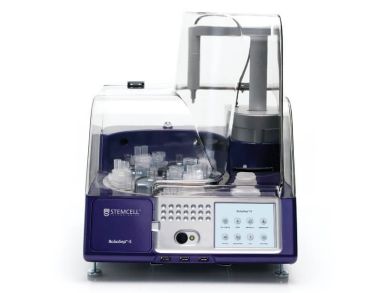 RoboSep™-S附加服务包 RoboSep™- S -全自动细胞分选仪器
 RoboSep™分选管套装 RoboSep™分选管套装(9个塑料管)
 Falcon® 圆底管,带细胞滤网扣盖,5 mL 无菌聚苯乙烯圆底管,配有尼龙网细胞过滤器卡扣盖
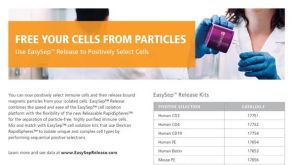 产品手册使用EasySep™ Release 获得不含磁珠标记的细胞



 沪公网安备31010102008431号