Y. Huang et al. (May 2025)
International Journal of Molecular Sciences 26 11
Elexacaftor/Tezacaftor/Ivacaftor Supports Treatment for CF with ΔI1023-V1024-CFTR
Cystic Fibrosis (CF) is a common genetic disease in the United States,resulting from mutations in the Cystic Fibrosis transmembrane conductance regulator (cftr) gene. CFTR modulators,particularly Elexacaftor/Tezacaftor/Ivacaftor (ETI),have significantly improved clinical outcomes for patients with CF. However,many CFTR mutations are not eligible for CFTR modulator therapy due to their rarity. In this study,we report that a patient carrying rare complex CFTR mutations,c.1680-877G>T and c.3067_3072delATAGTG,showed positive clinical outcomes after ETI treatment. We demonstrate that ETI was able to increase the expression of CFTR harboring c.3067_3072delATAGTG in a heterologous system. Importantly,patient-derived nasal epithelial cells in an air–liquid interface (ALI) culture showed improved CFTR function following ETI treatment. These findings supported the initiation of ETI with the patient. Retrospective studies have suggested that the patient has shown small but steady improvement over the past two years in several clinical metrics,including lung function,body mass index (BMI),and sweat chloride levels. Our studies suggest that ETI could be beneficial for patients carrying c.3067_3072delATAGTG.
View Publication
Lewis C and Krieg PA (APR 2014)
Methods (San Diego,Calif.) 66 3 390--7
Reagents for developmental regulation of Hedgehog signaling.
We have examined a number of reagents for their ability to modulate activity of the Hh signaling pathway during embryonic development of Xenopus. In particular we have focused on regulation of events occurring during tailbud stages and later. Two inducible protein reagents based on the Gli1 and Gli3 transcription factors were generated and the activity of these proteins was compared to the Hh signaling pathway inhibitor,cyclopamine,and the activators,Smoothened agonist (SAG) and purmorphamine (PMA). Effectiveness of reagents was assayed using both molecular biological techniques and biological readouts. We found that the small molecule modulators of the Hh pathway were highly specific and effective and produced results generally superior to the more conventional protein reagents for examination of later stage developmental processes.
View Publication
A. Z. Zhu et al. (Jul 2024)
Stem Cell Research & Therapy 15 6
HES1 is required for mouse fetal hematopoiesis
Hematopoiesis in mammal is a complex and highly regulated process in which hematopoietic stem cells (HSCs) give rise to all types of differentiated blood cells. Previous studies have shown that hairy and enhancer of split (HES) repressors are essential regulators of adult HSC development downstream of Notch signaling. In this study,we investigated the role of HES1,a member of HES family,in fetal hematopoiesis using an embryonic hematopoietic specific Hes1 conditional knockout mouse model by using phenotypic flow cytometry,histopathology analysis,and functional in vitro colony forming unit (CFU) assay and in vivo bone marrow transplant (BMT) assay. We found that loss of Hes1 in early embryonic stage leads to smaller embryos and fetal livers,decreases hematopoietic stem progenitor cell (HSPC) pool,results in defective multi-lineage differentiation. Functionally,fetal hematopoietic cells deficient for Hes1 exhibit reduced in vitro progenitor activity and compromised in vivo repopulation capacity in the transplanted recipients. Further analysis shows that fetal hematopoiesis defects in Hes1 fl/fl Flt3Cre embryos are resulted from decreased proliferation and elevated apoptosis,associated with de-repressed HES1 targets,p27 and PTEN in Hes1 -KO fetal HSPCs. Finally,pharmacological inhibition of p27 or PTEN improves fetal HSPCs function both in vitro and in vivo. Together,our findings reveal a previously unappreciated role for HES1 in regulating fetal hematopoiesis,and provide new insight into the differences between fetal and adult HSC maintenance. The online version contains supplementary material available at 10.1186/s13287-024-03836-8.
View Publication
Wang Y and Adjaye J (JUN 2011)
Stem cell reviews 7 2 331--41
A cyclic AMP analog, 8-Br-cAMP, enhances the induction of pluripotency in human fibroblast cells.
Somatic cells can be reprogrammed into induced pluripotent stem (iPS) cells by ectopic expression of four transcription factors. However,the efficiency of human iPS cell generation is extremely low and therefore elucidating the mechanisms underlying cellular reprogramming is of prime importance. We demonstrate that 8-Bromoadenosine 3',5'-cyclic monophosphate (8-Br-cAMP) improves the reprogramming efficiency of human neonatal foreskin fibroblast (HFF1) cells transduced with the four transcription factors by 2-fold. The combination of 8-Br-cAMP and VPA synergistically increases the efficiency to 6.5-fold. The effect of 8-Br-cAMP or VPA may in part be due to the up-regulation of cytokine-related and inflammatory pathways. Remarkably,the synergistic effect of 8-Br-cAMP and VPA on cellular reprogramming may be due to the transient decrease of p53 protein during the early stages of reprogramming. However,it could also be due to additional differentially regulated genes and pathways such as the up-regulation of cytokine-related,inflammatory pathways and self-renewal supporting gene,namely cyclin-encoding CCND2,and the associated genes CCNA1 and CCNE1. Conversely,we also see the down-regulation of the p53 (CCNB2,GTSE1,SERPINE1) and cell cycle (PLK1,CCNB2) pathways. Our data demonstrates that a cyclic AMP analog,8-Br-cAMP,enhances the efficiency of cellular reprogramming. In addition,8-Br-cAMP and VPA have a synergistic effect on cellular reprogramming,which may be in part due to the transient down-regulation of the p53 signaling pathway during the early stages of reprogramming.
View Publication
产品类型:
产品号#:
73602
73604
产品名:
8-Bromo-cAMP
8-Bromo-cAMP
Konorov SO et al. (AUG 2011)
Analytical chemistry 83 16 6254--6258
Absolute quantification of intracellular glycogen content in human embryonic stem cells with Raman microspectroscopy
We present a method to perform absolute quantification of glycogen in human embryonic stem cells (hESCs) in situ based on the use of Raman microspectroscopy. The proposed quantification method was validated by comparison to a commonly used commercial glycogen assay kit. With Raman microspectroscopy,we could obtain the glycogen content of hESCs faster and apparently more accurately than with the kit. In addition,glycogen distributions across a colony could be obtained. Raman spectroscopy can provide reliable estimates of the in situ glycogen content in hESCs,and this approach should also be extensible to their other biochemical constituents as well as to other cell types.
View Publication
产品类型:
产品号#:
85850
85857
产品名:
mTeSR™1
mTeSR™1
Jain AK et al. (JAN 2012)
PLoS Biology 10 2 e1001268
P53 regulates cell cycle and micrornas to promote differentiation of human embryonic stem cells
Multiple studies show that tumor suppressor p53 is a barrier to dedifferentiation; whether this is strictly due to repression of proliferation remains a subject of debate. Here,we show that p53 plays an active role in promoting differentiation of human embryonic stem cells (hESCs) and opposing self-renewal by regulation of specific target genes and microRNAs. In contrast to mouse embryonic stem cells,p53 in hESCs is maintained at low levels in the nucleus,albeit in a deacetylated,inactive state. In response to retinoic acid,CBP/p300 acetylates p53 at lysine 373,which leads to dissociation from E3-ubiquitin ligases HDM2 and TRIM24. Stabilized p53 binds CDKN1A to establish a G(1) phase of cell cycle without activation of cell death pathways. In parallel,p53 activates expression of miR-34a and miR-145,which in turn repress stem cell factors OCT4,KLF4,LIN28A,and SOX2 and prevent backsliding to pluripotency. Induction of p53 levels is a key step: RNA-interference-mediated knockdown of p53 delays differentiation,whereas depletion of negative regulators of p53 or ectopic expression of p53 yields spontaneous differentiation of hESCs,independently of retinoic acid. Ectopic expression of p53R175H,a mutated form of p53 that does not bind DNA or regulate transcription,failed to induce differentiation. These studies underscore the importance of a p53-regulated network in determining the human stem cell state.
View Publication
产品类型:
产品号#:
07923
85850
85857
产品名:
Dispase (1 U/mL)
mTeSR™1
mTeSR™1
Naujok O and Lenzen S (SEP 2012)
Stem Cell Reviews and Reports 8 3 779--791
A critical re-evaluation of CD24-positivity of human embryonic stem cells differentiated into pancreatic progenitors.
Differentiation of embryonic stem cells (ESCs) into insulin-producing cells for cell replacement therapy of diabetes mellitus comprises the stepwise recapitulation of in vivo developmental stages of pancreatic organogenesis in an in vitro differentiation protocol. The chemical compounds IDE-1 and (-)-indolactam-V can be used to direct mouse and human ESCs through these stages to form definitive endoderm via an intermediate mesendodermal stage and finally into pancreatic endoderm. Cells of the pancreatic endoderm express the PDX1 transcription factor and contribute to all pancreatic cell types upon further in vitro or in vivo differentiation. Even though this differentiation approach is highly effective and reproducible,it generates heterogeneous populations containing PDX1-expressing pancreatic progenitors amongst other cell types. Thus,a technique to separate PDX1-expressing cells from this mixture is very desirable. Recently it has been reported that PDX1-positive pancreatic progenitors,derived from human embryonic stem cells,express the surface marker CD24. Therefore were subjected mouse and human ESCs to a small molecule differentiation approach and the expression of the surface marker CD24 was monitored in undifferentiated cells,cells committed to the definitive endoderm and cells reminiscent of the pancreatic endoderm. We observed that both mouse and human ESCs expressed CD24 in the pluripotent state,during the whole process of endoderm formation and upon further differentiation towards pancreatic endoderm. Thus CD24 is not a suitable cell surface marker for identification of PDX1-positive progenitor cells.
View Publication
Enzymatic passaging of human embryonic stem cells alters central carbon metabolism and glycan abundance
To realize the potential of human embryonic stem cells (hESCs) in regenerative medicine and drug discovery applications,large numbers of cells that accurately recapitulate cell and tissue function must be robustly produced. Previous studies have suggested that genetic instability and epigenetic changes occur as a consequence of enzymatic passaging. However,the potential impacts of such passaging methods on the metabolism of hESCs have not been described. Using stable isotope tracing and mass spectrometry-based metabolomics,we have explored how different passaging reagents impact hESC metabolism. Enzymatic passaging caused significant decreases in glucose utilization throughout central carbon metabolism along with attenuated de novo lipogenesis. In addition,we developed and validated a method for rapidly quantifying glycan abundance and isotopic labeling in hydrolyzed biomass. Enzymatic passaging reagents significantly altered levels of glycans immediately after digestion but surprisingly glucose contribution to glycans was not affected. These results demonstrate that there is an immediate effect on hESC metabolism after enzymatic passaging in both central carbon metabolism and biosynthesis. HESCs subjected to enzymatic passaging are routinely placed in a state requiring re-synthesis of biomass components,subtly influencing their metabolic needs in a manner that may impact cell performance in regenerative medicine applications.
View Publication


 EasySep™小鼠TIL(CD45)正选试剂盒




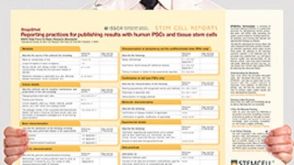 挂图Reporting Practices for Publishing Results with hPSCs Learn how to plan and conduct your human pluripotent stem cell (hPSC)-based research following the ISSCR’s Standards for Human Stem Cell Use in Research


 沪公网安备31010102008431号