Efficient differentiation of human pluripotent stem cells into functional CD34+ progenitor cells by combined modulation of the MEK/ERK and BMP4 signaling pathways.
Differentiation of human pluripotent stem cells (hPSCs) into functional cell types is a crucial step in cell therapy. In the present study,we demonstrate that functional CD34(+) progenitor cells can be efficiently produced from human embryonic stem cells (hESCs) and induced pluripotent stem cells (hiPSCs) by combined modulation of 2 signaling pathways. A higher proportion of CD34(+) cells (∼ 20%) could be derived from hPSCs by inhibition of mitogen-activated protein kinase (MAPK) extracellular signal-regulated protein kinase (MEK)/extracellular signal-regulated kinase (ERK) signaling and activation of bone morphogenic protein-4 (BMP4) signaling. hPSC-derived CD34(+) progenitor cells further developed to endothelial and smooth muscle cells with functionality. Moreover,they contributed directly to neovasculogenesis in ischemic mouse hind limbs,thereby resulting in improved blood perfusion and limb salvage. Our results suggest that combined modulation of signaling pathways may be an efficient means of differentiating hPSCs into functional CD34(+) progenitor cells.
View Publication
M. Drukker et al. (may 2012)
Nature biotechnology 30 6 531--42
Isolation of primitive endoderm, mesoderm, vascular endothelial and trophoblast progenitors from human pluripotent stem cells.
To identify early populations of committed progenitors derived from human embryonic stem cells (hESCs),we screened self-renewing,BMP4-treated and retinoic acid-treated cultures with >400 antibodies recognizing cell-surface antigens. Sorting of >30 subpopulations followed by transcriptional analysis of developmental genes identified four distinct candidate progenitor groups. Subsets detected in self-renewing cultures,including CXCR4(+) cells,expressed primitive endoderm genes. Expression of Cxcr4 in primitive endoderm was confirmed in visceral endoderm of mouse embryos. BMP4-induced progenitors exhibited gene signatures of mesoderm,trophoblast and vascular endothelium,suggesting correspondence to gastrulation-stage primitive streak,chorion and allantois precursors,respectively. Functional studies in vitro and in vivo confirmed that ROR2(+) cells produce mesoderm progeny,APA(+) cells generate syncytiotrophoblasts and CD87(+) cells give rise to vasculature. The same progenitor classes emerged during the differentiation of human induced pluripotent stem cells (hiPSCs). These markers and progenitors provide tools for purifying human tissue-regenerating progenitors and for studying the commitment of pluripotent stem cells to lineage progenitors.
View Publication
产品类型:
产品号#:
85850
85857
产品名:
mTeSR™1
mTeSR™1
Lian X et al. (JUL 2012)
Proceedings of the National Academy of Sciences of the United States of America 109 27 E1848--57
Robust cardiomyocyte differentiation from human pluripotent stem cells via temporal modulation of canonical Wnt signaling.
Human pluripotent stem cells (hPSCs) offer the potential to generate large numbers of functional cardiomyocytes from clonal and patient-specific cell sources. Here we show that temporal modulation of Wnt signaling is both essential and sufficient for efficient cardiac induction in hPSCs under defined,growth factor-free conditions. shRNA knockdown of β-catenin during the initial stage of hPSC differentiation fully blocked cardiomyocyte specification,whereas glycogen synthase kinase 3 inhibition at this point enhanced cardiomyocyte generation. Furthermore,sequential treatment of hPSCs with glycogen synthase kinase 3 inhibitors followed by inducible expression of β-catenin shRNA or chemical inhibitors of Wnt signaling produced a high yield of virtually (up to 98%) pure functional human cardiomyocytes from multiple hPSC lines. The robust ability to generate functional cardiomyocytes under defined,growth factor-free conditions solely by genetic or chemically mediated manipulation of a single developmental pathway should facilitate scalable production of cardiac cells suitable for research and regenerative applications.
View Publication
产品类型:
产品号#:
72032
72034
72552
72554
85850
85857
产品名:
BIO
BIO
IWP-4
IWP-4
mTeSR™1
mTeSR™1
Leydon C et al. (OCT 2013)
Tissue Engineering Part A 19 19-20 2233--2241
Human embryonic stem cell-derived epithelial cells in a novel in vitro model of vocal mucosa.
A satisfactory in vitro model of vocal fold mucosa does not exist,thus precluding a systematic,controlled study of vocal fold biology and biomechanics. We sought to create a valid,reproducible three-dimensional (3D) in vitro model of human origin of vocal fold mucosa of human origin. We hypothesized that coculture of human embryonic stem cell (hESC)-derived simple epithelial cells with primary vocal fold fibroblasts under appropriate conditions would elicit morphogenesis of progenitor cells into vocal fold epithelial-like cells and creation of a basement membrane. Using an in vitro prospective study design,hESCs were differentiated into cells that coexpressed the simple epithelial cell marker,keratin 18 (K18),and the transcription factor,p63. These simple epithelial cells were cocultured with primary vocal fold fibroblasts seeded in a collagen gel scaffold. The cells were cultured for 3 weeks in a keratinocyte medium at an air–liquid interface. After that time,the engineered mucosa demonstrated a stratified,squamous epithelium and a continuous basement membrane recapitulating the key morphologic and phenotypic characteristics of native vocal fold mucosa. hESC-derived epithelial cells exhibited positive staining for vocal fold stratified,squamous epithelial markers,keratin 13 (K13) and 14 (K14),as well as tight junctions,adherens junctions,gap junctions,and desmosomes. Despite the presence of components critical for epithelial structural integrity,the epithelium demonstrated greater permeability than native tissue indicating compromised functional integrity. While further work is warranted to improve functional barrier integrity,this study demonstrates that hESC-derived epithelial progenitor cells can be engineered to create a replicable 3D in vitro model of vocal fold mucosa featuring a multilayered,terminally differentiated epithelium.
View Publication
产品类型:
产品号#:
85850
85857
产品名:
mTeSR™1
mTeSR™1
Konorov SO et al. (OCT 2013)
Analytical Chemistry 85 19 8996--9002
Label-Free Determination of the Cell Cycle Phase in Human Embryonic Stem Cells by Raman Microspectroscopy
The cell cycle is a series of integrated and coordinated physiological events that results in cell growth and replication. Besides observing the event of cell division it is not feasible to determine the cell cycle phase without fatal and/or perturbing invasive procedures such as cell staining,fixing,and/or dissociation. Raman microspectroscopy (RMS) is a chemical imaging technique that exploits molecular vibrations as a contrast mechanism; it can be applied to single living cells noninvasively to allow unperturbed analysis over time. We used RMS to determine the cell cycle phase based on integrating the composite 783 cm(-1) nucleic acid band intensities across individual cell nuclei. After correcting for RNA contributions using the RNA 811 cm(-1) band,the measured intensities essentially reflected DNA content. When quantifying Raman images from single cells in a population of methanol-fixed human embryonic stem cells,the histogram of corrected 783 cm(-1) band intensities exhibited a profile analogous to that obtained using flow-cytometry with nuclear stains. The two population peaks in the histogram occur at Raman intensities corresponding to a 1-fold and 2-fold diploid DNA complement per cell,consistent with a distribution of cells with a population peak due to cells at the end of G1 phase (1-fold) and a peak due to cells entering M phase (2-fold). When treated with EdU to label the replicating DNA and block cell division,cells with higher EdU-related fluorescence generally had higher integrated Raman intensities. This provides proof-of-principle of an analytical method for label-free RMS determination in situ of cell cycle phase in adherent monolayers or even single adherent cells.
View Publication
Oct4 maintains the pluripotency of human embryonic stem cells by inactivating p53 through sirt1-mediated deacetylation
Oct4 is critical to maintain the pluripotency of human embryonic stem cells (hESCs); however,the underlying mechanism remains to be fully understood. Here,we report that silencing of Oct4 in hESCs leads to the activation of tumor suppressor p53,inducing the differentiation of hESCs since acute disruption of p53 in p53 conditional knockout (p53CKO) hESCs prevents the differentiation of hESCs after Oct4 depletion. We further discovered that the silencing of Oct4 significantly reduces the expression of Sirt1,a deacetylase known to inhibit p53 activity and the differentiation of ESCs,leading to increased acetylation of p53 at lysine 120 and 164. The importance of Sirt1 in mediating Oct4-dependent pluripotency is revealed by the finding that the ectopic expression of Sirt1 in Oct4-silenced hESCs prevents p53 activation and hESC differentiation. In addition,using knock-in approach,we revealed that the acetylation of p53 at lysine 120 and 164 is required for both stabilization and activity of p53 in hESCs. In summary,our findings reveal a novel role of Oct4 in maintaining the pluripotency of hESCs by suppressing pathways that induce differentiation. Considering that p53 suppresses pluripotency after DNA damage response in ESCs,our findings further underscore the stringent mechanism to coordinate DNA damage response pathways and pluripotency pathways in order to maintain the pluripotency and genomic stability of hESCs.
View Publication
产品类型:
产品号#:
85850
85857
产品名:
mTeSR™1
mTeSR™1
Tateno H et al. (FEB 2014)
Scientific reports 4 4069
A medium hyperglycosylated podocalyxin enables noninvasive and quantitative detection of tumorigenic human pluripotent stem cells.
While human pluripotent stem cells are attractive sources for cell-replacement therapies,a major concern remains regarding their tumorigenic potential. Thus,safety assessment of human pluripotent stem cell-based products in terms of tumorigenicity is critical. Previously we have identified a pluripotent stem cell-specific lectin probe rBC2LCN recognizing hyperglycosylated podocalyxin as a cell surface ligand. Here we demonstrate that hyperglycosylated podocalyxin is secreted from human pluripotent stem cells into cell culture supernatants. We establish a sandwich assay system,named the GlycoStem test,targeting the soluble hyperglycosylated podocalyxin using rBC2LCN. The GlycoStem test is sufficiently sensitive and quantitative to detect residual human pluripotent stem cells. This work provides a proof of concept for the noninvasive and quantitative detection of tumorigenic human pluripotent stem cells using cell culture supernatants. The developed method should increase the safety of human pluripotent stem cell-based cell therapies.
View Publication
产品类型:
产品号#:
85850
85857
产品名:
mTeSR™1
mTeSR™1
Richter A et al. (MAR 2014)
Stem Cells 32 3 636--648
BMP4 promotes EMT and mesodermal commitment in human embryonic stem cells via SLUG and MSX2
Bone morphogenetic proteins (BMPs) initiate differentiation in human embryonic stem cells (hESCs) but the exact mechanisms have not been fully elucidated. We demonstrate here that SLUG and MSX2,transcription factors involved in epithelial-mesenchymal transitions,essential features of gastrulation in development and tumor progression,are important mediators of BMP4-induced differentiation in hESCs. Phosphorylated Smad1/5/8 colocalized with the SLUG protein at the edges of hESC colonies where differentiation takes place. The upregulation of the BMP target SLUG was direct as shown by the binding of phosphorylated Smad1/5/8 to its promoter,which interrupted the formation of adhesion proteins,resulting in migration. Knockdown of SLUG by short hairpin RNA blocked these changes,confirming an important role for SLUG in BMP-mediated mesodermal differentiation. Furthermore,BMP4-induced MSX2 expression leads to mesoderm formation and then preferential differentiation toward the cardiovascular lineage.
View Publication
产品类型:
产品号#:
85850
85857
产品名:
mTeSR™1
mTeSR™1
Takahashi K et al. (APR 2014)
Nature communications 5 3678
Induction of pluripotency in human somatic cells via a transient state resembling primitive streak-like mesendoderm.
During mammalian embryonic development,the primitive streak initiates the differentiation of pluripotent epiblast cells into germ layers. Pluripotency can be reacquired in committed somatic cells using a combination of a handful of transcription factors,such as OCT3/4,SOX2,KLF4 and c-MYC (hereafter referred to as OSKM),albeit with low efficiency. Here we show that during OSKM-induced reprogramming towards pluripotency in human cells,intermediate cells transiently show gene expression profiles resembling mesendoderm,which is a major component of the primitive streak. Based on these findings,we discover that forkhead box H1 (FOXH1),a transcription factor required for anterior primitive streak specification during early development,significantly enhances the reprogramming efficiency of human fibroblasts by promoting their maturation,including mesenchymal to epithelial transition and the activation of late pluripotency markers. These results demonstrate that during the reprogramming process,human somatic cells go through a transient state that resembles mesendoderm.
View Publication


 EasySep™小鼠TIL(CD45)正选试剂盒




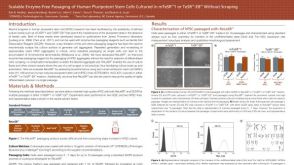 科学海报Scalable Enzyme-Free Passaging of Human Pluripotent Stem Cells Cultured in mTeSR™1 or TeSR™-E8™ Without Scraping
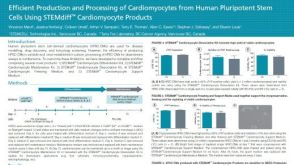 科学海报Efficient Production and Processing of Cardiomyocytes from Human Pluripotent Stem Cells Using STEMdiff™ Cardiomyocyte Products

 沪公网安备31010102008431号