C. J. Chung et al. ( 2016)
PloS one 11 10 e0165450
Recognition of Highly Diverse Type-1 and -2 Porcine Reproductive and Respiratory Syndrome Viruses (PRRSVs) by T-Lymphocytes Induced in Pigs after Experimental Infection with a Type-2 PRRSV Strain.
BACKGROUND/AIM Live attenuated vaccines confer partial protection in pigs before the appearance of neutralizing antibodies,suggesting the contribution of cell-mediated immunity (CMI). However,PRRSV-specific T-lymphocyte responses and protective mechanisms need to be further defined. To this end,the hypothesis was tested that PRRSV-specific T-lymphocytes induced by exposure to type-2 PRRSV can recognize diverse isolates. METHODS An IFN-gamma ELISpot assay was used to enumerate PRRSV-specific T-lymphocytes from PRRSVSD23983-infected gilts and piglets born after in utero infection against 12 serologically and genetically distinct type-1 and -2 PRRSV isolates. The IFN-gamma ELISpot assay using synthetic peptides spanning all open reading frames of PRRSVSD23983 was utilized to localize epitopes recognized by T-lymphocytes. Virus neutralization tests were carried out using the challenge strain (type-2 PRRSVSD23983) and another strain (type-2 PRRSVVR2332) with high genetic similarity to evaluate cross-reactivity of neutralizing antibodies in gilts after PRRSVSD23983 infection. RESULTS At 72 days post infection,T-lymphocytes from one of three PRRSVSD23983-infected gilts recognized all 12 diverse PRRSV isolates,while T-lymphocytes from the other two gilts recognized all but one isolate. Furthermore,five of nine 14-day-old piglets infected in utero with PRRSVSD23983 had broadly reactive T-lymphocytes,including one piglet that recognized all 12 isolates. Overlapping peptides encompassing all open reading frames of PRRSVSD23983 were used to identify ≥28 peptides with T-lymphocyte epitopes from 10 viral proteins. This included one peptide from the M protein that was recognized by T-lymphocytes from all three gilts representing two completely mismatched MHC haplotypes. In contrast to the broadly reactive T-lymphocytes,neutralizing antibody responses were specific to the infecting PRRSVSD23983 isolate. CONCLUSION These results demonstrated that T-lymphocytes recognizing antigenically and genetically diverse isolates were induced by infection with a type 2 PRRSV strain (SD23983). If these reponses have cytotoxic or other protective functions,they may help overcome the suboptimal heterologous protection conferred by conventional vaccines.
View Publication
产品类型:
产品号#:
85450
85460
86450
86460
18060
18061
07861
07811
85415
85420
86415
86420
产品名:
SepMate™-50 (IVD)
SepMate™-50 (IVD)
SepMate™-50 (RUO)
SepMate™-50 (RUO)
Lymphoprep™
Lymphoprep™
Lymphoprep™
Lymphoprep™
SepMate™-15 (IVD), 100 units
SepMate™-15 (IVD)
SepMate™-15 (RUO), 100 units
SepMate™-15 (RUO)
M. Baliu-Piqu\'e et al. ( 2018)
Frontiers in immunology 9 2054
Short Lifespans of Memory T-cells in Bone Marrow, Blood, and Lymph Nodes Suggest That T-cell Memory Is Maintained by Continuous Self-Renewal of Recirculating Cells.
Memory T-cells are essential to maintain long-term immunological memory. It is widely thought that the bone marrow (BM) plays an important role in the long-term maintenance of memory T-cells. There is controversy however on the longevity and recirculating kinetics of BM memory T-cells. While some have proposed that the BM is a reservoir for long-lived,non-circulating memory T-cells,it has also been suggested to be the preferential site for memory T-cell self-renewal. In this study,we used in vivo deuterium labeling in goats to simultaneously quantify the average turnover rates-and thereby expected lifespans-of memory T-cells from BM,blood and lymph nodes (LN). While the fraction of Ki-67 positive cells,a snapshot marker for recent cell division,was higher in memory T-cells from blood compared to BM and LN,in vivo deuterium labeling revealed no substantial differences in the expected lifespans of memory T-cells between these compartments. Our results support the view that the majority of memory T-cells in the BM are self-renewing as fast as those in the periphery,and are continuously recirculating between the blood,BM,and LN.
View Publication
产品类型:
产品号#:
85415
85420
85450
85460
产品名:
SepMate™-15 (IVD), 100 units
SepMate™-15 (IVD)
SepMate™-50 (IVD)
SepMate™-50 (IVD)
D. M. Shaw et al. (jan 2020)
European journal of applied physiology 120 1 191--202
Acute hyperketonaemia alters T-cell-related cytokine gene expression within stimulated peripheral blood mononuclear cells following prolonged exercise.
PURPOSE We investigated the effect of the racemic $\beta$-hydroxybutyrate precursor,R,S-1,3-butanediol (BD),on T-cell-related cytokine gene expression within stimulated peripheral blood mononuclear cells (PBMC) following prolonged,strenuous exercise. METHODS A repeated-measures,randomised,crossover study was conducted in nine healthy,trained male cyclists (age,26.7 ± 5.2 years; VO2peak,63.9 ± 2.5 mL kg-1 min-1). Participants ingested 0.35 g kg-1 of BD or placebo 30 min before and 60 min during 85 min of steady-state (SS) exercise,which preceded a {\~{}} 30 min time-trial (TT) (7 kJ kg-1). Blood samples were collected at pre-supplement,pre-exercise,post-SS,post-TT and 1-h post-TT. Whole blood cultures were stimulated with Staphylococcal enterotoxin B (SEB) for 24 h to determine T-cell-related interleukin (IL)-4,IL-10 and interferon (IFN)-$\gamma$ mRNA expression within isolated PBMCs in vitro. RESULTS Serum cortisol,total circulating leukocyte and lymphocyte,and T-cell subset concentrations were similar between trials during exercise and recovery (all p {\textgreater} 0.05). BD ingestion increased T-cell-related IFN-$\gamma$ mRNA expression compared with placebo throughout exercise and recovery (p = 0.011); however,IL-4 and IL-10 mRNA expression and the IFN-$\gamma$/IL-4 mRNA expression ratio were unaltered (all p {\textgreater} 0.05). CONCLUSION Acute hyperketonaemia appears to transiently amplify the initiation of the pro-inflammatory T-cell-related IFN-$\gamma$ response to an immune challenge in vitro during and following prolonged,strenuous exercise; suggesting enhanced type-1 T-cell immunity at the gene level.
View Publication
产品类型:
产品号#:
19669
19752
19752RF
19753
19753RF
19762
19762RF
产品名:
EasySep™ Direct人单核细胞分选试剂盒
EasySep™小鼠中性粒细胞富集试剂盒
RoboSep™ 小鼠中性粒细胞富集试剂盒含滤芯吸头
D. Mathew et al. (jul 2020)
Science (New York,N.Y.)
Deep immune profiling of COVID-19 patients reveals distinct immunotypes with therapeutic implications.
COVID-19 is currently a global pandemic,but human immune responses to the virus remain poorly understood. We analyzed 125 COVID-19 patients,and compared recovered to healthy individuals using high dimensional cytometry. Integrated analysis of {\~{}}200 immune and {\~{}}50 clinical features revealed activation of T cell and B cell subsets in a proportion of patients. A subgroup of patients had T cell activation characteristic of acute viral infection and plasmablast responses reaching {\textgreater}30{\%} of circulating B cells. However,another subgroup had lymphocyte activation comparable to uninfected subjects. Stable versus dynamic immunological signatures were identified and linked to trajectories of disease severity change. These analyses identified three immunotypes" associated with poor clinical trajectories versus improving health. These immunotypes may have implications for the design of therapeutics and vaccines for COVID-19."
View Publication
产品类型:
产品号#:
85450
85460
产品名:
SepMate™-50 (IVD)
SepMate™-50 (IVD)
W. Fu et al. ( 2020)
Frontiers in oncology 10 78
High Dimensional Mass Cytometry Analysis Reveals Characteristics of the Immunosuppressive Microenvironment in Diffuse Astrocytomas.
The tumor immune microenvironment (TIME) plays a pivotal role in tumor development,progression,and prognosis. However,the characteristics of the TIME in diffuse astrocytoma (DA) are still unclear. Leveraging mass cytometry with a panel of 33 markers,we analyzed the infiltrating immune cells from 10 DA and 4 oligodendroglioma (OG) tissues and provided a single cell-resolution landscape of the intricate immune microenvironment. Our study profiled the composition of the TIME in DA and confirmed the presence of immune cells,such as glioma-associated microglia/macrophages (GAMs),CD8+ T cells,CD4+ T cells,regulatory T cells (Tregs),and natural killer cells. Increased percentages of PD-1+ CD8+ T cells,TIM-3+ CD4+ T cell subpopulations,Tregs and pro-tumor phenotype GAMs substantially contribute to the local immunosuppressive microenvironment in DA. DAs and OGs share similar compositions in terms of immune cells,while GAMs in DA exhibit more inhibitory characteristics than those in OG.
View Publication
产品类型:
产品号#:
86450
86460
产品名:
SepMate™-50 (RUO)
SepMate™-50 (RUO)
K. Abdelsalam et al. (jun 2020)
Viruses 12 7
The Effect of Bovine Viral Diarrhea Virus (BVDV) Strains and the Corresponding Infected-Macrophages' Supernatant on Macrophage Inflammatory Function and Lymphocyte Apoptosis.
Bovine viral diarrhea virus (BVDV) is an important viral disease of cattle that causes immune dysfunction. Macrophages are the key cells for the initiation of the innate immunity and play an important role in viral pathogenesis. In this in vitro study,we studied the effect of the supernatant of BVDV-infected macrophage on immune dysfunction. We infected bovine monocyte-derived macrophages (MDM) with high or low virulence strains of BVDV. The supernatant recovered from BVDV-infected MDM was used to examine the functional activity and surface marker expression of normal macrophages as well as lymphocyte apoptosis. Supernatants from the highly virulent 1373-infected MDM reduced phagocytosis,bactericidal activity and downregulated MHC II and CD14 expression of macrophages. Supernatants from 1373-infected MDM induced apoptosis in MDBK cells,lymphocytes or BL-3 cells. By protein electrophoresis,several protein bands were unique for high-virulence,1373-infected MDM supernatant. There was no significant difference in the apoptosis-related cytokine mRNA (IL-1beta,IL-6 and TNF-a) of infected MDM. These data suggest that BVDV has an indirect negative effect on macrophage functions that is strain-specific. Further studies are required to determine the identity and mechanism of action of these virulence factors present in the supernatant of the infected macrophages.
View Publication
产品类型:
产品号#:
85450
85460
产品名:
SepMate™-50 (IVD)
SepMate™-50 (IVD)
M. Cerezo et al. (OCT 2018)
Nature medicine
Translational control of tumor immune escape via the eIF4F-STAT1-PD-L1 axis in melanoma.
Preventing the immune escape of tumor cells by blocking inhibitory checkpoints,such as the interaction between programmed death ligand-1 (PD-L1) and programmed death-1 (PD-1) receptor,is a powerful anticancer approach. However,many patients do not respond to checkpoint blockade. Tumor PD-L1 expression is a potential efficacy biomarker,but the complex mechanisms underlying its regulation are not completely understood. Here,we show that the eukaryotic translation initiation complex,eIF4F,which binds the 5' cap of mRNAs,regulates the surface expression of interferon-$\gamma$-induced PD-L1 on cancer cells by regulating translation of the mRNA encoding the signal transducer and activator of transcription 1 (STAT1) transcription factor. eIF4F complex formation correlates with response to immunotherapy in human melanoma. Pharmacological inhibition of eIF4A,the RNA helicase component of eIF4F,elicits powerful antitumor immune-mediated effects via PD-L1 downregulation. Thus,eIF4A inhibitors,in development as anticancer drugs,may also act as cancer immunotherapies.
View Publication
产品类型:
产品号#:
10971
10991
10981
15023
15063
15021
15061
78036
78036.1
78036.2
78036.3
85415
85420
85450
85460
86415
86420
86450
86460
产品名:
ImmunoCult™ 人CD3/CD28 T细胞激活剂
ImmunoCult™ 人CD3/CD28 T细胞激活剂
ImmunoCult™ XF 人T细胞扩增培养基,500 mL
RosetteSep™ 人CD8+ T细胞富集抗体混合物
RosetteSep™人CD8+ T细胞富集抗体混合物
RosetteSep™人T细胞富集抗体混合物
RosetteSep™人T细胞富集抗体混合物
重组人 IL-2 (CHO表达)
重组人 IL-2 (CHO表达)
重组人 IL-2 (CHO表达)
重组人 IL-2 (CHO表达)
SepMate™-15 (IVD), 100 units
SepMate™-15 (IVD)
SepMate™-50 (IVD)
SepMate™-50 (IVD)
SepMate™-15 (RUO), 100 units
SepMate™-15 (RUO)
SepMate™-50 (RUO)
SepMate™-50 (RUO)
S. Kumar et al. (JAN 2017)
Vaccine 35 7 1080--1086
Ex vivo antigen-pulsed PBMCs generate potent and long lasting immunity to infection when administered as a vaccine.
Numerous studies have demonstrated that administration of antigen (Ag)-pulsed dendritic cells (DCs) is an effective strategy for enhancing immunity to tumors and infectious disease organisms. However,the generation and/or isolation of DCs can require substantial time and expense. Therefore,using inactivated F. tularensis (iFt) Ag as a model immunogen,we first sought to determine if DCs could be replaced with peripheral blood mononuclear cells (PBMCs) during the ex-vivo pulse phase and still provide protection against Ft infection. Follow up studies were then conducted using the S. pneumoniae (Sp) vaccine Prevnar {\textregistered}13 as the Ag in the pulse phase followed by immunization and Sp challenge. In both cases,we demonstrate that PBMCs can be used in place of DCs when pulsing with iFt and/or Prevnar {\textregistered}13 ex vivo and re-administering the Ag-pulsed PBMCs as a vaccine. In addition,utilization of the i.n. route for Ag-pulsed PBMC administration is superior to use of the i.v. route in the case of Sp immunization,as well as when compared to direct injection of Prevnar {\textregistered}13 vaccine i.m. or i.n. Furthermore,this PBMC-based vaccine strategy provides a more marked and enduring protective immune response and is also capable of serving as a multi-organism vaccine platform. The potential for this ex-vivo vaccine strategy to provide a simpler,less time consuming,and less expensive approach to DC-based vaccines and vaccination in general is also discussed.
View Publication
J. M. Termini et al. ( 2017)
Journal of virology 91 20
Simian T Lymphotropic Virus 1 Infection of Papio anubis: tax Sequence Heterogeneity and T Cell Recognition.
Baboons naturally infected with simian T lymphotropic virus (STLV) are a potentially useful model system for the study of vaccination against human T lymphotropic virus (HTLV). Here we expanded the number of available full-length baboon STLV-1 sequences from one to three and related the T cell responses that recognize the immunodominant Tax protein to the tax sequences present in two individual baboons. Continuously growing T cell lines were established from two baboons,animals 12141 and 12752. Next-generation sequencing (NGS) of complete STLV genome sequences from these T cell lines revealed them to be closely related but distinct from each other and from the baboon STLV-1 sequence in the NCBI sequence database. Overlapping peptides corresponding to each unique Tax sequence and to the reference baboon Tax sequence were used to analyze recognition by T cells from each baboon using intracellular cytokine staining (ICS). Individual baboons expressed more gamma interferon and tumor necrosis factor alpha in response to Tax peptides corresponding to their own STLV-1 sequence than in response to Tax peptides corresponding to the reference baboon STLV-1 sequence. Thus,our analyses revealed distinct but closely related STLV-1 genome sequences in two baboons,extremely low heterogeneity of STLV sequences within each baboon,no evidence for superinfection within each baboon,and a ready ability of T cells in each baboon to recognize circulating Tax sequences. While amino acid substitutions that result in escape from CD8+ T cell recognition were not observed,premature stop codons were observed in 7{\%} and 56{\%} of tax sequences from peripheral blood mononuclear cells from animals 12141 and 12752,respectively.IMPORTANCE It has been estimated that approximately 100,000 people suffer serious morbidity and 10,000 people die each year from the consequences associated with human T lymphotropic virus (HTLV) infection. There are no antiviral drugs and no preventive vaccine. A preventive vaccine would significantly impact the global burden associated with HTLV infections. Here we provide fundamental information on the simian T lymphotropic virus (STLV) naturally transmitted in a colony of captive baboons. The limited viral sequence heterogeneity in individual baboons,the identity of the viral gene product that is the major target of cellular immune responses,the persistence of viral amino acid sequences that are the major targets of cellular immune responses,and the emergence in vivo of truncated variants in the major target of cellular immune responses all parallel what are seen with HTLV infection of humans. These results justify the use of STLV-infected baboons as a model system for vaccine development efforts.
View Publication
产品类型:
产品号#:
85415
85420
85450
85460
86415
86420
86450
86460
产品名:
SepMate™-15 (IVD), 100 units
SepMate™-15 (IVD)
SepMate™-50 (IVD)
SepMate™-50 (IVD)
SepMate™-15 (RUO), 100 units
SepMate™-15 (RUO)
SepMate™-50 (RUO)
SepMate™-50 (RUO)
Lee DJ et al. (NOV 2016)
Scientific reports 6 37790
MC5r and A2Ar Deficiencies During Experimental Autoimmune Uveitis Identifies Distinct T cell Polarization Programs and a Biphasic Regulatory Response.
Autoantigen-specific regulatory immunity emerges in the spleen of mice recovering from experimental autoimmune uveitis (EAU),a murine model for human autoimmune uveoretinitis. This regulatory immunity provides induced tolerance to ocular autoantigen,and requires melanocortin 5 receptor (MC5r) expression on antigen presenting cells with adenosine 2 A receptor (A2Ar) expression on T cells. During EAU it is not well understood what roles MC5r and A2Ar have on promoting regulatory immunity. Cytokine profile analysis during EAU revealed MC5r and A2Ar each mediate distinct T cell responses,and are responsible for a functional regulatory immune response in the spleen. A2Ar stimulation at EAU onset did not augment this regulatory response,nor bypass the MC5r requirement to induce regulatory immunity. The importance of this pathway in human autoimmune uveitis was assayed. PBMC from uveitis patients were assayed for MC5r expression on monocytes and A2Ar on T cells,and comparison between uveitis patients and healthy controls had no significant difference. The importance for MC5r and A2Ar expression in EAU to promote the induction of protective regulatory immunity,and the expression of MC5r and A2Ar on human immune cells,suggests that it may be possible to utilize the melanocortin-adenosinergic pathways to induce protective immunity in uveitic patients.
View Publication
产品类型:
产品号#:
85450
85460
86450
86460
产品名:
SepMate™-50 (IVD)
SepMate™-50 (IVD)
SepMate™-50 (RUO)
SepMate™-50 (RUO)
N. H. Overgaard et al. (JUN 2018)
Frontiers in immunology 9 1301
Genetically Induced Tumors in the Oncopig Model Invoke an Antitumor Immune Response Dominated by Cytotoxic CD8 T Cells and Differentiated T Cells Alongside a Regulatory Response Mediated by FOXP3+ T Cells and Immunoregulatory Molecules
In recent years,immunotherapy has shown considerable promise in the management of several malignancies. However,the majority of preclinical studies have been conducted in rodents,the results of which often translate poorly to patients given the substantial differences between murine and human immunology. As the porcine immune system is far more analogous to that of humans,pigs may serve as a supplementary preclinical model for future testing of such therapies. We have generated the genetically modified Oncopig with inducible tumor formation resulting from concomitant KRAS(G12D) and TP53(R167H) mutations under control of an adenoviral vector Cre-recombinase (AdCre). The objective of this study was to characterize the tumor microenvironment in this novel animal model with respect to T-cell responses in particular and to elucidate the potential use of Oncopigs for future preclinical testing of cancer immunotherapies. In this study,we observed pronounced intratumoral T-cell infiltration with a strong CD8$\beta$(+) predominance alongside a representation of highly differentiated $\gamma$$\delta$ T cells. The infiltrating CD8$\beta$(+) T cells displayed increased expression of the cytotoxic marker perforin when compared with the peripheral T-cell pool. Similarly,there was robust granzyme B staining localizing to the tumors; affirming the presence of cytotoxic immune cells within the tumor. In parallel with this antitumor immune response,the tumors displayed enrichment in FOXP3-expressing T cells and increased gene expression of indoleamine 2,3-dioxygenase 1 (IDO1),cytotoxic T-lymphocyte-associated protein 4 (CTLA4),and programmed death-ligand 1 (PDL1). Finally,we investigated the Oncopig immune system in mediating antitumor immunity. We observed pronounced killing of autologous tumor cells,which demonstrates the propensity of the Oncopig immune system to recognize and mount a cytotoxic response against tumor cells. Together,these findings suggest innate and adaptive recognition of the induced tumors with a concomitant in vivo suppression of T-cell effector functions. Combined,the data support that the Oncopig may serve as a valuable model for future preclinical testing of immunotherapies aimed at reactivating tumor-directed cytotoxicity in vivo.
View Publication


 EasySep™小鼠TIL(CD45)正选试剂盒




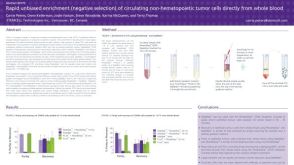 科学海报Rapid Unbiased Enrichment (Negative Selection) of Circulating Non-Hematopoietic Tumor Cells Directly from Whole Blood
 沪公网安备31010102008431号