The Activity of Human NK Cells Towards 3D Heterotypic Cellular Tumor Model of Breast Cancer
Due to the complexity of modeling tumor-host interactions within the tumor microenvironment in vitro,we developed a 3D heterotypic cellular breast cancer (BC) model. We generated spheroid models using MCF7,MDA-MB-231,and SK-BR-3 cell lines alongside cancer-associated (BrC4f) and normal (BN120f) fibroblasts in ultra-low attachment plates. Stromal spheroids (3Df) were formed using a liquid overlay technique (graphical abstract). The YT cell line and peripheral blood NK (PB-NK) cells were used as immune components in our 3D model. In this study,we showed that stromal cells promoted tumor cell aggregation into spheroids,regardless of the initial proliferation rates,with NK cells accumulating in fibroblast-rich regions. The presence of CAFs within the model induced alterations in the expression levels of MICA/B and PD-L1 by tumor cells within the 3D-2 model. The feasibility of utilizing a 3D cell BC model in combination with cytokines and PB-NKs was evaluated. We observed that IL-15 and IL-2 enhanced NK cell activity within spheroids,whereas TGFβ had varying effects on proliferation depending on the cell type. Stimulation with IL-2 and IL-15 or TGFβ1 altered PB-NK markers and stimulated their differentiation into ILC1-like cells in 3D models. These findings underscore the regulatory function of CAFs in shaping the response of the tumor microenvironment to immunotherapeutic interventions.
View Publication
产品类型:
产品号#:
15025
15065
产品名:
RosetteSep™人NK细胞富集抗体混合物
RosetteSep™人NK细胞富集抗体混合物
(Mar 2025)
Stem Cell Research & Therapy 16
RNA-binding protein SAMD4A targets FGF2 to regulate cardiomyocyte lineage specification from human embryonic stem cells
BackgroundRNA-binding proteins (RBPs) are essential in cardiac development. However,a large of them have not been characterized during the process.MethodsWe applied the human embryonic stem cells (hESCs) differentiated into cardiomyocytes model and constructed SAMD4A-knockdown/overexpression hESCs to investigate the role of SAMD4A in cardiomyocyte lineage specification.ResultsSAMD4A,an RBP,exhibits increased expression during early heart development. Suppression of SAMD4A inhibits the proliferation of hESCs,impedes cardiac mesoderm differentiation,and impairs the function of hESC-derived cardiomyocytes. Correspondingly,forced expression of SAMD4A enhances proliferation and promotes cardiomyogenesis. Mechanistically,SAMD4A specifically binds to FGF2 via a specific CNGG/CNGGN motif,stabilizing its mRNA and enhancing translation,thereby upregulating FGF2 expression,which subsequently modulates the AKT signaling pathway and regulates cardiomyocyte lineage differentiation. Additionally,supplementation of FGF2 can rescue the proliferation defect of hESCs in the absence of SAMD4A.ConclusionsOur study demonstrates that SAMD4A orchestrates cardiomyocyte lineage commitment through the post-transcriptional regulation of FGF2 and modulation of AKT signaling. These findings not only underscore the essential role of SAMD4A in cardiac organogenesis,but also provide critical insights into the molecular mechanisms underlying heart development,thereby informing potential therapeutic strategies for congenital heart disease.Supplementary InformationThe online version contains supplementary material available at 10.1186/s13287-025-04269-7.
View Publication
S. Dolma et al. (mar 2003)
Cancer cell 3 3 285--96
Identification of genotype-selective antitumor agents using synthetic lethal chemical screening in engineered human tumor cells.
We used synthetic lethal high-throughput screening to interrogate 23,550 compounds for their ability to kill engineered tumorigenic cells but not their isogenic normal cell counterparts. We identified known and novel compounds with genotype-selective activity,including doxorubicin,daunorubicin,mitoxantrone,camptothecin,sangivamycin,echinomycin,bouvardin,NSC146109,and a novel compound that we named erastin. These compounds have increased activity in the presence of hTERT,the SV40 large and small T oncoproteins,the human papillomavirus type 16 (HPV) E6 and E7 oncoproteins,and oncogenic HRAS. We found that overexpressing hTERT and either E7 or LT increased expression of topoisomerase 2alpha and that overexpressing RAS(V12) and ST both increased expression of topoisomerase 1 and sensitized cells to a nonapoptotic cell death process initiated by erastin.
View Publication
Miyoshi H et al. (JAN 1999)
Science (New York,N.Y.) 283 5402 682--6
Transduction of human CD34+ cells that mediate long-term engraftment of NOD/SCID mice by HIV vectors.
Efficient gene transfer into human hematopoietic stem cells (HSCs) is an important goal in the study of the hematopoietic system as well as for gene therapy of hematopoietic disorders. A lentiviral vector based on the human immunodeficiency virus (HIV) was able to transduce human CD34+ cells capable of stable,long-term reconstitution of nonobese diabetic/severe combined immunodeficient (NOD/SCID) mice. High-efficiency transduction occurred in the absence of cytokine stimulation and resulted in transgene expression in multiple lineages of human hematopoietic cells for up to 22 weeks after transplantation.
View Publication
产品类型:
产品号#:
09500
产品名:
BIT 9500血清替代物
Hwang GH et al. (DEC 2017)
Journal of cellular physiology 232 12 3384--3395
Purification of small molecule-induced cardiomyocytes from human induced pluripotent stem cells using a reporter system.
In order to realize the practical use of human pluripotent stem cell (hPSC)-derived cardiomyocytes for the purpose of clinical use or cardiovascular research,the generation of large numbers of highly purified cardiomyocytes should be achieved. Here,we show an efficient method for cardiac differentiation of human induced pluripotent stem cells (hiPSCs) in chemically defined conditions and purification of hiPSC-derived cardiomyocytes using a reporter system. Regulation of the Wnt/β-catenin signaling pathway is implicated in the induction of the cardiac differentiation of hPSCs. We increased cardiac differentiation efficiency of hiPSCs in chemically defined conditions through combined treatment with XAV939,a tankyrase inhibitor and IWP2,a porcupine inhibitor and optimized concentrations. Although cardiac differentiation efficiency was high (>80%),it was difficult to suppress differentiation into non-cardiac cells,Therefore,we applied a lentiviral reporter system,wherein green fluorescence protein (GFP) and Zeocin-resistant gene are driven by promoter activation of a gene (TNNT2) encoding cardiac troponin T (cTnT),a cardiac-specific protein,to exclude non-cardiomyocytes from differentiated cell populations. We transduced this reporter construct into differentiated cells using a lentiviral vector and then obtained highly purified hiPSC-derived cardiomyocytes by treatment with the lowest effective dose of Zeocin. We significantly increased transgenic efficiency through manipulation of the cells in which the differentiated cells were simultaneously infected with virus and re-plated after single-cell dissociation. Purified cells specifically expressed GFP,cTnT,displayed typical properties of cardiomyocytes. This study provides an efficient strategy for obtaining large quantities of highly purified hPSC-derived cardiomyocytes for application in regenerative medicine and biomedical research.
View Publication
产品类型:
产品号#:
85850
85857
产品名:
mTeSR™1
mTeSR™1
Abuljadayel IS (JAN 2003)
Current medical research and opinion 19 5 355--75
Induction of stem cell-like plasticity in mononuclear cells derived from unmobilised adult human peripheral blood.
Undifferentiated pluripotent stem cells with flexible developmental potentials are not normally found in peripheral blood. However,such cells have recently been reported to reside in the bone marrow. Herein are reported methods of inducing pluripotency in cells derived from unmobilised adult human peripheral blood. In response to the inclusion of purified CR3/43 monoclonal antibody (mAb) to well-established culture conditions,mononuclear cells (MNC) obtained from a single blood donor are converted into pluripotent haematopoietic,neuronal and cardiomyogenic progenitor stem cells or undifferentiated stem cells. The haematopoietic stem cells are CD34+,clonogenic and have been shown to repopulate non-obese diabetic/severe combined immunodeficient (NOD/SCID) mice. The neuronal precursors transcribe the primitive stem cell markers OCT-4 and nestin,and on maturation,differentially stain positive for neuronal,glial or oligodendrocyte-specific antigens. The cardiomyogenic progenitor stem cells form large bodies of asynchronously beating cells and differentiate into mature cardiomyocytes which transcribe GATA-4. The undifferentiated stem cells do not express haematopoietic-associated markers,are negative for major histocompatibility complex (MHC) class I and II antigens,transcribe high levels of OCT-4 and form embryoid body (EB)-like structures. This induction of stem cell-like plasticity in MNC may have proceeded by a process of retrodifferentiation but,in any case,could have profound clinical and pharmacological implications. Finally,the flexibility and the speed by which a variety of stem cell classes can be generated ex vivo from donor blood could potentially transfer this novel process into a less invasive automated clinical procedure.
View Publication
产品类型:
产品号#:
04434
04444
产品名:
MethoCult™H4434经典
MethoCult™H4434经典
Frelin C et al. (JAN 2005)
Blood 105 2 804--11
Targeting NF-kappaB activation via pharmacologic inhibition of IKK2-induced apoptosis of human acute myeloid leukemia cells.
Acute myeloid leukemia (AML) cells are characterized by a constitutive and abnormal activation of the nuclear factor-kappaB (NF-kappaB) transcription factor. This study,conducted in vitro on 18 patients,shows that targeting the IKB kinase 2 (IKK2) kinase with the specific pharmacologic inhibitor AS602868 to block NF-kappaB activation led to apoptosis of human primary AML cells. Moreover,AS602868 potentiated the apoptotic response induced by the current chemotherapeutic drugs doxorubicin,cytarabine,or etoposide (VP16). AS602868-induced cell death was associated with rupture of the mitochondrial transmembrane potential and activation of cellular caspases. NF-kappaB inhibition did not affect normal CD34+ hematopoietic precursors,suggesting that it could represent a new adjuvant strategy for AML treatment.
View Publication
产品类型:
产品号#:
15026
15066
产品名:
RosetteSep™ 人造血祖细胞富集抗体混合物
RosetteSep™人造血祖细胞富集抗体混合物
Graichen R et al. (APR 2008)
Differentiation 76 4 357--70
Enhanced cardiomyogenesis of human embryonic stem cells by a small molecular inhibitor of p38 MAPK.
Human embryonic stem cells (hESC) can differentiate to cardiomyocytes in vitro but with generally poor efficiency. Here,we describe a novel method for the efficient generation of cardiomyocytes from hESC in a scalable suspension culture process. Differentiation in serum-free medium conditioned by the cell line END2 (END2-CM) readily resulted in differentiated cell populations with more than 10% cardiomyocytes without further enrichment. By screening candidate molecules,we have identified SB203580,a specific p38 MAP kinase inhibitor,as a potent promoter of hESC-cardiogenesis. SB203580 at concentrations textless10 microM,induced more than 20% of differentiated cells to become cardiomyocytes and increased total cell numbers,so that the overall cardiomyocyte yield was approximately 2.5-fold higher than controls. Gene expression indicated that early mesoderm formation was favored in the presence of SB203580. Accordingly,transient addition of the inhibitor at the onset of differentiation only was sufficient to determine the hESC fate. Patch clamp electrophysiology showed that the distribution of cardiomyocyte phenotypes in the population was unchanged by the compound. Interestingly,cardiomyogenesis was strongly inhibited at SB203580 concentrations textgreater or =15 microM. Thus,modulation of the p38MAP kinase pathway,in combination with factors released by END2 cells,plays an essential role in early lineage determination in hESC and the efficiency of cardiomyogenesis. Our findings contribute to transforming human cardiomyocyte generation from hESC into a robust and scalable process.
View Publication
产品类型:
产品号#:
72222
72632
72634
产品名:
SB203580 (Hydrochloride)
SB202190
SB202190
K. Trakarnsanga et al. ( 2017)
Nature communications 8 14750
An immortalized adult human erythroid line facilitates sustainable and scalable generation of functional red cells.
With increasing worldwide demand for safe blood,there is much interest in generating red blood cells in vitro as an alternative clinical product. However,available methods for in vitro generation of red cells from adult and cord blood progenitors do not yet provide a sustainable supply,and current systems using pluripotent stem cells as progenitors do not generate viable red cells. We have taken an alternative approach,immortalizing early adult erythroblasts generating a stable line,which provides a continuous supply of red cells. The immortalized cells differentiate efficiently into mature,functional reticulocytes that can be isolated by filtration. Extensive characterization has not revealed any differences between these reticulocytes and in vitro-cultured adult reticulocytes functionally or at the molecular level,and importantly no aberrant protein expression. We demonstrate a feasible approach to the manufacture of red cells for clinical use from in vitro culture.
View Publication


 EasySep™小鼠TIL(CD45)正选试剂盒




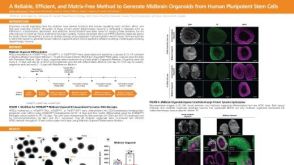 科学海报A Reliable, Efficient, and Matrix-Free Method to Generate Midbrain Organoids from Human Pluripotent Stem Cells
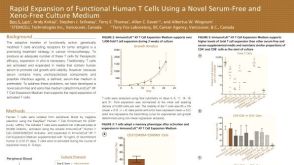 科学海报Rapid Expansion of Functional Human T Cells Using a Novel Serum-Free and Xeno-Free Culture Medium

 沪公网安备31010102008431号