Pittenger MF et al. (APR 1999)
Science (New York,N.Y.) 284 5411 143--7
Multilineage potential of adult human mesenchymal stem cells.
Human mesenchymal stem cells are thought to be multipotent cells,which are present in adult marrow,that can replicate as undifferentiated cells and that have the potential to differentiate to lineages of mesenchymal tissues,including bone,cartilage,fat,tendon,muscle,and marrow stroma. Cells that have the characteristics of human mesenchymal stem cells were isolated from marrow aspirates of volunteer donors. These cells displayed a stable phenotype and remained as a monolayer in vitro. These adult stem cells could be induced to differentiate exclusively into the adipocytic,chondrocytic,or osteocytic lineages. Individual stem cells were identified that,when expanded to colonies,retained their multilineage potential.
View Publication
产品类型:
产品号#:
72092
72132
72762
72764
产品名:
地塞米松(Dexamethasone)
抗坏血酸(Ascorbic Acid)
IBMX
IBMX
Suto A et al. (JUN 2008)
The Journal of experimental medicine 205 6 1369--79
Development and characterization of IL-21-producing CD4+ T cells.
It has recently been shown that interleukin (IL)-21 is produced by Th17 cells,functions as an autocrine growth factor for Th17 cells,and plays critical roles in autoimmune diseases. In this study,we investigated the differentiation and characteristics of IL-21-producing CD4(+) T cells by intracellular staining. Unexpectedly,we found that under Th17-polarizing conditions,the majority of IL-21-producing CD4(+) T cells did not produce IL-17A and -17F. We also found that IL-6 and -21 potently induced the development of IL-21-producing CD4(+) T cells without the induction of IL-4,IFN-gamma,IL-17A,or IL-17F production. On the other hand,TGF-beta inhibited IL-6- and IL-21-induced development of IL-21-producing CD4(+) T cells. IL-2 enhanced the development of IL-21-producing CD4(+) T cells under Th17-polarizing conditions. Finally,IL-21-producing CD4(+) T cells exhibited a stable phenotype of IL-21 production in the presence of IL-6,but retained the potential to produce IL-4 under Th2-polarizing conditions and IL-17A under Th17-polarizing conditions. These results suggest that IL-21-producing CD4(+) T cells exhibit distinct characteristics from Th17 cells and develop preferentially in an IL-6-rich environment devoid of TGF-beta,and that IL-21 functions as an autocrine growth factor for IL-21-producing CD4(+) T cells.
View Publication
产品类型:
产品号#:
20119
20155
21000
产品名:
RoboSep™ 吸头组件抛光剂
RoboSep™分选试管套装(9个塑料管+吸头保护器)
RoboSep™- S
West FD et al. (AUG 2010)
Stem cells and development 19 8 1211--1220
Porcine induced pluripotent stem cells produce chimeric offspring.
Ethical and moral issues rule out the use of human induced pluripotent stem cells (iPSCs) in chimera studies that would determine the full extent of their reprogrammed state,instead relying on less rigorous assays such as teratoma formation and differentiated cell types. To date,only mouse iPSC lines are known to be truly pluripotent. However,initial mouse iPSC lines failed to form chimeric offspring,but did generate teratomas and differentiated embryoid bodies,and thus these specific iPSC lines were not completely reprogrammed or truly pluripotent. Therefore,there is a need to address whether the reprogramming factors and process used eventually to generate chimeric mice are universal and sufficient to generate reprogrammed iPSC that contribute to chimeric offspring in additional species. Here we show that porcine mesenchymal stem cells transduced with 6 human reprogramming factors (POU5F1,SOX2,NANOG,KLF4,LIN28,and C-MYC) injected into preimplantation-stage embryos contributed to multiple tissue types spanning all 3 germ layers in 8 of 10 fetuses. The chimerism rate was high,85.3% or 29 of 34 live offspring were chimeras based on skin and tail biopsies harvested from 2- to 5-day-old pigs. The creation of pluripotent porcine iPSCs capable of generating chimeric offspring introduces numerous opportunities to study the facets significantly affecting cell therapies,genetic engineering,and other aspects of stem cell and developmental biology.
View Publication
产品类型:
产品号#:
85850
85857
产品名:
mTeSR™1
mTeSR™1
Ishikawa T et al. (JAN 2012)
Methods in molecular biology (Clifton,N.J.) 826 103--114
Generation and hepatic differentiation of human iPS cells.
A method for the generation of human induced pluripotent stem (iPS) cells was established. This method employs adenovirus carrying the ecotropic retrovirus receptor mCAT1 and Moloney murine leukemia virus (MMLV)-based retroviral vectors carrying the four transcription factors POU5F1 (OCT3/4),KLF4,SOX2,and MYC (c-Myc) (Masaki H & Ishikawa T Stem Cell Res 1:105-15,2007). The differentiation of human iPS cells into hepatic cells was performed by a stepwise protocol (Song Z et al. Cell Res 19:1233-42,2009). These cells have potential as patient-specific in vitro models for studying disease etiology and could be used in drug discovery programs tailored to deal with genetic variations in drug efficacy and toxicity.
View Publication
产品类型:
产品号#:
85850
85857
产品名:
mTeSR™1
mTeSR™1
Deglincerti A et al. (NOV 2016)
Nature protocols 11 11 2223--2232
Self-organization of human embryonic stem cells on micropatterns.
Fate allocation in the gastrulating embryo is spatially organized as cells differentiate into specialized cell types depending on their positions with respect to the body axes. There is a need for in vitro protocols that allow the study of spatial organization associated with this developmental transition. Although embryoid bodies and organoids can exhibit some spatial organization of differentiated cells,methods that generate embryoid bodies or organoids do not yield consistent and fully reproducible results. Here,we describe a micropatterning approach in which human embryonic stem cells are confined to disk-shaped,submillimeter colonies. After 42 h of BMP4 stimulation,cells form self-organized differentiation patterns in concentric radial domains,which express specific markers associated with the embryonic germ layers,reminiscent of gastrulating embryos. Our protocol takes 3 d; it uses commercial microfabricated slides (from CYTOO),human laminin-521 (LN-521) as extracellular matrix coating,and either conditioned or chemically defined medium (mTeSR). Differentiation patterns within individual colonies can be determined by immunofluorescence and analyzed with cellular resolution. Both the size of the micropattern and the type of medium affect the patterning outcome. The protocol is appropriate for personnel with basic stem cell culture training. This protocol describes a robust platform for quantitative analysis of the mechanisms associated with pattern formation at the onset of gastrulation.
View Publication
产品类型:
产品号#:
85850
85857
产品名:
mTeSR™1
mTeSR™1
Wang A and Liew CG (NOV 2012)
Current protocols in stem cell biology Chapter 5 SUPPL.23 Unit 5B.2
Genetic manipulation of human induced pluripotent stem cells
Human induced pluripotent stem cells (HIPSC) have tremendous value as a source of autologous cells for cellular transplantation in the treatment of degenerative diseases. The protocols described here address methods for large-scale genetic modification of HIPSCs. The first is an optimized method for transfecting HIPSCs cultured in feeder-free conditions. The second method allows nucleofection of trypsinized HIPSCs at an optimal cell density. Both methods enable robust generation of stable HIPSC transfectants within two weeks. Our protocols are highly reproducible and do not require optimization for individual HIPSC and human embryonic stem cell (HESC) lines.
View Publication
产品类型:
产品号#:
85850
85857
产品名:
mTeSR™1
mTeSR™1
Castro-Diaz N et al. (JUL 2014)
Genes and Development 28 13 1397--1409
Evolutionally dynamic L1 regulation in embryonic stem cells
Mobile elements are important evolutionary forces that challenge genomic integrity. Long interspersed element-1 (L1,also known as LINE-1) is the only autonomous transposon still active in the human genome. It displays an unusual pattern of evolution,with,at any given time,a single active L1 lineage amplifying to thousands of copies before getting replaced by a new lineage,likely under pressure of host restriction factors,which act notably by silencing L1 expression during early embryogenesis. Here,we demonstrate that in human embryonic stem (hES) cells,KAP1 (KRAB [Kruppel-associated box domain]-associated protein 1),the master cofactor of KRAB-containing zinc finger proteins (KRAB-ZFPs) previously implicated in the restriction of endogenous retroviruses,represses a discrete subset of L1 lineages predicted to have entered the ancestral genome between 26.8 million and 7.6 million years ago. In mice,we documented a similar chronologically conditioned pattern,albeit with a much contracted time scale. We could further identify an L1-binding KRAB-ZFP,suggesting that this rapidly evolving protein family is more globally responsible for L1 recognition. KAP1 knockdown in hES cells induced the expression of KAP1-bound L1 elements,but their younger,human-specific counterparts (L1Hs) were unaffected. Instead,they were stimulated by depleting DNA methyltransferases,consistent with recent evidence demonstrating that the PIWI-piRNA (PIWI-interacting RNA) pathway regulates L1Hs in hES cells. Altogether,these data indicate that the early embryonic control of L1 is an evolutionarily dynamic process and support a model in which newly emerged lineages are first suppressed by DNA methylation-inducing small RNA-based mechanisms before KAP1-recruiting protein repressors are selected.
View Publication
产品类型:
产品号#:
85850
85857
产品名:
mTeSR™1
mTeSR™1
V. O. Boldrini et al. ( 2022)
Frontiers in immunology 13 750660
Cytotoxic B Cells in Relapsing-Remitting Multiple Sclerosis Patients.
BACKGROUND Emerging evidence of antibody-independent functions,as well as the clinical efficacy of anti-CD20 depleting therapies,helped to reassess the contribution of B cells during multiple sclerosis (MS) pathogenesis. OBJECTIVE To investigate whether CD19+ B cells may share expression of the serine-protease granzyme-B (GzmB),resembling classical cytotoxic CD8+ T lymphocytes,in the peripheral blood from relapsing-remitting MS (RRMS) patients. METHODS In this study,104 RRMS patients during different treatments and 58 healthy donors were included. CD8,CD19,Runx3,and GzmB expression was assessed by flow cytometry analyses. RESULTS RRMS patients during fingolimod (FTY) and natalizumab (NTZ) treatment showed increased percentage of circulating CD8+GzmB+ T lymphocytes when compared to healthy volunteers. An increase in circulating CD19+GzmB+ B cells was observed in RRMS patients during FTY and NTZ therapies when compared to glatiramer (GA),untreated RRMS patients,and healthy donors but not when compared to interferon-$\beta$ (IFN). Moreover,regarding Runx3,the transcriptional factor classically associated with cytotoxicity in CD8+ T lymphocytes,the expression of GzmB was significantly higher in CD19+Runx3+-expressing B cells when compared to CD19+Runx3- counterparts in RRMS patients. CONCLUSIONS CD19+ B cells may exhibit cytotoxic behavior resembling CD8+ T lymphocytes in MS patients during different treatments. In the future,monitoring cytotoxic" subsets might become an accessible marker for investigating MS pathophysiology and even for the development of new therapeutic interventions."
View Publication
产品类型:
产品号#:
17963
18000
17963RF
产品名:
EasySep™人B细胞富集试剂盒II(不去除CD43)
EasySep™磁极
RoboSep™ 人B细胞富集试剂盒II(不去除CD43)
Hang L et al. (AUG 2016)
Journal of immunology (Baltimore,Md. : 1950)
Downregulation of the Syk Signaling Pathway in Intestinal Dendritic Cells Is Sufficient To Induce Dendritic Cells That Inhibit Colitis.
Helminthic infections modulate host immunity and may protect people in less-developed countries from developing immunological diseases. In a murine colitis model,the helminth Heligmosomoides polygyrus bakeri prevents colitis via induction of regulatory dendritic cells (DCs). The mechanism driving the development of these regulatory DCs is unexplored. There is decreased expression of the intracellular signaling pathway spleen tyrosine kinase (Syk) in intestinal DCs from H. polygyrus bakeri-infected mice. To explore the importance of this observation,it was shown that intestinal DCs from DC-specific Syk(-/-) mice were powerful inhibitors of murine colitis,suggesting that loss of Syk was sufficient to convert these cells into their regulatory phenotype. DCs sense gut flora and damaged epithelium via expression of C-type lectin receptors,many of which signal through the Syk signaling pathway. It was observed that gut DCs express mRNA encoding for C-type lectin (CLEC) 7A,CLEC9A,CLEC12A,and CLEC4N. H. polygyrus bakeri infection downmodulated CLEC mRNA expression in these cells. Focusing on CLEC7A,which encodes for the dectin-1 receptor,flow analysis showed that H. polygyrus bakeri decreases dectin-1 expression on the intestinal DC subsets that drive Th1/Th17 development. DCs become unresponsive to the dectin-1 agonist curdlan and fail to phosphorylate Syk after agonist stimulation. Soluble worm products can block CLEC7A and Syk mRNA expression in gut DCs from uninfected mice after a brief in vitro exposure. Thus,downmodulation of Syk expression and phosphorylation in intestinal DCs could be important mechanisms through which helminths induce regulatory DCs that limit colitis.
View Publication
产品类型:
产品号#:
15028
15068
产品名:
RosetteSep™ 人单核细胞富集抗体混合物
RosetteSep™人单核细胞富集抗体混合物
Yonkers NL et al. (APR 2007)
Journal of immunology (Baltimore,Md. : 1950) 178 7 4436--44
TLR ligand-dependent activation of naive CD4 T cells by plasmacytoid dendritic cells is impaired in hepatitis C virus infection.
Chronic hepatitis C virus (HCV) infection is characterized by diminished numbers and function of HCV-reactive T cells and impaired responses to immunization. Because host response to viral infection likely involves TLR signaling,we examined whether chronic HCV infection impairs APC response to TLR ligand and contributes to the origin of dysfunctional T cells. Freshly purified myeloid dendritic cells (MDC) and plasmacytoid DC (PDC) obtained from subjects with chronic HCV infection and healthy controls were exposed to TLR ligands (poly(I:C),R-848,or CpG),in the presence or absence of cytokine (TNF-alpha or IL-3),and examined for indices of maturation and for their ability to activate allogeneic naive CD4 T cells to proliferate and secrete IFN-gamma. TLR ligand was observed to enhance both MDC and PDC activation of naive CD4 T cells. Although there was increased CD83 and CD86 expression on MDC from HCV-infected persons,the ability of MDC to activate naive CD4 T cells in the presence or absence of poly(I:C) or TNF-alpha did not differ between HCV-infected and healthy control subjects. In contrast,PDC from HCV-infected persons had reduced activation marker (HLA-DR) and cytokine (IFN-alpha) expression upon R-848 stimulation,and these were associated with impaired activation of naive CD4 T cells. These data indicate that an impaired PDC responsiveness to TLR ligation may play an important role in the fundamental and unexplained failure to induce new T cell responses to HCV Ags and to other new Ags as a consequence of HCV infection.
View Publication


 EasySep™小鼠TIL(CD45)正选试剂盒




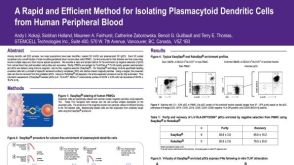 科学海报Isolation of Plasmacytoid Dendritic Cells from Peripheral Blood
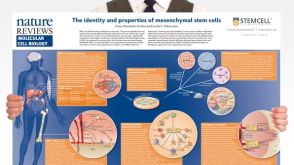 挂图The Identity and Properties of Mesenchymal Stem Cells Overview of MSC expansion, differentiation, immunoregulatory properties and therapeutic potential

 沪公网安备31010102008431号