Kunisato A et al. (JAN 2011)
Stem cells and development 20 1 159--168
Direct generation of induced pluripotent stem cells from human nonmobilized blood.
The use of induced pluripotent stem cells (iPSCs) is an exciting frontier in the study and treatment of human diseases through the generation of specific cell types. Here we show the derivation of iPSCs from human nonmobilized peripheral blood (PB) and bone marrow (BM) mononuclear cells (MNCs) by retroviral transduction of OCT3/4,SOX2,KLF4,and c-MYC. The PB- and BM-derived iPSCs were quite similar to human embryonic stem cells with regard to morphology,expression of surface antigens and pluripotency-associated transcription factors,global gene expression profiles,and differentiation potential in vitro and in vivo. Infected PB and BM MNCs gave rise to iPSCs in the presence of several cytokines,although transduction efficiencies were not high. We found that 5 × 10(5) PB MNCs,which corresponds to less than 1 mL of PB,was enough for the generation of several iPSC colonies. Generation of iPSCs from MNCs of nonmobilized PB,with its relative efficiency and ease of harvesting,could enable the therapeutic use of patient-specific pluripotent stem cells.
View Publication
产品类型:
产品号#:
05850
05857
05870
05875
85850
85857
85870
85875
产品名:
mTeSR™1
mTeSR™1
Zhang K et al. (JAN 2014)
Protein and Cell 5 1 48--58
Direct conversion of human fibroblasts into retinal pigment epithelium-like cells by defined factors
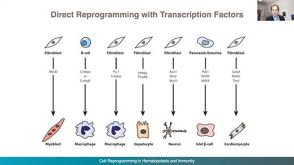
The generation of functional retinal pigment epithelium (RPE) is of great therapeutic interest to the field of regenerative medicine and may provide possible cures for retinal degenerative diseases,including age-related macular degeneration (AMD). Although RPE cells can be produced from either embryonic stem cells or induced pluripotent stem cells,direct cell reprogramming driven by lineagedetermining transcription factors provides an immediate route to their generation. By monitoring a human RPE specific Best1::GFP reporter,we report the conversion of human fibroblasts into RPE lineage using defined sets of transcription factors. We found that Best1::GFP positive cells formed colonies and exhibited morphological and molecular features of early stage RPE cells. Moreover,they were able to obtain pigmentation upon activation of Retinoic acid (RA) and Sonic Hedgehog (SHH) signaling pathways. Our study not only established an ideal platform to investigate the transcriptional network regulating the RPE cell fate determination,but also provided an alternative strategy to generate functional RPE cells that complement the use of pluripotent stem cells for disease modeling,drug screening,and cell therapy of retinal degeneration.
View Publication
产品类型:
产品号#:
05850
05857
05870
05875
85850
85857
85870
85875
产品名:
mTeSR™1
mTeSR™1
Brambrink T et al. (FEB 2008)
Cell stem cell 2 2 151--9
Sequential expression of pluripotency markers during direct reprogramming of mouse somatic cells.
Pluripotency can be induced in differentiated murine and human cells by retroviral transduction of Oct4,Sox2,Klf4,and c-Myc. We have devised a reprogramming strategy in which these four transcription factors are expressed from doxycycline (dox)-inducible lentiviral vectors. Using these inducible constructs,we derived induced pluripotent stem (iPS) cells from mouse embryonic fibroblasts (MEFs) and found that transgene silencing is a prerequisite for normal cell differentiation. We have analyzed the timing of known pluripotency marker activation during mouse iPS cell derivation and observed that alkaline phosphatase (AP) was activated first,followed by stage-specific embryonic antigen 1 (SSEA1). Expression of Nanog and the endogenous Oct4 gene,marking fully reprogrammed cells,was only observed late in the process. Importantly,the virally transduced cDNAs needed to be expressed for at least 12 days in order to generate iPS cells. Our results are a step toward understanding some of the molecular events governing epigenetic reprogramming.
View Publication
产品类型:
产品号#:
72742
产品名:
Doxycycline (Hyclate)
Hockemeyer D et al. (SEP 2008)
Cell stem cell 3 3 346--53
A drug-inducible system for direct reprogramming of human somatic cells to pluripotency.
Current approaches to reprogram human somatic cells to pluripotent iPSCs utilize viral transduction of different combinations of transcription factors. These protocols are highly inefficient because only a small fraction of cells carry the appropriate number and stoichiometry of proviral insertions to initiate the reprogramming process. Here we have generated genetically homogeneous secondary" somatic cells�
View Publication
Direct interaction of whole-inactivated influenza A and pneumococcal vaccines enhances influenza-specific immunity.
The upper respiratory tract is continuously exposed to a vast array of potentially pathogenic viruses and bacteria. Influenza A virus (IAV) has particular synergism with the commensal bacterium Streptococcus pneumoniae in this niche,and co-infection exacerbates pathogenicity and causes significant mortality. However,it is not known whether this synergism is associated with a direct interaction between the two pathogens. We have previously reported that co-administration of a whole-inactivated IAV vaccine (gamma-Flu) with a whole-inactivated pneumococcal vaccine (gamma-PN) enhances pneumococcal-specific responses. In this study,we show that mucosal co-administration of gamma-Flu and gamma-PN similarly augments IAV-specific immunity,particularly tissue-resident memory cell responses in the lung. In addition,our in vitro analysis revealed that S. pneumoniae directly interacts with both gamma-Flu and with live IAV,facilitating increased uptake by macrophages as well as increased infection of epithelial cells by IAV. These observations provide an additional explanation for the synergistic pathogenicity of IAV and S. pneumoniae,as well as heralding the prospect of exploiting the phenomenon to develop better vaccine strategies for both pathogens.
View Publication
产品类型:
产品号#:
19858
19858RF
产品名:
EasySep™ 小鼠Naïve CD8+ T细胞分选试剂盒
RoboSep™ 小鼠Naïve CD8+ T细胞分选试剂盒
Zhu S et al. ( 2014)
Cell research 24 1 126--129
Small molecules enable OCT4-mediated direct reprogramming into expandable human neural stem cells.
NANOG Is a Direct Target of TGF$\$/Activin-Mediated SMAD Signaling in Human ESCs
Self-renewal of human embryonic stem cells (ESCs) is promoted by FGF and TGFbeta/Activin signaling,and differentiation is promoted by BMP signaling,but how these signals regulate genes critical to the maintenance of pluripotency has been unclear. Using a defined medium,we show here that both TGFbeta and FGF signals synergize to inhibit BMP signaling; sustain expression of pluripotency-associated genes such as NANOG,OCT4,and SOX2; and promote long-term undifferentiated proliferation of human ESCs. We also show that both TGFbeta- and BMP-responsive SMADs can bind with the NANOG proximal promoter. NANOG promoter activity is enhanced by TGFbeta/Activin and FGF signaling and is decreased by BMP signaling. Mutation of putative SMAD binding elements reduces NANOG promoter activity to basal levels and makes NANOG unresponsive to BMP and TGFbeta signaling. These results suggest that direct binding of TGFbeta/Activin-responsive SMADs to the NANOG promoter plays an essential role in sustaining human ESC self-renewal.
View Publication
Leong MF et al. (SEP 2016)
Tissue engineering. Part C,Methods 22 9 884--894
Alginate Microfiber System for Expansion and Direct Differentiation of Human Embryonic Stem Cells.
Pluripotent human embryonic stem cells (hESCs) are a potential renewable cell source for regenerative medicine and drug testing. To obtain adequate cell numbers for these applications,there is a need to develop scalable cell culture platforms to propagate hESCs. In this study,we encapsulated hESCs in calcium alginate microfibers as single cells,for expansion and differentiation under chemically defined conditions. hESCs were suspended in 1% (w/v) alginate solution at high cell density (textgreater10(7) cells/mL) and extruded at 5 m/min into a low calcium concentration bath (10 mM) for gelation. Mild citrate buffer (2.5 mM),which did not affect hESCs viability,was used to release the cells from the calcium alginate hydrogel. Encapsulation as single cells was critical,as this allowed the hESCs to grow in the form of relatively small and uniform aggregates. This alginate microfiber system allowed for expansion of an hESC line,HUES7,for up to five passages while maintaining pluripotency. Immunohistochemistry,polymerase chain reaction,and other analyses showed that passage 5 (P5) HUES7 cells expressed proteins and genes characteristic of pluripotent stem cells,possessed normal karyotype,and were able to form representative tissues of the three embryonic germ layers in vitro and in vivo. Encapsulated HUES7 cells at P5 could also be induced to directly differentiate into liver-like cells. Collectively,our experiments show that the alginate microfiber system can be used as a three-dimensional cell culture platform for long-term expansion and differentiation of hESCs under defined conditions.
View Publication
产品类型:
产品号#:
05850
05857
05870
05875
85850
85857
85870
85875
产品名:
mTeSR™1
mTeSR™1
I. Elcheva et al. (jul 2014)
Nature communications 5 164 4372
Direct induction of haematoendothelial programs in human pluripotent stem cells by transcriptional regulators.
Advancing pluripotent stem cell technologies for modelling haematopoietic stem cell development and blood therapies requires identifying key regulators of haematopoietic commitment from human pluripotent stem cells (hPSCs). Here,by screening the effect of 27 candidate factors,we reveal two groups of transcriptional regulators capable of inducing distinct haematopoietic programs from hPSCs: pan-myeloid (ETV2 and GATA2) and erythro-megakaryocytic (GATA2 and TAL1). In both cases,these transcription factors directly convert hPSCs to endothelium,which subsequently transform into blood cells with pan-myeloid or erythro-megakaryocytic potential. These data demonstrate that two distinct genetic programs regulate the haematopoietic development from hPSCs and that both of these programs specify hPSCs directly to haemogenic endothelial cells. In addition,this study provides a novel method for the efficient induction of blood and endothelial cells from hPSCs via the overexpression of modified mRNA for the selected transcription factors.
View Publication


 EasySep™小鼠TIL(CD45)正选试剂盒






 沪公网安备31010102008431号