Differential expression of SHIP1 in CD56bright and CD56dim NK cells provides a molecular basis for distinct functional responses to monokine costimulation.
Monocyte cytokines (ie,monokines) induce natural killer (NK) cells to produce interferon-gamma (IFN-gamma),which is critical for monocyte clearance of infectious pathogens and tumor surveillance. Human CD56bright NK cells produce far more IFN-gamma in response to monokines than do CD56dim NK cells. The kinases and phosphatases involved in regulating IFN-gamma production by monokine-activated NK cells are not clearly identified. SHIP1 is a 5' inositol phosphatase that dephosphorylates the phosphatidylinositol-3 kinase (PI-3K) product PI3,4,5P3. Here,we show that constitutive expression of SHIP1 is distinctly lower in CD56bright NK cells compared with CD56dim NK cells,suggesting it could be an important negative regulator of IFN-gamma production in monokine-activated NK cells. Indeed,overexpression of SHIP1 in CD56bright NK cells followed by monokine activation substantially lowered IFN-gamma production. This effect was not seen when NK cells were infected with a SHIP1 mutant containing an inactive catalytic domain. Finally,NK cells in SHIP1-/- mice produced more IFN-gamma in response to monokines in vivo than did NK cells from wild-type mice. Collectively,these results demonstrate that SHIP1 negatively regulates monokine-induced NK cell IFN-gamma production in vitro and in vivo and provide the first molecular explanation for an important functional distinction observed between CD56bright and CD56dim human NK subsets.
View Publication
产品类型:
产品号#:
15025
15065
产品名:
RosetteSep™人NK细胞富集抗体混合物
RosetteSep™人NK细胞富集抗体混合物
Vanneaux V et al. (JAN 2010)
Cell transplantation 19 9 1143--55
In vitro and in vivo analysis of endothelial progenitor cells from cryopreserved umbilical cord blood: are we ready for clinical application?
Umbilical cord blood (CB) represents a main source of circulating endothelial progenitor cells (cEPCs). In view of their clinical use,in either the autologous or allogeneic setting,cEPCs should likely be expanded from CB kept frozen in CB banks. In this study,we compared the expansion,functional features,senescence pattern over culture,and in vivo angiogenic potential of cEPCs isolated from fresh or cryopreserved CB (cryoCB). cEPCs could be isolated in only 59% of cryoCB compared to 94% for fresh CB,while CB units were matched in terms of initial volume,nucleated and CD34(+) cell number. Moreover,the number of endothelial colony-forming cells was significantly decreased when using cryoCB. Once cEPCs culture was established,the proliferation,migration,tube formation,and acetylated-LDL uptake potentials were similar in both groups. In addition,cEPCs derived from cryoCB displayed the same senescence status and telomeres length as that of cEPCs derived from fresh CB. Karyotypic aberrations were found in cells obtained from both fresh and cryoCB. In vivo,in a hind limb ischemia murine model,cEPCs from fresh and cryoCB were equally efficient to induce neovascularization. Thus,cEPCs isolated from cryoCB exhibited similar properties to those of fresh CB in vitro and in vivo. However,the low frequency of cEPCs colony formation after cryopreservation shed light on the need for specific freezing conditions adapted to cEPCs in view of their future clinical use.
View Publication
产品类型:
产品号#:
15026
15066
产品名:
RosetteSep™ 人造血祖细胞富集抗体混合物
RosetteSep™人造血祖细胞富集抗体混合物
Zhang J et al. ( 2016)
International Journal of Biological Sciences 12 6 639--652
Dimethyloxaloylglycine promotes the angiogenic activity of mesenchymal stem cells derived from iPSCs via activation of the PI3K/Akt pathway for bone regeneration
The vascularization of tissue-engineered bone is a prerequisite step for the successful repair of bone defects. Hypoxia inducible factor-1$$ (HIF-1$$) plays an essential role in angiogenesis-osteogenesis coupling during bone regeneration and can activate the expression of angiogenic factors in mesenchymal stem cells (MSCs). Dimethyloxaloylglycine (DMOG) is an angiogenic small molecule that can inhibit prolyl hydroxylase (PHD) enzymes and thus regulate the stability of HIF-1$$ in cells at normal oxygen tension. Human induced pluripotent stem cell-derived MSCs (hiPSC-MSCs) are promising alternatives for stem cell therapy. In this study,we evaluated the effect of DMOG on promoting hiPSC-MSCs angiogenesis in tissue-engineered bone and simultaneously explored the underlying mechanisms in vitro. The effectiveness of DMOG in improving the expression of HIF-1$$ and its downstream angiogenic genes in hiPSC-MSCs demonstrated that DMOG significantly enhanced the gene and protein expression profiles of angiogenic-related factors in hiPSC-MSCs by sustaining the expression of HIF-1$$. Further analysis showed that DMOG-stimulated hiPSC-MSCs angiogenesis was associated with the phosphorylation of protein kinase B (Akt) and with an increase in VEGF production. The effects could be blocked by the addition of the phosphatidylinositol 3-kinase (PI3K) inhibitor LY294002. In a critical-sized calvarial defect model in rats,DMOG-treated hiPSC-MSCs showed markedly improved angiogenic capacity in the tissue-engineered bone,leading to bone regeneration. Collectively,the results indicate that DMOG,via activation of the PI3K/Akt pathway,promotes the angiogenesis of hiPSC-MSCs in tissue-engineered bone for bone defect repair and that DMOG-treated hiPSC-MSCs can be exploited as a potential therapeutic tool in bone regeneration.
View Publication
产品类型:
产品号#:
85850
85857
产品名:
mTeSR™1
mTeSR™1
Khan M et al. (JUL 2013)
Biomaterials 34 21 5336--5343
Delivery of reprogramming factors into fibroblasts for generation of non-genetic induced pluripotent stem cells using a cationic bolaamphiphile as a non-viral vector
Protein delivery allows a clinical effect to be directly realized without genetic modification of the host cells. We have developed a cationic bolaamphiphile as a non-viral vector for protein delivery application. The relatively low toxicity and efficient protein delivery by the cationic bolaamphiphile prompted us to test the system for the generation of induced pluripotent stem cells (iPSCs) as an alternative to the conventional vector-based genetic approach. Studies on the kinetics and cytotoxicity of the protein delivery system led us to use an optimized cationic bolaamphiphile-protein complex ratio of 7:1 (wt/wt) and a 3 h period of incubation with human fibroblasts,to ensure complete and non-toxic protein delivery of the reprogramming proteins. The reprogrammed cells were shown to exhibit the characteristics of embryonic stem cells,including expression of pluripotent markers,teratoma formation in SCID mice,and ability to be differentiated into a specific lineage,as exemplified by neuronal differentiation.
View Publication
产品类型:
产品号#:
85850
85857
产品名:
mTeSR™1
mTeSR™1
Y. Zeng et al. (Sep 2024)
Biomolecules 14 9
Sheng Xue Ning as a Novel Agent that Promotes SCF-Driven Hematopoietic Stem/Progenitor Cell Proliferation to Promote Erythropoiesis
Stimulating erythropoiesis is essential in the treatment of various types of anemia. Sheng Xue Ning (SXN) is commonly used in China as an iron supplement to treat iron deficiency anemia,renal anemia,and anemia in pregnancy. This research reports a novel effect of SXN in enhancing the proliferation of hematopoietic stem/progenitor cell (HSPC) to promote erythropoiesis in the bone marrow,which is distinct from conventional iron supplements that primarily aid in the maturation of red blood cells. Employing a model of hematopoietic dysfunction induced by X-ray exposure,we evaluated the efficacy of SXN in restoring hematopoietic function. SXN significantly promoted the recovery of peripheral erythroid cells and enhanced the proliferation and differentiation of Lin − /c-KIT + /Sca-1 + HSPC in mice exposed to X-ray irradiation. Our results showed that SXN elevated the expression of stem cell factor (SCF) and activated the SCF/c-KIT/PI3K/AKT signaling pathway,facilitating the proliferation and differentiation of HSPC. In vitro,SXN markedly enhanced the proliferation of bone marrow nucleated cell (BMNC) and the colony-forming capacity of BFU-E,CFU-E,and CFU-GM,while also elevating the expression of proteins involved in the SCF/c-KIT/PI3K/AKT pathway in BMNC. Additionally,SXN enhanced the proliferation and differentiation of mesenchymal stem cell (MSC) and increased SCF secretion. In conclusion,SXN demonstrates the capacity to enhance erythropoiesis by upregulating SCF expression,thereby promoting HSPC proliferation and differentiation via the SCF/c-KIT/PI3K/AKT pathway. SXN may offer a new strategy for improving the activity of HSPC and promoting erythropoiesis in the treatment of hematopoiesis disorders.
View Publication
产品类型:
产品号#:
03434
03444
产品名:
MethoCult™GF M3434
MethoCult™GF M3434
Al-Jaderi Z and Maghazachi AA (NOV 2013)
Toxins 5 11 1932--47
Effects of vitamin D3, calcipotriol and FTY720 on the expression of surface molecules and cytolytic activities of human natural killer cells and dendritic cells.
We describe here the effects of three drugs that are either approved or have the potential for treating multiple sclerosis (MS) patients through the in vitro activities of human natural killer (NK) cells and dendritic cells (DCs). Our results indicate that 1,25(OH)2D3,the biologically active metabolite of vitamin D3,calcipotriol and FTY720 augment IL-2-activated NK cell lysis of K562 and RAJI tumor cell lines as well as immature (i) and mature (m) DCs,with variable efficacies. These results are corroborated with the ability of the drugs to up-regulate the expression of NK cytotoxicity receptors NKp30 and NKp44,as well as NKG2D on the surfaces of NK cells. Also,they down-regulate the expression of the killer inhibitory receptor CD158. The three drugs down-regulate the expression of CCR6 on the surface of iDCs,whereas vitamin D3 and calcipotriol tend to up-regulate the expression of CCR7 on mDCs,suggesting that they may influence the migration of DCs into the lymph nodes. Finally,vitamin D3,calcipotriol and FTY720 enhance NK17/NK1 cell lysis of K562 cells,suggesting that a possible mechanism of action for these drugs is via activating these newly described cells. In conclusion,our results show novel mechanisms of action for vitamin D3,calcipotriol and FTY720 on cells of the innate immune system.
View Publication
Translation of the Philadelphia chromosome into therapy for CML.
Throughout its history,chronic myeloid leukemia (CML) has set precedents for cancer research and therapy. These range from the identification of the first specific chromosomal abnormality associated with cancer to the development of imatinib as a specific,targeted therapy for the disease. The successful development of imatinib as a therapeutic agent for CML can be attributed directly to decades of scientific discoveries. These discoveries determined that the BCR-ABL tyrosine kinase is the critical pathogenetic event in CML and an ideal target for therapy. This was confirmed in clinical trials of imatinib,with imatinib significantly improving the long-term survival of patients with CML. Continuing in this tradition of scientific discoveries leading to improved therapies,the understanding of resistance to imatinib has rapidly led to strategies to circumvent resistance. Continued studies of hematologic malignancies will allow this paradigm of targeting molecular pathogenetic events to be applied to many additional hematologic cancers.
View Publication
产品类型:
产品号#:
72532
产品名:
Imatinib (Mesylate)
Xu L et al. (SEP 2010)
Stem cell reviews 6 3 398--404
The iPS technique provides hope for Parkinson's disease treatment.
More recently,reprogramming of somatic cells to an embryonic stem cell-like state presents a milestone in the realm of stem cells,making it possible to derive all cell types from any patients bearing specific genetic mutations. With the development of induced pluripotent stem (iPS) cells,we are now able to use the derivatives of iPS cells to study the mechanisms of disease and to perform drug screening and toxicology testing. In addition,differentiated iPS cells are now close to be used in clinical practice. Here we review the progress of iPS technique and the possible application in the area of Parkinson's disease treatment.
View Publication
产品类型:
产品号#:
85850
85857
产品名:
mTeSR™1
mTeSR™1
Murphy S et al. (APR 2010)
Current protocols in stem cell biology Chapter 1 Unit 1E.6
Amnion epithelial cell isolation and characterization for clinical use.
Human amnion epithelial cells (hAECs) are a heterologous population positive for stem cell markers; they display multilineage differentiation potential,differentiating into cells of the endoderm (liver,lung epithelium),mesoderm (bone,fat),and ectoderm (neural cells). They have a low immunogenic profile and possess potent immunosuppressive properties. Hence,hAECs may be a valuable source of cells for cell therapy. This unit describes an efficient and effective method of hAEC isolation,culture,and cryopreservation that is animal product-free and in accordance with current guidelines on preparation of cells for clinical use. Cells isolated using this method were characterized after 5 passages by analysis of karyotype,cell cycle distribution,and changes in telomere length. The differentiation potential of hAECs isolated using this animal product-free method was demonstrated by differentiation into lineages of the three primary germ layers and expression of lineage-specific markers analyzed by PCR,immunocytochemistry,and histology.
View Publication


 EasySep™小鼠TIL(CD45)正选试剂盒




 科学海报Evaluation of the Robosep Cell Separation for HLA analysis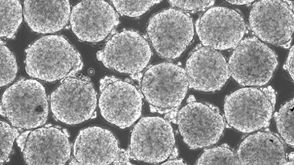

 沪公网安备31010102008431号