E. Wallén et al. (Jun 2025)
Disease Models & Mechanisms 18 6
Effects of alcohol on the transcriptome, methylome and metabolome of in vitro gastrulating human embryonic cells
Prenatal alcohol exposure (PAE) affects embryonic development,causing a variable fetal alcohol spectrum disorder (FASD) phenotype with neurodevelopmental disorders and birth defects. To explore the effects of PAE on gastrulation,we used an in vitro model with subchronic moderate (20 mM) and severe (70 mM) ethanol exposures during the differentiation of human embryonic stem cells into germ layer cells. We analyzed genome-wide gene expression (mRNA sequencing),DNA methylation (EPIC Illumina microarrays) and metabolome (non-targeted LC-MS) of the endodermal,mesodermal and ectodermal cells. The largest number of ethanol-induced alterations were observed in endodermal cells,whereas the most prominent changes were in ectodermal cells. Methionine metabolism and genes of the main signaling pathways involved in gastrulation and body patterning were affected by ethanol in all germ layers. Many of the altered genes,including BMP4,FGF8,SIX3 and LHX2,have previously been associated with PAE and phenotypes of FASD,like defects in heart and corpus callosum development as well as holoprosencephaly. Our findings support the early origin of alcohol-induced developmental disorders and strengthen the role of methionine cycle in the etiology of FASD.
View Publication
产品类型:
产品号#:
05230
产品名:
STEMdiff™ 三谱系分化试剂盒
V. S. Shah et al. (Jun 2025)
Nature Communications 16
Single cell profiling of human airway identifies tuft-ionocyte progenitor cells displaying cytokine-dependent differentiation bias in vitro
Human airways contain specialized rare epithelial cells including CFTR-rich ionocytes that regulate airway surface physiology and chemosensory tuft cells that produce asthma-associated inflammatory mediators. Here,using a lung cell atlas of 311,748 single cell RNA-Seq profiles,we identify 687 ionocytes (0.45%). In contrast to prior reports claiming a lack of ionocytes in the small airways,we demonstrate that ionocytes are present in small and large airways in similar proportions. Surprisingly,we find only 3 mature tuft cells (0.002%),and demonstrate that previously annotated tuft-like cells are instead highly replicative progenitor cells. These tuft-ionocyte progenitor (TIP) cells produce ionocytes as a default lineage. However,Type 2 and Type 17 cytokines divert TIP cell lineage in vitro,resulting in the production of mature tuft cells at the expense of ionocyte differentiation. Our dataset thus provides an updated understanding of airway rare cell composition,and further suggests that clinically relevant cytokines may skew the composition of disease-relevant rare cells. Subject terms: Interleukins,Systems analysis,Differentiation,Sequencing
View Publication
High-efficiency induction of neural conversion in human ESCs and human induced pluripotent stem cells with a single chemical inhibitor of transforming growth factor beta superfamily receptors.
Chemical compounds have emerged as powerful tools for modulating ESC functions and deriving induced pluripotent stem cells (iPSCs),but documentation of compound-induced efficient directed differentiation in human ESCs (hESCs) and human iPSC (hiPSCs) is limited. By screening a collection of chemical compounds,we identified compound C (also denoted as dorsomorphin),a protein kinase inhibitor,as a potent regulator of hESC and hiPSC fate decisions. Compound C suppresses mesoderm,endoderm,and trophoectoderm differentiation and induces rapid and high-efficiency neural conversion in both hESCs and hiPSCs,88.7% and 70.4%,respectively. Interestingly,compound C is ineffective in inducing neural conversion in mouse ESCs (mESCs). Large-scale kinase assay revealed that compound C targets at least seven transforming growth factor beta (TGF-β) superfamily receptors,including both type I and type II receptors,and thereby blocks both the Activin and bone morphogenesis protein (BMP) signaling pathways in hESCs. Dual inhibition of Activin and BMP signaling accounts for the effects of compound C on hESC differentiation and neural conversion. We also identified muscle segment homeobox gene 2 (MSX2) as a downstream target gene of compound C and a key signaling intermediate of the BMP pathway in hESCs. Our findings provide a single-step cost-effective method for efficient derivation of neural progenitor cells in adherent culture from human pluripotent stem cells. Therefore,it will be uniquely suitable for the production of neural progenitor cells in large scale and should facilitate the use of stem cells in drug screening and regenerative medicine and study of early human neural development.
View Publication
产品类型:
产品号#:
100-0246
72102
85850
85857
产品名:
白消安(Busulfan)
Dorsomorphin
mTeSR™1
mTeSR™1
挂图
Human Immune Cytokines
Infographic of key cytokines for expansion, differentiation and characterization of major immune cell types
Gu Z et al. (FEB 2006)
Antimicrobial agents and chemotherapy 50 2 625--31
In vitro antiretroviral activity and in vitro toxicity profile of SPD754, a new deoxycytidine nucleoside reverse transcriptase inhibitor for treatment of human immunodeficiency virus infection.
SPD754 (AVX754) is a deoxycytidine analogue nucleotide reverse transcriptase inhibitor (NRTI) in clinical development. These studies characterized the in vitro activity of SPD754 against NRTI-resistant human immunodeficiency virus type 1 (HIV-1) and non-clade B HIV-1 isolates,its activity in combination with other antiretrovirals,and its potential myelotoxicity and mitochondrial toxicity. SPD754 was tested against 50 clinical HIV-1 isolates (5 wild-type isolates and 45 NRTI-resistant isolates) in MT-4 cells using the Antivirogram assay. SPD754 susceptibility was reduced 1.2- to 2.2-fold against isolates resistant to zidovudine (M41L,T215Y/F,plus a median of three additional nucleoside analogue mutations [NAMs]) and/or lamivudine (M184V) and was reduced 1.3- to 2.8-fold against isolates resistant to abacavir (L74V,Y115F,and M184V plus one other NAM) or stavudine (V75T/M,M41L,T215F/Y,and four other NAMs). Insertions at amino acid position 69 and Q151M mutations (with or without M184V) reduced SPD754 susceptibility 5.2-fold and 14- to 16-fold,respectively (these changes gave values comparable to or less than the corresponding values for zidovudine,lamivudine,abacavir,and didanosine). SPD754 showed similar activity against isolates of group M HIV-1 clades,including A/G,B,C,D,A(E),D/F,F,and H. SPD754 showed additive effects in combination with other NRTIs,tenofovir,nevirapine,or saquinavir. SPD754 had no significant effects on cell viability or mitochondrial DNA in HepG2 or MT-4 cells during 28-day exposure at concentrations up to 200 microM. SPD754 showed a low potential for myelotoxicity against human bone marrow. In vitro,SPD754 retained activity against most NRTI-resistant HIV-1 clinical isolates and showed a low propensity to cause myelotoxicity and mitochondrial toxicity.
View Publication
Ankam S et al. (JAN 2013)
Acta Biomaterialia 9 1 4535--45
Substrate topography and size determine the fate of human embryonic stem cells to neuronal or glial lineage
Efficient derivation of neural cells from human embryonic stem cells (hESCs) remains an unmet need for the treatment of neurological disorders. The limiting factors for current methods include being labor-intensive,time-consuming and expensive. In this study,we hypothesize that the substrate topography,with optimal geometry and dimension,can modulate the neural fate of hESCs and enhance the efficiency of differentiation. A multi-architectural chip (MARC) containing fields of topographies varying in geometry and dimension was developed to facilitate high-throughput analysis of topography-induced neural differentiation in vitro. The hESCs were subjected to direct differentiation"�
View Publication
产品类型:
产品号#:
07920
07922
85850
85857
产品名:
ACCUTASE™
ACCUTASE™
mTeSR™1
mTeSR™1
Mathew S et al. ( 2012)
BMC systems biology 6 154
Analysis of alternative signaling pathways of endoderm induction of human embryonic stem cells identifies context specific differences.
BACKGROUND: Lineage specific differentiation of human embryonic stem cells (hESCs) is largely mediated by specific growth factors and extracellular matrix molecules. Growth factors initiate a cascade of signals which control gene transcription and cell fate specification. There is a lot of interest in inducing hESCs to an endoderm fate which serves as a pathway towards more functional cell types like the pancreatic cells. Research over the past decade has established several robust pathways for deriving endoderm from hESCs,with the capability of further maturation. However,in our experience,the functional maturity of these endoderm derivatives,specifically to pancreatic lineage,largely depends on specific pathway of endoderm induction. Hence it will be of interest to understand the underlying mechanism mediating such induction and how it is translated to further maturation. In this work we analyze the regulatory interactions mediating different pathways of endoderm induction by identifying co-regulated transcription factors.backslashnbackslashnRESULTS: hESCs were induced towards endoderm using activin A and 4 different growth factors (FGF2 (F),BMP4 (B),PI3KI (P),and WNT3A (W)) and their combinations thereof,resulting in 15 total experimental conditions. At the end of differentiation each condition was analyzed by qRT-PCR for 12 relevant endoderm related transcription factors (TFs). As a first approach,we used hierarchical clustering to identify which growth factor combinations favor up-regulation of different genes. In the next step we identified sets of co-regulated transcription factors using a biclustering algorithm. The high variability of experimental data was addressed by integrating the biclustering formulation with bootstrap re-sampling to identify robust networks of co-regulated transcription factors. Our results show that the transition from early to late endoderm is favored by FGF2 as well as WNT3A treatments under high activin. However,induction of late endoderm markers is relatively favored by WNT3A under high activin.backslashnbackslashnCONCLUSIONS: Use of FGF2,WNT3A or PI3K inhibition with high activin A may serve well in definitive endoderm induction followed by WNT3A specific signaling to direct the definitive endoderm into late endodermal lineages. Other combinations,though still feasible for endoderm induction,appear less promising for pancreatic endoderm specification in our experiments.
View Publication
产品类型:
产品号#:
85850
85857
产品名:
mTeSR™1
mTeSR™1
Tan JY et al. (JUL 2013)
Stem cells and development 22 13 1893--1906
Efficient derivation of lateral plate and paraxial mesoderm subtypes from human embryonic stem cells through GSKi-mediated differentiation.
The vertebrae mesoderm is a source of cells that forms a variety of tissues,including the heart,vasculature,and blood. Consequently,the derivation of various mesoderm-specific cell types from human embryonic stem cells (hESCs) has attracted the interest of many investigators owing to their therapeutic potential in clinical applications. However,the need for efficient and reliable methods of differentiation into mesoderm lineage cell types remains a significant challenge. Here,we demonstrated that inhibition of glycogen synthase kinase-3 (GSK-3) is an essential first step toward efficient generation of the mesoderm. Under chemically defined conditions without additional growth factors/cytokines,short-term GSK inhibitor (GSKi) treatment effectively drives differentiation of hESCs into the primitive streak (PS),which can potentially commit toward the mesoderm when further supplemented with bone morphogenetic protein 4. Further analysis confirmed that the PS-like cells derived from GSKi treatment are bipotential,being able to specify toward the endoderm as well. Our findings suggest that the bipotential,PS/mesendoderm-like cell population exists only at the initial stages of GSK-3 inhibition,whereas long-term inhibition results in an endodermal fate. Lastly,we demonstrated that our differentiation approach could efficiently generate lateral plate (CD34(+)KDR(+)) and paraxial (CD34(-)PDGFRα(+)) mesoderm subsets that can be further differentiated along the endothelial and smooth muscle lineages,respectively. In conclusion,our study presents a unique approach for generating early mesoderm progenitors in a chemically directed fashion through the use of small-molecule GSK-3 inhibitor,which may be useful for future applications in regenerative medicine.
View Publication
产品类型:
产品号#:
05270
05275
85850
85857
产品名:
STEMdiff™ APEL™2 培养基
STEMdiff™ APEL™2 培养基
mTeSR™1
mTeSR™1
Zhou Y et al. ( 2013)
Cell Death and Disease 4 6 e695
MicroRNA-195 targets ADP-ribosylation factor-like protein 2 to induce apoptosis in human embryonic stem cell-derived neural progenitor cells.
Neural progenitor cells (NPCs) derived from human embryonic stem cells (hESCs) have great potential in cell therapy,drug screening and toxicity testing of neural degenerative diseases. However,the molecular regulation of their proliferation and apoptosis,which needs to be revealed before clinical application,is largely unknown. MicroRNA miR-195 is known to be expressed in the brain and is involved in a variety of proapoptosis or antiapoptosis processes in cancer cells. Here,we defined the proapoptotic role of miR-195 in NPCs derived from two independent hESC lines (human embryonic stem cell-derived neural progenitor cells,hESC-NPCs). Overexpression of miR-195 in hESC-NPCs induced extensive apoptotic cell death. Consistently,global transcriptional microarray analyses indicated that miR-195 primarily regulated genes associated with apoptosis in hESC-NPCs. Mechanistically,a small GTP-binding protein ADP-ribosylation factor-like protein 2 (ARL2) was identified as a direct target of miR-195. Silencing ARL2 in hESC-NPCs provoked an apoptotic phenotype resembling that of miR-195 overexpression,revealing for the first time an essential role of ARL2 for the survival of human NPCs. Moreover,forced expression of ALR2 could abolish the cell number reduction caused by miR-195 overexpression. Interestingly,we found that paraquat,a neurotoxin,not only induced apoptosis but also increased miR-195 and reduced ARL2 expression in hESC-NPCs,indicating the possible involvement of miR-195 and ARL2 in neurotoxin-induced NPC apoptosis. Notably,inhibition of miR-195 family members could block neurotoxin-induced NPC apoptosis. Collectively,miR-195 regulates cell apoptosis in a context-dependent manner through directly targeting ARL2. The finding of the critical role of ARL2 for the survival of human NPCs and association of miR-195 and ARL2 with neurotoxin-induced apoptosis have important implications for understanding molecular mechanisms that control NPC survival and would facilitate our manipulation of the neurological pathogenesis.
View Publication
产品类型:
产品号#:
85850
85857
产品名:
mTeSR™1
mTeSR™1
van Wilgenburg B et al. (AUG 2013)
PLoS ONE 8 8 e71098
Efficient, Long Term Production of Monocyte-Derived Macrophages from Human Pluripotent Stem Cells under Partly-Defined and Fully-Defined Conditions
Human macrophages are specialised hosts for HIV-1,dengue virus,Leishmania and Mycobacterium tuberculosis. Yet macrophage research is hampered by lack of appropriate cell models for modelling infection by these human pathogens,because available myeloid cell lines are,by definition,not terminally differentiated like tissue macrophages. We describe here a method for deriving monocytes and macrophages from human Pluripotent Stem Cells which improves on previously published protocols in that it uses entirely defined,feeder- and serum-free culture conditions and produces very consistent,pure,high yields across both human Embryonic Stem Cell (hESC) and multiple human induced Pluripotent Stem Cell (hiPSC) lines over time periods of up to one year. Cumulatively,up to ∼3×10(7) monocytes can be harvested per 6-well plate. The monocytes produced are most closely similar to the major blood monocyte (CD14(+),CD16(low),CD163(+)). Differentiation with M-CSF produces macrophages that are highly phagocytic,HIV-1-infectable,and upon activation produce a pro-inflammatory cytokine profile similar to blood monocyte-derived macrophages. Macrophages are notoriously hard to genetically manipulate,as they recognise foreign nucleic acids; the lentivector system described here overcomes this,as pluripotent stem cells can be relatively simply genetically manipulated for efficient transgene expression in the differentiated cells,surmounting issues of transgene silencing. Overall,the method we describe here is an efficient,effective,scalable system for the reproducible production and genetic modification of human macrophages,facilitating the interrogation of human macrophage biology.
View Publication


 EasySep™小鼠TIL(CD45)正选试剂盒




 科学海报STEMdiff™ Blood Vessel Organoid Kit Supports Efficient Generation of Vascular Organoids from Human Pluripotent Stem Cells
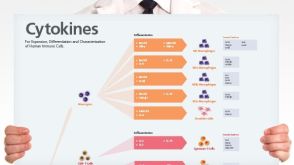 挂图Human Immune Cytokines Infographic of key cytokines for expansion, differentiation and characterization of major immune cell types
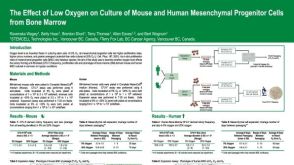 科学海报The Effect of Low Oxygen on Culture of Mouse and Human Mesenchymal Progenitor Cells from Bone Marrow
 沪公网安备31010102008431号