Christie VB et al. (NOV 2010)
Journal of neuroscience methods 193 2 239--45
Retinoid supplementation of differentiating human neural progenitors and embryonic stem cells leads to enhanced neurogenesis in vitro.
Retinoids are important molecules involved in the development and homeostasis of the nervous system. As such,various retinoid derivatives are often found in culture media and supplement formulations to support the growth and maintenance of neural cells. However,all-trans-retinoic acid (ATRA) and its associated derivatives are light sensitive and are highly susceptible to isomerisation. This can lead to variability in retinoid concentrations and the nature of the retinoid species present in culture solutions which in turn can influence biological activity and introduce inconsistency. We have previously described the development of the synthetic retinoid derivative,EC23,as a chemically and light stable alternative that does not degrade and has biological activity similar to ATRA. In this study we demonstrate that the addition of exogenous retinoid can significantly enhance neuronal differentiation of both human neuroprogenitor and human embryonic stem cells. In the former,both ATRA and EC23 induced increased maturation and stabilisation of the axonal cytoskeleton. However,EC23 was particularly potent at lower nanomolar concentrations resulting in significantly greater neurogenesis than ATRA. In ES cells enhanced motor neuron marker expression was also detected in response to both retinoids when incorporated into an established protocol for neuronal differentiation. We propose that synthetic retinoid EC23 represents a valuable addition to the formulation of new and existing culture supplements to enhance neuronal differentiation whilst enabling improved consistency.
View Publication
产品类型:
产品号#:
73102
73104
产品名:
EC23
EC23
Li Z et al. (OCT 2011)
Stem cells and development 20 10 1701--10
Functional characterization and expression profiling of human induced pluripotent stem cell- and embryonic stem cell-derived endothelial cells.
With regard to human induced pluripotent stem cells (hiPSCs),in which adult cells are reprogrammed into embryonic-like cells using defined factors,their functional and transcriptional expression pattern during endothelial differentiation has yet to be characterized. In this study,hiPSCs and human embryonic stem cells (hESCs) were differentiated using the embryoid body method,and CD31(+) cells were sorted. Fluorescence activated cell sorting analysis of hiPSC-derived endothelial cells (hiPSC-ECs) and hESC-derived endothelial cells (hESC-ECs) demonstrated similar endothelial gene expression patterns. We showed functional vascular formation by hiPSC-ECs in a mouse Matrigel plug model. We compared the gene profiles of hiPSCs,hESCs,hiPSC-ECs,hESC-ECs,and human umbilical vein endothelial cells (HUVECs) using whole genome microarray. Our analysis demonstrates that gene expression variation of hiPSC-ECs and hESC-ECs contributes significantly to biological differences between hiPSC-ECs and hESC-ECs as well as to the distances" among hiPSCs�
View Publication
产品类型:
产品号#:
85850
85857
产品名:
mTeSR™1
mTeSR™1
Shimada H et al. (JAN 2012)
Biochemical and Biophysical Research Communications 417 2 659--664
Accelerated generation of human induced pluripotent stem cells with retroviral transduction and chemical inhibitors under physiological hypoxia
Induced pluripotent stem (iPS) cells are generated from somatic cells by the forced expression of a defined set of pluripotency-associated transcription factors. Human iPS cells can be propagated indefinitely,while maintaining the capacity to differentiate into all cell types in the body except for extra-embryonic tissues. This technology not only represents a new way to use individual-specific stem cells for regenerative medicine but also constitutes a novel method to obtain large amounts of disease-specific cells for biomedical research. Despite their great potential,the long reprogramming process (up to 1. month) remains one of the most significant challenges facing standard virus-mediated methodology. In this study,we report the accelerated generation of human iPS cells from adipose-derived stem (ADS) cells,using a new combination of chemical inhibitors under a setting of physiological hypoxia in conjunction with retroviral transduction of Oct4,Sox2,Klf4,and L-Myc. Under optimized conditions,we observed human embryonic stem (ES)-like cells as early as 6. days after the initial retroviral transduction. This was followed by the emergence of fully reprogrammed cells bearing Tra-1-81-positive and DsRed transgene-silencing properties on day 10. The resulting cell lines resembled human ES cells in many respects including proliferation rate,morphology,pluripotency-associated markers,global gene expression patterns,genome-wide DNA methylation states,and the ability to differentiate into all three of the germ layers,both in vitro and in vivo. Our method,when combined with chemical inhibitors under conditions of physiological hypoxia,offers a powerful tool for rapidly generating bona fide human iPS cells and facilitates the application of iPS cell technology to biomedical research. textcopyright 2011 Elsevier Inc.
View Publication
产品类型:
产品号#:
85850
85857
产品名:
mTeSR™1
mTeSR™1
Y. Cheng et al. (feb 2019)
Science immunology 4 32
Multifactorial heterogeneity of virus-specific T cells and association with the progression of human chronic hepatitis B infection.
Associations between chronic antigen stimulation,T cell dysfunction,and the expression of various inhibitory receptors are well characterized in several mouse and human systems. During chronic hepatitis B virus (HBV) infection (CHB),T cell responses are blunted with low frequencies of virus-specific T cells observed,making these parameters difficult to study. Here,using mass cytometry and a highly multiplexed combinatorial peptide-major histocompatibility complex (pMHC) tetramer strategy that allows for the detection of rare antigen-specific T cells,we simultaneously probed 484 unique HLA-A*1101-restricted epitopes spanning the entire HBV genome on T cells from patients at various stages of CHB. Numerous HBV-specific T cell populations were detected,validated,and profiled. T cells specific for two epitopes (HBVpol387 and HBVcore169) displayed differing and complex heterogeneities that were associated with the disease progression,and the expression of inhibitory receptors on these cells was not linearly related with their extent of T cell dysfunction. For HBVcore169-specific CD8+ T cells,we found cellular markers associated with long-term memory,polyfunctionality,and the presence of several previously unidentified public TCR clones that correlated with viral control. Using high-dimensional trajectory analysis of these cellular phenotypes,a pseudo-time metric was constructed that fit with the status of viral infection in corresponding patients. This was validated in a longitudinal cohort of patients undergoing antiviral therapy. Our study uncovers complex relationships of inhibitory receptors between the profiles of antigen-specific T cells and the status of CHB with implications for new strategies of therapeutic intervention.
View Publication
产品类型:
产品号#:
19051
19051RF
19053
19053RF
产品名:
EasySep™人T细胞富集试剂盒
RoboSep™ 人T细胞富集试剂盒含滤芯吸头
EasySep™人CD8+ T细胞富集试剂盒
RoboSep™ 人CD8+ T细胞富集试剂盒含滤芯吸头
(Dec 2024)
Nature Communications 15
DDX18 coordinates nucleolus phase separation and nuclear organization to control the pluripotency of human embryonic stem cells
Pluripotent stem cells possess a unique nuclear architecture characterized by a larger nucleus and more open chromatin,which underpins their ability to self-renew and differentiate. Here,we show that the nucleolus-specific RNA helicase DDX18 is essential for maintaining the pluripotency of human embryonic stem cells. Using techniques such as Hi-C,DNA/RNA-FISH,and biomolecular condensate analysis,we demonstrate that DDX18 regulates nucleolus phase separation and nuclear organization by interacting with NPM1 in the granular nucleolar component,driven by specific nucleolar RNAs. Loss of DDX18 disrupts nucleolar substructures,impairing centromere clustering and perinucleolar heterochromatin (PNH) formation. To probe this further,we develop NoCasDrop,a tool enabling precise nucleolar targeting and controlled liquid condensation,which restores centromere clustering and PNH integrity while modulating developmental gene expression. This study reveals how nucleolar phase separation dynamics govern chromatin organization and cell fate,offering fresh insights into the molecular regulation of stem cell pluripotency. Pluripotent stem cells depend on specialized nuclear organization for their function. Here,the authors show that DDX18 regulates nucleolar phase separation and chromatin architecture to preserve human embryonic stem cell pluripotency.
View Publication
产品类型:
产品号#:
05230
100-0483
100-0484
100-0276
100-1130
85850
85857
产品名:
STEMdiff™ 三谱系分化试剂盒
Hausser Scientificᵀᴹ 明线血球计数板
ReLeSR™
mTeSR™ Plus
mTeSR™ Plus
mTeSR™1
mTeSR™1
(May 2024)
STAR Protocols 5 2
Generation and enrichment of cerebellar GABAergic interneurons from human induced pluripotent stem cells and intracellular calcium measurements
SummaryGABAergic interneurons are inhibitory neurons of the CNS,playing a fundamental role in neural circuitry and activity. Here,we provide a robust protocol for the successful enrichment of human cerebellar GABAergic interneurons from human induced pluripotent stem cells (iPSCs) and measuring intracellular calcium transients. We describe in detail steps for culturing iPSCs; generating embryoid bodies; and differentiating and enriching for cerebellar GABAergic neurons (cGNs),with precise steps for their molecular characterization. We then detail the procedure for adeno-associated virus-mediated transduction of cGNs with genetically encoded calcium indicators,followed by intracellular calcium imaging and analyses.For complete details on the use and execution of this protocol,please refer to Pilotto et al.1 Graphical abstract Highlights•Steps described for generating GABAergic neurons from human iPSCs•Instructions for the enrichment of cerebellar GABAergic interneurons (cGNs)•Guide to calcium imaging of cGNs using genetically encoded calcium indicators Publisher’s note: Undertaking any experimental protocol requires adherence to local institutional guidelines for laboratory safety and ethics. GABAergic interneurons are inhibitory neurons of the CNS,playing a fundamental role in neural circuitry and activity. Here,we provide a robust protocol for the successful enrichment of human-cerebellar GABAergic interneurons from human induced pluripotent stem cells (iPSCs) and measuring intracellular calcium transients. We describe in detail steps for culturing iPSCs,and generating embryoid bodies,differentiating and enriching for cerebellar GABAergic neurons (cGNs),with precise steps for their molecular characterization. We then detail the procedure for adeno-associated virus-mediated transduction of cGNs with genetically encoded calcium indicators,followed by intracellular calcium imaging and analyses.
View Publication
产品类型:
产品号#:
85850
85857
产品名:
mTeSR™1
mTeSR™1
(Dec 2024)
International Journal of Molecular Sciences 26 1
Optimized Prime Editing of Human Induced Pluripotent Stem Cells to Efficiently Generate Isogenic Models of Mendelian Diseases
Prime editing (PE) is a CRISPR-based tool for genome engineering that can be applied to generate human induced pluripotent stem cell (hiPSC)-based disease models. PE technology safely introduces point mutations,small insertions,and deletions (indels) into the genome. It uses a Cas9-nickase (nCas9) fused to a reverse transcriptase (RT) as an editor and a PE guide RNA (pegRNA),which introduces the desired edit with great precision without creating double-strand breaks (DSBs). PE leads to minimal off-targets or indels when introducing single-strand breaks (SSB) in the DNA. Low efficiency can be an obstacle to its use in hiPSCs,especially when the genetic context precludes the screening of multiple pegRNAs,and other strategies must be employed to achieve the desired edit. We developed a PE platform to efficiently generate isogenic models of Mendelian disorders. We introduced the c.25G>A (p.V9M) mutation in the NMNAT1 gene with over 25% efficiency by optimizing the PE workflow. Using our optimized system,we generated other isogenic models of inherited retinal diseases (IRDs),including the c.1481C>T (p.T494M) mutation in PRPF3 and the c.6926A>C (p.H2309P) mutation in PRPF8. We modified several determinants of the hiPSC PE procedure,such as plasmid concentrations,PE component ratios,and delivery method settings,showing that our improved workflow increased the hiPSC editing efficiency.
View Publication
产品类型:
产品号#:
100-0483
100-0484
100-0276
100-1130
产品名:
Hausser Scientificᵀᴹ 明线血球计数板
ReLeSR™
mTeSR™ Plus
mTeSR™ Plus
(Jul 2024)
Frontiers in Immunology 15
Expression of a stress-inducible heme oxygenase-1 in NK cells is maintained in the process of human aging
IntroductionHeme oxygenase-1 (HO-1) is a stress-inducible heat shock protein (HSP32) that exerts cytoprotective effects against oxidative stress and inflammation,and is involved in the maintenance of cellular homeostasis. This study aimed to evaluate the expression of HO-1 in natural killer (NK) cells from individuals of different age groups after stimulation with various factors,and to analyze the relationships between the concentration of this cytoprotective protein and parameters corresponding to oxidative stress and inflammation,that is,NOD-like receptor protein 3 (NLRP3),glutathione (GSH),GSH disulfide (GSSG),and interleukin 6 (IL-6).MethodsThe study population comprised three age groups: young adults (age range,19–23 years),older adults aged under 85 years (age range,73–84 years),and older adults aged over 85 years (age range,85–92 years). NLRP3,GSH,and GSSG concentrations were measured in serum,whereas the HO-1 concentration and IL-6 expression were studied in NK cells cultivated for 48 h and stimulated with IL-2,lipopolysaccharide (LPS),or phorbol 12-myristate 13-acetate (PMA) with ionomycin.ResultsThe analysis of serum NLRP3,GSH,and GSSG concentrations revealed no statistically significant differences among the studied age groups. However,some typical trends of aging were observed,such as a decrease in GSH concentration and an increase in both GSSG level,and GSSG/GSH ratio. The highest basal expression of IL-6 and lowest basal content of HO-1 were found in NK cells of adults over 85 years of age. The NK cells in this age group also showed the highest sensitivity to stimulation with the applied factors. Moreover,statistically significant negative correlations were observed between HO-1 and IL-6 expression levels in the studied NK cells.ConclusionsThese results showed that NK cells can express HO-1 at a basal level,which was significantly increased in activated cells,even in the oldest group of adults. The reciprocal relationship between HO-1 and IL-6 expression suggests a negative feedback loop between these parameters.
View Publication
产品类型:
产品号#:
18000
产品名:
EasySep™磁极
Hu K et al. ( 2012)
Breast cancer research : BCR 14 1 R22
Small interfering RNA library screen identified polo-like kinase-1 (PLK1) as a potential therapeutic target for breast cancer that uniquely eliminates tumor-initiating cells.
INTRODUCTION Triple-negative breast cancer (TNBC) high rate of relapse is thought to be due to the presence of tumor-initiating cells (TICs),molecularly defined as being CD44high/CD24-/low. TICs are resilient to chemotherapy and radiation. However,no currently accepted molecular target exists against TNBC and,moreover,TICs. Therefore,we sought the identification of kinase targets that inhibit TNBC growth and eliminate TICs. METHODS A genome-wide human kinase small interfering RNA (siRNA) library (691 kinases) was screened against the TNBC cell line SUM149 for growth inhibition. Selected siRNAs were then tested on four different breast cancer cell lines to confirm the spectrum of activity. Their effect on the CD44high subpopulation and sorted CD44high/CD24-/low cells of SUM149 also was studied. Further studies were focused on polo-like kinase 1 (PLK1),including its expression in breast cancer cell lines,effect on the CD44high/CD24-/low TIC subpopulation,growth inhibition,mammosphere formation,and apoptosis,as well as the activity of the PLK1 inhibitor,BI 2536. RESULTS Of the 85 kinases identified in the screen,28 of them were further silenced by siRNAs on MDA-MB-231 (TNBC),BT474-M1 (ER+/HER2+,a metastatic variant),and HR5 (ER+/HER2+,a trastuzumab-resistant model) cells and showed a broad spectrum of growth inhibition. Importantly,12 of 28 kinases also reduced the CD44high subpopulation compared with control in SUM149. Further tests of these 12 kinases directly on a sorted CD44high/CD24-/low TIC subpopulation of SUM149 cells confirmed their effect. Blocking PLK1 had the greatest growth inhibition on breast cancer cells and TICs by about 80% to 90% after 72 hours. PLK1 was universally expressed in breast cancer cell lines,representing all of the breast cancer subtypes,and was positively correlated to CD44. The PLK1 inhibitor BI 2536 showed similar effects on growth,mammosphere formation,and apoptosis as did PLK1 siRNAs. Finally,whereas paclitaxel,doxorubicin,and 5-fluorouracil enriched the CD44high/CD24-/low population compared with control in SUM149,subsequent treatment with BI 2536 killed the emergent population,suggesting that it could potentially be used to prevent relapse. CONCLUSION Inhibiting PLK1 with siRNA or BI 2536 blocked growth of TNBCs including the CD44high/CD24-/low TIC subpopulation and mammosphere formation. Thus,PLK1 could be a potential therapeutic target for the treatment of TNBC as well as other subtypes of breast cancer.
View Publication
产品类型:
产品号#:
05620
产品名:
MammoCult™人培养基试剂盒
T. Namekawa et al. (jan 2019)
Cells 8 1
Application of Prostate Cancer Models for Preclinical Study: Advantages and Limitations of Cell Lines, Patient-Derived Xenografts, and Three-Dimensional Culture of Patient-Derived Cells.
Various preclinical models have been developed to clarify the pathophysiology of prostate cancer (PCa). Traditional PCa cell lines from clinical metastatic lesions,as exemplified by DU-145,PC-3,and LNCaP cells,are useful tools to define mechanisms underlying tumorigenesis and drug resistance. Cell line-based experiments,however,have limitations for preclinical studies because those cells are basically adapted to 2-dimensional monolayer culture conditions,in which the majority of primary PCa cells cannot survive. Recent tissue engineering enables generation of PCa patient-derived xenografts (PDXs) from both primary and metastatic lesions. Compared with fresh PCa tissue transplantation in athymic mice,co-injection of PCa tissues with extracellular matrix in highly immunodeficient mice has remarkably improved the success rate of PDX generation. PDX models have advantages to appropriately recapitulate the molecular diversity,cellular heterogeneity,and histology of original patient tumors. In contrast to PDX models,patient-derived organoid and spheroid PCa models in 3-dimensional culture are more feasible tools for in vitro studies for retaining the characteristics of patient tumors. In this article,we review PCa preclinical model cell lines and their sublines,PDXs,and patient-derived organoid and spheroid models. These PCa models will be applied to the development of new strategies for cancer precision medicine.
View Publication
Wang X et al. ( 2012)
Journal of immunotherapy (Hagerstown,Md. : 1997) 35 9 689--701
Phenotypic and functional attributes of lentivirus-modified CD19-specific human CD8+ central memory T cells manufactured at clinical scale.
A key determinant of the therapeutic potency of adoptive T-cell transfer is the extent to which infused cells can persist and expand in vivo. Ex vivo propagated virus-specific and chimeric antigen receptor (CAR)-redirected antitumor CD8 effector T cells derived from CD45RA(-) CD62L(+) central memory (TCM) precursors engraft long-term and reconstitute functional memory after adoptive transfer. Here,we describe a clinical scale,closed system,immunomagnetic selection method to isolate CD8(+) T(CM) from peripheral blood mononuclear cells (PBMC). This method uses the CliniMACS device to first deplete CD14(+),CD45RA(+),and CD4(+) cells from PBMC,and then to positively select CD62L(+) cells. The average purity and yield of CD8(+) CD45RA(-) CD62L TCM obtained in full-scale qualification runs were 70% and 0.4% (of input PBMC),respectively. These CD8(+) T(CM) are responsive to anti-CD3/CD28 bead stimulation,and can be efficiently transduced with CAR encoding lentiviral vectors,and undergo sustained expansion in interleukin (IL)-2/IL-15 over 3-6 weeks. The resulting CD8(+) T(CM)-derived effectors are polyclonal,retain expression of CD62L and CD28,exhibit CAR-redirected antitumor effector function,and are capable of huIL-15-dependent in vivo homeostatic engraftment after transfer to immunodeficient NOD/Scid IL-2RgCnull mice. Adoptive therapy using purified T(CM) cells is now the subject of a Food and Drug Administration-authorized clinical trial for the treatment of CD19(+) B-cell malignancies,and 3 clinical cell products expressing a CD19-specific CAR for IND 14645 have already been successfully generated from lymphoma patients using this manufacturing platform.
View Publication


 EasySep™小鼠TIL(CD45)正选试剂盒




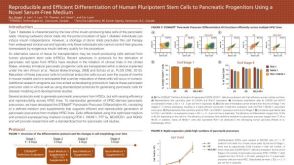 科学海报Reproducible and Efficient Differentiation of Human Pluripotent Stem Cells to Pancreatic Progenitors Using a Novel Serum-Free Medium
 沪公网安备31010102008431号