Isolation of multipotent mesenchymal stem cells from umbilical cord blood.
It is well accepted that umbilical cord blood has been a source for hematopoietic stem cells. However,controversy exists as to whether cord blood can serve as a source of mesenchymal stem cells,which can differentiate into cells of different connective tissue lineages such as bone,cartilage,and fat,and little success has been reported in the literature about the isolation of such cells from cord blood. Here we report a novel method to obtain single cell-derived,clonally expanded mesenchymal stem cells that are of multilineage differentiation potential by negative immunoselection and limiting dilution. The immunophenotype of these clonally expanded cells is consistent with that reported for bone marrow mesenchymal stem cells. Under appropriate induction conditions,these cells can differentiate into bone,cartilage,and fat. Surprisingly,these cells were also able to differentiate into neuroglial- and hepatocyte-like cells under appropriate induction conditions and,thus,these cells may be more than mesenchymal stem cells as evidenced by their ability to differentiate into cell types of all 3 germ layers. In conclusion,umbilical cord blood does contain mesenchymal stem cells and should not be regarded as medical waste. It can serve as an alternative source of mesenchymal stem cells to bone marrow.
View Publication
产品类型:
产品号#:
15128
15168
产品名:
RosetteSep™人间充质干细胞富集抗体混合物
RosetteSep™人间充质干细胞富集抗体混合物
Cheng L et al. (JUN 2014)
Cell Research 24 6 665--679
Generation of neural progenitor cells by chemical cocktails and hypoxia
Neural progenitor cells (NPCs) can be induced from somatic cells by defined factors. Here we report that NPCs can be generated from mouse embryonic fibroblasts by a chemical cocktail,namely VCR (V,VPA,an inhibitor of HDACs; C,CHIR99021,an inhibitor of GSK-3 kinases and R,Repsox,an inhibitor of TGF-β pathways),under a physiological hypoxic condition. These chemical-induced NPCs (ciNPCs) resemble mouse brain-derived NPCs re- garding their proliferative and self-renewing abilities,gene expression profiles,and multipotency for different neu- roectodermal lineages in vitro and in vivo. Further experiments reveal that alternative cocktails with inhibitors of histone deacetylation,glycogen synthase kinase,and TGF-β pathways show similar efficacies for ciNPC induction. Moreover,ciNPCs can also be induced from mouse tail-tip fibroblasts and human urinary cells with the same chemi- cal cocktail VCR. Thus our study demonstrates that lineage-specific conversion of somatic cells to NPCs could be achieved by chemical cocktails without introducing exogenous factors.
View Publication
产品类型:
产品号#:
85850
85857
产品名:
mTeSR™1
mTeSR™1
Chen X et al. (SEP 2006)
Stem cells (Dayton,Ohio) 24 9 2052--9
Bioreactor expansion of human adult bone marrow-derived mesenchymal stem cells.
Supplementation of mesenchymal stem cells (MSCs) during hematopoietic stem cell (HSC) transplantation alleviates complications such as graft-versus-host disease,leading to a speedy recovery of hematopoiesis. To meet this clinical demand,a fast MSC expansion method is required. In the present study,we examined the feasibility of using a rotary bioreactor system to expand MSCs from isolated bone marrow mononuclear cells. The cells were cultured in a rotary bioreactor with Myelocult medium containing a combination of supplementary factors,including stem cell factor and interleukin-3 and -6. After 8 days of culture,total cell numbers,Stro-1(+)CD44(+)CD34(-) MSCs,and CD34(+)CD44(+)Stro-1(-) HSCs were increased 9-,29-,and 8-fold,respectively. Colony-forming efficiency-fibroblast per day of the bioreactor-treated cells was 1.44-fold higher than that of the cells without bioreactor treatment. The bioreactor-expanded MSCs showed expression of primitive MSC markers endoglin (SH2) and vimentin,whereas markers associated with lineage differentiation,including osteocalcin (osteogenesis),type II collagen (chondrogenesis),and C/EBP-alpha (CCAAT/enhancer-binding protein-alpha) (adipogenesis),were not detected. Upon induction,the bioreactor-expanded MSCs were able to differentiate into osteoblasts,chondrocytes,and adipocytes. We conclude that the rotary bioreactor with the modified Myelocult medium reported in this study may be used to rapidly expand MSCs.
View Publication
产品类型:
产品号#:
05150
产品名:
MyeloCult™H5100
J. U. Hermansen et al. (dec 2018)
Scientific reports 8 1 17651
Cryopreservation of primary B cells minimally influences their signaling responses.
Phospho flow is a powerful approach to detect cell signaling aberrations,identify biomarkers and assess pharmacodynamics,and can be performed using cryopreserved samples. The effects of cryopreservation on signaling responses and the reproducibility of phospho flow measurements are however unknown in many cell systems. Here,B lymphocytes were isolated from healthy donors and patients with the B cell malignancy chronic lymphocytic leukemia and analyzed by phospho flow using phospho-specific antibodies targeting 20 different protein epitopes. Cells were analyzed both at basal conditions and after activation of cluster of differentiation 40 (CD40) or the B cell receptor. Pharmacodynamics of the novel pathway inhibitor ibrutinib was also assessed. At all conditions,fresh cells were compared to cryopreserved cells. Minimal variation between fresh and frozen samples was detected. Reproducibility was tested by running samples from the same donors in different experiments. The results demonstrate reproducibility across different phospho flow runs and support the use of cryopreserved samples in future phospho flow studies of B lymphocytes.
View Publication
产品类型:
产品号#:
15024
15064
产品名:
RosetteSep™ 人B细胞富集抗体混合物
RosetteSep™人B细胞富集抗体混合物
Hu B-Y and Zhang S-C (JAN 2009)
Nature protocols 4 9 1295--304
Differentiation of spinal motor neurons from pluripotent human stem cells.
We have devised a reproducible protocol by which human embryonic stem cells (hESCs) or inducible pluripotent stem cells (iPSCs) are efficiently differentiated to functional spinal motor neurons. This protocol comprises four major steps. Pluripotent stem cells are induced to form neuroepithelial (NE) cells that form neural tube-like rosettes in the absence of morphogens in the first 2 weeks. The NE cells are then specified to OLIG2-expressing motoneuron progenitors in the presence of retinoic acid (RA) and sonic hedgehog (SHH) or purmorphamine in the next 2 weeks. These progenitor cells further generate post-mitotic,HB9-expressing motoneurons at the 5th week and mature to functional motor neurons thereafter. It typically takes 5 weeks to generate the post-mitotic motoneurons and 8-10 weeks for the production of functional mature motoneurons. In comparison with other methods,our protocol does not use feeder cells,has a minimum dependence on proteins (purmorphamine replacing SHH),has controllable adherent selection and is adaptable for scalable suspension culture.
View Publication
产品类型:
产品号#:
72202
72204
100-1049
产品名:
Purmorphamine
Purmorphamine
Purmorphamine
Carpenter L et al. (APR 2011)
Blood 117 15 4008--4011
Human induced pluripotent stem cells are capable of B-cell lymphopoiesis.
Induced pluripotent stem (iPS) cells offer a unique potential for understanding the molecular basis of disease and development. Here we have generated several human iPS cell lines,and we describe their pluripotent phenotype and ability to differentiate into erythroid cells,monocytes,and endothelial cells. More significantly,however,when these iPS cells were differentiated under conditions that promote lympho-hematopoiesis from human embryonic stem cells,we observed the formation of pre-B cells. These cells were CD45(+)CD19(+)CD10(+) and were positive for transcripts Pax5,IL7αR,λ-like,and VpreB receptor. Although they were negative for surface IgM and CD5 expression,iPS-derived CD45(+)CD19(+) cells also exhibited multiple genomic D-J(H) rearrangements,which supports a pre-B-cell identity. We therefore have been able to demonstrate,for the first time,that human iPS cells are able to undergo hematopoiesis that contributes to the B-cell lymphoid lineage.
View Publication
产品类型:
产品号#:
85850
85857
产品名:
mTeSR™1
mTeSR™1
Grow EJ et al. (JUN 2015)
Nature 522 7555 221--5
Intrinsic retroviral reactivation in human preimplantation embryos and pluripotent cells.
Endogenous retroviruses (ERVs) are remnants of ancient retroviral infections,and comprise nearly 8% of the human genome. The most recently acquired human ERV is HERVK(HML-2),which repeatedly infected the primate lineage both before and after the divergence of the human and chimpanzee common ancestor. Unlike most other human ERVs,HERVK retained multiple copies of intact open reading frames encoding retroviral proteins. However,HERVK is transcriptionally silenced by the host,with the exception of in certain pathological contexts such as germ-cell tumours,melanoma or human immunodeficiency virus (HIV) infection. Here we demonstrate that DNA hypomethylation at long terminal repeat elements representing the most recent genomic integrations,together with transactivation by OCT4 (also known as POU5F1),synergistically facilitate HERVK expression. Consequently,HERVK is transcribed during normal human embryogenesis,beginning with embryonic genome activation at the eight-cell stage,continuing through the emergence of epiblast cells in preimplantation blastocysts,and ceasing during human embryonic stem cell derivation from blastocyst outgrowths. Remarkably,we detected HERVK viral-like particles and Gag proteins in human blastocysts,indicating that early human development proceeds in the presence of retroviral products. We further show that overexpression of one such product,the HERVK accessory protein Rec,in a pluripotent cell line is sufficient to increase IFITM1 levels on the cell surface and inhibit viral infection,suggesting at least one mechanism through which HERVK can induce viral restriction pathways in early embryonic cells. Moreover,Rec directly binds a subset of cellular RNAs and modulates their ribosome occupancy,indicating that complex interactions between retroviral proteins and host factors can fine-tune pathways of early human development.
View Publication


 EasySep™小鼠TIL(CD45)正选试剂盒




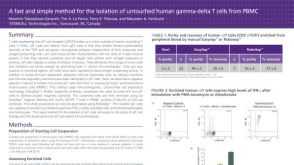 科学海报Cell Isolation of Untouched Human Gamma-Delta T Cells from PBMC
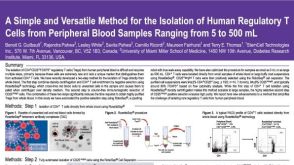 科学海报Isolation of Human Regulatory T Cells from Peripheral Blood Samples
 36:59
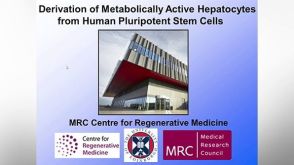
线上讲座Derivation of Metabolically Active Hepatocytes from Human Pluripotent Stem Cells发布日期: 07/16/2013
36:59
线上讲座Derivation of Metabolically Active Hepatocytes from Human Pluripotent Stem Cells发布日期: 07/16/2013


 沪公网安备31010102008431号