T. Yarahmadov et al. (aug 2022)
Infection and immunity 90 8 e0017422
Primary Infection by E. multilocularis Induces Distinct Patterns of Cross Talk between Hepatic Natural Killer T Cells and Regulatory T Cells in Mice.
The larval stage of the helminthic cestode Echinococcus multilocularis can inflict tumor-like hepatic lesions that cause the parasitic disease alveolar echinococcosis in humans,with high mortality in untreated patients. Opportunistic properties of the disease have been established based on the increased incidence in immunocompromised patients and mouse models,indicating that an appropriate adaptive immune response is required for the control of the disease. However,cellular interactions and the kinetics of the local hepatic immune responses during the different stages of infection with E. multilocularis remain unknown. In a mouse model of oral infection that mimics the normal infection route in human patients,the networks of the hepatic immune response were assessed using single-cell RNA sequencing (scRNA-seq) of isolated hepatic CD3+ T cells at different infection stages. We observed an early and sustained significant increase in natural killer T (NKT) cells and regulatory T cells (Tregs). Early tumor necrosis factor (TNF)- and integrin-dependent interactions between these two cell types promote the formation of hepatic lesions. At late time points,downregulation of programmed cell death protein 1 (PD-1) and ectonucleoside triphosphate diphosphohydrolase 1 (ENTPD1)-dependent signaling suppress the resolution of parasite-induced pathology. The obtained data provide fresh insight into the adaptive immune responses and local regulatory pathways at different infection stages of E. multilocularis in mice.
View Publication
产品类型:
产品号#:
19851
19851RF
产品名:
EasySep™小鼠T细胞分选试剂盒
RoboSep™ 小鼠T细胞分选试剂盒
Traggiai E et al. (FEB 2008)
Stem cells (Dayton,Ohio) 26 2 562--9
Bone marrow-derived mesenchymal stem cells induce both polyclonal expansion and differentiation of B cells isolated from healthy donors and systemic lupus erythematosus patients.
Human bone marrow multipotent mesenchymal stromal cells are progenitor cells that can be expanded in vitro and differentiate into various cells of mesodermal origin. They contribute to the bone marrow reticular niche,where mature B cells and long-lived plasma cells are maintained. Multipotent mesenchymal stromal cells were recently shown to modulate T- and B-cell proliferation and differentiation,dendritic cell maturation,and natural killer activity. These immunoregulatory properties encouraged a possible use of these cells to modulate autoimmune responses in humans. We studied the influence of bone marrow mesenchymal stem cells on highly purified B-cell subsets isolated from healthy donors and total B cells from pediatric systemic lupus erythematosus patients. Bone marrow mesenchymal stem cells promoted proliferation and differentiation into immunoglobulin-secreting cells of transitional and naive B cells stimulated with an agonist of Toll-like receptor 9,in the absence of B cell receptor triggering. They strongly enhanced proliferation and differentiation into plasma cells of memory B-cell populations. A similar effect was observed in response to polyclonal stimulation of B cells isolated from pediatric patients with systemic lupus erythematosus. This study casts important questions on bone marrow mesenchymal stem cells as a therapeutic tool in autoimmune diseases in which B-cell activation is crucially implicated in the pathogenesis of the disease.
View Publication
产品类型:
产品号#:
05401
05402
05411
产品名:
MesenCult™ MSC基础培养基 (人)
MesenCult™ MSC 刺激补充剂(人)
MesenCult™ 增殖试剂盒(人)
Huat T et al. (APR 2015)
International Journal of Molecular Sciences 16 5 9693--9718
MicroRNA Expression Profile of Neural Progenitor-Like Cells Derived from Rat Bone Marrow Mesenchymal Stem Cells under the Influence of IGF-1, bFGF and EGF
Insulin-like growth factor 1 (IGF-1) enhances cellular proliferation and reduces apoptosis during the early differentiation of bone marrow derived mesenchymal stem cells (BMSCs) into neural progenitor-like cells (NPCs) in the presence of epidermal growth factor (EGF) and basic fibroblast growth factor (bFGF). BMSCs were differentiated in three groups of growth factors: (A) EGF + bFGF,(B) EGF + bFGF + IGF-1,and (C) without growth factor. To unravel the molecular mechanisms of the NPCs derivation,microarray analysis using GeneChip miRNA arrays was performed. The profiles were compared among the groups. Annotated microRNA fingerprints (GSE60060) delineated 46 microRNAs temporally up-regulated or down-regulated compared to group C. The expressions of selected microRNAs were validated by real-time PCR. Among the 46 microRNAs,30 were consistently expressed for minimum of two consecutive time intervals. In Group B,only miR-496 was up-regulated and 12 microRNAs,including the let-7 family,miR-1224,miR-125a-3p,miR-214,miR-22,miR-320,miR-708,and miR-93,were down-regulated. Bioinformatics analysis reveals that some of these microRNAs (miR-22,miR-214,miR-125a-3p,miR-320 and let-7 family) are associated with reduction of apoptosis. Here,we summarize the roles of key microRNAs associated with IGF-1 in the differentiation of BMSCs into NPCs. These findings may provide clues to further our understanding of the mechanisms and roles of microRNAs as key regulators of BMSC-derived NPC maintenance.
View Publication
产品类型:
产品号#:
05750
05751
产品名:
NeuroCult™ NS-A 基础培养基(人)
NeuroCult™ NS-A 扩增试剂盒(人)
N. Paiboon et al. ( 2019)
Stem cells international 2019 9748795
Gestational Tissue-Derived Human Mesenchymal Stem Cells Use Distinct Combinations of Bioactive Molecules to Suppress the Proliferation of Human Hepatoblastoma and Colorectal Cancer Cells.
Background Cancer has been considered a serious global health problem and a leading cause of morbidity and mortality worldwide. Despite recent advances in cancer therapy,treatments of advance stage cancers are mostly ineffective resulting in poor survival of patients. Recent evidences suggest that multipotent human mesenchymal stem cells (hMSCs) play important roles in growth and metastasis of several cancers by enhancing their engraftment and inducing tumor neovascularization. However,the effect of hMSCs on cancer cells is still controversial because there are also evidences demonstrating that hMSCs inhibited growth and metastasis of some cancers. Methods In this study,we investigated the effects of bioactive molecules released from bone marrow and gestational tissue-derived hMSCs on the proliferation of various human cancer cells,including C3A,HT29,A549,Saos-2,and U251. We also characterized the hMSC-derived factors that inhibit cancer cell proliferation by protein fractionation and mass spectrometry analysis. Results We herein make a direct comparison and show that the effects of hMSCs on cancer cell proliferation and migration depend on both hMSC sources and cancer cell types and cancer-derived bioactive molecules did not affect the cancer suppressive capacity of hMSCs. Moreover,hMSCs use distinct combination of bioactive molecules to suppress the proliferation of human hepatoblastoma and colorectal cancer cells. Using protein fractionation and mass spectrometry analysis,we have identified several novel hMSC-derived factors that might be able to suppress cancer cell proliferation. Conclusion We believe that the procedure developed in this study could be used to discover other therapeutically useful molecules released by various hMSC sources for a future in vivo study.
View Publication
zur Nieden NI et al. (JAN 2003)
Differentiation; research in biological diversity 71 1 18--27
In vitro differentiation of embryonic stem cells into mineralized osteoblasts.
Embryonic stem cells are pluripotent cells derived from the inner cell mass of mouse blastocysts that have been shown to differentiate spontaneously into cell types representing all three germ layers. This study shows that ES cells were induced to differentiate in vitro into mineralized osteoblasts under the influence of ascorbic acid,beta-glycerophosphate and 1alpha,25-OH vitamin D3. The activity of alkaline phosphatase,an early osteoblast marker,was found to be increased around day 12 of culture. Mineralized cells were clearly identified by histochemical staining,which detects mineralized calcium. The major noncollagenous component of bone matrix,osteocalcin,was localized to the mineralized cells by immunofluorescence. The expression of bone-specific genes was analyzed by real-time quantitative PCR. Osteocalcin and bone sialoprotein (BSP) were identified as early as in the fourth week of embryonic stem cell culture,both being characteristic for late stages of osteoblastic differentiation,indicating that at this time of culture the identified cells represent mature" osteoblasts. The osteoblast-specific transcription factor Cbfa1 was induced a few days earlier. The expression of osteopontin and osteonectin�
View Publication
产品类型:
产品号#:
72132
产品名:
抗坏血酸(Ascorbic Acid)
Leiba M et al. (AUG 2006)
Journal of leukocyte biology 80 2 399--406
Halofuginone inhibits NF-kappaB and p38 MAPK in activated T cells.
Halofuginone,a low molecular weight plant alkaloid,inhibits collagen alpha1 (I) gene expression in several animal models and in patients with fibrotic disease,including scleroderma and graft-versus-host disease. In addition,halofuginone has been shown to inhibit angiogenesis and tumor progression. It was demonstrated recently that halofuginone inhibits transforming growth factor-beta (TGF-beta),an important immunomodulator. The present study was undertaken to explore the effects of halofuginone on activated T cells. Peripheral blood T cells were activated by anti-CD3 monoclonal antibodies in the absence and presence of halofuginone and assessed for nuclear factor (NF)-kappaB activity,production of tumor necrosis factor alpha (TNF-alpha) and interferon-gamma (IFN-gamma),T cell apoptosis,chemotaxis,and phosphorylation of p38 mitogen-activated protein kinase (MAPK). A delayed-type hypersensitivity (DTH) model was applied to investigate the effect of halofuginone on T cells in vivo. Preincubation of activated peripheral blood T cells with 10-40 ng/ml halofuginone resulted in a significant dose-dependent decrease in NF-kappaB activity (80% inhibition following incubation with 40 ng halofuginone,P = 0.002). In addition,40 ng/ml halofuginone inhibited secretion of TNF-alpha,IFN-gamma,interleukin (IL)-4,IL-13,and TGF-beta (P textless 0.005). Similarly,halofuginone inhibited the phosphorylation of p38 MAPK and apoptosis in activated T cells (P = 0.0001 and 0.005,respectively). In contrast,T cell chemotaxis was not affected. Halofuginone inhibited DTH response in mice,indicating suppression of T cell-mediated inflammation in vivo. Halofuginone inhibits activated peripheral blood T cell functions and proinflammatory cytokine production through inhibition of NF-kappaB activation and p38 MAPK phosphorylation. It also inhibited DTH response in vivo,making it an attractive immunomodulator and anti-inflammatory agent.
View Publication
产品类型:
产品号#:
15022
15062
15023
15063
产品名:
RosetteSep™人CD4+ T细胞富集抗体混合物
RosetteSep™人CD4+ T细胞富集抗体混合物
RosetteSep™ 人CD8+ T细胞富集抗体混合物
RosetteSep™人CD8+ T细胞富集抗体混合物
Yu J et al. (DEC 2008)
Yearbook of Dermatology and Dermatologic Surgery 2008 5858 301--302
Induced Pluripotent Stem Cell Lines Derived from Human Somatic Cells
Somatic cell nuclear transfer allows trans-acting factors present in the mammalian oocyte to reprogram somatic cell nuclei to an undifferentiated state. We show that four factors (OCT4,SOX2,NANOG,and LIN28) are sufficient to reprogram human somatic cells to pluripotent stem cells that exhibit the essential characteristics of embryonic stem (ES) cells. These induced pluripotent human stem cells have normal karyotypes,express telomerase activity,express cell surface markers and genes that characterize human ES cells,and maintain the developmental potential to differentiate into advanced derivatives of all three primary germ layers. Such induced pluripotent human cell lines should be useful in the production of new disease models and in drug development,as well as for applications in transplantation medicine,once technical limitations (for example,mutation through viral integration) are eliminated.
View Publication
产品类型:
产品号#:
09500
27100
27150
85850
85857
产品名:
BIT 9500血清替代物
35 mm培养皿
35 mm培养皿
mTeSR™1
mTeSR™1
Flanagan LA et al. (MAR 2008)
Stem cells (Dayton,Ohio) 26 3 656--65
Unique dielectric properties distinguish stem cells and their differentiated progeny.
The relatively new field of stem cell biology is hampered by a lack of sufficient means to accurately determine the phenotype of cells. Cell-type-specific markers,such as cell surface proteins used for flow cytometry or fluorescence-activated cell sorting,are limited and often recognize multiple members of a stem cell lineage. We sought to develop a complementary approach that would be less dependent on the identification of particular markers for the subpopulations of cells and would instead measure their overall character. We tested whether a microfluidic system using dielectrophoresis (DEP),which induces a frequency-dependent dipole in cells,would be useful for characterizing stem cells and their differentiated progeny. We found that populations of mouse neural stem/precursor cells (NSPCs),differentiated neurons,and differentiated astrocytes had different dielectric properties revealed by DEP. By isolating NSPCs from developmental ages at which they are more likely to generate neurons,or astrocytes,we were able to show that a shift in dielectric property reflecting their fate bias precedes detectable marker expression in these cells and identifies specific progenitor populations. In addition,experimental data and mathematical modeling suggest that DEP curve parameters can indicate cell heterogeneity in mixed cultures. These findings provide evidence for a whole cell property that reflects stem cell fate bias and establish DEP as a tool with unique capabilities for interrogating,characterizing,and sorting stem cells.
View Publication
产品类型:
产品号#:
05707
产品名:
NeuroCult™化学解离试剂盒(小鼠)
Lavasani M et al. (APR 2014)
The Journal of clinical investigation 124 4 1745--56
Human muscle-derived stem/progenitor cells promote functional murine peripheral nerve regeneration.
Peripheral nerve injuries and neuropathies lead to profound functional deficits. Here,we have demonstrated that muscle-derived stem/progenitor cells (MDSPCs) isolated from adult human skeletal muscle (hMDSPCs) can adopt neuronal and glial phenotypes in vitro and ameliorate a critical-sized sciatic nerve injury and its associated defects in a murine model. Transplanted hMDSPCs surrounded the axonal growth cone,while hMDSPCs infiltrating the regenerating nerve differentiated into myelinating Schwann cells. Engraftment of hMDSPCs into the area of the damaged nerve promoted axonal regeneration,which led to functional recovery as measured by sustained gait improvement. Furthermore,no adverse effects were observed in these animals up to 18 months after transplantation. Following hMDSPC therapy,gastrocnemius muscles from mice exhibited substantially less muscle atrophy,an increase in muscle mass after denervation,and reorganization of motor endplates at the postsynaptic sites compared with those from PBS-treated mice. Evaluation of nerve defects in animals transplanted with vehicle-only or myoblast-like cells did not reveal histological or functional recovery. These data demonstrate the efficacy of hMDSPC-based therapy for peripheral nerve injury and suggest that hMDSPC transplantation has potential to be translated for use in human neuropathies.
View Publication


 EasySep™小鼠TIL(CD45)正选试剂盒




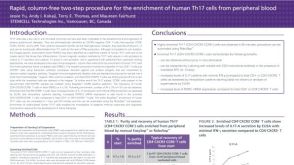 科学海报Column-Free Cell Enrichment of Human Th17 Cells from Peripheral Blood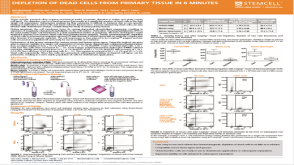


 沪公网安备31010102008431号