Tareen SU et al. (MAR 2014)
Molecular therapy : the journal of the American Society of Gene Therapy 22 3 575--87
Design of a novel integration-deficient lentivector technology that incorporates genetic and posttranslational elements to target human dendritic cells.
As sentinels of the immune system,dendritic cells (DCs) play an essential role in regulating cellular immune responses. One of the main challenges of developing DC-targeted therapies includes the delivery of antigen to DCs in order to promote the activation of antigen-specific effector CD8 T cells. With the goal of creating antigen-directed immunotherapeutics that can be safely administered directly to patients,Immune Design has developed a platform of novel integration-deficient lentiviral vectors that target and deliver antigen-encoding nucleic acids to human DCs. This platform,termed ID-VP02,utilizes a novel genetic variant of a Sindbis virus envelope glycoprotein with posttranslational carbohydrate modifications in combination with Vpx,a SIVmac viral accessory protein,to achieve efficient targeting and transduction of human DCs. In addition,ID-VP02 incorporates safety features in its design that include two redundant mechanisms to render ID-VP02 integration-deficient. Here,we describe the characteristics that allow ID-VP02 to specifically transduce human DCs,and the advances that ID-VP02 brings to conventional third-generation lentiviral vector design as well as demonstrate upstream production yields that will enable manufacturing feasibility studies to be conducted.
View Publication
产品类型:
产品号#:
70034
70042
200-0167
200-0166
产品名:
冻存的人外周血单核细胞
冻存的人外周血巨噬细胞
人外周血单核细胞,冷冻
人外周血单核细胞,冷冻
Voo KS et al. (JUL 2014)
The Journal of Immunology 193 2 627--34
Targeting of TLRs inhibits CD4+ regulatory T cell function and activates lymphocytes in human peripheral blood mononuclear cells.
Accumulating evidence suggests elements within tumors induce exhaustion of effector T cells and infiltration of immunosuppressive regulatory T cells (Tregs),thus preventing the development of durable antitumor immunity. Therefore,the discovery of agents that simultaneously block Treg suppressive function and reinvigorate effector function of lymphocytes is key to the development of effective cancer immunotherapy. Previous studies have shown that TLR ligands (TLRLs) could modulate the function of these T cell targets; however,those studies relied on cell-free or accessory cell-based assay systems that do not accurately reflect in vivo responses. In contrast,we used a human PBMC-based proliferation assay system to simultaneously monitor the effect of TLRLs on T cells (CD4(+),CD8(+),Tregs),B cells,and NK cells,which gave different and even conflicting results. We found that the TLR7/8L:CL097 could simultaneously activate CD8(+) T cells,B cells,and NK cells plus block Treg suppression of T cells and B cells. The TLRLs TLR1/2L:Pam3CSK4,TLR5L:flagellin,TLR4L:LPS,and TLR8/7L:CL075 also blocked Treg suppression of CD4(+) or CD8(+) T cell proliferation,but not B cell proliferation. Besides CL097,TLR2L:PGN,CL075,and TLR9L:CpG-A,CpG-B,and CpG-C) were strong activators of NK cells. Importantly,we found that Pam3CSK4 could: 1) activate CD4(+) T cell proliferation,2) inhibit the expansion of IL-10(+) naturally occurring FOXP3(+) Tregs and induction of IL-10(+) CD4(+) Tregs (IL-10-producing type 1 Treg),and 3) block naturally occurring FOXP3(+) Tregs suppressive function. Our results suggest these agents could serve as adjuvants to enhance the efficacy of current immunotherapeutic strategies in cancer patients.
View Publication
产品类型:
产品号#:
19052
19052RF
19055
19055RF
产品名:
EasySep™人CD4+ T细胞富集试剂盒
RoboSep™ 人CD4+ T细胞富集试剂盒含滤芯吸头
EasySep™人NK细胞富集试剂盒
RoboSep™ 人NK细胞富集试剂盒含滤芯吸头
Prè et al. (JUL 2014)
PLoS ONE 9 7 e103418
A time course analysis of the electrophysiological properties of neurons differentiated from human induced Pluripotent Stem Cells (iPSCs)
Many protocols have been designed to differentiate human embryonic stem cells (ESCs) and human induced pluripotent stem cells (iPSCs) into neurons. Despite the relevance of electrophysiological properties for proper neuronal function,little is known about the evolution over time of important neuronal electrophysiological parameters in iPSC-derived neurons. Yet,understanding the development of basic electrophysiological characteristics of iPSC-derived neurons is critical for evaluating their usefulness in basic and translational research. Therefore,we analyzed the basic electrophysiological parameters of forebrain neurons differentiated from human iPSCs,from day 31 to day 55 after the initiation of neuronal differentiation. We assayed the developmental progression of various properties,including resting membrane potential,action potential,sodium and potassium channel currents,somatic calcium transients and synaptic activity. During the maturation of iPSC-derived neurons,the resting membrane potential became more negative,the expression of voltage-gated sodium channels increased,the membrane became capable of generating action potentials following adequate depolarization and,at day 48-55,50% of the cells were capable of firing action potentials in response to a prolonged depolarizing current step,of which 30% produced multiple action potentials. The percentage of cells exhibiting miniature excitatory post-synaptic currents increased over time with a significant increase in their frequency and amplitude. These changes were associated with an increase of Ca2+ transient frequency. Co-culturing iPSC-derived neurons with mouse glial cells enhanced the development of electrophysiological parameters as compared to pure iPSC-derived neuronal cultures. This study demonstrates the importance of properly evaluating the electrophysiological status of the newly generated neurons when using stem cell technology,as electrophysiological properties of iPSC-derived neurons mature over time.
View Publication
产品类型:
产品号#:
85850
85857
产品名:
mTeSR™1
mTeSR™1
Burger R et al. ( 2009)
Molecular Cancer Therapeutics 8 1 26--35
Janus kinase inhibitor INCB20 has antiproliferative and apoptotic effects on human myeloma cells in vitro and in vivo
Protein tyrosine kinases of the Janus kinase (JAK) family are associated with many cytokine receptors,which,on ligand binding,regulate important cellular functions such as proliferation,survival,and differentiation. In multiple myeloma,JAKs may be persistently activated due to a constant stimulation by interleukin (IL)-6,which is produced in the bone marrow environment. INCB20 is a synthetic molecule that potently inhibits all members of the JAK family with a 100- to 1,000-fold selectivity for JAKs over textgreater70 other kinases. Treatment of multiple myeloma cell lines and patient tumor cells with INCB20 resulted in a significant and dose-dependent inhibition of spontaneous as well as IL-6-induced cell growth. Importantly,multiple myeloma cell growth was inhibited in the presence of bone marrow stromal cells. The IL-6 dependent cell line INA-6 was particularly sensitive to the drug (IC50textless1 micromol/L). Growth suppression of INA-6 correlated with an increase in the percentage of apoptotic cells and inhibition of signal transducer and activator of transcription 3 phosphorylation. INCB20 also abrogated the protective effect of IL-6 against dexamethasone by blocking phosphorylation of SHP-2 and AKT. In contrast,AKT phosphorylation induced by insulin-like growth factor-I remained unchanged,showing selectivity of the compound. In a s.c. severe combined immunodeficient mouse model with INA-6,INCB20 significantly delayed INA-6 tumor growth. Our studies show that disruption of JAKs and downstream signaling pathways may both inhibit multiple myeloma cell growth and survival and overcome cytokine-mediated drug resistance,thereby providing the preclinical rationale for the use of JAK inhibitors as a novel therapeutic approach in multiple myeloma.
View Publication
产品类型:
产品号#:
72932
产品名:
AG-490
Mandal A et al. (FEB 2016)
In Vitro Cellular and Developmental Biology - Animal 52 2 243--251
Long-term culture and cryopreservation does not affect the stability and functionality of human embryonic stem cell-derived hepatocyte-like cells
Human embryonic stem cells (hESCs) are predicted to be an unlimited source of hepatocytes which can pave the way for applications such as cell replacement therapies or as a model of human development or even to predict the hepatotoxicity of drug compounds. We have optimized a 23-d differentiation protocol to generate hepatocyte-like cells (HLCs) from hESCs,obtaining a relatively pure population which expresses the major hepatic markers and is functional and mature. The stability of the HLCs in terms of hepato-specific marker expression and functionality was found to be intact even after an extended period of in vitro culture and cryopreservation. The hESC-derived HLCs have shown the capability to display sensitivity and an alteration in the level of CYP enzyme upon drug induction. This illustrates the potential of such assays in predicting the hepatotoxicity of a drug compound leading to advancement of pharmacology
View Publication
产品类型:
产品号#:
85850
85857
产品名:
mTeSR™1
mTeSR™1
Parmigiani A et al. (FEB 2011)
Human immunology 72 2 115--23
Interleukin-21 and cellular activation concurrently induce potent cytotoxic function and promote antiviral activity in human CD8 T cells.
Infection with human immunodeficiency virus (HIV)-1 induces a progressive deterioration of the immune system that ultimately leads to acquired immune deficiency syndrome (AIDS). Murine models indicate that the common γ-chain (γ(c))-sharing cytokine interleukin (IL)-21 and its receptor (IL-21R) play a crucial role in maintaining polyfunctional T cell responses during chronic viral infections. Therefore,we analyzed the ability of this cytokine to modulate the properties of human CD8 T cells in comparison with other γ(c)-sharing cytokines (IL-2,IL-7,and IL-15). CD8 T cells from healthy volunteers were stimulated in vitro via T cell receptor signals to mimic the heightened status of immune activation of HIV-infected patients. The administration of IL-21 upregulated cytotoxic effector function and the expression of the costimulatory molecule CD28. Notably,this outcome was not accompanied by increased cellular proliferation or activation. Moreover,IL-21 promoted antiviral activity while not inducing HIV-1 replication in vitro. Thus,IL-21 may be a favorable molecule for immunotherapy and a suitable vaccine adjuvant in HIV-infected individuals.
View Publication
产品类型:
产品号#:
15024
15064
15023
15063
15021
15061
产品名:
RosetteSep™ 人B细胞富集抗体混合物
RosetteSep™人B细胞富集抗体混合物
RosetteSep™ 人CD8+ T细胞富集抗体混合物
RosetteSep™人CD8+ T细胞富集抗体混合物
RosetteSep™人T细胞富集抗体混合物
RosetteSep™人T细胞富集抗体混合物
Chung HCY et al. (JAN 2012)
Stem cells and development 21 2 206--16
Human induced pluripotent stem cells derived under feeder-free conditions display unique cell cycle and DNA replication gene profiles.
Use of animal feeder layers and serum containing media in the derivation and propagation of induced pluripotent stem cells (iPSCs) can hinder clinical translation,because of the presence of xeno-material/pathogens. A defined and standardized system would be ideal for generating a homogenous population of iPSCs,which closely resembles human embryonic stem cells (hESCs). This article presents a novel and extensive comparison between in-house produced iPSCs and hESCs under feeder" and "feeder-free" conditions�
View Publication
A practical synthesis of Rho-Kinase inhibitor Y-27632 and fluoro derivatives and their evaluation in human pluripotent stem cells.
A practical synthesis of the Rho-Kinase inhibitor Y-27632 and two new fluoro derivatives was achieved in seven steps and with a good overall yield of 45% starting from commercially available (R)-1-phenylethylamine. Compared to Y-27632 the new fluoro derivatives showed reduced or no effect on hPSC vitality and expansion after dissociation in human pluripotent stem cells.
View Publication
产品类型:
产品号#:
85850
85857
产品名:
mTeSR™1
mTeSR™1
Jara-Avaca M et al. (FEB 2017)
Stem cell reports 8 2 305--317
EBIO Does Not Induce Cardiomyogenesis in Human Pluripotent Stem Cells but Modulates Cardiac Subtype Enrichment by Lineage-Selective Survival.
Subtype-specific human cardiomyocytes (CMs) are valuable for basic and applied research. Induction of cardiomyogenesis and enrichment of nodal-like CMs was described for mouse pluripotent stem cells (mPSCs) in response to 1-ethyl-2-benzimidazolinone (EBIO),a chemical modulator of small-/intermediate-conductance Ca(2+)-activated potassium channels (SKs 1-4). Investigating EBIO in human pluripotent stem cells (PSCs),we have applied three independent differentiation protocols of low to high cardiomyogenic efficiency. Equivalent to mPSCs,timed EBIO supplementation during hPSC differentiation resulted in dose-dependent enrichment of up to 80% CMs,including an increase in nodal- and atrial-like phenotypes. However,our study revealed extensive EBIO-triggered cell loss favoring cardiac progenitor preservation and,subsequently,CMs with shortened action potentials. Proliferative cells were generally more sensitive to EBIO,presumably via an SK-independent mechanism. Together,EBIO did not promote cardiogenic differentiation of PSCs,opposing previous findings,but triggered lineage-selective survival at a cardiac progenitor stage,which we propose as a pharmacological strategy to modulate CM subtype composition.
View Publication
GATA1-deficient human pluripotent stem cells generate neutrophils with improved antifungal immunity that is mediated by the integrin CD18
Neutrophils are critical for host defense against fungi. However,the short life span and lack of genetic tractability of primary human neutrophils has limited in vitro analysis of neutrophil-fungal interactions. Human induced pluripotent stem cell (iPSC)-derived neutrophils (iNeutrophils) are a genetically tractable alternative to primary human neutrophils. Here,we show that deletion of the transcription factor GATA1 from human iPSCs results in iNeutrophils with improved antifungal activity against Aspergillus fumigatus. GATA1 knockout (KO) iNeutrophils have increased maturation,antifungal pattern recognition receptor expression and more readily execute neutrophil effector functions compared to wild-type iNeutrophils. iNeutrophils also show a shift in their metabolism following stimulation with fungal ?-glucan,including an upregulation of the pentose phosphate pathway (PPP),similar to primary human neutrophils in vitro. Furthermore,we show that deletion of the integrin CD18 attenuates the ability of GATA1-KO iNeutrophils to kill A. fumigatus but is not necessary for the upregulation of PPP. Collectively,these findings support iNeutrophils as a robust system to study human neutrophil antifungal immunity and has identified specific roles for CD18 in the defense response. Author SummaryNeutrophils are important first responders to fungal infections,and understanding their antifungal functions is essential to better elucidating disease dynamics. Primary human neutrophils are short lived and do not permit genetic manipulation,limiting their use to study neutrophil-fungal interactions in vitro. Human induced pluripotent stem cell (iPSC)-derived neutrophils (iNeutrophils) are a genetically tractable alternative to primary human neutrophils for in vitro analyses. In this report we show that GATA1-deficient iPSCs generate neutrophils (iNeutrophils) that are more mature than wild-type iNeutrophils and display increased antifungal activity against the human fungal pathogen Aspergillus fumigatus. We also show that GATA1-deficient iNeutrophils have increased expression of antifungal receptors than wild-type cells and shift their metabolism and execute neutrophil antifungal functions at levels comparable to primary human neutrophils. Deletion of the integrin CD18 blocks the ability of GATA1-deficient iNeutrophils to kill and control the growth of A. fumigatus,demonstrating an important role for this integrin in iNeutrophil antifungal activity. Collectively,these findings support the use of iNeutrophils as a model to study neutrophil antifungal immunity.
View Publication
产品类型:
产品号#:
100-0276
100-1130
05990
09600
09605
09650
09655
产品名:
mTeSR™ Plus
mTeSR™ Plus
TeSR™-E8™
StemSpan™ SFEM
StemSpan™ SFEM II
StemSpan™ SFEM
StemSpan™ SFEM II
(Jul 2024)
iScience 27 8
Substrate stiffness alters layer architecture and biophysics of human induced pluripotent stem cells to modulate their differentiation potential
SummaryLineage-specific differentiation of human induced pluripotent stem cells (hiPSCs) relies on complex interactions between biochemical and physical cues. Here we investigated the ability of hiPSCs to undergo lineage commitment in response to inductive signals and assessed how this competence is modulated by substrate stiffness. We showed that Activin A-induced hiPSC differentiation into mesendoderm and its derivative,definitive endoderm,is enhanced on gel-based substrates softer than glass. This correlated with changes in tight junction formation and extensive cytoskeletal remodeling. Further,live imaging and biophysical studies suggested changes in cell motility and interfacial contacts underlie hiPSC layer reshaping on soft substrates. Finally,we repurposed an ultra-soft silicone gel,which may provide a suitable substrate for culturing hiPSCs at physiological stiffnesses. Our results provide mechanistic insight into how epithelial mechanics dictate the hiPSC response to chemical signals and provide a tool for their efficient differentiation in emerging stem cell therapies. Graphical abstract Highlights•Tuning of substrate stiffness can enhance mesendoderm/endoderm hiPSC differentiation•Altered tight junction formation drives increased differentiation on soft substrates•Changes in cell motility and interfacial contacts underlie hiPSC layer remodeling Mechanobiology; Stem cells research; Biophysics
View Publication


 EasySep™小鼠TIL(CD45)正选试剂盒




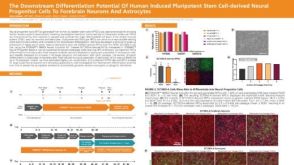 科学海报The Downstream Differentiation Potential of Human Induced Pluripotent Stem Cell-Derived Neural Progenitor Cells to Forebrain Neurons and Astrocytes
 沪公网安备31010102008431号