Dahl C et al. (APR 2002)
Journal of immunological methods 262 1-2 137--43
The establishment of a combined serum-free and serum-supplemented culture method of obtaining functional cord blood-derived human mast cells.
BACKGROUND: Serum-free cultures supplemented with stem cell factor (SCF) and IL-6 is reported to support the extensive growth of less functional human cord blood-derived mast cells. OBJECTIVE: To obtain more functional mast cells from cord blood,we developed a culture system combining a serum-free condition for 0-8 weeks of culture,and followed by a serum-supplemented culture condition and examined the function of the cells compared to the cells cultured continuously in serum-free condition. METHODS: Human cord blood progenitors were purified with anti-CD133 antibody. They were cultured in a serum-free medium StemSpan supplemented with SCF at 100 ng/ml and IL-6 at 50 ng/ml for 8 weeks. Then,an aliquot of the cultured cells were cultured in the above condition but further supplemented with 10% fetal calf serum (FCS). RESULTS: The addition of FCS after 8 weeks of culture significantly increased the amount of histamine per mast cell (3.8 pg/cell) when compared to the serum-free condition (0.7 pg/cell). The cells cultured with FCS after 8 weeks expressed more FcvarepsilonRI alpha and released textgreater30% of the histamine content upon anti-IgE stimulation than those cultured without serum. CONCLUSION: It is uncertain why FCS enhanced the functional maturation of mast cells when added after week 8 of culture but suppressed mast cell development when added at day 0 of culture. Yet,the present method combining a serum-free culture system with a serum-supplemented culture system seems to be beneficial for most of the laboratories to obtain functional human mast cells.
View Publication
产品类型:
产品号#:
09600
09650
产品名:
StemSpan™ SFEM
StemSpan™ SFEM
Naka K et al. (AUG 1997)
Differentiation 61 5 313--20
Growth inhibition of cultured human gastric cancer cells by 9-cis-retinoic acid with induction of cdk inhibitor Waf1/Cip1/Sdi1/p21 protein.
The effect of 9-cis-retinoic acid (9-cis-RA) on the growth of eight gastric cancer cell lines was related to their transcription levels of mRNAs for retinoid receptors. Northern blot analysis showed that seven (TMK-1,MKN-1,-28,-45,-74,HSC-39,KATO-III) out of eight gastric cancer cell lines synthesized mRNAs for retinoic acid receptors (RARs) and retinoid X receptor-alpha (RXR-alpha). MKN-7 cells did not transcribe either RARs or RXR-alpha at the mRNA level although they appeared to have no alterations at the gene level. The growth of all of the cell lines except for MKN-7 cells was inhibited by 1 x 10(-6) M 9-cis-RA. Cell cycle distribution analysis revealed that G0-G1 arrest was not induced by exposure to 9-cis-RA in the sensitive TMK-1 and KATO-III cells or the resistant MKN-7 cells. Interestingly,9-cis-RA temporarily increased the amount of the cyclin dependent kinase (cdk) inhibitor,Waf1/Cip1/Sdi1/p21 protein,and also reduced the amount of cdk-7,epidermal growth factor receptor (EGFR) and cyclin D1 proteins,followed by reduction in phosphorylation of the product of the retinoblastoma tumor suppressor gene (Rb) in the sensitive TMK-1 cells,but not in the resistant MKN-7 cells. These results suggest that 9-cis-RA has a cytostatic effect on gastric cancer cells that synthesize the receptor molecules through cell cycle regulatory machinery.
View Publication
产品类型:
产品号#:
72382
产品名:
9-cis Retinoic Acid
Ramos-Mejia V et al. (MAY 2012)
Stem cells and development 21 7 1145--55
The Adaptation of Human Embryonic Stem Cells to Different Feeder-Free Culture Conditions Is Accompanied by a Mitochondrial Response
The mitochondrial contribution to the maintenance of human embryonic stem cell (hESC) pluripotency and culture homeostasis remains poorly understood. Here,we sought to determine whether hESC adaptation to different feeder-free culture conditions is linked to a mitochondrial adaptation. The expression of ESC pluripotency factors and parameters of mitochondrial contribution including mitochondrial membrane potential,mtDNA content,and the expression of master mitochondrial genes implicated in replication,transcription,and biogenesis were determined in 8 hESC lines maintained in 2 distinct human feeders-conditioned media (CM): human foreskin fibroblast-CM (HFF-CM) and mesenchymal stem cell-CM (MSC-CM). We show a robust parallel trend between the expression of ESC pluripotency factors and the mitochondrial contribution depending on the culture conditions employed to maintain the hESCs,with those in MSC-CM consistently displaying increased levels of pluripotency markers associated to an enhanced mitochondrial contribution. The differences in the mitochondrial status between hESCs maintained in MSC-CM versus HFF-CM respond to coordinated changes in mitochondrial gene expression and biogenesis. Importantly,the culture conditions determine the mitochondrial distribution within the stage-specific embryonic antigen 3 positive (SSEA3(+)) and negative (SSEA3(-)) isolated cell subsets. hESC colonies in MSC-CM display an intrinsic" high mitochondrial status which may suffice to support undifferentiated growth�
View Publication
产品类型:
产品号#:
85850
85857
产品名:
mTeSR™1
mTeSR™1
Dumitru R et al. (JUN 2012)
Molecular cell 46 5 573--583
Human embryonic stem cells have constitutively active Bax at the Golgi and are primed to undergo rapid apoptosis.
Human embryonic stem (hES) cells activate a rapid apoptotic response after DNA damage but the underlying mechanisms are unknown. A critical mediator of apoptosis is Bax,which is reported to become active and translocate to the mitochondria only after apoptotic stimuli. Here we show that undifferentiated hES cells constitutively maintain Bax in its active conformation. Surprisingly,active Bax was maintained at the Golgi rather than at the mitochondria,thus allowing hES cells to effectively minimize the risks associated with having preactivated Bax. After DNA damage,active Bax rapidly translocated to the mitochondria by a p53-dependent mechanism. Interestingly,upon differentiation,Bax was no longer active,and cells were not acutely sensitive to DNA damage. Thus,maintenance of Bax in its active form is a unique mechanism that can prime hES cells for rapid death,likely to prevent the propagation of mutations during the early critical stages of embryonic development.
View Publication
产品类型:
产品号#:
85850
85857
产品名:
mTeSR™1
mTeSR™1
Hosszu KK et al. ( 2012)
Blood 120 6 1228--1237
DC-SIGN, C1q and gC1qR forge a trimolecular receptor complex on the surface of human monocyte-derived immature dendritic cells
C1q modulates the differentiation and function of cells committed to the monocyte-derived dendritic cell (DC) lineage. Because the two C1q receptors found on the DC surface - gC1qR and cC1qR - lack a direct conduit into intracellular elements,we postulated that the receptors must form complexes with transmembrane partners. Here we show that DC-SIGN,a C-type lectin expressed on DCs,binds directly to C1q,as assessed by ELISA,flow cytometry and immuno-precipitation experiments. Surface plasmon resonance analysis revealed that the interaction was specific,and intact C1q,as well as the globular portion of C1q,bound to DC-SIGN. While IgG significantly reduced the binding; the Arg residues (162-163) of the C1q-A-chain,considered to contribute to C1q-IgG interaction,were not required for C1q binding to DC-SIGN. Binding was significantly reduced in the absence of Ca(2+) and by pre-incubation of DC-SIGN with mannan,suggesting that C1q binds to DC-SIGN at its principal Ca(2+)-binding pocket,which has increased affinity for mannose residues. Antigen-capture ELISA and immunofluorescence microscopy revealed that C1q and gC1qR associate with DC-SIGN on blood DC precursors and immature DCs. Thus the data suggest that C1q/gC1qR may regulate DC differentiation and function through DC-SIGN-mediated induction of cell signaling pathways.
View Publication
产品类型:
产品号#:
07811
07861
18060
18061
产品名:
Lymphoprep™
Lymphoprep™
Lymphoprep™
Lymphoprep™
Sahara M et al. (JUL 2014)
Cell Research 24 7 820--841
Manipulation of a VEGF-Notch signaling circuit drives formation of functional vascular endothelial progenitors from human pluripotent stem cells
Human pluripotent stem cell (hPSC)-derived endothelial lineage cells constitutes a promising source for therapeutic revascularization,but progress in this arena has been hampered by a lack of clinically-scalable differentiation protocols and inefficient formation of a functional vessel network integrating with the host circulation upon transplantation. Using a human embryonic stem cell reporter cell line,where green fluorescent protein expression is driven by an endothelial cell-specific VE-cadherin (VEC) promoter,we screened for textgreater 60 bioactive small molecules that would promote endothelial differentiation,and found that administration of BMP4 and a GSK-3β inhibitor in an early phase and treatment with VEGF-A and inhibition of the Notch signaling pathway in a later phase led to efficient differentiation of hPSCs to the endothelial lineage within six days. This sequential approach generated textgreater 50% conversion of hPSCs to endothelial cells (ECs),specifically VEC(+)CD31(+)CD34(+)CD14(-)KDR(high) endothelial progenitors (EPs) that exhibited higher angiogenic and clonogenic proliferation potential among endothelial lineage cells. Pharmaceutical inhibition or genetical knockdown of Notch signaling,in combination with VEGF-A treatment,resulted in efficient formation of EPs via KDR(+) mesodermal precursors and blockade of the conversion of EPs to mature ECs. The generated EPs successfully formed functional capillary vessels in vivo with anastomosis to the host vessels when transplanted into immunocompromised mice. Manipulation of this VEGF-A-Notch signaling circuit in our protocol leads to rapid large-scale production of the hPSC-derived EPs by 12- to 20-fold vs current methods,which may serve as an attractive cell population for regenerative vascularization with superior vessel forming capability compared to mature ECs.
View Publication
产品类型:
产品号#:
85850
85857
产品名:
mTeSR™1
mTeSR™1
Ninomiya H et al. (JAN 2015)
In vitro cellular & developmental biology. Animal 51 1 1--8
Improved efficiency of definitive endoderm induction from human induced pluripotent stem cells in feeder and serum-free culture system
Improvement of methods to produce endoderm-derived cells from pluripotent stem cells is important to realize high-efficient induction of endodermal tissues such as pancreas and hepatocyte. Difficulties hampering such efforts include the low efficiency of definitive endoderm cell induction and establishing appropriate defined culture conditions to ensure a safe cell source for human transplantation. Based on previous studies,we revised the experimental condition of definitive endoderm induction in feeder- and serum-free culture. Our results suggested that CHIR99021 is more effective than Wnt3A ligand in feeder- and serum-free conditions. In addition,keeping cell density low during endoderm induction is important for the efficiency. On the other hand,we showed that overtreatment with CHIR99021 converted the cells into BRACHYURY-expressing posterior mesoderm cells rather than endoderm,indicating strict CHIR99021 treatment requirements for endoderm differentiation. Nevertheless,these results should enable better control in the production of definitive endoderm-derived cells.
View Publication
产品类型:
产品号#:
85850
85857
产品名:
mTeSR™1
mTeSR™1
Uenishi G et al. (DEC 2014)
Stem Cell Reports 3 6 1073--1084
Tenascin C promotes hematoendothelial development and T lymphoid commitment from human pluripotent stem cells in chemically defined conditions
The recent identification of hemogenic endothelium (HE) in human pluripotent stem cell (hPSC) cultures presents opportunities to investigate signaling pathways that are essential for blood development from endothelium and provides an exploratory platform for de novo generation of hematopoietic stem cells (HSCs). However,the use of poorly defined human or animal components limits the utility of the current differentiation systems for studying specific growth factors required for HE induction and manufacturing clinical-grade therapeutic blood cells. Here,we identified chemically defined conditions required to produce HE from hPSCs growing in Essential 8 (E8) medium and showed that Tenascin C (TenC),an extracellular matrix protein associated with HSC niches,strongly promotes HE and definitive hematopoiesis in this system. hPSCs differentiated in chemically defined conditions undergo stages of development similar to those previously described in hPSCs cocultured on OP9 feeders,including the formation of VE-Cadherin(+)CD73(-)CD235a/CD43(-) HE and hematopoietic progenitors with myeloid and T lymphoid potential.
View Publication
产品类型:
产品号#:
04236
04436
85850
85857
产品名:
MethoCult™SF H4236
MethoCult™ SF H4436
mTeSR™1
mTeSR™1
Hansson ML et al. (FEB 2015)
Journal of Biological Chemistry 290 9 5661--5672
Efficient delivery and functional expression of transfected modified mRNA in human embryonic stem cell-derived retinal pigmented epithelial cells
Gene- and cell-based therapies are promising strategies for the treatment of degenerative retinal diseases such as age-related macular degeneration,Stargardt disease,and retinitis pigmentosa. Cellular engineering before transplantation may allow the delivery of cellular factors that can promote functional improvements,such as increased engraftment or survival of transplanted cells. A current challenge in traditional DNA-based vector transfection is to find a delivery system that is both safe and efficient,but using mRNA as an alternative to DNA can circumvent these major roadblocks. In this study,we show that both unmodified and modified mRNA can be delivered to retinal pigmented epithelial (RPE) cells with a high efficiency compared with conventional plasmid delivery systems. On the other hand,administration of unmodified mRNA induced a strong innate immune response that was almost absent when using modified mRNA. Importantly,transfection of mRNA encoding a key regulator of RPE gene expression,microphthalmia-associated transcription factor (MITF),confirmed the functionality of the delivered mRNA. Immunostaining showed that transfection with either type of mRNA led to the expression of roughly equal levels of MITF,primarily localized in the nucleus. Despite these findings,quantitative RT-PCR analyses showed that the activation of the expression of MITF target genes was higher following transfection with modified mRNA compared with unmodified mRNA. Our findings,therefore,show that modified mRNA transfection can be applied to human embryonic stem cell-derived RPE cells and that the method is safe,efficient,and functional.
View Publication
产品类型:
产品号#:
85850
85857
产品名:
mTeSR™1
mTeSR™1
C. Kropp et al. (Oct 2016)
Stem cells translational medicine 5 1289-1301
Impact of Feeding Strategies on the Scalable Expansion of Human Pluripotent Stem Cells in Single-Use Stirred Tank Bioreactors.
The routine application of human pluripotent stem cells (hPSCs) and their derivatives in biomedicine and drug discovery will require the constant supply of high-quality cells by defined processes. Culturing hPSCs as cell-only aggregates in (three-dimensional [3D]) suspension has the potential to overcome numerous limitations of conventional surface-adherent (two-dimensional [2D]) cultivation. Utilizing single-use instrumented stirred-tank bioreactors,we showed that perfusion resulted in a more homogeneous culture environment and enabled superior cell densities of 2.85 X 10(6) cells per milliliter and 47% higher cell yields compared with conventional repeated batch cultures. Flow cytometry,quantitative reverse-transcriptase polymerase chain reaction,and global gene expression analysis revealed a high similarity across 3D suspension and 2D precultures,underscoring that matrix-free hPSC culture efficiently supports maintenance of pluripotency. Interestingly,physiological data and gene expression assessment indicated distinct changes of the cells' energy metabolism,suggesting a culture-induced switch from glycolysis to oxidative phosphorylation in the absence of hPSC differentiation. Our data highlight the plasticity of hPSCs' energy metabolism and provide clear physiological and molecular targets for process monitoring and further development. This study paves the way toward more efficient GMP-compliant cell production and underscores the enormous process development potential of hPSCs in suspension culture. SIGNIFICANCE Human pluripotent stem cells (hPSCs) are a unique source for the,in principle,unlimited production of functional human cell types in vitro,which are of high value for therapeutic and industrial applications. This study applied single-use,clinically compliant bioreactor technology to develop advanced,matrix-free,and more efficient culture conditions for the mass production of hPSCs in scalable suspension culture. Using extensive analytical tools to compare established conditions with this novel culture strategy,unexpected physiological features of hPSCs were discovered. These data allow a more rational process development,providing significant progress in the field of translational stem cell research and medicine.
View Publication
产品类型:
产品号#:
85850
85857
产品名:
mTeSR™1
mTeSR™1
P. Klaihmon et al. (Feb 2024)
Scientific Reports 14 3
Inhibition of LATS kinases reduces tumorigenicity and increases the sensitivity of human chronic myelogenous leukemia cells to imatinib
Chronic myelogenous leukemia (CML) is a clonal hematologic malignancy of the myeloid lineage caused by the oncogenic BCR/ABL fusion protein that promotes CML cell proliferation and protects them against drug-induced apoptosis. In this study,we determine LATS1 and LATS2 expression in CML cells derived from patients who are resistant to imatinib (IM) treatment. Significant upregulation of LATS1 and LATS2 was found in these CML patients compared to healthy donors. To further explore whether the expression of LATS1/2 contributes to the IM-resistant phenotype,IM-resistant CML cell lines generated by culturing CML-derived erythroblastic K562 cells in increasing concentrations of IM were used as in vitro models. Up-regulation of LATS1 and LATS2 was observed in IM-resistant K562 cells. Reduction of LATS using either Lats-IN-1 (TRULI),a specific LATS inhibitor,or shRNA targeting LATS1/2 significantly reduced clonogenicity,increased apoptosis and induced differentiation of K562 cells to late-stage erythroid cells. Furthermore,depletion of LATS1 and LATS2 also increased the sensitivity of K562 cells to IM. Taken together,our results suggest that LATS could be one of the key factors contributing to the rapid proliferation,reduced apoptosis,and IM resistance of CML cells. Targeting LATS could be a promising treatment to enhance the therapeutic effect of a conventional BCR/ABL tyrosine kinase inhibitor such as IM.
View Publication


 EasySep™小鼠TIL(CD45)正选试剂盒




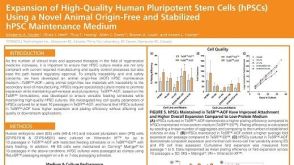 科学海报Expansion of High-Quality Human Pluripotent Stem Cells (hPSCs) Using a Novel Animal Origin-Free and Stabilized hPSC Maintenance Medium
 沪公网安备31010102008431号