Site-1 protease ablation in the osterix-lineage in mice results in bone marrow neutrophilia and hematopoietic stem cell alterations.
Site-1 protease (S1P) ablation in the osterix-lineage in mice drastically reduces bone development and downregulates bone marrow-derived skeletal stem cells. Here we show that these mice also suffer from spina bifida occulta with a characteristic lack of bone fusion in the posterior neural arches. Molecular analysis of bone marrow-derived non-red blood cell cells,via single-cell RNA-Seq and protein mass spectrometry,demonstrate that these mice have a much-altered bone marrow with a significant increase in neutrophils and Ly6C-expressing leukocytes. The molecular composition of bone marrow neutrophils is also different as they express more and additional members of the stefin A (Stfa) family of proteins. In vitro,recombinant Stfa1 and Stfa2 proteins have the ability to drastically inhibit osteogenic differentiation of bone marrow stromal cells,with no effect on adipogenic differentiation. FACS analysis of hematopoietic stem cells show that despite a decrease in hematopoietic stem cells,S1P ablation results in an increased production of granulocyte-macrophage progenitors,the precursors to neutrophils. These observations indicate that S1P has a role in the lineage specification of hematopoietic stem cells and/or their progenitors for development of a normal hematopoietic niche. Our study designates a fundamental requirement of S1P for maintaining a balanced regenerative capacity of the bone marrow niche.
View Publication
产品类型:
产品号#:
05507
产品名:
MesenCult™ 脂肪分化试剂盒 (小鼠)
Karamatic Crew V et al. (OCT 2004)
Blood 104 8 2217--23
CD151, the first member of the tetraspanin (TM4) superfamily detected on erythrocytes, is essential for the correct assembly of human basement membranes in kidney and skin.
Tetraspanins are thought to facilitate the formation of multiprotein complexes at cell surfaces,but evidence illuminating the biologic importance of this role is sparse. Tetraspanin CD151 forms very stable laminin-binding complexes with integrins alpha3beta1 and alpha6beta1 in kidney and alpha3beta1 and alpha6beta4 in skin. It is encoded by a gene at the same position on chromosome 11p15.5 as the MER2 blood group gene. We show that CD151 expresses the MER2 blood group antigen and is located on erythrocytes. We examined CD151 in 3 MER2-negative patients (2 are sibs) of Indian Jewish origin with end-stage kidney disease. In addition to hereditary nephritis the sibs have sensorineural deafness,pretibial epidermolysis bullosa,and beta-thalassemia minor. The 3 patients are homozygous for a single nucleotide insertion (G383) in exon 5 of CD151,causing a frameshift and premature stop signal at codon 140. The resultant truncated protein would lack its integrin-binding domain. We conclude that CD151 is essential for the proper assembly of the glomerular and tubular basement membrane in kidney,has functional significance in the skin,is probably a component of the inner ear,and could play a role in erythropoiesis.
View Publication
Wood ER et al. ( 2004)
Cancer research 64 18 6652--6659
A unique structure for epidermal growth factor receptor bound to GW572016 (Lapatinib): relationships among protein conformation, inhibitor off-rate, and receptor activity in tumor cells.
GW572016 (Lapatinib) is a tyrosine kinase inhibitor in clinical development for cancer that is a potent dual inhibitor of epidermal growth factor receptor (EGFR,ErbB-1) and ErbB-2. We determined the crystal structure of EGFR bound to GW572016. The compound is bound to an inactive-like conformation of EGFR that is very different from the active-like structure bound by the selective EGFR inhibitor OSI-774 (Tarceva) described previously. Surprisingly,we found that GW572016 has a very slow off-rate from the purified intracellular domains of EGFR and ErbB-2 compared with OSI-774 and another EGFR selective inhibitor,ZD-1839 (Iressa). Treatment of tumor cells with these inhibitors results in down-regulation of receptor tyrosine phosphorylation. We evaluated the duration of the drug effect after washing away free compound and found that the rate of recovery of receptor phosphorylation in the tumor cells reflected the inhibitor off-rate from the purified intracellular domain. The slow off-rate of GW572016 correlates with a prolonged down-regulation of receptor tyrosine phosphorylation in tumor cells. The differences in the off-rates of these drugs and the ability of GW572016 to inhibit ErbB-2 can be explained by the enzyme-inhibitor structures.
View Publication
产品类型:
产品号#:
73242
产品名:
拉帕替尼
Lambert AA et al. (AUG 2008)
Blood 112 4 1299--307
The C-type lectin surface receptor DCIR acts as a new attachment factor for HIV-1 in dendritic cells and contributes to trans- and cis-infection pathways.
The dynamic interplay between dendritic cells (DCs) and human immunodeficiency virus type-1 (HIV-1) is thought to result in viral dissemination and evasion of antiviral immunity. Although initial observations suggested that the C-type lectin receptor (CLR) DC-SIGN was responsible for the trans-infection function of the virus,subsequent studies demonstrated that trans-infection of CD4(+) T cells with HIV-1 can also occur through DC-SIGN-independent mechanisms. We demonstrate that a cell surface molecule designated DCIR (for DC immunoreceptor),a member of a recently described family of DC-expressing CLRs,can participate in the capture of HIV-1 and promote infection in trans and in cis of autologous CD4(+) T cells from human immature monocyte-derived DCs. The contribution of DCIR to these processes was revealed using DCIR-specific siRNAs and a polyclonal antibody specific for the carbohydrate recognition domain of DCIR. Data from transfection experiments indicated that DCIR acts as a ligand for HIV-1 and is involved in events leading to productive virus infection. Finally,we show that the neck domain of DCIR is important for the DCIR-mediated effect on virus binding and infection. These results point to a possible role for DCIR in HIV-1 pathogenesis by supporting the productive infection of DCs and promoting virus propagation.
View Publication
产品类型:
产品号#:
19052
19052RF
产品名:
EasySep™人CD4+ T细胞富集试剂盒
RoboSep™ 人CD4+ T细胞富集试剂盒含滤芯吸头
(Apr 2025)
Cells 14 8
LFA-1/ICAM-1 Interactions Between CD8+ and CD4+ T Cells Promote CD4+ Th1-Dominant Differentiation and CD8+ T Cell Cytotoxicity for Strong Antitumor Immunity After Cryo-Thermal Therapy
CD4+ T cells have been well-regarded as “helper” cells in activating the cytotoxicity of CD8+ T cells for effective tumor eradication,while few studies have focused on whether CD8+ T cells regulate CD4+ T cells. Our previous studies provided evidence for an interaction between CD4+ and CD8+ T cells after cryo-thermal therapy,but the mechanism remains unclear,especially pertaining to how CD8+ T cells promote the Th1 differentiation of CD4+ T cells. This study revealed that activated CD4+ and CD8+ T cells are critical for CTT-induced antitumor immunity,and the interaction between activated T cells is enhanced. The reciprocal regulation of activated CD8+ and CD4+ T cells was through LFA-1/ICAM-1 interactions,in which CD8+ T cells facilitate Notch1-dependent CD4+ Th1-dominant differentiation and promote IL-2 secretion of CD4+ T cells. Meanwhile,IL-2 derived from CD4+ T cells enhances the cytotoxicity of CD8+ T cells and establishes a positive feedback loop via increasing the expression of LFA-1 and ICAM-1 on T cells. Clinical analyses further validated that LFA-1/ICAM interactions between CD4+ and CD8+ T cells are correlated with clinical outcomes. Our study extends the functions of the LFA-1/ICAM-1 adhesion pathway,indicating its novel role in the interaction of CD4+ and CD8+ T cells.
View Publication
Human immunodeficiency virus-driven expansion of CD4+CD25+ regulatory T cells, which suppress HIV-specific CD4 T-cell responses in HIV-infected patients.
The present study demonstrates that CD4(+)CD25(+) T cells,expanded in peripheral blood of HIV-infected patients receiving highly active antiretroviral therapy (HAART),exhibit phenotypic,molecular,and functional characteristics of regulatory T cells. The majority of peripheral CD4(+)CD25(+) T cells from HIV-infected patients expressed a memory phenotype. They were found to constitutively express transcription factor forkhead box P3 (Foxp3) messengers. CD4(+)CD25(+) T cells weakly proliferated to immobilized anti-CD3 monoclonal antibody (mAb) and addition of soluble anti-CD28 mAb significantly increased proliferation. In contrast to CD4(+)CD25(-) T cells,CD4(+)CD25(+) T cells from HIV-infected patients did not proliferate in response to recall antigens and to p24 protein. The proliferative capacity of CD4 T cells to tuberculin,cytomegalovirus (CMV),and p24 significantly increased following depletion of CD4(+)CD25(+) T cells. Furthermore,addition of increasing numbers of CD4(+)CD25(+) T cells resulted in a dose-dependent inhibition of CD4(+)CD25(-) T-cell proliferation to tuberculin and p24. CD4(+)CD25(+) T cells responded specifically to p24 antigen stimulation by expressing transforming growth factor beta (TGF-beta) and interleukin 10 (IL-10),thus indicating the presence of p24-specific CD4(+) T cells among the CD4(+)CD25(+) T-cell subset. Suppressive activity was not dependent on the secretion of TGF-beta or IL-10. Taken together,our results suggest that persistence of HIV antigens might trigger the expansion of CD4(+)CD25(+) regulatory T cells,which might induce a tolerance to HIV in vivo.
View Publication
产品类型:
产品号#:
15022
15062
产品名:
RosetteSep™人CD4+ T细胞富集抗体混合物
RosetteSep™人CD4+ T细胞富集抗体混合物
Porayette P et al. (AUG 2009)
The Journal of Biological Chemistry 284 35 23806--17
Differential Processing of Amyloid-β Precursor Protein Directs Human Embryonic Stem Cell Proliferation and Differentiation into Neuronal Precursor Cells
The amyloid-beta precursor protein (AbetaPP) is a ubiquitously expressed transmembrane protein whose cleavage product,the amyloid-beta (Abeta) protein,is deposited in amyloid plaques in neurodegenerative conditions such as Alzheimer disease,Down syndrome,and head injury. We recently reported that this protein,normally associated with neurodegenerative conditions,is expressed by human embryonic stem cells (hESCs). We now report that the differential processing of AbetaPP via secretase enzymes regulates the proliferation and differentiation of hESCs. hESCs endogenously produce amyloid-beta,which when added exogenously in soluble and fibrillar forms but not oligomeric forms markedly increased hESC proliferation. The inhibition of AbetaPP cleavage by beta-secretase inhibitors significantly suppressed hESC proliferation and promoted nestin expression,an early marker of neural precursor cell (NPC) formation. The induction of NPC differentiation via the non-amyloidogenic pathway was confirmed by the addition of secreted AbetaPPalpha,which suppressed hESC proliferation and promoted the formation of NPCs. Together these data suggest that differential processing of AbetaPP is normally required for embryonic neurogenesis.
View Publication
产品类型:
产品号#:
85850
85857
产品名:
mTeSR™1
mTeSR™1
Lian R-L et al. (FEB 2016)
Molecular and cellular biochemistry 413 1-2 69--85
Effects of induced pluripotent stem cells-derived conditioned medium on the proliferation and anti-apoptosis of human adipose-derived stem cells.
Human adipose-derived stem cells (hASCs) become an appealing source for regenerative medicine. However,with the multi-passage or cryopreservation for large-scale growth procedures in terms of preclinical and clinical purposes,hASCs often reveal defective cell viability,which is a major obstacle for cell therapy. In our study,the effects of induced pluripotent stem cells-derived conditioned medium (iPS-CM) on the proliferation and anti-apoptosis in hASCs were investigated. hASCs at passage 1 were identified by the analysis of typical surface antigens with flow cytometry assay and adipogenic and osteogenic differentiation. The effect of iPS-CM on the proliferation in hASCs was analyzed by cell cycle assay and Ki67/P27 quantitative polymerase chain reaction analysis. The effect of iPS-CM on the anti-apoptosis of hASCs irradiated by 468 J/m(2) of ultraviolet C was investigated by annexin v/propidium iodide analysis,mitochondrial membrane potential assay,intracellular reactive oxygen species assay,Western blotting and caspase activity assays. The effect of iPS-CM on the surface antigen expressions of hASCs was analyzed using flow cytometry assay. The levels of Activin A and bFGF in culture supernatant of hASCs with different treatments were also detected by enzyme-linked immunosorbent assay. iPS-CM promoted proliferation and inhibited apoptosis of hASCs. This discovery demonstrates that iPS-CM might be used as one of the available means to overcome the propagation obstacle for hASCs and make for large-scale growth procedures in terms of preclinical and clinical purposes.
View Publication
产品类型:
产品号#:
85850
85857
产品名:
mTeSR™1
mTeSR™1
Halim L et al. (JUL 2017)
Cell reports 20 3 757--770
An Atlas of Human Regulatory T Helper-like Cells Reveals Features of Th2-like Tregs that Support a Tumorigenic Environment.
Regulatory T cells (Tregs) play a pivotal role in maintaining immunological tolerance,but they can also play a detrimental role by preventing antitumor responses. Here,we characterized T helper (Th)-like Treg subsets to further delineate their biological function and tissue distribution,focusing on their possible contribution to disease states. RNA sequencing and functional assays revealed that Th2-like Tregs displayed higher viability and autocrine interleukin-2 (IL-2)-mediated activation than other subsets. Th2-like Tregs were preferentially found in tissues rather than circulation and exhibited the highest migratory capacity toward chemokines enriched at tumor sites. These cellular responses led us to hypothesize that this subset could play a role in maintaining a tumorigenic environment. Concurrently,Th2-like Tregs were enriched specifically in malignant tissues from patients with melanoma and colorectal cancer compared to healthy tissue. Overall,our results suggest that Th2-like Tregs may contribute to a tumorigenic environment due to their increased cell survival,higher migratory capacity,and selective T-effector suppressive ability.
View Publication
产品类型:
产品号#:
15022
15062
产品名:
RosetteSep™人CD4+ T细胞富集抗体混合物
RosetteSep™人CD4+ T细胞富集抗体混合物
Wang J et al. (SEP 2012)
International journal of oncology 41 3 1101--9
Sirtinol, a class III HDAC inhibitor, induces apoptotic and autophagic cell death in MCF-7 human breast cancer cells.
Sirtuins (SIRTs),NAD+-dependent class III histone deacetylases (HDACs),play an important role in the regulation of cell division,survival and senescence. Although a number of effective SIRT inhibitors have been developed,little is known about the specific mechanisms of their anticancer activity. In this study,we investigated the anticancer effects of sirtinol,a SIRT inhibitor,on MCF-7 human breast cancer cells. Apoptotic and autophagic cell death were measured. Sirtinol significantly inhibited the proliferation of MCF-7 cells in a concentration-dependent manner. The IC50 values of sirtinol were 48.6 µM (24 h) and 43.5 µM (48 h) in MCF-7 cells. As expected,sirtinol significantly increased the acetylation of p53,which has been reported to be a target of SIRT1/2. Flow cyto-metry analysis revealed that sirtinol significantly increased the G1 phase of the cell cycle. The upregulation of Bax,downregulation of Bcl-2 and cytochrome c release into the cytoplasm,which are considered as mechanisms of apoptotic cell death,were observed in the MCF-7 cells treated with sirtinol. The annexin V-FITC assay was used to confirm sirtinol-induced apoptotic cell death. Furthermore,the expression of LC3-II,an autophagy-related molecule,was significantly increased in MCF-7 cells after sirtinol treatment. Autophagic cell death was confirmed by acridine orange and monodansylcadaverine (MDC) staining. Of note,pre-treatment with 3-methyladenine (3-MA) increased the sirtinol-induced MCF-7 cell cytotoxicity,which is associated with blocking autophagic cell death and increasing apoptotic cell death. Based on our results,the downregulation of SIRT1/2 expression may play an important role in the regulation of breast cancer cell death; thus,SIRT1/2 may be a novel molecular target for cancer therapy and these findings may provide a molecular basis for targeting SIRT1/2 in future cancer therapy.
View Publication


 EasySep™小鼠TIL(CD45)正选试剂盒




 科学海报A Rapid Method to Isolate Highly Purified T or B Cells from Blood, Lymph Node or Spleen Samples For Use in Donor-Recipient Crossmatch Assays
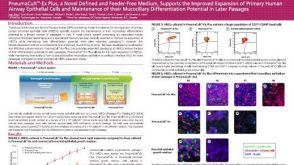 科学海报PneumaCult™-Ex Plus, a Novel Defined and Feeder-Free Medium, Supports the Improved Expansion of Primary Human Airway Epithelial Cells
 沪公网安备31010102008431号