P. Fonseca et al. (Apr 2024)
Journal of Experimental & Clinical Cancer Research : CR 43 1
A phenotypic screening approach to target p60AmotL2-expressing invasive cancer cells
Tumor cells have the ability to invade and form small clusters that protrude into adjacent tissues,a phenomenon that is frequently observed at the periphery of a tumor as it expands into healthy tissues. The presence of these clusters is linked to poor prognosis and has proven challenging to treat using conventional therapies. We previously reported that p60AmotL2 expression is localized to invasive colon and breast cancer cells. In vitro,p60AmotL2 promotes epithelial cell invasion by negatively impacting E-cadherin/AmotL2-related mechanotransduction. Using epithelial cells transfected with inducible p60AmotL2,we employed a phenotypic drug screening approach to find compounds that specifically target invasive cells. The phenotypic screen was performed by treating cells for 72 h with a library of compounds with known antitumor activities in a dose-dependent manner. After assessing cell viability using CellTiter-Glo,drug sensitivity scores for each compound were calculated. Candidate hit compounds with a higher drug sensitivity score for p60AmotL2-expressing cells were then validated on lung and colon cell models,both in 2D and in 3D,and on colon cancer patient-derived organoids. Nascent RNA sequencing was performed after BET inhibition to analyse BET-dependent pathways in p60AmotL2-expressing cells. We identified 60 compounds that selectively targeted p60AmotL2-expressing cells. Intriguingly,these compounds were classified into two major categories: Epidermal Growth Factor Receptor (EGFR) inhibitors and Bromodomain and Extra-Terminal motif (BET) inhibitors. The latter consistently demonstrated antitumor activity in human cancer cell models,as well as in organoids derived from colon cancer patients. BET inhibition led to a shift towards the upregulation of pro-apoptotic pathways specifically in p60AmotL2-expressing cells. BET inhibitors specifically target p60AmotL2-expressing invasive cancer cells,likely by exploiting differences in chromatin accessibility,leading to cell death. Additionally,our findings support the use of this phenotypic strategy to discover novel compounds that can exploit vulnerabilities and specifically target invasive cancer cells. The online version contains supplementary material available at 10.1186/s13046-024-03031-w.
View Publication
产品类型:
产品号#:
06010
产品名:
IntestiCult™ 类器官生长培养基 (人)
A. Col\'on et al. ( 2020)
ACS chemical neuroscience 11 7 1085--1092
Differentiation of Intrafusal Fibers from Human Induced Pluripotent Stem Cells.
Human-based body-on-a-chip" technology provides powerful platforms in developing models for drug evaluation and disease evaluations in phenotypic models. Induced pluripotent stem cells (iPSCs) are ideal cell sources for generating different cell types for these in vitro functional systems and recapitulation of the neuromuscular reflex arc would allow for the study of patient specific neuromuscular diseases. Regarding relevant afferent (intrafusal fibers sensory neurons) and efferent (extrafusal fibers motoneurons) cells in vitro differentiation of intrafusal fiber from human iPSCs has not been established. This work demonstrates a protocol for inducing an enrichment of intrafusal bag fibers from iPSCs using morphological analysis and immunocytochemistry. Phosphorylation of the ErbB2 receptors and S46 staining indicated a 3-fold increase of total intrafusal fibers further confirming the efficiency of the protocol. Integration of induced intrafusal fibers would enable more accurate reflex arc models and application of this protocol on patient iPSCs would allow for patient-specific disease modeling."
View Publication
产品类型:
产品号#:
05980
05982
05983
产品名:
MyoCult™-SF 扩增添加物试剂盒 (人)
MyoCult™-SF 扩增10X添加物(人)
MyoCult™-SF 贴附基质
S. M. Seki et al. (oct 2020)
Science signaling 13 655
Modulation of PKM activity affects the differentiation of TH17 cells.
Small molecules that promote the metabolic activity of the pyruvate kinase isoform PKM2,such as TEPP-46 and DASA-58,limit tumorigenesis and inflammation. To understand how these compounds alter T cell function,we assessed their therapeutic activity in a mouse model of T cell-mediated autoimmunity that mimics multiple sclerosis (MS). TH17 cells are believed to orchestrate MS pathology,in part,through the production of two proinflammatory cytokines: interleukin-17 (IL-17) and GM-CSF. We found that both TEPP-46 and DASA-58 suppressed the development of IL-17-producing TH17 cells but increased the generation of those producing GM-CSF. This switch redirected disease pathology from the spinal cord to the brain. In addition,we found that activation of PKM2 interfered with TGF-$\beta$1 signaling,which is necessary for the development of TH17 and regulatory T cells. Collectively,our data clarify the therapeutic potential of PKM2 activators in MS-like disease and how these agents alter T cell function.
View Publication
产品类型:
产品号#:
19852
19852RF
产品名:
EasySep™小鼠CD4+ T细胞分选试剂盒
RoboSep™ 小鼠CD4+ T细胞分选试剂盒
Kucia M et al. (JAN 2006)
Leukemia 20 1 18--28
Cells enriched in markers of neural tissue-committed stem cells reside in the bone marrow and are mobilized into the peripheral blood following stroke.
The concept that bone marrow (BM)-derived cells participate in neural regeneration remains highly controversial and the identity of the specific cell type(s) involved remains unknown. We recently reported that the BM contains a highly mobile population of CXCR4+ cells that express mRNA for various markers of early tissue-committed stem cells (TCSCs),including neural TCSCs. Here,we report that these cells not only express neural lineage markers (beta-III-tubulin,Nestin,NeuN,and GFAP),but more importantly form neurospheres in vitro. These neural TCSCs are present in significant amounts in BM harvested from young mice but their abundance and responsiveness to gradients of motomorphogens,such as SDF-1,HGF,and LIF,decreases with age. FACS analysis,combined with analysis of neural markers at the mRNA and protein levels,revealed that these cells reside in the nonhematopoietic CXCR4+/Sca-1+/lin-/CD45 BM mononuclear cell fraction. Neural TCSCs are mobilized into the peripheral-blood following stroke and chemoattracted to the damaged neural tissue in an SDF-1-CXCR4-,HGF-c-Met-,and LIF-LIF-R-dependent manner. Based on these data,we hypothesize that the postnatal BM harbors a nonhematopoietic population of cells that express markers of neural TCSCs that may account for the beneficial effects of BM-derived cells in neural regeneration.
View Publication
产品类型:
产品号#:
05700
05701
05702
05703
05704
产品名:
NeuroCult™ 基础培养基(小鼠&大鼠)
NeuroCult™ 扩增添加物 (小鼠&大鼠)
NeuroCult™ 扩增试剂盒 (小鼠&大鼠)
NeuroCult™ 分化添加物 (小鼠&大鼠)
NeuroCult™ 分化试剂盒 (小鼠&大鼠)
Sareen D et al. (AUG 2014)
Journal of Comparative Neurology 522 12 2707--2728
Human induced pluripotent stem cells are a novel source of neural progenitor cells (iNPCs) that migrate and integrate in the rodent spinal cord
Transplantation of human neural progenitor cells (NPCs) into the brain or spinal cord to replace lost cells,modulate the injury environment,or create a permissive milieu to protect and regenerate host neurons is a promising therapeutic strategy for neurological diseases. Deriving NPCs from human fetal tissue is feasible,although problematic issues include limited sources and ethical concerns. Here we describe a new and abundant source of NPCs derived from human induced pluripotent stem cells (iPSCs). A novel chopping technique was used to transform adherent iPSCs into free-floating spheres that were easy to maintain and were expandable (EZ spheres) (Ebert et al. [2013] Stem Cell Res 10:417–427). These EZ spheres could be differentiated towards NPC spheres with a spinal cord phenotype using a combination of all-trans retinoic acid (RA) and epidermal growth factor (EGF) and fibroblast growth factor-2 (FGF-2) mitogens. Suspension cultures of NPCs derived from human iPSCs or fetal tissue have similar characteristics,although they were not similar when grown as adherent cells. In addition,iPSC-derived NPCs (iNPCs) survived grafting into the spinal cord of athymic nude rats with no signs of overgrowth and with a very similar profile to human fetal-derived NPCs (fNPCs). These results suggest that human iNPCs behave like fNPCs and could thus be a valuable alternative for cellular regenerative therapies of neurological diseases. J. Comp. Neurol. 522:2707–2728,2014. textcopyright 2014 Wiley Periodicals,Inc.
View Publication
产品类型:
产品号#:
85850
85857
产品名:
mTeSR™1
mTeSR™1
Zhou P et al. (MAY 2016)
Biomaterials 87 1--17
Simple and versatile synthetic polydopamine-based surface supports reprogramming of human somatic cells and long-term self-renewal of human pluripotent stem cells under defined conditions
Human pluripotent stem cells (hPSCs) possess great value in the aspect of cellular therapies due to its self-renewal and potential to differentiate into all somatic cell types. A few defined synthetic surfaces such as polymers and adhesive biological materials conjugated substrata were established for the self-renewal of hPSCs. However,none of them was effective in the generation of human induced pluripotent stem cells (hiPSCs) and long-term maintenance of multiple hPSCs,and most of them required complicated manufacturing processes. Polydopamine has good biocompatibility,is able to form a stable film on nearly all solid substrates surface,and can immobilize adhesive biomolecules. In this manuscript,a polydopamine-mediated surface was developed,which not only supported the reprogramming of human somatic cells into hiPSCs under defined conditions,but also sustained the growth of hiPSCs on diverse substrates. Moreover,the proliferation and pluripotency of hPSCs cultured on the surface were comparable to Matrigel for more than 20 passages. Besides,hPSCs were able to differentiate to cardiomyocytes and neural cells on the surface. This polydopamine-based synthetic surface represents a chemically-defined surface extensively applicable both for fundamental research and cell therapies of hPSCs.
View Publication
Fu X et al. (AUG 2010)
Tissue engineering. Part C,Methods 16 4 719--733
Autologous feeder cells from embryoid body outgrowth support the long-term growth of human embryonic stem cells more effectively than those from direct differentiation.
Autologous feeder cells have been developed by various methods to minimize the presence of xenogenic entities in human embryonic stem cell (hESC) cultures. However,there was no systematic comparison of supportive effects of the feeder cells on hESC growth,nor comparison to the supportive effects of various feeder-free culture systems and standard mouse feeder cells. In this study,we aimed to compare the supportive abilities of autologous feeders derived either directly from H9 hESCs (H9 dF) or from outgrowth of embryoid body predifferentiated in suspension from H9 hESCs (H9 ebF). Mouse feeder system and matrigel-mTeSR1 feeder-free system were used as controls. H9 ebF was found to secrete more basic fibroblast growth factor in the conditioned medium than H9 dF did. The undifferentiated state of H9 hESCs was sustained more stably on H9 ebF than on H9 dF,and the differentiation potential of H9 hESCs on H9 ebF was higher than on H9 dF. We concluded that H9 ebF was an optimal autologous feeder to maintain the long-term undifferentiated state of hESCs in our current culture system. This study helps to standardize the autologous culture of hESCs. It also suggests a more definite direction for future development of xeno-free culture system for hESCs.
View Publication
产品类型:
产品号#:
85850
85857
产品名:
mTeSR™1
mTeSR™1
Gu Z et al. (FEB 2006)
Antimicrobial agents and chemotherapy 50 2 625--31
In vitro antiretroviral activity and in vitro toxicity profile of SPD754, a new deoxycytidine nucleoside reverse transcriptase inhibitor for treatment of human immunodeficiency virus infection.
SPD754 (AVX754) is a deoxycytidine analogue nucleotide reverse transcriptase inhibitor (NRTI) in clinical development. These studies characterized the in vitro activity of SPD754 against NRTI-resistant human immunodeficiency virus type 1 (HIV-1) and non-clade B HIV-1 isolates,its activity in combination with other antiretrovirals,and its potential myelotoxicity and mitochondrial toxicity. SPD754 was tested against 50 clinical HIV-1 isolates (5 wild-type isolates and 45 NRTI-resistant isolates) in MT-4 cells using the Antivirogram assay. SPD754 susceptibility was reduced 1.2- to 2.2-fold against isolates resistant to zidovudine (M41L,T215Y/F,plus a median of three additional nucleoside analogue mutations [NAMs]) and/or lamivudine (M184V) and was reduced 1.3- to 2.8-fold against isolates resistant to abacavir (L74V,Y115F,and M184V plus one other NAM) or stavudine (V75T/M,M41L,T215F/Y,and four other NAMs). Insertions at amino acid position 69 and Q151M mutations (with or without M184V) reduced SPD754 susceptibility 5.2-fold and 14- to 16-fold,respectively (these changes gave values comparable to or less than the corresponding values for zidovudine,lamivudine,abacavir,and didanosine). SPD754 showed similar activity against isolates of group M HIV-1 clades,including A/G,B,C,D,A(E),D/F,F,and H. SPD754 showed additive effects in combination with other NRTIs,tenofovir,nevirapine,or saquinavir. SPD754 had no significant effects on cell viability or mitochondrial DNA in HepG2 or MT-4 cells during 28-day exposure at concentrations up to 200 microM. SPD754 showed a low potential for myelotoxicity against human bone marrow. In vitro,SPD754 retained activity against most NRTI-resistant HIV-1 clinical isolates and showed a low propensity to cause myelotoxicity and mitochondrial toxicity.
View Publication
产品类型:
产品号#:
04434
04444
产品名:
MethoCult™H4434经典
MethoCult™H4434经典
T. J. Pugh et al. (DEC 2018)
Cancer genetics 228-229 184--196
Assessing genome-wide copy number aberrations and copy-neutral loss-of-heterozygosity as best practice: An evidence-based review from the Cancer Genomics Consortium working group for plasma cell disorders.
BACKGROUND Plasma cell neoplasms (PCNs) encompass a spectrum of disorders including monoclonal gammopathy of undetermined significance,smoldering myeloma,plasma cell myeloma,and plasma cell leukemia. Molecular subtypes have been defined by recurrent cytogenetic abnormalities and somatic mutations that are prognostic and predictive. Karyotype and fluorescence in situ hybridization (FISH) have historically been used to guide management; however,new technologies and markers raise the need to reassess current testing algorithms. METHODS We convened a panel of representatives from international clinical laboratories to capture current state-of-the-art testing from published reports and to put forward recommendations for cytogenomic testing of plasma cell neoplasms. We reviewed 65 papers applying FISH,chromosomal microarray (CMA),next-generation sequencing,and gene expression profiling for plasma cell neoplasm diagnosis and prognosis. We also performed a survey of our peers to capture current laboratory practice employed outside our working group. RESULTS Plasma cell enrichment is widely used prior to FISH testing,most commonly by magnetic bead selection. A variety of strategies for direct,short- and long-term cell culture are employed to ensure clonal representation for karyotyping. Testing of clinically-informative 1p/1q,del(13q) and del(17p) are common using karyotype,FISH and,increasingly,CMA testing. FISH for a variety of clinically-informative balanced IGH rearrangements is prevalent. Literature review found that CMA analysis can detect abnormalities in 85-100{\%} of patients with PCNs; more specifically,in 5-53{\%} (median 14{\%}) of cases otherwise normal by FISH and cytogenetics. CMA results in plasma cell neoplasms are usually complex,with alteration counts ranging from 1 to 74 (median 10-20),primarily affecting loci not covered by FISH testing. Emerging biomarkers include structural alterations of MYC as well as somatic mutations of KRAS,NRAS,BRAF,and TP53. Together,these may be measured in a comprehensive manner by a combination of newer technologies including CMA and next-generation sequencing (NGS). Our survey suggests most laboratories have,or are soon to have,clinical CMA platforms,with a desire to move to NGS assays in the future. CONCLUSION We present an overview of current practices in plasma cell neoplasm testing as well as an algorithm for integrated FISH and CMA testing to guide treatment of this disease.
View Publication
Scappini B et al. (DEC 2001)
Clinical cancer research : an official journal of the American Association for Cancer Research 7 12 3884--93
Effects of signal transduction inhibitor 571 in acute myelogenous leukemia cells.
STI571 is a 2-phenylalaminopyrimidine derivative that inhibits c-abl,Bcr-Abl,and platelet-derived growth factor receptor tyrosine kinases. Recently,inhibition of stem cell factor (SCF)-induced c-kit phosphorylation and cell proliferation by STI571 was reported in the human myeloid cell line MO7e. Because approximately 70% of acute myelogenous leukemia (AML) cases are c-kit positive,we evaluated in vitro effects of STI571 on c-kit-positive cell lines and primary AML blast cells. At concentrations textgreater5 microM,the drug marginally inhibited SCF-independent proliferation of cell lines and most of AML blasts. Treatment of AML cells with cytarabine and STI571 showed synergistic effect at low concentrations. Western blotting analysis documented a distinct band of M(r) 145,000 specific for c-kit in cell lines and in AML samples. There was no correlation between the level of the c-kit expression evaluated by Western blotting and percentage of c-kit-positive blasts as measured by flow cytometry. Neither in cell lines nor in primary AML cells,c-kit autophosphorylation was detectable under standard growth conditions. SCF-induced phosphorylation of c-kit in MO7e cells was inhibited by STI571. In a c-kit-positive AML-4 cell line,as well as in AML samples,c-kit phosphorylation was not induced by SCF exposure,suggesting that in these cases,the receptor could not be functionally activated. In conclusion,with the exception of MO7e,SCF did not induce phosphorylation of c-kit,and cell proliferation was not modulated in the presence of STI571. We did not detect any SCF-independent c-kit phosphorylation in our experimental systems. Consequently,STI571 exerted only a limited inhibitory effect on the cell growth.
View Publication


 EasySep™小鼠TIL(CD45)正选试剂盒




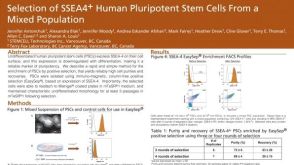 科学海报Selection of SSEA4+ Human Pluripotent Stem Cells from a Mixed Population

 沪公网安备31010102008431号