MUC1* Ligand, NM23-H1, Is a Novel Growth Factor That Maintains Human Stem Cells in a More Naïve State
We report that a single growth factor,NM23-H1,enables serial passaging of both human ES and iPS cells in the absence of feeder cells,their conditioned media or bFGF in a fully defined xeno-free media on a novel defined,xeno-free surface. Stem cells cultured in this system show a gene expression pattern indicative of a more naïve" state than stem cells grown in bFGF-based media. NM23-H1 and MUC1* growth factor receptor cooperate to control stem cell self-replication. By manipulating the multimerization state of NM23-H1�
View Publication
产品类型:
产品号#:
85850
85857
产品名:
mTeSR™1
mTeSR™1
Cao N et al. (SEP 2013)
Cell Research 23 9 1119--1132
Highly efficient induction and long-term maintenance of multipotent cardiovascular progenitors from human pluripotent stem cells under defined conditions
Cardiovascular progenitor cells (CVPCs) derived from human pluripotent stem cells (hPSCs),including human embryonic stem cells (hESCs) and human induced pluripotent stem cells (hiPSCs),hold great promise for the study of cardiovascular development and cell-based therapy of heart diseases,but their applications are challenged by the difficulties in their efficient generation and stable maintenance. This study aims to develop chemically defined systems for robust generation and stable propagation of hPSC-derived CVPCs by modulating the key early developmental pathways involved in human cardiovascular specification and CVPC self-renewal. Herein we report that a combination of bone morphogenetic protein 4 (BMP4),glycogen synthase kinase 3 (GSK3) inhibitor CHIR99021 and ascorbic acid is sufficient to rapidly convert monolayer-cultured hPSCs,including hESCs and hiPSCs,into homogeneous CVPCs in a chemically defined medium under feeder- and serum-free culture conditions. These CVPCs stably self-renewed under feeder- and serum-free conditions and expanded over 10(7)-fold when the differentiation-inducing signals from BMP,GSK3 and Activin/Nodal pathways were simultaneously eliminated. Furthermore,these CVPCs exhibited expected genome-wide molecular features of CVPCs,retained potentials to generate major cardiovascular lineages including cardiomyocytes,smooth muscle cells and endothelial cells in vitro,and were non-tumorigenic in vivo. Altogether,the established systems reported here permit efficient generation and stable maintenance of hPSC-derived CVPCs,which represent a powerful tool to study early embryonic cardiovascular development and provide a potentially safe source of cells for myocardial regenerative medicine.
View Publication
Brefeldin a effectively inhibits cancer stem cell-like properties and MMP-9 activity in human colorectal cancer Colo 205 cells.
Cancer stem cells (CSCs) are a small subset of cancer cells with indefinite potential for self-renewal and the capacity to drive tumorigenesis. Brefeldin A (BFA) is an antibiotic that is known to block protein transport and induce endoplasmic reticulum (ER) stress in eukaryotic cells,but its effects on colorectal CSCs are unknown. We investigated the inhibitory effect of BFA on human colorectal cancer Colo 205 cells. We found that BFA effectively reduced the survival of suspension Colo 205 cells (IC₅₀ = ˜15 ng/mL) by inducing apoptosis,and inhibited the clonogenic activity of Colo 205 CSCs in tumorsphere formation assay and soft agar colony formation assay in the same nanogram per milliliter range. We also discovered that at such low concentrations,BFA effectively induced endoplasmic reticulum (ER) stress response as indicated by the increased mRNA expression of ER stress-related genes,such as glucose-regulated protein 78 (GRP78),X-box binding protein 1 (XBP1),and C/EBP homologous protein (CHOP). Finally,we found that BFA reduced the activity of matrix metallopeptidase 9 (MMP-9). These findings suggest that BFA can effectively suppress the progression of colorectal cancer during the tumorigenesis and metastasis stages. These results may lead to the development of novel therapies for the treatment of colorectal cancer.
View Publication
产品类型:
产品号#:
73012
73014
产品名:
Brefeldin A
布雷非德菌素A
Vazin T et al. (JAN 2014)
Biomaterials 35 3 941--948
The effect of multivalent Sonic hedgehog on differentiation of human embryonic stem cells into dopaminergic and GABAergic neurons
Stem cell differentiation is regulated by complex repertoires of signaling ligands which often use multivalent interactions,where multiple ligands tethered to one entity interact with multiple cellular receptors to yield oligomeric complexes. One such ligand is Sonic hedgehog (Shh),whose posttranslational lipid modifications and assembly into multimers enhance its biological potency,potentially through receptor clustering. Investigations of Shh typically utilize recombinant,monomeric protein,and thus the impact of multivalency on ligand potency is unexplored. Among its many activities,Shh is required for ventralization of the midbrain and forebrain and is therefore critical for the development of midbrain dopaminergic (mDA) and forebrain gamma-aminobutyric acid (GABA) inhibitory neurons. We have designed multivalent biomaterials presenting Shh in defined spatial arrangements and investigated the role of Shh valency in ventral specification of human embryonic stem cells (hESCs) into these therapeutically relevant cell types. Multivalent Shh conjugates with optimal valencies,compared to the monomeric Shh,increased the percentages of neurons belonging to mDA or forebrain GABAergic fates from 33% to 60% or 52% to 86%,respectively. Thus,multivalent Shh bioconjugates can enhance neuronal lineage commitment of pluripotent stem cells and thereby facilitate efficient derivation of neurons that could be used to treat Parkinson's and epilepsy patients.
View Publication
产品类型:
产品号#:
85850
85857
产品名:
mTeSR™1
mTeSR™1
Greene WA et al. (JUN 2014)
Journal of visualized experiments : JoVE 88 e51589
MicroRNA expression profiles of human iPS cells, retinal pigment epithelium derived from iPS, and fetal retinal pigment epithelium.
The objective of this report is to describe the protocols for comparing the microRNA (miRNA) profiles of human induced-pluripotent stem (iPS) cells,retinal pigment epithelium (RPE) derived from human iPS cells (iPS-RPE),and fetal RPE. The protocols include collection of RNA for analysis by microarray,and the analysis of microarray data to identify miRNAs that are differentially expressed among three cell types. The methods for culture of iPS cells and fetal RPE are explained. The protocol used for differentiation of RPE from human iPS is also described. The RNA extraction technique we describe was selected to allow maximal recovery of very small RNA for use in a miRNA microarray. Finally,cellular pathway and network analysis of microarray data is explained. These techniques will facilitate the comparison of the miRNA profiles of three different cell types.
View Publication
产品类型:
产品号#:
85850
85857
产品名:
mTeSR™1
mTeSR™1
C. Wang et al. ( 2019)
Molecular nutrition {\&} food research 63 18 e1900262
Human Milk Oligosaccharides Protect against Necrotizing Enterocolitis by Inhibiting Intestinal Damage via Increasing the Proliferation of Crypt Cells.
SCOPE Necrotizing enterocolitis (NEC) is a devastating disease that is highly lethal in premature infants. Human milk oligosaccharides (HMOs) efficiently reduce the incidence of NEC. However,the protective mechanism of HMO treatment is unknown. It is hypothesized that HMOs protect against NEC by inhibiting the damage to intestinal epithelial cells. METHODS AND RESULTS C57BL/6 pups are challenged with hypoxia and cold stress to induce NEC. All pups are sacrificed after 72 h. It is found that HMO administration reduces the concentrations of IL-8 in the serum and ileum of all NEC mice. Ileum toll-like receptor 4 (TLR4) protein expression and nuclear factor kappa-B (NF$\kappa$B) pathway activation are inhibited. The proliferative ability of enterocytes in the ileum is restored as determined by labeling with proliferation markers (Ki67,SOX9). In a 3D culture intestinal crypt organoids study,HMO treatment improves the maturation of organoid cells and increases the ratio of proliferative cells under lipopolysaccharides (LPS) treatment. HMO treatment downregulates TLR4 expression in the organoid cells,thus reducing the effect of LPS. CONCLUSION HMOs protect intestinal epithelial cells from injury by accelerating the turnover of crypt cells by reducing the expression of TLR4 on intestinal epithelial cells.
View Publication
产品类型:
产品号#:
85415
85420
产品名:
SepMate™-15 (IVD), 100 units
SepMate™-15 (IVD)
M. B. Mahmoud et al. (Jan 2025)
Scientific Reports 15
Multifactorial approach is needed to unravel the maturation phases of human neurons derived from induced pluripotent stem cells
Neurons derived from induced pluripotent stem cells (h-iPSC-Ns) provide an invaluable model for studying the physiological aspects of human neuronal development under healthy and pathological conditions. However,multiple studies have demonstrated that h-iPSC-Ns exhibit a high degree of functional and epigenetic diversity. Due to the imprecise characterization and significant variation among the currently available maturation protocols,it is essential to establish a set of criteria to standardize models and accurately characterize and define the developmental properties of human neurons derived from iPSCs. In this study,we conducted comprehensive cellular and network level analysis of the functional development of human neurons,generated from iPSCs obtained from healthy young female peripheral blood mononuclear cells by BDNF and GDNF treatment. We provide a thorough description of the maturation process of h-iPSC-Ns over a 10-week in vitro period using conventional whole-cell patch clamp and dynamic clamp techniques,alongside with morphometry and immunocytochemistry. Additionally,we utilized calcium imaging to monitor the progression of synaptic activity and network communication. At the single cell level,human neurons exhibited gradually decreasing membrane resistance in parallel with improved excitability. By the fifth week of maturation,firing profiles were consistent with those of mature regular firing type of neurons. At the network level,fast glutamatergic and depolarizing GABAergic synaptic connections were abundant together with synchronized network activity from the sixth week of maturation. Alterations in the expression of GABA A receptor subunits were also observed during the process of maturation. The sequence of differentiation events was consistent,providing a robust temporal framework to execute experiments at defined stages of neuronal maturation as well as to use a specific set of experiments to assess a culture’s maturation. The uncovered progression of differentiation events provides a powerful tool to aid the planning and designing of targeted experiments during defined stages of neuronal maturation.
View Publication
OrganoLabeler: A Quick and Accurate Annotation Tool for Organoid Images
Organoids are self-assembled 3D cellular structures that resemble organs structurally and functionally,providing in vitro platforms for molecular and therapeutic studies. Generation of organoids from human cells often requires long and costly procedures with arguably low efficiency. Prediction and selection of cellular aggregates that result in healthy and functional organoids can be achieved by using artificial intelligence-based tools. Transforming images of 3D cellular constructs into digitally processable data sets for training deep learning models requires labeling of morphological boundaries,which often is performed manually. Here,we report an application named OrganoLabeler,which can create large image-based data sets in a consistent,reliable,fast,and user-friendly manner. OrganoLabeler can create segmented versions of images with combinations of contrast adjusting,K-means clustering,CLAHE,binary,and Otsu thresholding methods. We created embryoid body and brain organoid data sets,of which segmented images were manually created by human researchers and compared with OrganoLabeler. Validation is performed by training U-Net models,which are deep learning models specialized in image segmentation. U-Net models,which are trained with images segmented by OrganoLabeler,achieved similar or better segmentation accuracies than the ones trained with manually labeled reference images. OrganoLabeler can replace manual labeling,providing faster and more accurate results for organoid research free of charge.
View Publication
产品类型:
产品号#:
100-0483
100-0484
85850
85857
产品名:
Hausser Scientificᵀᴹ 明线血球计数板
ReLeSR™
mTeSR™1
mTeSR™1
M. K. Orlowska et al. (Mar 2024)
Biomicrofluidics 18 2
A miniaturized culture platform for control of the metabolic environment
The heart is a metabolic “omnivore” and adjusts its energy source depending on the circulating metabolites. Human cardiac organoids,a three-dimensional in vitro model of the heart wall,are a useful tool to study cardiac physiology and pathology. However,cardiac tissue naturally experiences shear stress and nutrient fluctuations via blood flow in vivo,whilst in vitro models are conventionally cultivated in a static medium. This necessitates the regular refreshing of culture media,which creates acute cellular disturbances and large metabolic fluxes. To culture human cardiac organoids in a more physiological manner,we have developed a perfused bioreactor for cultures in a 96-well plate format. The designed bioreactor is easy to fabricate using a common culture plate and a 3D printer. Its open system allows for the use of traditional molecular biology techniques,prevents flow blockage issues,and provides easy access for sampling and cell assays. We hypothesized that a perfused culture would create more stable environment improving cardiac function and maturation. We found that lactate is rapidly produced by human cardiac organoids,resulting in large fluctuations in this metabolite under static culture. Despite this,neither medium perfusion in bioreactor culture nor lactate supplementation improved cardiac function or maturation. In fact,RNA sequencing revealed little change across the transcriptome. This demonstrates that cardiac organoids are robust in response to fluctuating environmental conditions under normal physiological conditions. Together,we provide a framework for establishing an easily accessible perfusion system that can be adapted to a range of miniaturized cell culture systems.
View Publication


 EasySep™小鼠TIL(CD45)正选试剂盒




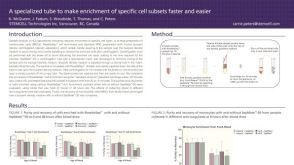 科学海报Fast and Easy Enrichment of Cell Subsets for HLA Analysis

 沪公网安备31010102008431号