Byrne SM et al. (FEB 2015)
Nucleic Acids Research 43 3 e21
Multi-kilobase homozygous targeted gene replacement in human induced pluripotent stem cells.
Sequence-specific nucleases such as TALEN and the CRISPR/Cas9 system have so far been used to disrupt,correct or insert transgenes at precise locations in mammalian genomes. We demonstrate efficient 'knock-in' targeted replacement of multi-kilobase genes in human induced pluripotent stem cells (iPSC). Using a model system replacing endogenous human genes with their mouse counterpart,we performed a comprehensive study of targeting vector design parameters for homologous recombination. A 2.7 kilobase (kb) homozygous gene replacement was achieved in up to 11% of iPSC without selection. The optimal homology arm length was around 2 kb,with homology length being especially critical on the arm not adjacent to the cut site. Homologous sequence inside the cut sites was detrimental to targeting efficiency,consistent with a synthesis-dependent strand annealing (SDSA) mechanism. Using two nuclease sites,we observed a high degree of gene excisions and inversions,which sometimes occurred more frequently than indel mutations. While homozygous deletions of 86 kb were achieved with up to 8% frequency,deletion frequencies were not solely a function of nuclease activity and deletion size. Our results analyzing the optimal parameters for targeting vector design will inform future gene targeting efforts involving multi-kilobase gene segments,particularly in human iPSC.
View Publication
产品类型:
产品号#:
85850
85857
产品名:
mTeSR™1
mTeSR™1
Martinez RA et al. (MAY 2015)
Nucleic acids research 43 10 e65
Genome engineering of isogenic human ES cells to model autism disorders
Isogenic pluripotent stem cells are critical tools for studying human neurological diseases by allowing one to study the effects of a mutation in a fixed genetic background. Of particular interest are the spectrum of autism disorders,some of which are monogenic such as Timothy syndrome (TS); others are multigenic such as the microdeletion and microduplication syndromes of the 16p11.2 chromosomal locus. Here,we report engineered human embryonic stem cell (hESC) lines for modeling these two disorders using locus-specific endonucleases to increase the efficiency of homology-directed repair (HDR). We developed a system to: (1) computationally identify unique transcription activator-like effector nuclease (TALEN) binding sites in the genome using a new software program,TALENSeek,(2) assemble the TALEN genes by combining golden gate cloning with modified constructs from the FLASH protocol,and (3) test the TALEN pairs in an amplification-based HDR assay that is more sensitive than the typical non-homologous end joining assay. We applied these methods to identify,construct,and test TALENs that were used with HDR donors in hESCs to generate an isogenic TS cell line in a scarless manner and to model the 16p11.2 copy number disorder without modifying genomic loci with high sequence similarity.
View Publication
Matsumoto K et al. (JAN 2000)
Stem cells (Dayton,Ohio) 18 3 196--203
In vitro proliferation potential of AC133 positive cells in peripheral blood.
AC133 antigen is a novel marker for human hematopoietic stem/progenitor cells. In this study,we examined the expression and proliferation potential of AC133(+) cells obtained from steady-state peripheral blood (PB). The proportion of AC133(+) cells in the CD34(+) subpopulation of steady-state PB was significantly lower than that of cord blood (CB),although that of cytokine-mobilized PB was higher than that of CB. The proliferation potential of AC133(+)CD34(+) and AC133(-)CD34(+) cells was examined by colony-forming analysis and analysis of long-term culture-initiating cells (LTC-IC). Although the total number of colony-forming cells was essentially the same in the AC133(+)CD34(+) fraction as in the AC133(-)CD34(+) fraction,the proportion of LTC-IC was much higher in the AC133(+)CD34(+) fraction. Virtually no LTC-IC were detected in the AC133(-)CD34(+) fraction. In addition,the features of the colonies grown from these two fractions were quite different. Approximately 70% of the colonies derived from the AC133(+)CD34(+) fraction were granulocyte-macrophage colonies,whereas more than 90% of the colonies derived from the AC133(-)CD34(+) fraction were erythroid colonies. Furthermore,an ex vivo expansion study observed expansion of colony-forming cells only in the AC133(+)CD34(+) population,and not in the AC133(-)CD34(+) population. These findings suggest that to isolate primitive hematopoietic cells from steady-state PB,selection by AC133 expression is better than selection by CD34 expression.
View Publication
产品类型:
产品号#:
04034
04044
产品名:
MethoCult™H4034 Optimum
MethoCult™H4034 Optimum
Lane ME et al. ( 2001)
Cancer research 61 16 6170--6177
A novel cdk2-selective inhibitor, SU9516, induces apoptosis in colon carcinoma cells.
Recent studies have indicated that the development of cyclin-dependent kinase (cdk)2 inhibitors that deregulate E2F are a plausible pharmacological strategy for novel antineoplastic agents. We show here that 3-[1-(3H-Imidazol-4-yl)-meth-(Z)-ylidene]-5-methoxy-1,3-dihydro-indol-2-one (SU9516),a novel 3-substituted indolinone compound,binds to and selectively inhibits the activity of cdk2. This inhibition results in a time-dependent decrease (4-64%) in the phosphorylation of the retinoblastoma protein pRb,an increase in caspase-3 activation (5-84%),and alterations in cell cycle resulting in either a G(0)-G(1) or a G(2)-M block. We also report here cell line differences in the cdk-dependent phosphorylation of pRb. These findings demonstrate that SU9516 is a selective cdk2 inhibitor and support the theory that compounds that inhibit cdk2 are viable resources in the development of new antineoplastic agents.
View Publication
产品类型:
产品号#:
73452
产品名:
SU9516
Wu X et al. (DEC 2002)
Journal of the American Chemical Society 124 49 14520--1
A small molecule with osteogenesis-inducing activity in multipotent mesenchymal progenitor cells.
Purmorphamine,which is a 2,6,9-trisubstituted purine compound,was discovered through cell-based high-throughput screening from a heterocycle combinatorial library. It differentiates multipotent mesenchymal progenitor cells into an osteoblast lineage. It will serve as a unique chemical tool to study the molecular mechanisms of osteogenesis of stem cells and bone development.
View Publication
产品类型:
产品号#:
72202
72204
100-1049
产品名:
Purmorphamine
Purmorphamine
Purmorphamine
Eguchi M et al. (JAN 2005)
Proceedings of the National Academy of Sciences of the United States of America 102 4 1133--8
Directing oncogenic fusion genes into stem cells via an SCL enhancer.
TEL-TRKC is a fusion gene generated by chromosomal translocation and encodes an activated tyrosine kinase. Uniquely,it is found in both solid tumors and leukemia. However,a single exon difference (in TEL) in TEL-TRKC fusions is associated with the two sets of cancer phenotypes. We expressed the two TEL-TRKC variants in vivo by using the 3' regulatory element of SCL that is selectively active in a subset of mesodermal cell lineages,including endothelial and hematopoietic stem cells and progenitors. The leukemia form of TEL-TRKC (-exon 5 of TEL) enhanced hematopoietic stem cell renewal and initiated leukemia. In contrast,the TEL-TRKC solid tumor variant (+ TEL exon 5) elicited an embryonic lethal phenotype with impairment of both angiogenesis and hematopoiesis indicative of an effect at the level of the hemangioblasts. The ability of TEL-TRKC to repress expression of Flk1,a critical regulator of early endothelial and hematopoietic cells,depended on TEL exon 5. These data indicate that related oncogenic fusion proteins similarly expressed in a hierarchy of early stem cells can have selective,cell type-specific developmental impacts.
View Publication
产品类型:
产品号#:
03231
产品名:
MethoCult™M3231
Laird DJ et al. (DEC 2005)
Cell 123 7 1351--60
Stem cells are units of natural selection in a colonial ascidian.
Stem cells are highly conserved biological units of development and regeneration. Here we formally demonstrate that stem cell lineages are also legitimate units of natural selection. In a colonial ascidian,Botryllus schlosseri,vascular fusion between genetically distinct individuals results in cellular parasitism of somatic tissues,gametes,or both. We show that genetic hierarchies of somatic and gametic parasitism following fusion can be replicated by transplanting cells between colonies. We prospectively isolate a population of multipotent,self-renewing stem cells that retain their competitive phenotype upon transplantation. Their single-cell contribution to either somatic or germline fates,but not to both,is consistent with separate lineages of somatic and germline stem cells or pluripotent stem cells that differentiate according to the niche in which they land. Since fusion is restricted to individuals that share a fusion/histocompatibility allele,these data suggest that histocompatibility genes in Botryllus evolved to protect the body from parasitic stem cells usurping asexual or sexual inheritance.
View Publication
产品类型:
产品号#:
01700
01702
01705
产品名:
ALDEFLUOR™ 试剂盒
ALDEFLUOR™测定缓冲液
ALDEFLUOR™ DEAB试剂
Fulcher JA et al. (JUL 2006)
Journal of immunology (Baltimore,Md. : 1950) 177 1 216--26
Galectin-1-matured human monocyte-derived dendritic cells have enhanced migration through extracellular matrix.
Dendritic cells (DCs) are potent mediators of the immune response,and can be activated by exogenous pathogen components. Galectin-1 is a member of the conserved beta-galactoside-binding lectin family that binds galactoside residues on cell surface glycoconjugates. Galectin-1 is known to play a role in immune regulation via action on multiple immune cells. However,its effects on human DCs are unknown. In this study,we show that galectin-1 induces a phenotypic and functional maturation in human monocyte-derived DCs (MDDCs) similar to but distinct from the activity of the exogenous pathogen stimuli,LPS. Immature human MDDCs exposed to galectin-1 up-regulated cell surface markers characteristic of DC maturation (CD40,CD83,CD86,and HLA-DR),secreted high levels of IL-6 and TNF-alpha,stimulated T cell proliferation,and showed reduced endocytic capacity,similar to LPS-matured MDDCs. However,unlike LPS-matured DCs,galectin-1-treated MDDCs did not produce the Th1-polarizing cytokine IL-12. Microarray analysis revealed that in addition to modulating many of the same DC maturation genes as LPS,galectin-1 also uniquely up-regulated a significant subset of genes related to cell migration through the extracellular matrix (ECM). Indeed,compared with LPS,galectin-1-treated human MDDCs exhibited significantly better chemotactic migration through Matrigel,an in vitro ECM model. Our findings show that galectin-1 is a novel endogenous activator of human MDDCs that up-regulates a significant subset of genes distinct from those regulated by a model exogenous stimulus (LPS). One unique effect of galectin-1 is to increase DC migration through the ECM,suggesting that galectin-1 may be an important component in initiating an immune response.
View Publication
产品类型:
产品号#:
15022
15062
15028
15068
产品名:
RosetteSep™人CD4+ T细胞富集抗体混合物
RosetteSep™人CD4+ T细胞富集抗体混合物
RosetteSep™ 人单核细胞富集抗体混合物
RosetteSep™人单核细胞富集抗体混合物
Benvenuti S et al. (OCT 2007)
Journal of endocrinological investigation 30 9 RC26--30
Rosiglitazone stimulates adipogenesis and decreases osteoblastogenesis in human mesenchymal stem cells.
Thiazolidinediones (TZD) are widely prescribed for the treatment of Type 2 diabetes. Increased loss of bone mass and a higher incidence of fractures have been associated with the use of this class of drugs in post-menopausal women. In vitro studies performed in rodent cell models indicated that rosiglitazone (RGZ),one of the TZD,inhibited osteoblastogenesis and induced adipogenesis in bone marrow progenitor cells. The objective of the present study was to determine for the first time the RGZ-dependent shift from osteoblastogenesis toward adipogenesis using a human cell model. To this purpose,bone marrow-derived mesenchymal stem cells were characterized and induced to differentiate along osteogenic and adipogenic lineages. We found that the exposure to RGZ potentiated adipogenic differentiation and shifted the differentiation toward an osteogenic phenotype into an adipogenic phenotype,as assessed by the appearance of lipid droplets. Accordingly,RGZ markedly increased the expression of the typical marker of adipogenesis fatty-acid binding protein 4,whereas it reduced the expression of Runx2,a marker of osteoblastogenesis. This is the first demonstration that RGZ counteracts osteoblastogenesis and induces a preferential differentiation into adipocytes in human mesenchymal stem cells.
View Publication
产品类型:
产品号#:
72622
72624
产品名:
Rosiglitazone
罗格列酮(Rosiglitazone)
Kordes C et al. ( 2008)
Biochemical and biophysical research communications 367 1 116--123
Canonical Wnt signaling maintains the quiescent stage of hepatic stellate cells.
It is well known that hepatic stellate cells (HSC) develop into cells,which are thought to contribute to liver fibrogenesis. Recent data suggest that HSC are progenitor cells with the capacity to differentiate into cells of endothelial and hepatocyte lineages. The present study shows that beta-catenin-dependent canonical Wnt signaling is active in freshly isolated HSC of rats. Mimicking of the canonical Wnt pathway in cultured HSC by TWS119,an inhibitor of the glycogen synthase kinase 3beta,led to reduced beta-catenin phosphorylation,induced nuclear translocation of beta-catenin,elevated glutamine synthetase production,impeded synthesis of alpha-smooth muscle actin and Wnt5a,but promoted the expression of glial fibrillary acidic protein,Wnt10b,and paired-like homeodomain transcription factor 2c. In addition,canonical Wnt signaling lowered DNA synthesis and hindered HSC from entering the cell cycle. The findings demonstrate that beta-catenin-dependent Wnt signaling maintains the quiescent state of HSC and,similar to stem and progenitor cells,influences their developmental fate.
View Publication
产品类型:
产品号#:
73512
73514
产品名:
TWS119
TWS119
Mathieu C et al. (AUG 2008)
Molecular and cellular neurosciences 38 4 569--77
Endothelial cell-derived bone morphogenetic proteins control proliferation of neural stem/progenitor cells.
Neurogenesis persists in the adult brain subventricular zone where neural stem/progenitor cells (NSPCs) lie close to brain endothelial cells (BECs). We show in mouse that BECs produce bone morphogenetic proteins (BMPs). Coculture of embryonic and adult NSPCs with BECs activated the canonical BMP/Smad pathway and reduced their proliferation. We demonstrate that coculture with BECs in the presence of EGF and FGF2 induced a reversible cell cycle exit of NSPCs (LeX+) and an increase in the amount of GFAP/LeX-expressing progenitors thought to be stem cells. Levels of the phosphatidylinositol phosphatase PTEN were upregulated in NSPCs after coculture with BECs,or treatment with recombinant BMP4,with a concomitant reduction in Akt phosphorylation. Silencing Smad5 with siRNA or treatment with Noggin,a BMP antagonist,demonstrated that upregulation of PTEN in NSPCs required BMP/Smad signaling and that this pathway regulated cell cycle exit of NSPCs. Therefore,BECs may provide a feedback mechanism to control the proliferation of NSPCs.
View Publication


 EasySep™小鼠TIL(CD45)正选试剂盒




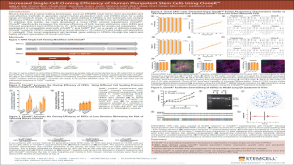 科学海报Increased Single-Cell Cloning Efficiency of Human Pluripotent Stem Cells Using CloneR™
 沪公网安备31010102008431号