Y. P. Zhu et al. (AUG 2018)
Cell reports 24 9 2329--2341.e8
Identification of an Early Unipotent Neutrophil Progenitor with Pro-tumoral Activity in Mouse and Human Bone Marrow.
Neutrophils are short-lived cells that play important roles in both health and disease. Neutrophils and monocytes originate from the granulocyte monocyte progenitor (GMP) in bone marrow; however,unipotent neutrophil progenitors are not well defined. Here,we use cytometry by time of flight (CyTOF) and single-cell RNA sequencing (scRNA-seq) methodologies to identify a committed unipotent early-stage neutrophil progenitor (NeP) in adult mouse bone marrow. Importantly,we found a similar unipotent NeP (hNeP) in human bone marrow. Both NeP and hNeP generate only neutrophils. NeP and hNeP both significantly increase tumor growth when transferred into murine cancer models,including a humanized mouse model. hNeP are present in the blood of treatment-naive melanoma patients but not of healthy subjects. hNeP can be readily identified by flow cytometry and could be used as a biomarker for early cancer discovery. Understanding the biology of hNeP should allow the development of new therapeutic targets for neutrophil-related diseases,including cancer.
View Publication
Burkholderia pseudomallei-loaded cells act as a Trojan horse to invade the brain during endotoxemia.
Neurologic melioidosis occurs in both human and animals; however,the mechanism by which the pathogen Burkholderia pseudomallei invades the central nervous system (CNS) remains unclear. B. pseudomallei-loaded Ly6C cells have been suggested as a putative portal; however,during melioidosis,lipopolysaccharide (LPS) can drive disruption of the blood-brain barrier (BBB). This study aims to test whether the Trojan horse-like mechanism occurs during endotoxemia. The expression levels of cerebral cytokines,chemokines and cell adhesion molecules; the activation of astrocytes,microglia and endothelial cells; and the increased vascular permeability and brain-infiltrating leukocytes were evaluated using B. pseudomallei,B. thailandensis,B. cenocepacia and B. multivorans LPS-induced brains. Accordingly,different degrees of BBB damage in those brains with endotoxemia were established. The B. multivorans LPS-induced brain exhibited the highest levels of disruptive BBB according to the above mediators/indicators. Into these distinct groups of endotoxemic mice,B. pseudomallei-loaded Ly6C cells or free B. pseudomallei were adoptively transferred at equal bacterial concentrations (103 CFU). The bacterial load and number of cases of meningeal neutrophil infiltration in the brains of animals treated with B. pseudomallei-loaded Ly6C cells were higher than those in brains induced by free B. pseudomallei in any of the endotoxemic groups. In particular,these results were reproducible in B. multivorans LPS-induced brains. We suggest that B. pseudomallei-loaded cells can act as a Trojan horse and are more effective than free B. pseudomallei in invading the CNS under septic or endotoxemic conditions even when there is a high degree of BBB disruption.
View Publication
产品类型:
产品号#:
产品名:
Y. Otsuka et al. (NOV 2018)
Journal of immunology (Baltimore,Md. : 1950) 201 10 3006--3016
Differentiation of Langerhans Cells from Monocytes and Their Specific Function in Inducing IL-22-Specific Th Cells.
Human mucosal tissues and skin contain two distinct types of dendritic cell (DC) subsets,epidermal Langerhans cells (LCs) and dermal DCs,which can be distinguished by the expression of C-type lectin receptors,Langerin and DC-SIGN,respectively. Although peripheral blood monocytes differentiate into these distinct subsets,monocyte-derived LCs (moLCs) induced by coculture with GM-CSF,IL-4,and TGF-$\beta$1 coexpress both Langerin and DC-SIGN,suggesting that the environmental cues remain unclear. In this study,we show that LC differentiation is TGF-$\beta$1 dependent and that cofactors such as IL-4 and TNF-$\alpha$ promote TGF-$\beta$1-dependent LC differentiation into Langerin+DC-SIGN- moLCs but continuous exposure to IL-4 blocks differentiation. Steroids such as dexamethasone greatly enhanced TNF-$\alpha$-induced moLC differentiation and blocked DC-SIGN expression. Consistent with primary LCs,dexamethasone-treated moLCs express CD1a,whereas monocyte-derived DCs (moDCs) express CD1b,CD1c,and CD1d. moDCs but not moLCs produced inflammatory cytokines after stimulation with CD1b and CD1d ligands mycolic acid and $\alpha$-galactosylceramide,respectively. Strikingly,CD1a triggering with squalene on moLCs but not moDCs induced strong IL-22-producing CD4+ helper T cell responses. As IL-22 is an important cytokine in the maintenance of skin homeostasis,these data suggest that CD1a on LCs is involved in maintaining the immune barrier in the skin.
View Publication
产品类型:
产品号#:
19059
19059RF
产品名:
EasySep™人单核细胞富集试剂盒
RoboSep™ 人单核细胞富集试剂盒含滤芯吸头
R. A. Woolaver et al. (OCT 2018)
Journal of immunology (Baltimore,Md. : 1950)
TRAF2 Deficiency in B Cells Impairs CD40-Induced Isotype Switching That Can Be Rescued by Restoring NF-$\kappa$B1 Activation.
Effective humoral immunity requires class switch recombination (CSR) catalyzed by activation-induced cytidine deaminase (AID). In response to T cell-dependent (TD) Ags,CSR can be induced by CD40 signaling in B cells. TNFR-associated factors 2 and 3 (TRAF2/TRAF3) function as adaptors of the CD40 signaling pathway. B cell-intrinsic TRAF2 or TRAF3 (B-TRAF2 or B-TRAF3) knockout mice were previously reported to have indistinguishable phenotypes in gene expression,B cell survival and development,and enlarged peripheral lymphoid organs. However,it remains unknown whether deficiency of B-TRAF2 or B-TRAF3 differentially affects TD humoral immune responses and CD40-induced CSR. In this article,we show that B-TRAF2 is essential for optimal isotype switching induced by in vivo TD Ag immunization or by engaging CD40 in vitro. Our data clarify the controversial role of B-TRAF3 and confirm its dispensability in CD40-induced CSR. Mechanistically,CD40-induced AID expression was markedly impaired by B-TRAF2,but not B-TRAF3,deficiency. Moreover,B-TRAF2 deficiency causes defective activation of the NF-$\kappa$B1 complex in a CD40-autonomous manner,and restoring CD40-induced NF-$\kappa$B1 activation in TRAF2-deficient B cells rescues AID expression and CSR. We conclude that TRAF2 is essential but TRAF3 is dispensable for TD humoral immunity and CD40-induced CSR. Our studies provide significant biological bases for optimizing treatment of B cell-associated immune disorders by targeting CD40 signaling.
View Publication
产品类型:
产品号#:
19854
19854RF
产品名:
EasySep™小鼠B细胞分选试剂盒
RoboSep™ 小鼠B细胞分选试剂盒
Y. Yamamoto et al. (OCT 2018)
Scientific reports 8 1 15917
Lipopolysaccharide shock reveals the immune function of indoleamine 2,3-dioxygenase 2 through the regulation of IL-6/stat3 signalling.
Indoleamine 2,3-dioxygenase 2 (Ido2) is a recently identified catalytic enzyme in the tryptophan-kynurenine pathway that is expressed primarily in monocytes and dendritic cells. To elucidate the biological role of Ido2 in immune function,we introduced lipopolysaccharide (LPS) endotoxin shock to Ido2 knockout (Ido2 KO) mice,which led to higher mortality than that in the wild type (WT) mice. LPS-treated Ido2 KO mice had increased production of inflammatory cytokines (including interleukin-6; IL-6) in serum and signal transducer and activator of transcription 3 (stat3) phosphorylation in the spleen. Moreover,the peritoneal macrophages of LPS-treated Ido2 KO mice produced more cytokines than did the WT mice. By contrast,the overexpression of Ido2 in the murine macrophage cell line (RAW) suppressed cytokine production and decreased stat3 expression. Finally,RAW cells overexpressing Ido2 did not alter nuclear factor $\kappa$B (NF-$\kappa$B) or stat1 expression,but IL-6 and stat3 expression decreased relative to the control cell line. These results reveal that Ido2 modulates IL-6/stat3 signalling and is induced by LPS,providing novel options for the treatment of immune disorders.
View Publication
产品类型:
产品号#:
19851
19851RF
19861
19861RF
产品名:
EasySep™小鼠T细胞分选试剂盒
RoboSep™ 小鼠T细胞分选试剂盒
EasySep™小鼠单核细胞分选试剂盒
RoboSep™ 小鼠单核细胞分选试剂盒
S. R. Walsh et al. (NOV 2018)
The Journal of clinical investigation
Type I IFN blockade uncouples immunotherapy-induced antitumor immunity and autoimmune toxicity.
Despite showing success in treating melanoma and haematological malignancies,adoptive cell therapy (ACT) has generated only limited effects in solid tumors. This is,in part,due to a lack of specific antigen targets,poor trafficking/infiltration and immunosuppression in the tumor microenvironment. In this study,we combined ACT with oncolytic virus vaccines (OVV) to drive expansion and tumor infiltration of transferred antigen-specific T cells,and demonstrated that the combination is highly potent for the eradication of established solid tumors. Consistent with other successful immunotherapies,this approach elicited severe autoimmune consequence when the antigen targeted was a self-protein. However,modulation of IFN$\alpha$/$\beta$ signaling,either by functional blockade or rational choice of an OVV backbone,ameliorated autoimmune side effects without compromising antitumor efficacy. Our study uncovers a pathogenic role for IFN$\alpha$/$\beta$ in facilitating autoimmune toxicity during cancer immunotherapy and offers a safe and powerful combinatorial regimen with immediate translational applications.
View Publication
产品类型:
产品号#:
19853
19853RF
产品名:
EasySep™小鼠CD8+ T细胞分选试剂盒
RoboSep™ 小鼠CD8+ T细胞分选试剂盒
M. Compte et al. (NOV 2018)
Nature communications 9 1 4809
A tumor-targeted trimeric 4-1BB-agonistic antibody induces potent anti-tumor immunity without systemic toxicity.
The costimulation of immune cells using first-generation anti-4-1BB monoclonal antibodies (mAbs) has demonstrated anti-tumor activity in human trials. Further clinical development,however,is restricted by significant off-tumor toxicities associated with Fc$\gamma$R interactions. Here,we have designed an Fc-free tumor-targeted 4-1BB-agonistic trimerbody,1D8N/CEGa1,consisting of three anti-4-1BB single-chain variable fragments and three anti-EGFR single-domain antibodies positioned in an extended hexagonal conformation around the collagen XVIII homotrimerization domain. The1D8N/CEGa1 trimerbody demonstrated high-avidity binding to 4-1BB and EGFR and a potent in vitro costimulatory capacity in the presence of EGFR. The trimerbody rapidly accumulates in EGFR-positive tumors and exhibits anti-tumor activity similar to IgG-based 4-1BB-agonistic mAbs. Importantly,treatment with 1D8N/CEGa1 does not induce systemic inflammatory cytokine production or hepatotoxicity associated with IgG-based 4-1BB agonists. These results implicate Fc$\gamma$R interactions in the 4-1BB-agonist-associated immune abnormalities,and promote the use of the non-canonical antibody presented in this work for safe and effective costimulatory strategies in cancer immunotherapy.
View Publication
产品类型:
产品号#:
18953
18953RF
产品名:
EasySep™小鼠CD8a正选试剂盒II
RoboSep™ 小鼠CD8a正选试剂盒II
M. D. Shortridge et al. (NOV 2018)
Nucleic acids research
An ultra-high affinity ligand of HIV-1 TAR reveals the RNA structure recognized by P-TEFb.
The HIV-1 trans-activator protein Tat binds the trans-activation response element (TAR) to facilitate recruitment of the super elongation complex (SEC) to enhance transcription of the integrated pro-viral genome. The Tat-TAR interaction is critical for viral replication and the emergence of the virus from the latent state,therefore,inhibiting this interaction has long been pursued to discover new anti-viral or latency reversal agents. However,discovering active compounds that directly target RNA with high affinity and selectivity remains a significant challenge; limiting pre-clinical development. Here,we report the rational design of a macrocyclic peptide mimic of the arginine rich motif of Tat,which binds to TAR with low pM affinity and 100-fold selectivity against closely homologous RNAs. Despite these unprecedented binding properties,the new ligand (JB181) only moderately inhibits Tat-dependent reactivation in cells and recruitment of positive transcription elongation factor (P-TEFb) to TAR. The NMR structure of the JB181-TAR complex revealed that the ligand induces a structure in the TAR loop that closely mimics the P-TEFb/Tat1:57/AFF4/TAR complex. These results strongly suggest that high-affinity ligands which bind the UCU bulge are not likely to inhibit recruitment of the SEC and suggest that targeting of the TAR loop will be an essential feature of effective Tat inhibitors.
View Publication


 EasySep™小鼠TIL(CD45)正选试剂盒




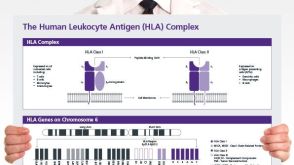 挂图The Human Leukocyte Antigen (HLA) Complex Provides an overview of the human leukocyte antigen (HLA) complex and nomenclature of HLA alleles
 技术窍门组织解离方法指南


 沪公网安备31010102008431号