E. Schruf et al. (jun 2020)
FASEB journal : official publication of the Federation of American Societies for Experimental Biology 34 6 7825--7846
Recapitulating idiopathic pulmonary fibrosis related alveolar epithelial dysfunction in a human iPSC-derived air-liquid interface model.
Idiopathic pulmonary fibrosis (IPF) is a fatal disease of unknown cause that is characterized by progressive fibrotic lung remodeling. An abnormal emergence of airway epithelial-like cells within the alveolar compartments of the lung,herein termed bronchiolization,is often observed in IPF. However,the origin of this dysfunctional distal lung epithelium remains unknown due to a lack of suitable human model systems. In this study,we established a human induced pluripotent stem cell (iPSC)-derived air-liquid interface (ALI) model of alveolar epithelial type II (ATII)-like cell differentiation that allows us to investigate alveolar epithelial progenitor cell differentiation in vitro. We treated this system with an IPF-relevant cocktail (IPF-RC) to mimic the pro-fibrotic cytokine milieu present in IPF lungs. Stimulation with IPF-RC during differentiation increases secretion of IPF biomarkers and RNA sequencing (RNA-seq) of these cultures reveals significant overlap with human IPF patient data. IPF-RC treatment further impairs ATII differentiation by driving a shift toward an airway epithelial-like expression signature,providing evidence that a pro-fibrotic cytokine environment can influence the proximo-distal differentiation pattern of human lung epithelial cells. In conclusion,we show for the first time,the establishment of a human model system that recapitulates aspects of IPF-associated bronchiolization of the lung epithelium in vitro.
View Publication
Differential Responses of Human iPSC-Derived Microglia to Stimulation with Diverse Inflammogens
Human microglia are central regulators and actors in brain infections and neuro-inflammatory pathologies. However,access to such cells is limited,and studies systematically mapping the spectrum of their inflammatory states are scarce. Here,we generated microglia-like cells (MGLCs) from human induced pluripotent stem cells and characterized them as a robust,accessible model system for studying inflammatory activation. We validated lineage identity through transcriptome profiling,revealing selective upregulation of microglial signature genes and enrichment of microglia/macrophage-related gene sets. MGLCs displayed distinct morphologies and produced stimulus- and time-dependent cytokine secretion profiles upon exposure to diverse inflammatory stimuli,including pro-inflammatory cytokines (TNFα,interferon-γ) and agonists of the Toll-like receptors TLR2 (FSL-1),TLR3 (Poly(I:C)),TLR4 (lipopolysaccharide,LPS),and TLR7 (imiquimod). Transcriptome profiling and bioinformatics analysis revealed distinct activation signatures. Functional assays demonstrated stimulus-specific engagement of NFκB and JAK-STAT signaling pathways. The shared NFκB nuclear translocation response of TLR ligands and TNFα was reflected in overlapping transcriptome profiles: they shared modules (e.g.,oxidative stress response and TNFα-related signaling) identified by weighted gene co-expression network analysis. Finally,the potential consequences of microglia activation for neighboring cells were studied on the example of microglia-astrocyte crosstalk. The capacity of MGLC supernatants to stimulate astrocytes was measured by quantifying astrocytic NFκB translocation. MGLCs stimulated with FSL-1,LPS,or Poly(I:C) indirectly activated astrocytes via a strictly TNFα-dependent mechanism,highlighting the role of soluble mediators in the signal propagation. Altogether,this platform enables a dissection of microglia activation states and multi-parametric characterization of subsequent neuroinflammation.
View Publication
产品类型:
产品号#:
34811
34815
34821
34825
34850
34860
85850
85857
产品名:
AggreWell™ 800 24孔板,1个
AggreWell™ 800 24孔板,5个
AggreWell™ 800 6孔板,1个
AggreWell™ 800 6孔板,5个
AggreWell™ 800 24孔板启动套装
AggreWell™ 800 6孔板启动套装
mTeSR™1
mTeSR™1
M. Shameem et al. (Dec 2025)
Journal of Cardiovascular Development and Disease 12 12
Early Cytoskeletal Remodeling Drives Hypertrophic Cardiomyopathy Pathogenesis in MYH6/7 Mutant hiPSC-Derived Cardiomyocytes
Hypertrophic cardiomyopathy (HCM) is a common and deadly cardiac disease characterized by enlarged myocytes,increased myocardial wall thickening,and fibrosis. A majority of HCM cases are associated with mutations in the β-myosin heavy chain (MYH7) converter domain locus,which leads to varied pathophysiological and clinical manifestations. Using base-editing technology,we generated mutant human-induced pluripotent stem cell-derived cardiomyocytes (hiPSC-CMs) harboring HCM-causing myosin converter domain mutations (MYH7 c.2167C>T [R723C]; MYH6 c.2173C>T [R725C]) to define HCM pathogenesis in vitro. In this study,we integrated transcriptomic analysis with phenotypic and molecular analyses to dissect the HCM disease mechanisms using MYH6/7 myosin mutants. Our KEGG analysis of bulk RNA-sequencing data revealed significant upregulation of transcripts associated with HCM in the mutant hiPSC-CMs. Further,in-depth transcriptomic analysis using Gene-Ontology (GO-term) analysis for biological process showed upregulation of several transcripts associated with heart development and disease. Notably,our analysis showed robust upregulation of cytoskeletal transcripts,including actin-cytoskeleton networks,sarcomere components,and other structural proteins in the mutant CMs. Furthermore,cellular and nuclear morphological analysis showed that the MYH6/7 mutation induced cellular hypertrophy and increased aspect ratio compared to the isogenic control. Immunostaining experiments showed marked sarcomere disorganization with lower sarcomeric order and higher dispersion in the mutant hiPSC-CMs,highlighting the remodeling of the myofibril arrangement. Notably,the MYH6/7 mutant showed reduced cortical F-actin expression and increased central F-actin expression compared to the isogenic control,confirming the cytoskeletal remodeling and sarcomeric organization during HCM pathogenesis. These pathological changes accumulated progressively over time,underscoring the chronic and evolving nature of HCM driven by the MYH6/7 mutations. Together,our findings provide critical insights into the cellular and molecular underpinnings of MYH6/7-mutation-associated disease. These findings offer valuable insights into HCM pathogenesis,aiding in future therapies.
View Publication
Patriarchi T et al. (JUN 2016)
European journal of human genetics : EJHG 24 6 871--880
Imbalance of excitatory/inhibitory synaptic protein expression in iPSC-derived neurons from FOXG1(+/-) patients and in foxg1(+/-) mice.
Rett syndrome (RTT) is a severe neurodevelopmental disorder associated with mutations in either MECP2,CDKL5 or FOXG1. The precise molecular mechanisms that lead to the pathogenesis of RTT have yet to be elucidated. We recently reported that expression of GluD1 (orphan glutamate receptor $\$-1 subunit) is increased in iPSC-derived neurons obtained from patients with mutations in either MECP2 or CDKL5. GluD1 controls synaptic differentiation and shifts the balance between excitatory and inhibitory synapses toward the latter. Thus,an increase in GluD1 might be a critical factor in the etiology of RTT by affecting the excitatory/inhibitory balance in the developing brain. To test this hypothesis,we generated iPSC-derived neurons from FOXG1(+/-) patients. We analyzed mRNA and protein levels of GluD1 together with key markers of excitatory and inhibitory synapses in these iPSC-derived neurons and in Foxg1(+/-) mouse fetal (E11.5) and adult (P70) brains. We found strong correlation between iPSC-derived neurons and fetal mouse brains,where GluD1 and inhibitory synaptic markers (GAD67 and GABA AR-$\$1) were increased,whereas the levels of a number of excitatory synaptic markers (VGLUT1,GluA1,GluN1 and PSD-95) were decreased. In adult mice,GluD1 was decreased along with all GABAergic and glutamatergic markers. Our findings further the understanding of the etiology of RTT by introducing a new pathological event occurring in the brain of FOXG1(+/-) patients during embryonic development and its time-dependent shift toward a general decrease in brain synapses.
View Publication
产品类型:
产品号#:
05850
05857
05870
05875
07923
85850
85857
85870
85875
产品名:
Dispase (1 U/mL)
mTeSR™1
mTeSR™1
Verheyen A et al. (DEC 2015)
PLoS ONE 10 12 e0146127
Using human iPSC-derived neurons to model TAU aggregation
Alzheimer's disease and frontotemporal dementia are amongst the most common forms of dementia characterized by the formation and deposition of abnormal TAU in the brain. In order to develop a translational human TAU aggregation model suitable for screening,we transduced TAU harboring the pro-aggregating P301L mutation into control hiPSC-derived neural progenitor cells followed by differentiation into cortical neurons. TAU aggregation and phosphorylation was quantified using AlphaLISA technology. Although no spontaneous aggregation was observed upon expressing TAU-P301L in neurons,seeding with preformed aggregates consisting of the TAU-microtubule binding repeat domain triggered robust TAU aggregation and hyperphosphorylation already after 2 weeks,without affecting general cell health. To validate our model,activity of two autophagy inducers was tested. Both rapamycin and trehalose significantly reduced TAU aggregation levels suggesting that iPSC-derived neurons allow for the generation of a biologically relevant human Tauopathy model,highly suitable to screen for compounds that modulate TAU aggregation.
View Publication
产品类型:
产品号#:
05850
05857
05870
05875
85850
85857
85870
85875
产品名:
mTeSR™1
mTeSR™1
Sancho-Martinez I et al. (FEB 2016)
Nature communications 7 10743
Establishment of human iPSC-based models for the study and targeting of glioma initiating cells.
Glioma tumour-initiating cells (GTICs) can originate upon the transformation of neural progenitor cells (NPCs). Studies on GTICs have focused on primary tumours from which GTICs could be isolated and the use of human embryonic material. Recently,the somatic genomic landscape of human gliomas has been reported. RTK (receptor tyrosine kinase) and p53 signalling were found dysregulated in ∼90% and 86% of all primary tumours analysed,respectively. Here we report on the use of human-induced pluripotent stem cells (hiPSCs) for modelling gliomagenesis. Dysregulation of RTK and p53 signalling in hiPSC-derived NPCs (iNPCs) recapitulates GTIC properties in vitro. In vivo transplantation of transformed iNPCs leads to highly aggressive tumours containing undifferentiated stem cells and their differentiated derivatives. Metabolic modulation compromises GTIC viability. Last,screening of 101 anti-cancer compounds identifies three molecules specifically targeting transformed iNPCs and primary GTICs. Together,our results highlight the potential of hiPSCs for studying human tumourigenesis.
View Publication
产品类型:
产品号#:
05850
05857
05870
05875
85850
85857
85870
85875
产品名:
mTeSR™1
mTeSR™1
Smith BW et al. ( 2016)
Stem Cells International 2016 2574152
Genome Editing of the CYP1A1 Locus in iPSCs as a Platform to Map AHR Expression throughout Human Development
The aryl hydrocarbon receptor (AHR) is a ligand activated transcription factor that increases the expression of detoxifying enzymes upon ligand stimulation. Recent studies now suggest that novel endogenous roles of the AHR exist throughout development. In an effort to create an optimized model system for the study of AHR signaling in several cellular lineages,we have employed a CRISPR/CAS9 genome editing strategy in induced pluripotent stem cells (iPSCs) to incorporate a reporter cassette at the transcription start site of one of its canonical targets,cytochrome P450 1A1 (CYP1A1). This cell line faithfully reports on CYP1A1 expression,with luciferase levels as its functional readout,when treated with an endogenous AHR ligand (FICZ) at escalating doses. iPSC-derived fibroblast-like cells respond to acute exposure to environmental and endogenous AHR ligands,and iPSC-derived hepatocytes increase CYP1A1 in a similar manner to primary hepatocytes. This cell line is an important innovation that can be used to map AHR activity in discrete cellular subsets throughout developmental ontogeny. As further endogenous ligands are proposed,this line can be used to screen for safety and efficacy and can report on the ability of small molecules to regulate critical cellular processes by modulating the activity of the AHR.
View Publication
产品类型:
产品号#:
05110
05850
05857
05870
05875
85850
85857
85870
85875
产品名:
STEMdiff™定型内胚层检测试剂盒
mTeSR™1
mTeSR™1
Perales-Clemente E et al. (JUL 2016)
The EMBO Journal e201694892
Natural underlying mtDNA heteroplasmy as a potential source of intra-person hiPSC variability
Functional variability among human clones of induced pluripotent stem cells (hiPSCs) remains a limitation in assembling high-quality biorepositories. Beyond inter-person variability,the root cause of intra-person variability remains unknown. Mitochondria guide the required transition from oxidative to glycolytic metabolism in nuclear reprogramming. Moreover,mitochondria have their own genome (mitochondrial DNA [mtDNA]). Herein,we performed mtDNA next-generation sequencing (NGS) on 84 hiPSC clones derived from a cohort of 19 individuals,including mitochondrial and non-mitochondrial patients. The analysis of mtDNA variants showed that low levels of potentially pathogenic mutations in the original fibroblasts are revealed through nuclear reprogramming,generating mutant hiPSCs with a detrimental effect in their differentiated progeny. Specifically,hiPSC-derived cardiomyocytes with expanded mtDNA mutations non-related with any described human disease,showed impaired mitochondrial respiration,being a potential cause of intra-person hiPSC variability. We propose mtDNA NGS as a new selection criterion to ensure hiPSC quality for drug discovery and regenerative medicine.
View Publication
产品类型:
产品号#:
05850
05857
05870
05875
85850
85857
85870
85875
产品名:
mTeSR™1
mTeSR™1
Yokota M et al. (JAN 2017)
Cell death & disease 8 1 e2551
Mitochondrial respiratory dysfunction disturbs neuronal and cardiac lineage commitment of human iPSCs.
Mitochondrial diseases are genetically heterogeneous and present a broad clinical spectrum among patients; in most cases,genetic determinants of mitochondrial diseases are heteroplasmic mitochondrial DNA (mtDNA) mutations. However,it is uncertain whether and how heteroplasmic mtDNA mutations affect particular cellular fate-determination processes,which are closely associated with the cell-type-specific pathophysiology of mitochondrial diseases. In this study,we established two isogenic induced pluripotent stem cell (iPSC) lines each carrying different proportions of a heteroplasmic m.3243A>G mutation from the same patient; one exhibited apparently normal and the other showed most likely impaired mitochondrial respiratory function. Low proportions of m.3243A>G exhibited no apparent molecular pathogenic influence on directed differentiation into neurons and cardiomyocytes,whereas high proportions of m.3243A>G showed both induced neuronal cell death and inhibited cardiac lineage commitment. Such neuronal and cardiac maturation defects were also confirmed using another patient-derived iPSC line carrying quite high proportion of m.3243A>G. In conclusion,mitochondrial respiratory dysfunction strongly inhibits maturation and survival of iPSC-derived neurons and cardiomyocytes; our presenting data also suggest that appropriate mitochondrial maturation actually contributes to cellular fate-determination processes during development.
View Publication


 EasySep™小鼠TIL(CD45)正选试剂盒




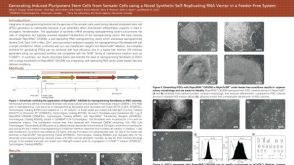 科学海报Generating iPSCs from Somatic Cells using a Novel Synthetic Self-Replicating RNA Vector in a Feeder-Free System


 沪公网安备31010102008431号