BMP-2/6 heterodimer is more effective than BMP-2 or BMP-6 homodimers as inductor of differentiation of human embryonic stem cells
Bone Morphogenetic Protein (BMP) signaling pathways are involved in differentiation of stem cells into diverse cell types,and thus BMPs can be used as main guidance molecules for in vitro differentiation of human stem cells.
View Publication
产品类型:
产品号#:
85850
85857
产品名:
mTeSR™1
mTeSR™1
Rizzino A (SEP 2010)
Regenerative medicine 5 5 799--807
Stimulating progress in regenerative medicine: improving the cloning and recovery of cryopreserved human pluripotent stem cells with ROCK inhibitors.
Until recently,culturing human pluripotent stem cells was hampered by three prominent technical problems: a high degree of unwanted cellular stress when the cells are passaged,unacceptably low cloning efficiency and poor recovery of cryopreserved stocks. This review discusses recent developments that address these problems. A major focus of the review is the use of p160 Rho-associated coiled-coil kinase inhibitors for improving both the cloning efficiency and the recovery of cryopreserved human embryonic stem cells and human induced pluripotent stem cells. An underlying theme of this review is that the three problems have a common cause: separation of human pluripotent stem cells from one another increases cellular stress,which greatly decreases their viability unless special steps are taken.
View Publication
产品类型:
产品号#:
85850
85857
产品名:
mTeSR™1
mTeSR™1
Barbaric I et al. (JUL 2014)
Stem Cell Reports 3 1 142--155
Time-lapse analysis of human embryonic stem cells reveals multiple bottlenecks restricting colony formation and their relief upon culture adaptation
Using time-lapse imaging,we have identified a series of bottlenecks that restrict growth of early-passage human embryonic stem cells (hESCs) and that are relieved by karyotypically abnormal variants that are selected by prolonged culture. Only a minority of karyotypically normal cells divided after plating,and these were mainly cells in the later stages of cell cycle at the time of plating. Furthermore,the daughter cells showed a continued pattern of cell death after division,so that few formed long-term proliferating colonies. These colony-forming cells showed distinct patterns of cell movement. Increasing cell density enhanced cell movement facilitating cell:cell contact,which resulted in increased proportion of dividing cells and improved survival postplating of normal hESCs. In contrast,most of the karyotypically abnormal cells reentered the cell cycle on plating and gave rise to healthy progeny,without the need for cell:cell contacts and independent of their motility patterns. ?? 2014 The Authors.
View Publication
产品类型:
产品号#:
85850
85857
产品名:
mTeSR™1
mTeSR™1
(Mar 2025)
bioRxiv 19
Dependence of cell fate potential and cadherin switching on primitive streak coordinate during differentiation of human pluripotent stem cells
During gastrulation,the primitive streak (PS) forms and begins to differentiate into mesendodermal subtypes. This process involves an epithelial-mesenchymal transition (EMT),which is marked by cadherin switching,where E-Cadherin is downregulated,and N-Cadherin is upregulated. To understand the relationships between differentiation,EMT,and cadherin switching,we made measurements of these processes during differentiation of human pluripotent stem cells (hPSCs) to PS and subsequently to mesendoderm subtypes using established protocols,as well as variants in which signaling through key pathways including Activin,BMP,and Wnt were modulated. We found that perturbing signaling so that cells acquired identities ranging from anterior to posterior PS had little impact on the subsequent differentiation potential of cells but strongly impacted the degree of cadherin switching. The degree of E-Cadherin downregulation and N-Cadherin upregulation were uncorrelated and had different dependence on signaling. The exception to the broad potential of cells throughout the PS was the loss of definitive endoderm potential in cells with mid to posterior PS identities. Thus,cells induced to different PS coordinates had similar potential within the mesoderm but differed in cadherin switching. Consistently,E-Cadherin knockout did not alter cell fates outcomes during differentiation. Overall,cadherin switching and EMT are modulated independently of cell fate commitment in mesendodermal differentiation.
View Publication
产品类型:
产品号#:
100-0276
100-1130
85850
85857
产品名:
mTeSR™ Plus
mTeSR™ Plus
mTeSR™1
mTeSR™1
I. Romayor et al. (Feb 2026)
Journal of Tissue Engineering 17 11
Nanopatterned bioresorbable elastomeric scaffolds to promote neural, glial, and endothelial differentiation using human embryonic and induced pluripotent stem cells
Bioresorbable nanopatterned scaffolds functionalized with polydopamine (PDA) and graphene oxide (GO) have been shown to promote the differentiation of murine neural stem cells (mNSCs) toward neural and glial lineages. Herein,we aim to evaluate the compatibility of these scaffolds for the culture and differentiation of both human embryonic (hESCs) and induced pluripotent (hiPSCs) stem cells. Our results indicate that PDA and GO scaffolds support the topographic alignment of hESCs and hiPSCs cultures,while preserving their pluripotency characteristics. Upon differentiation,PDA and GO scaffolds guide cell specification toward the neuroectoderm germ layer and the neural crest. This promotes enhanced differentiation into both neural and supportive glial cells of the central nervous system (CNS),as well as Schwann cells of the peripheral nervous system (PNS). Moreover,nanopatterned scaffolds also support the differentiation of hESCs and hiPSCs toward endothelial precursors. These findings establish a novel culture platform that enables combined differentiation pathways,potentially relevant for applications in personalized medicine and regenerative cell therapy.
View Publication
产品类型:
产品号#:
05230
产品名:
STEMdiff™ 三谱系分化试剂盒
Pettinato G et al. (SEP 2016)
Scientific reports 6 32888
Scalable Differentiation of Human iPSCs in a Multicellular Spheroid-based 3D Culture into Hepatocyte-like Cells through Direct Wnt/β-catenin Pathway Inhibition.
Treatment of acute liver failure by cell transplantation is hindered by a shortage of human hepatocytes. Current protocols for hepatic differentiation of human induced pluripotent stem cells (hiPSCs) result in low yields,cellular heterogeneity,and limited scalability. In the present study,we have developed a novel multicellular spheroid-based hepatic differentiation protocol starting from embryoid bodies of hiPSCs (hiPSC-EBs) for robust mass production of human hepatocyte-like cells (HLCs) using two novel inhibitors of the Wnt pathway. The resultant hiPSC-EB-HLCs expressed liver-specific genes,secreted hepatic proteins such as Albumin,Alpha Fetoprotein,and Fibrinogen,metabolized ammonia,and displayed cytochrome P450 activities and functional activities typical of mature primary hepatocytes,such as LDL storage and uptake,ICG uptake and release,and glycogen storage. Cell transplantation of hiPSC-EB-HLC in a rat model of acute liver failure significantly prolonged the mean survival time and resolved the liver injury when compared to the no-transplantation control animals. The transplanted hiPSC-EB-HLCs secreted human albumin into the host plasma throughout the examination period (2 weeks). Transplantation successfully bridged the animals through the critical period for survival after acute liver failure,providing promising clues of integration and full in vivo functionality of these cells after treatment with WIF-1 and DKK-1.
View Publication
产品类型:
产品号#:
85850
85857
产品名:
mTeSR™1
mTeSR™1
Katzenellenbogen BS et al. (JAN 1984)
Cancer research 44 1 112--9
Bioactivities, estrogen receptor interactions, and plasminogen activator-inducing activities of tamoxifen and hydroxy-tamoxifen isomers in MCF-7 human breast cancer cells.
Tamoxifen is used widely in the treatment of endocrine-responsive breast cancers in humans. Studies were undertaken to examine the biological character (estrogenic-antiestrogenic properties) and estrogen receptor (ER) interaction of the cis- and trans-isomers of tamoxifen and hydroxytamoxifen in MCF-7 human breast cancer cells. For each compound,the following parameters were monitored: affinity for ER and effects on cellular ER levels; stimulation-inhibition of cell growth,plasminogen activator activity,and cellular progesterone receptor levels; and isomer interconversion and metabolism in vitro. The relative binding affinities of the compounds cis-tamoxifen,trans-tamoxifen,cis-hydroxytamoxifen,and trans-hydroxytamoxifen for cytosol ER were 0.3,2.5,1.8,and 310%,respectively,in which the affinity of estradiol is considered 100%. cis-Tamoxifen behaved as a weak estrogen agonist in all assays,while trans-tamoxifen was an effective estrogen antagonist. cis-Tamoxifen behaved like estradiol in stimulating MCF-7 cell growth and increasing plasminogen activator activity and cellular progesterone receptor content,although very much higher concentrations of cis-tamoxifen (10(-6) M) were needed to achieve the levels of stimulation observed with 10(-10) M estradiol. trans-Tamoxifen and trans-hydroxytamoxifen suppressed cell growth,inhibited plasminogen activator activity of control cells,and suppressed estradiol-stimulation of plasminogen activator activity,and they evoked minimal increases in cellular progesterone receptor levels. trans-Hydroxytamoxifen had a 100-fold increased affinity for ER and was approximately 100-times more potent than was trans-tamoxifen in suppressing cell growth and plasminogen activator activity. cis-Hydroxytamoxifen behaved as an estrogen antagonist,suppressing cell growth and plasminogen activator activity,and it elicited submaximal increases in progesterone receptor levels. This apparently paradoxical behavior of cis-hydroxytamoxifen was shown to be due to the fact that the cis- and trans-hydroxytamoxifens readily undergo isomeric interconversion upon exposure to our cell culture conditions,resulting in substantial accumulation of the higher-affinity trans-hydroxytamoxifen in the nuclear ER fraction of cells. In contrast to the facile interconversion of the hydroxytamoxifen isomers,there is no metabolism or interconversion of the parent compounds cis- and trans-tamoxifen in vitro. Hence,by the criteria we have used,the biological characters of trans-tamoxifen and trans-hydroxytamoxifen are similar,the major difference being the approximately 100-fold enhanced potency of the hydroxylated form. In contrast,cis-t
View Publication
产品类型:
产品号#:
72662
产品名:
Tamoxifen
Varela I et al. (DEC 2014)
Cellular reprogramming 16 6 447--455
Generation of human $\$-thalassemia induced pluripotent cell lines by reprogramming of bone marrow-derived mesenchymal stromal cells using modified mRNA.
Synthetic modified mRNA molecules encoding pluripotency transcription factors have been used successfully in reprogramming human fibroblasts to induced pluripotent stem cells (iPSCs). We have applied this method on bone marrow-derived mesenchymal stromal cells (BM-MSCs) obtained from a patient with $$-thalassemia ($$-thal) with the aim to generate trangene-free $$-thal-iPSCs. Transfection of 10(4) BM-MSCs by lipofection with mRNA encoding the reprogramming factors Oct4,Klf4,Sox2,cMyc,and Lin28 resulted in formation of five iPSC colonies,from which three were picked up and expanded in $$-thal-iPSC lines. After 10 serial passages in vitro,$$-thal-iPSCs maintain genetic stability as shown by array comparative genomic hybridization (aCGH) and are capable of forming embryoid bodies in vitro and teratomas in vivo. Their gene expression profile compared to human embryonic stem cells (ESCs) and BM-MSCs seems to be similar to that of ESCs,whereas it differs from the profile of the parental BM-MSCs. Differentiation cultures toward a hematopoietic lineage showed the generation of CD34(+) progenitors up to 10%,but with a decreased hematopoietic colony-forming capability. In conclusion,we report herein the generation of transgene-free $$-thal-iPSCs that could be widely used for disease modeling and gene therapy applications. Moreover,it was demonstrated that the mRNA-based reprogramming method,used mainly in fibroblasts,is also suitable for reprogramming of human BM-MSCs.
View Publication
NKp46 and DNAM-1 NK-cell receptors drive the response to human cytomegalovirus-infected myeloid dendritic cells overcoming viral immune evasion strategies.
Information on natural killer (NK)-cell receptor-ligand interactions involved in the response to human cytomegalovirus (HCMV) is limited and essentially based on the study of infected fibroblasts. Experimental conditions were set up to characterize the NK response to HCMV-infected myeloid dendritic cells (DCs). Monocyte-derived DCs (moDCs) infected by the TB40/E HCMV strain down-regulated the expression of human leukocyte antigen class I molecules and specifically activated autologous NK-cell populations. NKG2D ligands appeared virtually undetectable in infected moDCs,reflecting the efficiency of immune evasion mechanisms,and explained the lack of antagonistic effects of NKG2D-specific monoclonal antibody. By contrast,DNAM-1 and DNAM-1 ligands (DNAM-1L)-specific monoclonal antibodies inhibited the NK response at 48 hours after infection,although the impact of HCMV-dependent down-regulation of DNAM-1L in infected moDCs was perceived at later stages. moDCs constitutively expressed ligands for NKp46 and NKp30 natural cytotoxicity receptors,which were partially reduced on HCMV infection; yet,only NKp46 appeared involved in the NK response. In contrast to previous reports in fibroblasts,human leukocyte antigen-E expression was not preserved in HCMV-infected moDCs,which triggered CD94/NKG2A(+) NK-cell activation. The results provide an insight on key receptor-ligand interactions involved in the NK-cell response against HCMV-infected moDCs,stressing the importance of the dynamics of viral immune evasion mechanisms.
View Publication
产品类型:
产品号#:
19055
19055RF
产品名:
EasySep™人NK细胞富集试剂盒
RoboSep™ 人NK细胞富集试剂盒含滤芯吸头
Xia G et al. (JUN 2015)
Stem cells (Dayton,Ohio) 33 6 1829--38
Genome modification leads to phenotype reversal in human myotonic dystrophy type 1 induced pluripotent stem cell-derived neural stem cells.
Myotonic dystrophy type 1 (DM1) is caused by expanded CTG repeats in the 3'-untranslated region (3' UTR) of the DMPK gene. Correcting the mutation in DM1 stem cells would be an important step toward autologous stem cell therapy. The objective of this study is to demonstrate in vitro genome editing to prevent production of toxic mutant transcripts and reverse phenotypes in DM1 stem cells. Genome editing was performed in DM1 neural stem cells (NSCs) derived from human DM1 induced pluripotent stem (iPS) cells. An editing cassette containing SV40/bGH polyA signals was integrated upstream of the CTG repeats by TALEN-mediated homologous recombination (HR). The expression of mutant CUG repeats transcript was monitored by nuclear RNA foci,the molecular hallmarks of DM1,using RNA fluorescence in situ hybridization. Alternative splicing of microtubule-associated protein tau (MAPT) and muscleblind-like (MBNL) proteins were analyzed to further monitor the phenotype reversal after genome modification. The cassette was successfully inserted into DMPK intron 9 and this genomic modification led to complete disappearance of nuclear RNA foci. MAPT and MBNL 1,2 aberrant splicing in DM1 NSCs were reversed to normal pattern in genome-modified NSCs. Genome modification by integration of exogenous polyA signals upstream of the DMPK CTG repeat expansion prevents the production of toxic RNA and leads to phenotype reversal in human DM1 iPS-cells derived stem cells. Our data provide proof-of-principle evidence that genome modification may be used to generate genetically modified progenitor cells as a first step toward autologous cell transfer therapy for DM1.
View Publication
产品类型:
产品号#:
05833
05835
05839
产品名:
STEMdiff™神经前体细胞培养基
STEMdiff™ 神经诱导培养基
STEMdiff™ 神经诱导培养基
Chen H et al. (DEC 2015)
Biological research 48 1 59
Functional disruption of human leukocyte antigen II in human embryonic stem cell.
BACKGROUND Theoretically human embryonic stem cells (hESCs) have the capacity to self-renew and differentiate into all human cell types. Therefore,the greatest promise of hESCs-based therapy is to replace the damaged tissues of patients suffering from traumatic or degenerative diseases by the exact same type of cells derived from hESCs. Allograft immune rejection is one of the obstacles for hESCs-based clinical applications. Human leukocyte antigen (HLA) II leads to CD4(+) T cells-mediated allograft rejection. Hence,we focus on optimizing hESCs for clinic application through gene modification. RESULTS Transcription activator-like effector nucleases (TALENs) were used to target MHC class II transactivator (CIITA) in hESCs efficiently. CIITA (-/-) hESCs did not show any difference in the differentiation potential and self-renewal capacity. Dendritic cells (DCs) derived from CIITA (-/-) hESCs expressed CD83 and CD86 but without the constitutive HLA II. Fibroblasts derived from CIITA (-/-) hESCs were powerless in IFN-$\$ expression of HLA II. CONCLUSION We generated HLA II defected hESCs via deleting CIITA,a master regulator of constitutive and IFN-$\$ expression of HLA II genes. CIITA (-/-) hESCs can differentiate into tissue cells with non-HLA II expression. It's promising that CIITA (-/-) hESCs-derived cells could be used in cell therapy (e.g.,T cells and DCs) and escape the attack of receptors' CD4(+) T cells,which are the main effector cells of cellular immunity in allograft.
View Publication


 EasySep™小鼠TIL(CD45)正选试剂盒




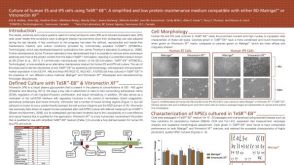 科学海报Culture of Human ES and iPS Cells Using TeSR™-E8™: a Simplified and Low Protein Maintenance Medium Compatible With Vitronectin XF™
 沪公网安备31010102008431号