J. M. Horcas-Nieto et al. (Sep 2025)
Frontiers in Toxicology 7 1
Implementing a trilineage differentiation in the ReproTracker assay for improved teratogenicity assessment
IntroductionExposure to teratogenic compounds during pregnancy can lead to significant birth defects. Given the considerable variation in drug responses across species,along with the financial and ethical challenges associated with animal testing,the development of advanced human-based in vitro assays is imperative for effectively identifying potential human teratogens. Previously,we developed a human induced pluripotent stem cells (hiPSCs)-based biomarker assay,ReproTracker,that follows the differentiation of hiPSCs into hepatocytes and cardiomyocytes. The assay combines morphological profiling with the assessment of time-dependent expression patterns of cell-specific biomarkers to detect developmental toxicity responses.MethodsTo further increase the predictability of the assay in identifying potential teratogens,we added differentiation of hiPSCs towards neural rosette-like cells. We evaluated the performance of the extended assay with a set of 51 well-known in vivo teratogens and non-teratogens,including the compounds listed in the ICH S5 reference list.ResultsThe optimized assay correctly identified (neuro)developmental toxicants that were not detected in the hepatocyte and cardiomyocyte differentiation assays. These compounds selectively downregulated gene and protein expression of the neuroectodermal marker PAX6 and/or neural rosette marker NESTIN in a concentration-dependent manner and disrupted the differentiation of hiPSCs towards neural rosette-like cells. Overall,based on the current dataset,the addition of neural commitment improved the assay accuracy (from 72.55% to 86.27%) and sensitivity (from 67.50% to 87.50%),when compared to the previously described assay.DiscussionIn summary,trilineage differentiation expanded the spectrum of teratogenic agents detectable by ReproTracker,making the assay an invaluable tool for early in vitro teratogenicity screening.
View Publication
产品类型:
产品号#:
85850
85857
产品名:
mTeSR™1
mTeSR™1
Kang S et al. (APR 2009)
Molecular and cellular biology 29 8 2105--17
Fibroblast growth factor receptor 3 associates with and tyrosine phosphorylates p90 RSK2, leading to RSK2 activation that mediates hematopoietic transformation.
Dysregulation of the receptor tyrosine kinase fibroblast growth factor receptor 3 (FGFR3) plays a pathogenic role in a number of human hematopoietic malignancies and solid tumors. These include t(4;14) multiple myeloma associated with ectopic expression of FGFR3 and t(4;12)(p16;p13) acute myeloid leukemia associated with expression of a constitutively activated fusion tyrosine kinase,TEL-FGFR3. We recently reported that FGFR3 directly tyrosine phosphorylates RSK2 at Y529,which consequently regulates RSK2 activation. Here we identified Y707 as an additional tyrosine in RSK2 that is phosphorylated by FGFR3. Phosphorylation at Y707 contributes to RSK2 activation,through a putative disruption of the autoinhibitory alphaL-helix on the C terminus of RSK2,unlike Y529 phosphorylation,which facilitates ERK binding. Moreover,we found that FGFR3 interacts with RSK2 through residue W332 in the linker region of RSK2 and that this association is required for FGFR3-dependent phosphorylation of RSK2 at Y529 and Y707,as well as the subsequent RSK2 activation. Furthermore,in a murine bone marrow transplant assay,genetic deficiency in RSK2 resulted in a significantly delayed and attenuated myeloproliferative syndrome induced by TEL-FGFR3 as compared with wild-type cells,suggesting a critical role of RSK2 in FGFR3-induced hematopoietic transformation. Our current and previous findings represent a paradigm for tyrosine phosphorylation-dependent regulation of serine-threonine kinases.
View Publication
Cited2 is required for normal hematopoiesis in the murine fetal liver.
Cited2 (cAMP-responsive elementbinding protein [CBP]/p300-interacting transactivators with glutamic acid [E] and aspartic acid [D]-rich tail 2) is a newly identified transcriptional modulator. Knockout of the Cited2 gene results in embryonic lethality with embryos manifesting heart and neural tube defects. Cited2-/- fetal liver displayed significant reduction in the numbers of Lin(-)c-Kit+Sca-1+ cells,Lin(-)c-Kit+ cells,and progenitor cells of different lineages. Fetal liver cells from Cited2-/- embryos gave rise to markedly reduced number of colonies in the colony-forming unit assay. Primary and secondary transplantation studies showed significantly compromised reconstitution of T-lymphoid,B-lymphoid,and myeloid lineages in mice that received a transplant of Cited2-/- fetal liver cells. Competitive reconstitution experiments further showed that fetal liver hematopoietic stem cell (HSC) function is severely impaired due to Cited2 deficiency. Microarray analysis showed decreased expression of Wnt5a and a panel of myeloid molecular markers such as PRTN3,MPO,Neutrophil elastase,Cathepsin G,and Eosinophil peroxidase in Cited2-/- fetal livers. Decreased expression of Bmi-1,Notch1,LEF-1,Mcl-1,and GATA2 was also observed in Cited2-/- Lin(-)c-Kit+ cells. The present study uncovers for the first time a novel role of Cited2 in the maintenance of hematopoietic homeostasis during embryogenesis and thus provides new insights into the molecular regulation of hematopoietic development.
View Publication
产品类型:
产品号#:
03434
03444
产品名:
MethoCult™GF M3434
MethoCult™GF M3434
Valamehr B et al. (SEP 2008)
Proceedings of the National Academy of Sciences of the United States of America 105 38 14459--64
Hydrophobic surfaces for enhanced differentiation of embryonic stem cell-derived embryoid bodies.
With their unique ability to differentiate into all cell types,embryonic stem (ES) cells hold great therapeutic promise. To improve the efficiency of embryoid body (EB)-mediated ES cell differentiation,we studied murine EBs on the basis of their size and found that EBs with an intermediate size (diameter 100-300 microm) are the most proliferative,hold the greatest differentiation potential,and have the lowest rate of cell death. In an attempt to promote the formation of this subpopulation,we surveyed several biocompatible substrates with different surface chemical parameters and identified a strong correlation between hydrophobicity and EB development. Using self-assembled monolayers of various lengths of alkanethiolates on gold substrates,we directly tested this correlation and found that surfaces that exhibit increasing hydrophobicity enrich for the intermediate-size EBs. When this approach was applied to the human ES cell system,similar phenomena were observed. Our data demonstrate that hydrophobic surfaces serve as a platform to deliver uniform EB populations and may significantly improve the efficiency of ES cell differentiation.
View Publication
Li Z et al. (MAR 2013)
Proceedings of the National Academy of Sciences of the United States of America 110 13 5004--9
Simple piggyBac transposon-based mammalian cell expression system for inducible protein production.
Reported here is a piggyBac transposon-based expression system for the generation of doxycycline-inducible,stably transfected mammalian cell cultures for large-scale protein production. The system works with commonly used adherent and suspension-adapted mammalian cell lines and requires only a single transfection step. Moreover,the high uniform expression levels observed among clones allow for the use of stable bulk cell cultures,thereby eliminating time-consuming cloning steps. Under continuous doxycycline induction,protein expression levels have been shown to be stable for at least 2 mo in the absence of drug selection. The high efficiency of the system also allows for the generation of stable bulk cell cultures in 96-well format,a capability leading to the possibility of generating stable cell cultures for entire families of membrane or secreted proteins. Finally,we demonstrate the utility of the system through the large-scale production (140-750 mg scale) of an endoplasmic reticulum-resident fucosyltransferase and two potential anticancer protein therapeutic agents.
View Publication
(Jul 2025)
Frontiers in Bioengineering and Biotechnology 13 12
360° size-adjustable microelectrode array system for electrophysiological monitoring of cerebral organoids
This paper presents a 360°,size-adjustable microelectrode array (MEA) system for the long-term electrophysiological monitoring of cerebral organoids derived from human pluripotent stem cells. The system consists of eight independently positionable multielectrode probes,each carrying eight electrodes arranged vertically. This configuration resulted in 64 recording channels surrounding the organoid. The multielectrode probes were mounted on custom-designed miniature manipulators with three degrees of freedom. This setup enabled positioning and contact with organoids of varying sizes (approximately 1–3.7 mm in diameter). The design allowed circumferential access and facilitated standard incubator-based cultivation without disrupting the recording setup. Fabricated using flexible printed circuit technology,this MEA system offers relatively low production costs. It is also amenable to widespread implementation in laboratory settings. Experimental results demonstrated the successful recording of neuronal activity,including spike detection and signal stability,over 2 weeks of continuous organoid culture. These results suggests that the three-dimensional system provides broad spatial coverage and supports long-term monitoring for basic biomedical research. It also holds potential for future applications such as biohybrid computing.
View Publication
产品类型:
产品号#:
08570
100-0483
100-0484
100-0276
100-1130
产品名:
STEMdiff™ 脑类器官试剂盒
Hausser Scientificᵀᴹ 明线血球计数板
ReLeSR™
mTeSR™ Plus
mTeSR™ Plus
(May 2024)
Nature Communications 15
Comprehensive assessment of mRNA isoform detection methods for long-read sequencing data
The advancement of Long-Read Sequencing (LRS) techniques has significantly increased the length of sequencing to several kilobases,thereby facilitating the identification of alternative splicing events and isoform expressions. Recently,numerous computational tools for isoform detection using long-read sequencing data have been developed. Nevertheless,there remains a deficiency in comparative studies that systemically evaluate the performance of these tools,which are implemented with different algorithms,under various simulations that encompass potential influencing factors. In this study,we conducted a benchmark analysis of thirteen methods implemented in nine tools capable of identifying isoform structures from long-read RNA-seq data. We evaluated their performances using simulated data,which represented diverse sequencing platforms generated by an in-house simulator,RNA sequins (sequencing spike-ins) data,as well as experimental data. Our findings demonstrate IsoQuant as a highly effective tool for isoform detection with LRS,with Bambu and StringTie2 also exhibiting strong performance. These results offer valuable guidance for future research on alternative splicing analysis and the ongoing improvement of tools for isoform detection using LRS data. Recently,various computational tools have emerged for detecting mRNA isoforms using long-read sequencing data. Here,the authors systemically evaluate and compare the performance of these tools.
View Publication
产品类型:
产品号#:
85850
85857
产品名:
mTeSR™1
mTeSR™1
C. M. Rominger et al. (jun 2009)
The Journal of pharmacology and experimental therapeutics 329 3 995--1005
Evidence for allosteric interactions of antagonist binding to the smoothened receptor.
The Smoothened receptor (Smo) mediates hedgehog (Hh) signaling critical for development,cell growth,and migration,as well as stem cell maintenance. Aberrant Hh signaling pathway activation has been implicated in a variety of cancers,and small-molecule antagonists of Smo have entered human clinical trials for the treatment of cancer. Here,we report the biochemical characterization of allosteric interactions of agonists and antagonists for Smo. Binding of two radioligands,[(3)H]3-chloro-N-[trans-4-(methylamino)cyclohexyl]-N-{\{}[3-(4-pyridinyl)-phenyl]methyl{\}}-1-benzothiophene-2-carboxamide (SAG-1.3) (agonist) and [(3)H]cyclopamine (antagonist),was characterized using human Smo expressed in human embryonic kidney 293F membranes. We observed full displacement of [(3)H]cyclopamine by all Smo agonist and antagonist ligands examined. N-[(1E)-(3,5-Dimethyl-1-phenyl-1H-pyrazol-4-yl)methylidene]-4-(phenylmethyl)-1-piperazinamine (SANT-1),an antagonist,did not fully inhibit the binding of [(3)H]SAG-1.3. In a functional cell-based beta-lactamase reporter gene assay,SANT-1 and N-[3-(1H-benzimidazol-2-yl)-4-chlorophenyl]-3,4,5-tris(ethyloxy)-benzamide (SANT-2) fully inhibited 3-chloro-4,7-difluoro-N-[trans-4-(methylamino)cyclohexyl]-N-{\{}[3-(4-pyridinyl)phenyl]methyl{\}}-1-benzothiophene-2-carboxamide (SAG-1.5)-induced Hh pathway activation. Detailed Schild-type" radioligand binding analysis with [(3)H]SAG-1.3 revealed that two structurally distinct Smoothened receptor antagonists SANT-1 and SANT-2 bound in a manner consistent with that of allosteric modulation. Our mechanism of action characterization of radioligand binding to Smo combined with functional data provides a better understanding of small-molecule interactions with Smo and their influence on the Hh pathway."
View Publication


 EasySep™小鼠TIL(CD45)正选试剂盒




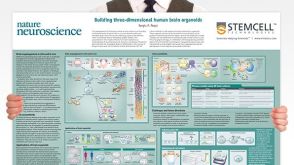 挂图Building Three-Dimensional Human Brain Organoids Overview of brain organogenesis and the applications of brain organoids in studying the development and maturation of the nervous system



 沪公网安备31010102008431号