Delivery of Proteases in Aqueous Two-Phase Systems Enables Direct Purification of Stem Cell Colonies from Feeder Cell Co-Cultures for Differentiation into Functional Cardiomyocytes
Patterning of bioactive enzymes with subcellular resolution is achieved by dispensing droplets of dextran (DEX) onto polyethylene glycol (PEG)-covered cells though a glass capillary needle connected to a pneumatic pump. This technique is applied to purify colonies of induced pluripotent stem cells (iPSCs) from mouse embryonic fibroblast (MEF) feeder cultures and inefficiently induced iPSC colonies by selectively dissociating the iPSCs with proteases.
View Publication
Pandey MK et al. (JUN 2007)
The Journal of biological chemistry 282 24 17340--50
Butein, a tetrahydroxychalcone, inhibits nuclear factor (NF)-kappaB and NF-kappaB-regulated gene expression through direct inhibition of IkappaBalpha kinase beta on cysteine 179 residue.
Although butein (3,4,2',4'-tetrahydroxychalcone) is known to exhibit anti-inflammatory,anti-cancer,and anti-fibrogenic activities,very little is known about its mechanism of action. Because numerous effects modulated by butein can be linked to interference with the NF-kappaB pathway,we investigated in detail the effect of this chalcone on NF-kappaB activity. As examined by DNA binding,we found that butein suppressed tumor necrosis factor (TNF)-induced NF-kappaB activation in a dose- and time-dependent manner; suppressed the NF-kappaB activation induced by various inflammatory agents and carcinogens; and inhibited the NF-kappaB reporter activity induced by TNFR1,TRADD,TRAF2,NIK,TAK1/TAB1,and IKK-beta. We also found that butein blocked the phosphorylation and degradation of IkappaBalpha by inhibiting IkappaBalpha kinase (IKK) activation. We found the inactivation of IKK by butein was direct and involved cysteine residue 179. This correlated with the suppression of phosphorylation and the nuclear translocation of p65. In this study,butein also inhibited the expression of the NF-kappaB-regulated gene products involved in anti-apoptosis (IAP2,Bcl-2,and Bcl-xL),proliferation (cyclin D1 and c-Myc),and invasion (COX-2 and MMP-9). Suppression of these gene products correlated with enhancement of the apoptosis induced by TNF and chemotherapeutic agents; and inhibition of cytokine-induced cellular invasion. Overall,our results indicated that antitumor and anti-inflammatory activities previously assigned to butein may be mediated in part through the direct inhibition of IKK,leading to the suppression of the NF-kappaB activation pathway.
View Publication
产品类型:
产品号#:
73462
73464
产品名:
Butein
Lu HF et al. (MAR 2014)
Biomaterials 35 9 2816--2826
A defined xeno-free and feeder-free culture system for the derivation, expansion and direct differentiation of transgene-free patient-specific induced pluripotent stem cells
A defined xeno-free system for patient-specific iPSC derivation and differentiation is required for translation to clinical applications. However,standard somatic cell reprogramming protocols rely on using MEFs and xenogeneic medium,imposing a significant obstacle to clinical translation. Here,we describe a well-defined culture system based on xeno-free media and LN521 substrate which supported i) efficient reprogramming of normal or diseased skin fibroblasts from human of different ages into hiPSCs with a 15-30 fold increase in efficiency over conventional viral vector-based method; ii) long-term self-renewal of hiPSCs; and iii) direct hiPSC lineage-specific differentiation. Using an excisable polycistronic vector and optimized culture conditions,we achieved up to 0.15%-0.3% reprogramming efficiencies. Subsequently,transgene-free hiPSCs were obtained by Cre-mediated excision of the reprogramming factors. The derived iPSCs maintained long-term self-renewal,normal karyotype and pluripotency,as demonstrated by the expression of stem cell markers and ability to form derivatives of three germ layers both in vitro and in vivo. Importantly,we demonstrated that Parkinson's patient transgene-free iPSCs derived using the same system could be directed towards differentiation into dopaminergic neurons under xeno-free culture conditions. Our approach provides a safe and robust platform for the generation of patient-specific iPSCs and derivatives for clinical and translational applications. textcopyright 2013 Elsevier Ltd.
View Publication
产品类型:
产品号#:
05860
05880
05850
05857
05870
05875
07923
07920
85850
85857
85870
85875
77003
77004
07922
200-0117
产品名:
Dispase (1 U/mL)
ACCUTASE™
mTeSR™1
mTeSR™1
CellAdhere™ Laminin-521
ACCUTASE™
CellAdhere™ Laminin-521
Brunn GJ et al. ( 1996)
The EMBO journal 15 19 5256--5267
Direct inhibition of the signaling functions of the mammalian target of rapamycin by the phosphoinositide 3-kinase inhibitors, wortmannin and LY294002.
The immunosuppressant,rapamycin,inhibits cell growth by interfering with the function of a novel kinase,termed mammalian target of rapamycin (mTOR). The putative catalytic domain of mTOR is similar to those of mammalian and yeast phosphatidylinositol (PI) 3-kinases. This study demonstrates that mTOR is a component of a cytokine-triggered protein kinase cascade leading to the phosphorylation of the eukaryotic initiation factor-4E (eIF-4E) binding protein,PHAS-1,in activated T lymphocytes. This event promotes G1 phase progression by stimulating eIF-4E-dependent translation initiation. A mutant YAC-1 T lymphoma cell line,which was selected for resistance to the growth-inhibitory action of rapamycin,was correspondingly resistant to the suppressive effect of this drug on PHAS-1 phosphorylation. In contrast,the PI 3-kinase inhibitor,wortmannin,reduced the phosphorylation of PHAS-1 in both rapamycin-sensitive and -resistant T cells. At similar drug concentrations (0.1-1 microM),wortmannin irreversibly inhibited the serine-specific autokinase activity of mTOR. The autokinase activity of mTOR was also sensitive to the structurally distinct PI 3-kinase inhibitor,LY294002,at concentrations (1-30 microM) nearly identical to those required for inhibition of the lipid kinase activity of the mammalian p85-p110 heterodimer. These studies indicate that the signaling functions of mTOR,and potentially those of other high molecular weight PI 3-kinase homologs,are directly affected by cellular treatment with wortmannin or LY294002.
View Publication
Fu X et al. (AUG 2010)
Tissue engineering. Part C,Methods 16 4 719--733
Autologous feeder cells from embryoid body outgrowth support the long-term growth of human embryonic stem cells more effectively than those from direct differentiation.
Autologous feeder cells have been developed by various methods to minimize the presence of xenogenic entities in human embryonic stem cell (hESC) cultures. However,there was no systematic comparison of supportive effects of the feeder cells on hESC growth,nor comparison to the supportive effects of various feeder-free culture systems and standard mouse feeder cells. In this study,we aimed to compare the supportive abilities of autologous feeders derived either directly from H9 hESCs (H9 dF) or from outgrowth of embryoid body predifferentiated in suspension from H9 hESCs (H9 ebF). Mouse feeder system and matrigel-mTeSR1 feeder-free system were used as controls. H9 ebF was found to secrete more basic fibroblast growth factor in the conditioned medium than H9 dF did. The undifferentiated state of H9 hESCs was sustained more stably on H9 ebF than on H9 dF,and the differentiation potential of H9 hESCs on H9 ebF was higher than on H9 dF. We concluded that H9 ebF was an optimal autologous feeder to maintain the long-term undifferentiated state of hESCs in our current culture system. This study helps to standardize the autologous culture of hESCs. It also suggests a more definite direction for future development of xeno-free culture system for hESCs.
View Publication
Caron G et al. (AUG 2005)
Journal of immunology (Baltimore,Md. : 1950) 175 3 1551--7
Direct stimulation of human T cells via TLR5 and TLR7/8: flagellin and R-848 up-regulate proliferation and IFN-gamma production by memory CD4+ T cells.
TLRs are involved in innate cell activation by conserved structures expressed by microorganisms. Human T cells express the mRNA encoding most of TLRs. Therefore,we tested whether some TLR ligands may modulate the function of highly purified human CD4+ T lymphocytes. We report that,in the absence of APCs,flagellin (a TLR5 ligand) and R-848 (a TLR7/8 ligand) synergized with suboptimal concentrations of TCR-dependent (anti-CD3 mAb) or -independent stimuli (anti-CD2 mAbs or IL-2) to up-regulate proliferation and IFN-gamma,IL-8,and IL-10 but not IL-4 production by human CD4+ T cells. No effect of poly(I:C) and LPS,ligands for TLR3 and TLR4,respectively,was detected. We also observed that CD4+CD45RO+ memory T cell responses to TLR ligands were more potent than those observed with CD4+CD45RA+ naive T cells. Moreover,among the memory T cells,CCR7- effector cells were more sensitive to TLR ligands than CCR7+ central memory cells. These data demonstrate for the first time a direct effect of TLR5 and TLR7/8 ligands on human T cells,and highlight an innate arm in T cell functions. They also suggest that some components from invading microorganisms may directly stimulate effector memory T cells located in tissues by up-regulating cytokine and chemokine production.
View Publication


 EasySep™小鼠TIL(CD45)正选试剂盒




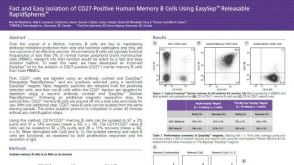 科学海报Fast and Easy Isolation of CD27-Positive Human Memory B Cells Using EasySep™ Releasable RapidSpheres™
 技术公告Obtain High-Quality Nucleic Acids from Organoid Cultures Using the EasySep™ Total Nucleic Acid Extraction Kit
 技术公告Achieve Scalable, High-Quality Nucleic Acid Extractions with the EasySep™ Total Nucleic Acid Extraction Kit


 沪公网安备31010102008431号