Qin H et al. (MAR 2016)
Cell reports 14 10 2301--2312
YAP Induces Human Naive Pluripotency.
The human naive pluripotent stem cell (PSC) state,corresponding to a pre-implantation stage of development,has been difficult to capture and sustain in vitro. We report that the Hippo pathway effector YAP is nuclearly localized in the inner cell mass of human blastocysts. Overexpression of YAP in human embryonic stem cells (ESCs) and induced PSCs (iPSCs) promotes the generation of naive PSCs. Lysophosphatidic acid (LPA) can partially substitute for YAP to generate transgene-free human naive PSCs. YAP- or LPA-induced naive PSCs have a rapid clonal growth rate,a normal karyotype,the ability to form teratomas,transcriptional similarities to human pre-implantation embryos,reduced heterochromatin levels,and other hallmarks of the naive state. YAP/LPA act in part by suppressing differentiation-inducing effects of GSK3 inhibition. CRISPR/Cas9-generated YAP-/- cells have an impaired ability to form colonies in naive but not primed conditions. These results uncover an unexpected role for YAP in the human naive state,with implications for early human embryology.
View Publication
Antonov SA et al. (SEP 2016)
Doklady biological sciences : proceedings of the Academy of Sciences of the USSR,Biological sciences sections 470 1 244--246
Investigation of the effects of GABA receptor agonists in the differentiation of human induced pluripotent stem cells into dopaminergic neurons.
The influence of GABA receptor agonists on the terminal differentiation in vitro of dopaminergic (DA) neurons derived from IPS cells was investigated. GABA-A agonist muscimol induced transient elevation of intracellular Ca(2+) level ([Ca(2+)] i ) in the investigated cells at days 5 to 21 of differentiation. Differentiation of cells in the presence of muscimol reduced tyrosine hydroxylase expression. Thus,the presence of active GABA-A receptors,associated with phenotype determination via Ca(2+)-signalling was demonstrated in differentiating human DA neurons.
View Publication
产品类型:
产品号#:
85850
85857
产品名:
mTeSR™1
mTeSR™1
Drury-Stewart D et al. (AUG 2013)
Stem cell research & therapy 4 4 93
Highly efficient differentiation of neural precursors from human embryonic stem cells and benefits of transplantation after ischemic stroke in mice.
INTRODUCTION: Ischemic stroke is a leading cause of death and disability,but treatment options are severely limited. Cell therapy offers an attractive strategy for regenerating lost tissues and enhancing the endogenous healing process. In this study,we investigated the use of human embryonic stem cell-derived neural precursors as a cell therapy in a murine stroke model.backslashnbackslashnMETHODS: Neural precursors were derived from human embryonic stem cells by using a fully adherent SMAD inhibition protocol employing small molecules. The efficiency of neural induction and the ability of these cells to further differentiate into neurons were assessed by using immunocytochemistry. Whole-cell patch-clamp recording was used to demonstrate the electrophysiological activity of human embryonic stem cell-derived neurons. Neural precursors were transplanted into the core and penumbra regions of a focal ischemic stroke in the barrel cortex of mice. Animals received injections of bromodeoxyuridine to track regeneration. Neural differentiation of the transplanted cells and regenerative markers were measured by using immunohistochemistry. The adhesive removal test was used to determine functional improvement after stroke and intervention.backslashnbackslashnRESULTS: After 11 days of neural induction by using the small-molecule protocol,over 95% of human embryonic stem-derived cells expressed at least one neural marker. Further in vitro differentiation yielded cells that stained for mature neuronal markers and exhibited high-amplitude,repetitive action potentials in response to depolarization. Neuronal differentiation also occurred after transplantation into the ischemic cortex. A greater level of bromodeoxyuridine co-localization with neurons was observed in the penumbra region of animals receiving cell transplantation. Transplantation also improved sensory recovery in transplant animals over that in control animals.backslashnbackslashnCONCLUSIONS: Human embryonic stem cell-derived neural precursors derived by using a highly efficient small-molecule SMAD inhibition protocol can differentiate into electrophysiologically functional neurons in vitro. These cells also differentiate into neurons in vivo,enhance regenerative activities,and improve sensory recovery after ischemic stroke.
View Publication
产品类型:
产品号#:
85850
85857
产品名:
mTeSR™1
mTeSR™1
Sun N and Zhao H (MAY 2014)
Biotechnology and Bioengineering 111 5 1048--53
Seamless correction of the sickle cell disease mutation of the HBB gene in human induced pluripotent stem cells using TALENs.
Sickle cell disease (SCD) is the most common human genetic disease which is caused by a single mutation of human β-globin (HBB) gene. The lack of long-term treatment makes the development of reliable cell and gene therapies highly desirable. Disease-specific patient-derived human induced pluripotent stem cells (hiPSCs) have great potential for developing novel cell and gene therapies. With the disease-causing mutations corrected in situ,patient-derived hiPSCs can restore normal cell functions and serve as a renewable autologous cell source for the treatment of genetic disorders. Here we successfully utilized transcription activator-like effector nucleases (TALENs),a recently emerged novel genome editing tool,to correct the SCD mutation in patient-derived hiPSCs. The TALENs we have engineered are highly specific and generate minimal off-target effects. In combination with piggyBac transposon,TALEN-mediated gene targeting leaves no residual ectopic sequences at the site of correction and the corrected hiPSCs retain full pluripotency and a normal karyotype. Our study demonstrates an important first step of using TALENs for the treatment of genetic diseases such as SCD,which represents a significant advance toward hiPSC-based cell and gene therapies.
View Publication
产品类型:
产品号#:
07920
07922
07923
100-0247
72252
72254
85850
85857
产品名:
ACCUTASE™
ACCUTASE™
Dispase (1 U/mL)
Thiazovivin
Thiazovivin
Thiazovivin
mTeSR™1
mTeSR™1
Nguyen TY et al. (OCT 2013)
PLoS ONE 8 10 e76547
An In Vitro Mechanism Study on the Proliferation and Pluripotency of Human Embryonic Stems Cells in Response to Magnesium Degradation
Magnesium (Mg) is a promising biodegradable metallic material for applications in cellular/tissue engineering and biomedical implants/devices. To advance clinical translation of Mg-based biomaterials,we investigated the effects and mechanisms of Mg degradation on the proliferation and pluripotency of human embryonic stem cells (hESCs). We used hESCs as the in vitro model system to study cellular responses to Mg degradation because they are sensitive to toxicants and capable of differentiating into any cell types of interest for regenerative medicine. In a previous study when hESCs were cultured in vitro with either polished metallic Mg (99.9% purity) or pre-degraded Mg,cell death was observed within the first 30 hours of culture. Excess Mg ions and hydroxide ions induced by Mg degradation may have been the causes for the observed cell death; hence,their respective effects on hESCs were investigated for the first time to reveal the potential mechanisms. For this purpose,the mTeSR®1 hESC culture media was either modified to an alkaline pH of 8.1 or supplemented with 0.4-40 mM of Mg ions. We showed that the initial increase of media pH to 8.1 had no adverse effect on hESC proliferation. At all tested Mg ion dosages,the hESCs grew to confluency and retained pluripotency as indicated by the expression of OCT4,SSEA3,and SOX2. When the supplemental Mg ion dosages increased to greater than 10 mM,however,hESC colony morphology changed and cell counts decreased. These results suggest that Mg-based implants or scaffolds are promising in combination with hESCs for regenerative medicine applications,providing their degradation rate is moderate. Additionally,the hESC culture system could serve as a standard model for cytocompatibility studies of Mg in vitro,and an identified 10 mM critical dosage of Mg ions could serve as a design guideline for safe degradation of Mg-based implants/scaffolds.
View Publication
产品类型:
产品号#:
85850
85857
产品名:
mTeSR™1
mTeSR™1
Lin L et al. ( 2014)
The Journal of Immunology 193 2 940--949
Human NK Cells Licensed by Killer Ig Receptor Genes Have an Altered Cytokine Program That Modifies CD4+ T Cell Function
NK cells are innate immune cells known for their cytolytic activities toward tumors and infections. They are capable of expressing diverse killer Ig-like receptors (KIRs),and KIRs are implicated in susceptibility to Crohn's disease (CD),a chronic intestinal inflammatory disease. However,the cellular mechanism of this genetic contribution is unknown. In this study,we show that the licensing" of NK cells�
View Publication
产品类型:
产品号#:
15025
15065
19051
19051RF
19055
19055RF
19854
19854RF
产品名:
RosetteSep™人NK细胞富集抗体混合物
RosetteSep™人NK细胞富集抗体混合物
EasySep™人T细胞富集试剂盒
RoboSep™ 人T细胞富集试剂盒含滤芯吸头
EasySep™人NK细胞富集试剂盒
RoboSep™ 人NK细胞富集试剂盒含滤芯吸头
EasySep™小鼠B细胞分选试剂盒
RoboSep™ 小鼠B细胞分选试剂盒
Turner J et al. (NOV 2014)
PLoS ONE 9 11 e112757
Metabolic Profiling and Flux Analysis of MEL-2 Human Embryonic Stem Cells during Exponential Growth at Physiological and Atmospheric Oxygen Concentrations
As human embryonic stem cells (hESCs) steadily progress towards regenerative medicine applications there is an increasing emphasis on the development of bioreactor platforms that enable expansion of these cells to clinically relevant numbers. Surprisingly little is known about the metabolic requirements of hESCs,precluding the rational design and optimisation of such platforms. In this study,we undertook an in-depth characterisation of MEL-2 hESC metabolic behaviour during the exponential growth phase,combining metabolic profiling and flux analysis tools at physiological (hypoxic) and atmospheric (normoxic) oxygen concentrations. To overcome variability in growth profiles and the problem of closing mass balances in a complex environment,we developed protocols to accurately measure uptake and production rates of metabolites,cell density,growth rate and biomass composition,and designed a metabolic flux analysis model for estimating internal rates. hESCs are commonly considered to be highly glycolytic with inactive or immature mitochondria,however,whilst the results of this study confirmed that glycolysis is indeed highly active,we show that at least in MEL-2 hESC,it is supported by the use of oxidative phosphorylation within the mitochondria utilising carbon sources,such as glutamine to maximise ATP production. Under both conditions,glycolysis was disconnected from the mitochondria with all of the glucose being converted to lactate. No difference in the growth rates of cells cultured under physiological or atmospheric oxygen concentrations was observed nor did this cause differences in fluxes through the majority of the internal metabolic pathways associated with biogenesis. These results suggest that hESCs display the conventional Warburg effect,with high aerobic activity despite high lactate production,challenging the idea of an anaerobic metabolism with low mitochondrial activity. The results of this study provide new insight that can be used in rational bioreactor design and in the development of
View Publication
Qiu W et al. (SEP 2011)
Biochemical and biophysical research communications 413 1 98--104
Activation of non-canonical Wnt/JNK pathway by Wnt3a is associated with differentiation fate determination of human bone marrow stromal (mesenchymal) stem cells.
The canonical Wnt signaling pathway can determine human bone marrow stromal (mesenchymal) stem cell (hMSC) differentiation fate into osteoblast or adipocyte lineages. However,its downstream targets in MSC are not well characterized. Thus,using DNA microarrays,we compared global gene expression patterns induced by Wnt3a treatment in two hMSC lines: hMSC-LRP5(T253) and hMSC-LRP5(T244) cells carrying known mutations of Wnt co-receptor LRP5 (T253I or T244M) that either enhances or represses canonical Wnt signaling,respectively. Wnt3a treatment of hMSC activated not only canonical Wnt signaling,but also the non-canonical Wnt/JNK pathway through upregulation of several non-canonical Wnt components e.g. naked cuticle 1 homolog (NKD1) and WNT11. Activation of the non-canonical Wnt/JNK pathway by anisomycin enhanced osteoblast differentiation whereas its inhibition by SP600125 enhanced adipocyte differentiation of hMSC. In conclusion,canonical and non-canonical Wnt signaling cooperate in determining MSC differentiation fate.
View Publication
Yoshimoto K et al. (JUL 2006)
International immunology 18 7 1189--96
Aberrant expression of BAFF in T cells of systemic lupus erythematosus, which is recapitulated by a human T cell line, Loucy.
B cell-activating factor of the tumor necrosis factor (TNF) family,or BAFF,is mainly produced in monocytes and dendritic cells,and indispensable for proliferation,differentiation and survival of B cells. BAFF is a type II membrane-bound protein and the extracellular C-terminal fragment is released from the cells as soluble BAFF (sBAFF),which binds to specific receptors on B cells. Accumulating evidence suggests that BAFF plays an important role in the pathogenesis of autoimmune diseases,such as systemic lupus erythematosus (SLE). In this study,we developed a sensitive sandwich ELISA system to quantify the amount of sBAFF using our own mAb. Treatment of peripheral T cells of SLE patients with an anti-CD3 antibody triggered robust expression of BAFF and subsequent release of sBAFF from the cells. On the other hand,the stimulus induced only marginal elevation of sBAFF from normal T cells. These data indicate that BAFF is expressed in T cells upon stimulation at least under pathological conditions. Expression of BAFF was also largely induced in a human T cell line,Loucy (American Type Tissue Collection CRL-2629),in response to several stimuli,while other T cell lines so far examined produced the cytokine almost constitutively. These data suggest that Loucy recapitulates some of the characteristics of SLE T cells. Investigation of molecular and cellular mechanisms of production of BAFF in Loucy demonstrated that expression of BAFF was regulated through a signal transduction pathway which involves c-jun NH2-terminal kinase and p38,and that shedding of BAFF was catalyzed by a membrane-bound protease,furin.
View Publication


 EasySep™小鼠TIL(CD45)正选试剂盒




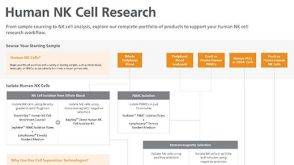
 科学海报Animal Component- and Extracellular Vesicle-Free Medium Facilitates Isolation and Characterization of Extracellular Vesicles from Human Bone Marrow Mesenchymal Stromal Cells
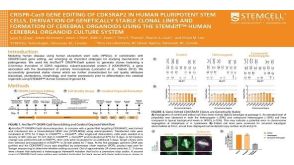 科学海报CRISPR-Cas9 Gene Editing Of CDK5RAP2 In Human Pluripotent Stem Cells, Derivation Of Genetically Stable Clonal Lines And Formation Of Cerebral Organoids
 沪公网安备31010102008431号