Regulatory T Cells
Overview of the development, phenotype and functions of regulatory T cells
Lei IL et al. (JAN 2015)
Journal of visualized experiments : JoVE January 52047. doi: 10.3791/52047.
Derivation of cardiac progenitor cells from embryonic stem cells.
Cardiac progenitor cells (CPCs) have the capacity to differentiate into cardiomyocytes,smooth muscle cells (SMC),and endothelial cells and hold great promise in cell therapy against heart disease. Among various methods to isolate CPCs,differentiation of embryonic stem cell (ESC) into CPCs attracts great attention in the field since ESCs can provide unlimited cell source. As a result,numerous strategies have been developed to derive CPCs from ESCs. In this protocol,differentiation and purification of embryonic CPCs from both mouse and human ESCs is described. Due to the difficulty of using cell surface markers to isolate embryonic CPCs,ESCs are engineered with fluorescent reporters activated by CPC-specific cre recombinase expression. Thus,CPCs can be enriched by fluorescence-activated cell sorting (FACS). This protocol illustrates procedures to form embryoid bodies (EBs) from ESCs for CPC specification and enrichment. The isolated CPCs can be subsequently cultured for cardiac lineage differentiation and other biological assays. This protocol is optimized for robust and efficient derivation of CPCs from both mouse and human ESCs.
View Publication
Thirukkumaran CM et al. (JUL 2003)
Blood 102 1 377--87
Reovirus oncolysis as a novel purging strategy for autologous stem cell transplantation.
Hematologic stem cell rescue after high-dose cytotoxic therapy is extensively used for the treatment of many hematopoietic and solid cancers. Gene marking studies suggest that occult tumor cells within the autograft may contribute to clinical relapse. To date purging of autografts contaminated with cancer cells has been unsuccessful. The selective oncolytic property of reovirus against myriad malignant histologies in in vitro,in vivo,and ex vivo systems has been previously demonstrated. In the present study we have shown that reovirus can successfully purge cancer cells within autografts. Human monocytic and myeloma cell lines as well as enriched ex vivo lymphoma,myeloma,and Waldenström macroglobulinemia patient tumor specimens were used in an experimental purging model. Viability of the cell lines or purified ex vivo tumor cells of diffuse large B-cell lymphoma,chronic lymphocytic leukemia,Waldenström macroglobulinemia,and small lymphocytic lymphoma was significantly reduced after reovirus treatment. Further,[35S]-methionine labeling and sodium dodecyl sulfate-polyacrylamide gel electrophoresis (SDS-PAGE) of cellular proteins demonstrated reovirus protein synthesis and disruption of host cell protein synthesis as early as 24 hours. Admixtures of apheresis product with the abovementioned tumor cells and cell lines treated with reovirus showed complete purging of disease. In contrast,reovirus purging of enriched ex vivo multiple myeloma,Burkitt lymphoma,and follicular lymphoma was incomplete. The oncolytic action of reovirus did not affect CD34+ stem cells or their long-term colony-forming assays even after granulocyte colony-stimulating factor (G-CSF) stimulation. Our results indicate the ex vivo use of an unattenuated oncolytic virus as an attractive purging strategy for autologous stem cell transplantations.
View Publication
产品类型:
产品号#:
04434
04444
09600
09650
产品名:
MethoCult™H4434经典
MethoCult™H4434经典
StemSpan™ SFEM
StemSpan™ SFEM
Wulff H et al. (JUL 2004)
Journal of immunology (Baltimore,Md. : 1950) 173 2 776--86
K+ channel expression during B cell differentiation: implications for immunomodulation and autoimmunity.
Using whole-cell patch-clamp,fluorescence microscopy and flow cytometry,we demonstrate a switch in potassium channel expression during differentiation of human B cells from naive to memory cells. Naive and IgD(+)CD27(+) memory B cells express small numbers of the voltage-gated Kv1.3 and the Ca(2+)-activated intermediate-conductance IKCa1 channel when quiescent,and increase IKCa1 expression 45-fold upon activation with no change in Kv1.3 levels. In contrast,quiescent class-switched memory B cells express high levels of Kv1.3 ( approximately 2000 channels/cell) and maintain their Kv1.3(high) expression after activation. Consistent with their channel phenotypes,proliferation of naive and IgD(+)CD27(+) memory B cells is suppressed by the specific IKCa1 inhibitor TRAM-34 but not by the potent Kv1.3 blocker Stichodactyla helianthus toxin,whereas the proliferation of class-switched memory B cells is suppressed by Stichodactyla helianthus toxin but not TRAM-34. These changes parallel those reported for T cells. Therefore,specific Kv1.3 and IKCa1 inhibitors may have use in therapeutic manipulation of selective lymphocyte subsets in immunological disorders.
View Publication
产品类型:
产品号#:
15024
15064
产品名:
RosetteSep™ 人B细胞富集抗体混合物
RosetteSep™人B细胞富集抗体混合物
Xu D et al. ( 2012)
PloS one 7 10 e46670
Cancer stem cell-related gene periostin: a novel prognostic marker for breast cancer.
We investigated the expression status of periostin in breast cancer stem cells and its clinical implications in order to lay a foundation for managing breast cancer. CD44+/CD24-/line- tumor cells (CSC) from clinical specimens were sorted using flow cytometry. Periostin expression status was detected in CSC cells and 1,086 breast cancer specimens by Western blot and immunohistochemistry staining,with the CSC ratio determined by immunofluorescence double staining. The relationship between the periostin protein and clinico-pathological parameters and prognosis was subsequently determined. As a result,CSC cells are more likely to generate new tumors in mice and cell microspheres that are deficient in NOD/SCID compared to the control group. Periostin protein was expressed higher in CSC cells compared to the control cells and was found to be related to CSC chemotherapy resistance. Moreover,periostin expression was found to be related to the CSC ratio in 1,086 breast cancer specimens (P = 0.001). In total,334 (30.76%) of the 1,086 breast cases showed high periostin expression. After universal and Spearman regression correlation analysis,periostin was observed to be related to histological grade,CSC ratio,lymph node metastasis,tumor size,and triple-negative breast cancer (all Ptextless0.05). Furthermore,periostin was shown to attain a significantly more distant bone metastasis and worse disease-specific survival than those with none or low-expressed periostin protein (P = 0.001). In the Cox regression test,periostin protein was detected as an independent prognostic factor (P = 0.001). In conclusion,periostin was found to be related to the CSC and an independent prognostic factor for breast cancer. It is also perhaps a potential target to breast cancer.
View Publication
产品类型:
产品号#:
05620
产品名:
MammoCult™人培养基试剂盒
Jiang J et al. (SEP 2010)
Cancer research 70 18 7242--52
Crucial roles for protein kinase C isoforms in tumor-specific killing by apoptin.
The chicken anemia virus-derived protein apoptin induces apoptosis in a variety of human malignant and transformed cells but not in normal cells. However,the mechanisms through which apoptin achieves its selective killing effects are not well understood. We developed a lentiviral vector encoding a green fluorescent protein-apoptin fusion gene (LV-GFP-AP) that can efficiently deliver apoptin into hematopoietic cells. Apoptin selectively killed the human multiple myeloma cell lines MM1.R and MM1.S,and the leukemia cell lines K562,HL60,U937,KG1,and NB4. In contrast,normal CD34(+) cells were not killed and maintained their differentiation potential in multilineage colony formation assays. In addition,dexamethasone-resistant MM1.R cells were found to be more susceptible to apoptin-induced cell death than the parental matched MM1.S cells. Death susceptibility correlated with increased phosphorylation and activation of the apoptin protein in MM1.R cells. Expression array profiling identified differential kinase profiles between MM1.R and MM1.S cells. Among these kinases,protein kinase Cβ (PKCβ) was found by immunoprecipitation and in vitro kinase studies to be a candidate kinase responsible for apoptin phosphorylation. Indeed,shRNA knockdown or drug-mediated inhibition of PKCβ significantly reduced apoptin phosphorylation. Furthermore,apoptin-mediated cell death proceeded through the upregulation of PKCβ,activation of caspase-9/3,cleavage of the PKCδ catalytic domain,and downregulation of the MERTK and AKT kinases. Collectively,these results elucidate a novel pathway for apoptin activation involving PKCβ and PKCδ. Further,they highlight the potential of apoptin and its cellular regulators to purge bone marrow used in autologous transplantation for multiple myeloma.
View Publication
产品类型:
产品号#:
04434
04444
09600
09650
产品名:
MethoCult™H4434经典
MethoCult™H4434经典
StemSpan™ SFEM
StemSpan™ SFEM
Jo SY et al. (MAY 2011)
Blood 117 18 4759--68
Requirement for Dot1l in murine postnatal hematopoiesis and leukemogenesis by MLL translocation.
Disruptor of telomeric silencing 1-like (Dot1l) is a histone 3 lysine 79 methyltransferase. Studies of constitutive Dot1l knockout mice show that Dot1l is essential for embryonic development and prenatal hematopoiesis. DOT1L also interacts with translocation partners of Mixed Lineage Leukemia (MLL) gene,which is commonly translocated in human leukemia. However,the requirement of Dot1l in postnatal hematopoiesis and leukemogenesis of MLL translocation proteins has not been conclusively shown. With a conditional Dot1l knockout mouse model,we examined the consequences of Dot1l loss in postnatal hematopoiesis and MLL translocation leukemia. Deletion of Dot1l led to pancytopenia and failure of hematopoietic homeostasis,and Dot1l-deficient cells minimally reconstituted recipient bone marrow in competitive transplantation experiments. In addition,MLL-AF9 cells required Dot1l for oncogenic transformation,whereas cells with other leukemic oncogenes,such as Hoxa9/Meis1 and E2A-HLF,did not. These findings illustrate a crucial role of Dot1l in normal hematopoiesis and leukemogenesis of specific oncogenes.
View Publication
产品类型:
产品号#:
03234
产品名:
MethoCult™M3234
S. Baos et al. ( 2018)
Frontiers in immunology 9 1416
Nonallergic Asthma and Its Severity: Biomarkers for Its Discrimination in Peripheral Samples.
Asthma is a complex and heterogeneous respiratory disorder characterized by chronic airway inflammation. It has generally been associated with allergic mechanisms related to type 2 airway inflammation. Nevertheless,between 10 and 33{\%} of asthmatic individuals have nonallergic asthma (NA). Several targeted treatments are in clinical development for patients with Th2 immune response,but few biomarkers are been defined for low or non-Th2-mediated inflammation asthma. We have recently defined by gene expression a set of genes as potential biomarkers of NA,mainly associated with disease severity: IL10,MSR1,PHLDA1,SERPINB2,CHI3L1,IL8,and PI3. Here,we analyzed their protein expression and specificity using sera and isolated peripheral blood mononuclear cells (PBMCs). First,protein quantification was carried out using ELISA (in sera) or Western blot (proteins extracted from PBMCs by Trizol procedure),depending on the biomarker in 30 healthy controls (C) subjects and 30 NA patients. A receiver operating characteristic curve analysis was performed by using the R program to study the specificity and sensitivity of the candidate biomarkers at a gene- and protein expression level. Four kinds of comparisons were performed: total NA group vs C group,severe NA patients vs C,moderate-mild NA patients vs C,and severe NA patients vs moderate-mild NA patients. We found that all the single genes showed good sensitivity vs specificity for some phenotypic discrimination,with CHI3L1 and PI3 exhibiting the best results for C vs NA: CHI3L1 area under the curve (AUC) (CI 95{\%}): 0.95 (0.84-1.00) and PI3 AUC: 0.99 (0.98-1.00); C vs severe NA: PI3 AUC: 1 (0.99-1.00); and C vs moderate-mild NA: CHI3L1 AUC: 1 (0.99-1.00) and PI3 AUC: 0.99 (0.96-1.00). However,the results for discriminating asthma disease and severity with protein expression were better when two or three biomarkers were combined. In conclusion,individual genes and combinations of proteins have been evaluated as reliable biomarkers for classifying NA subjects and their severity. These new panels could be good diagnostic tests.
View Publication
Drug and siRNA screens identify ROCK2 as a therapeutic target for ciliopathies
BackgroundPrimary cilia mediate vertebrate development and growth factor signalling. Defects in primary cilia cause inherited developmental conditions termed ciliopathies. Ciliopathies often present with cystic kidney disease,a major cause of early renal failure. Currently,only one drug,Tolvaptan,is licensed to slow the decline of renal function for the ciliopathy polycystic kidney disease. Novel therapeutic interventions are needed.MethodsWe screened clinical development compounds to identify those that reversed cilia loss due to siRNA knockdown. In parallel,we undertook a whole genome siRNA-based reverse genetics phenotypic screen to identify positive modulators of cilia formation.ResultsUsing a clinical development compound screen,we identify fasudil hydrochloride. Fasudil is a generic,off-patent drug that is a potent,broadly selective Rho-associated coiled-coil-containing protein kinase (ROCK) inhibitor. In parallel,the siRNA screen identifies ROCK2 and we demonstrate that ROCK2 is a key mediator of cilium formation and function through its possible effects on actin cytoskeleton remodelling.ConclusionsOur results indicate that specific ROCK2 inhibitors (e.g. belumosudil) could be repurposed for cystic kidney disease treatment. We propose that ROCK2 inhibition represents a novel,disease-modifying therapeutic approach for heterogeneous ciliopathies. Plain language summaryPrimary cilia are antennae-like structures on cells that are important for early development and healthy cell function. Defects in primary cilia can cause inherited diseases called ciliopathies. Ciliopathies often cause fluid-filled sacs,called cysts,that are a major cause of kidney disease and failure. There is currently one drug licensed to slow kidney disease progression,but it is poorly tolerated in patients. Therefore,new drugs are needed. In this study,we used screening assays to identify potential drugs and their targets that are effective in promoting the formation of primary cilia. Our results identified ROCK2 (Rho-associated coiled-coil-containing protein kinase 2),an inhibitor of protein signalling,as a key mediator of cilium function. These findings suggest that drugs that specifically target ROCK2 could be a potential treatment option for cystic kidney disease. Smith et al. use clinical development screen and whole genome siRNA-reverse genetics phenotypic screen to identify ROCK2,as a modulator of cilia formation and function via its effects on actin cytoskeleton remodelling. Repurposing ROCK2 is a viable treatment for ciliopathies,for which a limited therapeutic option is available.
View Publication


 EasySep™小鼠TIL(CD45)正选试剂盒




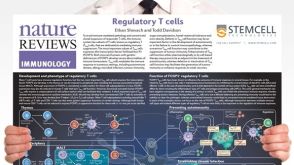 挂图Regulatory T Cells Overview of the development, phenotype and functions of regulatory T cells
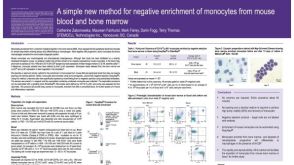 科学海报Method for Negative Enrichment of Monocytes from Mouse Blood and Bone Marrow
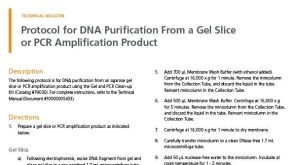 技术公告Protocol for DNA Purification From a Gel Slice or PCR Amplification Product

 沪公网安备31010102008431号