(Jul 2025)
Journal for Immunotherapy of Cancer 13 7
Engineered IL-18 variants with half-life extension and improved stability for cancer immunotherapy
AbstractBackgroundThe pro-inflammatory cytokine,interleukin-18 (IL-18),plays an instrumental role in bolstering anti-tumor immunity. However,the therapeutic application of IL-18 has been limited due to its susceptibility to neutralization by IL-18 binding protein (IL-18BP),short in vivo half-life,and unfavorable physicochemical properties.MethodsIn order to overcome the poor drug-like properties of IL-18,we installed an artificial disulfide bond,removed the native,unpaired cysteines,and fused the stabilized cytokine to an IgG Fc domain. The stability,potency,pharmacokinetic and pharmacodynamic properties as well as efficacy of disulfide-stabilized IL-18 Fc-fusion (dsIL-18-Fc) were assessed via in vitro and in vivo studies.ResultsThe stability and mammalian host cell production yields of dsIL-18-Fc were improved,compared to the wild-type (WT) cytokine,while maintaining its biological potency and interactions with IL-18 receptor α (IL-18Rα) and IL-18BP. Recombinant fusion of the cytokine to an IgG Fc domain provided extended half-life. Notably,despite maintaining sensitivity to IL-18BP,dsIL-18-Fc was effective at activating both T and natural killer (NK) cells,and elicited a strong anti-tumor response,either as a single agent,or in conjunction with anti-programmed cell death-ligand 1 (anti-PD-L1) therapy.ConclusionsWe engineered IL-18 for reinforced stability,extended half-life,and improved manufacturability. The therapeutic benefit of dsIL-18-Fc,coupled with a more favorable manufacturability profile and enhanced drug-like properties,underscores the potential utility of this engineered cytokine in cancer immunotherapy.
View Publication
产品类型:
产品号#:
17951
19851
100-0695
17951RF
19851RF
产品名:
EasySep™人T细胞分选试剂盒
EasySep™小鼠T细胞分选试剂盒
EasySep™人T细胞分选试剂盒
RoboSep™ 人T细胞分选试剂盒
RoboSep™ 小鼠T细胞分选试剂盒
(Jun 2024)
Frontiers in Immunology 15 5
PHE1-based IgG-like antibody platform provides a novel strategy for enhanced T-cell immunotherapy
IntroductionBispecific antibodies (BsAbs) can simultaneously target two epitopes of different antigenic targets,bringing possibilities for diversity in antibody drug design and are promising tools for the treatment of cancers and other diseases. T-cell engaging bsAb is an important application of the bispecific antibody,which could promote T cell-mediated tumor cell killing by targeting tumor-associated antigen (TAA) and CD3 at the same time.MethodsThis study comprised antibodies purification,Elisa assay for antigen binding,cytotoxicity assays,T cell activation by flow cytometry in vitro and xenogenic tumor model in vivo.ResultsWe present a novel bsAb platform named PHE-Ig technique to promote cognate heavy chain (HC)-light chain (LC) pairing by replacing the CH1/CL regions of different monoclonal antibodies (mAbs) with the natural A and B chains of PHE1 fragment of Integrin β2 based on the knob-in-hole (KIH) technology. We had also verified that PHE-Ig technology can be effectively used as a platform to synthesize different desired bsAbs for T-cell immunotherapy. Especially,BCMA×CD3 PHE-Ig bsAbs exhibited robust anti-multiple myeloma (MM) activity in vitro and in vivo.DiscussionMoreover,PHE1 domain was further shortened with D14G and R41S mutations,named PHE-S,and the PHE-S-based BCMA×CD3 bsAbs also showed anti BCMA+ tumor effect in vitro and in vivo,bringing more possibilities for the development and optimization of different bsAbs. To sum up,PHE1-based IgG-like antibody platform for bsAb construction provides a novel strategy for enhanced T-cell immunotherapy.
View Publication
Non-viral DNA donor templates are commonly used for targeted genomic integration via homologous recombination (HR),with efficiency improved by CRISPR/Cas9 technology. Circular single-stranded DNA (cssDNA) has been used as a genome engineering catalyst (GATALYST) for efficient and safe gene knock-in. Here,we introduce enGager,an enhanced GATALYST associated genome editor system that increases transgene integration efficiency by tethering cssDNA donors to nuclear-localized Cas9 fused with single-stranded DNA binding peptide motifs. This approach further improves targeted integration and expression of reporter genes at multiple genomic loci in various cell types,showing up to 6-fold higher efficiency compared to unfused Cas9,especially for large transgenes in primary cells. Notably,enGager enables efficient integration of a chimeric antigen receptor (CAR) transgene in 33% of primary human T cells,enhancing anti-tumor functionality. This ‘tripartite editor with ssDNA optimized genome engineering (TESOGENASE) offers a safer,more efficient alternative to viral vectors for therapeutic gene modification. Non-viral DNA donor templates are commonly used for targeted genomic integration via homologous recombination. Here the authors present the TESOGENASE system which enhances CRISPR-based gene integration by tethering circular single-stranded DNA to Cas9.
View Publication
产品类型:
产品号#:
20144
产品名:
EasySep™缓冲液
S. Acharya et al. (Jun 2024)
Nature Communications 15
PAM-flexible Engineered FnCas9 variants for robust and ultra-precise genome editing and diagnostics
The clinical success of CRISPR therapies hinges on the safety and efficacy of Cas proteins. The Cas9 from Francisella novicida (FnCas9) is highly precise,with a negligible affinity for mismatched substrates,but its low cellular targeting efficiency limits therapeutic use. Here,we rationally engineer the protein to develop enhanced FnCas9 (enFnCas9) variants and broaden their accessibility across human genomic sites by ~3.5-fold. The enFnCas9 proteins with single mismatch specificity expanded the target range of FnCas9-based CRISPR diagnostics to detect the pathogenic DNA signatures. They outperform Streptococcus pyogenes Cas9 (SpCas9) and its engineered derivatives in on-target editing efficiency,knock-in rates,and off-target specificity. enFnCas9 can be combined with extended gRNAs for robust base editing at sites which are inaccessible to PAM-constrained canonical base editors. Finally,we demonstrate an RPE65 mutation correction in a Leber congenital amaurosis 2 (LCA2) patient-specific iPSC line using enFnCas9 adenine base editor,highlighting its therapeutic utility. Subject terms: CRISPR-Cas9 genome editing,Molecular medicine,Genetic engineering,CRISPR-Cas9 genome editing
View Publication
产品类型:
产品号#:
100-0483
100-0484
产品名:
Hausser Scientificᵀᴹ 明线血球计数板
ReLeSR™
E. Park et al. (Jan 2026)
Light,Science & Applications 15
Label-free mid-infrared dichroism-sensitive photoacoustic microscopy for histostructural analysis of engineered heart tissues
Many biological tissues,such as cardiac muscle,tendons,and the cornea,exhibit highly organized microstructural alignment that is critical for mechanical and physiological functions. Disruptions in this structural organization are commonly associated with pathological conditions such as fibrosis,infarction,and cancer. However,conventional histological imaging techniques rely on immunofluorescence or histochemical staining,and they evaluate tissue alignment via non-physical 2D gradient-based calculation,which is labor-intensive,antibody-dependent,and prone to variability. Here,we demonstrate label-free mid-infrared dichroism-sensitive photoacoustic microscopy (MIR-DS-PAM),an analytical imaging system for cardiac tissue assessments. By combining molecular specificity with polarization sensitivity,this method selectively visualizes protein-rich engineered heart tissue (EHT) and quantifies the extracellular matrix (ECM) alignment without any labeling. The extracted dichroism-sensitive parameters,such as the degree of dichroism and the orientation angle,enable histostructural evaluation of tissue integrity and reveal diagnostic cues in fibrotic EHT. This technique offers a label-free analytical tool for fibrosis research and tissue engineering applications. Mid-infrared dichroism-sensitive photoacoustic microscopy enables label-free,quantitative histostructural analysis by combining spectral specificity and polarization sensitivity to visualize protein-rich components and evaluate anisotropic tissue alignment.
View Publication
Volpe DA and Warren MK (JUN 2003)
Toxicology in vitro : an international journal published in association with BIBRA 17 3 271--7
Myeloid clonogenic assays for comparison of the in vitro toxicity of alkylating agents.
A battery of clonal assays for myeloid progenitor cells (HPP-CFC,CFU-gemm,CFU-gm,CFU-g) was utilized to evaluate the myelotoxicity of a series of alkylating agents representing the spectrum of clinical times to nadir. Bone marrow aspirates from normal volunteers were incubated with mechlorethamine,busulfan,melphalan,carmustine or lomustine for 1 h and then cultured in methylcellulose with 30% serum and cytokines. There was a concentration-dependent inhibition of colony formation and often a differential toxicity to the myeloid progenitors with the alkylators tested. On a molar basis,mechlorethamine and melphalan were the most toxic of the alkylator drugs to the myeloid precursors. The most sensitive progenitor was CFU-gemm with the lowest inhibitory concentration IC(70) concentrations for mechlorethamine,melphalan,carmustine and lomustine. Generally,there was great similarity for drug effects between CFU-g and CFU-gm with overlapping inhibition curves. HPP-CFC proved to be the least sensitive of the progenitors to the toxic actions of the drugs. While there was no correlation between the time to clinical neutropenic nadir and the most sensitive progenitor in the clonal assays,the CFU-gm assay remains a suitable method for determining the myelotoxic potential of cytotoxic agents.
View Publication
产品类型:
产品号#:
04535
04545
产品名:
MethoCult™H4535富集无EPO
MethoCult™ H4535 Enriched,不含EPO
Nolte SM et al. (APR 2013)
Journal of the National Cancer Institute 105 8 551--562
A cancer stem cell model for studying brain metastases from primary lung cancer.
BACKGROUND Brain metastases are most common in adults with lung cancer,predicting uniformly poor patient outcome,with a median survival of only months. Despite their frequency and severity,very little is known about tumorigenesis in brain metastases. METHODS We applied previously developed primary solid tumor-initiating cell models to the study of brain metastases from the lung to evaluate the presence of a cancer stem cell population. Patient-derived brain metastases (n = 20) and the NCI-H1915 cell line were cultured as stem-enriching tumorspheres. We used in vitro limiting-dilution and sphere-forming assays,as well as intracranial human-mouse xenograft models. To determine genes overexpressed in brain metastasis tumorspheres,we performed comparative transcriptome analysis. All statistical analyses were two-sided. RESULTS Patient-derived brain metastasis tumorspheres had a mean sphere-forming capacity of 33 spheres/2000 cells (SD = 33.40) and median stem-cell frequency of 1/60 (range = 0-1/141),comparable to that of primary brain tumorspheres (P = .53 and P = .20,respectively). Brain metastases also expressed CD15 and CD133,markers suggestive of a stemlike population. Through intracranial xenotransplantation,brain metastasis tumorspheres were found to recapitulate the original patient tumor heterogeneity. We also identified several genes overexpressed in brain metastasis tumorspheres as statistically significant predictors of poor survival in primary lung cancer. CONCLUSIONS For the first time,we demonstrate the presence of a stemlike population in brain metastases from the lung. We also show that NCI-H1915 tumorspheres could be useful in studying self-renewal and tumor initiation in brain metastases. Our candidate genes may be essential to metastatic stem cell populations,where pathway interference may be able to transform a uniformly fatal disease into a more localized and treatable one.
View Publication
产品类型:
产品号#:
01700
01705
01702
产品名:
ALDEFLUOR™ 试剂盒
ALDEFLUOR™ DEAB试剂
ALDEFLUOR™测定缓冲液
Berndt A et al. ( 2010)
Nature chemical biology 6 2 117--124
The p110 delta structure: mechanisms for selectivity and potency of new PI(3)K inhibitors.
Deregulation of the phosphoinositide-3-OH kinase (PI(3)K) pathway has been implicated in numerous pathologies including cancer,diabetes,thrombosis,rheumatoid arthritis and asthma. Recently,small-molecule and ATP-competitive PI(3)K inhibitors with a wide range of selectivities have entered clinical development. In order to understand the mechanisms underlying the isoform selectivity of these inhibitors,we developed a new expression strategy that enabled us to determine to our knowledge the first crystal structure of the catalytic subunit of the class IA PI(3)K p110 delta. Structures of this enzyme in complex with a broad panel of isoform- and pan-selective class I PI(3)K inhibitors reveal that selectivity toward p110 delta can be achieved by exploiting its conformational flexibility and the sequence diversity of active site residues that do not contact ATP. We have used these observations to rationalize and synthesize highly selective inhibitors for p110 delta with greatly improved potencies.
View Publication
产品类型:
产品号#:
73152
产品名:
GDC-0941
Rahman M et al. (MAR 2015)
Anatomy & cell biology 48 1 25--35
Neurosphere and adherent culture conditions are equivalent for malignant glioma stem cell lines.
Certain limitations of the neurosphere assay (NSA) have resulted in a search for alternative culture techniques for brain tumor-initiating cells (TICs). Recently,reports have described growing glioblastoma (GBM) TICs as a monolayer using laminin. We performed a side-by-side analysis of the NSA and laminin (adherent) culture conditions to compare the growth and expansion of GBM TICs. GBM cells were grown using the NSA and adherent culture conditions. Comparisons were made using growth in culture,apoptosis assays,protein expression,limiting dilution clonal frequency assay,genetic affymetrix analysis,and tumorigenicity in vivo. In vitro expansion curves for the NSA and adherent culture conditions were virtually identical (P=0.24) and the clonogenic frequencies (5.2% for NSA vs. 5.0% for laminin,P=0.9) were similar as well. Likewise,markers of differentiation (glial fibrillary acidic protein and beta tubulin III) and proliferation (Ki67 and MCM2) revealed no statistical difference between the sphere and attachment methods. Several different methods were used to determine the numbers of dead or dying cells (trypan blue,DiIC,caspase-3,and annexin V) with none of the assays noting a meaningful variance between the two methods. In addition,genetic expression analysis with microarrays revealed no significant differences between the two groups. Finally,glioma cells derived from both methods of expansion formed large invasive tumors exhibiting GBM features when implanted in immune-compromised animals. A detailed functional,protein and genetic characterization of human GBM cells cultured in serum-free defined conditions demonstrated no statistically meaningful differences when grown using sphere (NSA) or adherent conditions. Hence,both methods are functionally equivalent and remain suitable options for expanding primary high-grade gliomas in tissue culture.
View Publication
产品类型:
产品号#:
05750
05751
产品名:
NeuroCult™ NS-A 基础培养基(人)
NeuroCult™ NS-A 扩增试剂盒(人)
(Jul 2024)
Nature Communications 15
KAT8-mediated H4K16ac is essential for sustaining trophoblast self-renewal and proliferation via regulating CDX2
Abnormal trophoblast self-renewal and differentiation during early gestation is the major cause of miscarriage,yet the underlying regulatory mechanisms remain elusive. Here,we show that trophoblast specific deletion of Kat8,a MYST family histone acetyltransferase,leads to extraembryonic ectoderm abnormalities and embryonic lethality. Employing RNA-seq and CUT&Tag analyses on trophoblast stem cells (TSCs),we further discover that KAT8 regulates the transcriptional activation of the trophoblast stemness marker,CDX2,via acetylating H4K16. Remarkably,CDX2 overexpression partially rescues the defects arising from Kat8 knockout. Moreover,increasing H4K16ac via using deacetylase SIRT1 inhibitor,EX527,restores CDX2 levels and promoted placental development. Clinical analysis shows reduced KAT8,CDX2 and H4K16ac expression are associated with recurrent pregnancy loss (RPL). Trophoblast organoids derived from these patients exhibit impaired TSC self-renewal and growth,which are significantly ameliorated with EX527 treatment. These findings suggest the therapeutic potential of targeting the KAT8-H4K16ac-CDX2 axis for mitigating RPL,shedding light on early gestational abnormalities. Embryo implantation failure is a leading cause of miscarriage,though the mechanisms underlying trophoblast defects are not well understood. Here they show that the histone acetyltransferase KAT8 is essential for proper activation of the trophoblast stemness gene CDX2,and that placental development can be partially rescued by inhibiting histone deacetylase activity.
View Publication
产品类型:
产品号#:
100-0276
100-1130
05946
产品名:
mTeSR™ Plus
mTeSR™ Plus
TeSR™-E6
(Sep 2024)
Nature Communications 15
Engineered model of heart tissue repair for exploring fibrotic processes and therapeutic interventions
Advancements in human-engineered heart tissue have enhanced the understanding of cardiac cellular alteration. Nevertheless,a human model simulating pathological remodeling following myocardial infarction for therapeutic development remains essential. Here we develop an engineered model of myocardial repair that replicates the phased remodeling process,including hypoxic stress,fibrosis,and electrophysiological dysfunction. Transcriptomic analysis identifies nine critical signaling pathways related to cellular fate transitions,leading to the evaluation of seventeen modulators for their therapeutic potential in a mini-repair model. A scoring system quantitatively evaluates the restoration of abnormal electrophysiology,demonstrating that the phased combination of TGF? inhibitor SB431542,Rho kinase inhibitor Y27632,and WNT activator CHIR99021 yields enhanced functional restoration compared to single factor treatments in both engineered and mouse myocardial infarction model. This engineered heart tissue repair model effectively captures the phased remodeling following myocardial infarction,providing a crucial platform for discovering therapeutic targets for ischemic heart disease. Engineered human models of hearts are needed to study pathology and repair. Here,the authors develop a model which replicates the phased remodelling process. The model is then used to study signalling pathway modulators for their therapeutic potential in a mini-repair model.
View Publication


 EasySep™小鼠TIL(CD45)正选试剂盒




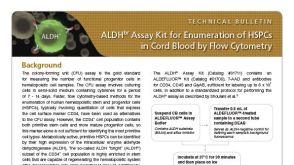 技术公告ALDHbr Assay Kit for Enumeration of HSPCs in Cord Blood by Flow Cytometry
 沪公网安备31010102008431号