(Sep 2024)
American Journal of Human Genetics 111 10
ARID1A-BAF coordinates ZIC2 genomic occupancy for epithelial-to-mesenchymal transition in cranial neural crest specification
SummaryThe BAF chromatin remodeler regulates lineage commitment including cranial neural crest cell (CNCC) specification. Variants in BAF subunits cause Coffin-Siris syndrome (CSS),a congenital disorder characterized by coarse craniofacial features and intellectual disability. Approximately 50% of individuals with CSS harbor variants in one of the mutually exclusive BAF subunits,ARID1A/ARID1B. While Arid1a deletion in mouse neural crest causes severe craniofacial phenotypes,little is known about the role of ARID1A in CNCC specification. Using CSS-patient-derived ARID1A+/? induced pluripotent stem cells to model CNCC specification,we discovered that ARID1A-haploinsufficiency impairs epithelial-to-mesenchymal transition (EMT),a process necessary for CNCC delamination and migration from the neural tube. Furthermore,wild-type ARID1A-BAF regulates enhancers associated with EMT genes. ARID1A-BAF binding at these enhancers is impaired in heterozygotes while binding at promoters is unaffected. At the sequence level,these EMT enhancers contain binding motifs for ZIC2,and ZIC2 binding at these sites is ARID1A-dependent. When excluded from EMT enhancers,ZIC2 relocates to neuronal enhancers,triggering aberrant neuronal gene activation. In mice,deletion of Zic2 impairs NCC delamination,while ZIC2 overexpression in chick embryos at post-migratory neural crest stages elicits ectopic delamination from the neural tube. These findings reveal an essential ARID1A-ZIC2 axis essential for EMT and CNCC delamination. Graphical abstract ARID1A modulates chromatin accessibility at enhancers of genes required for epithelial-to-mesenchymal transition,a process essential for cranial neural crest cell (CNCC) specification. Haploinsufficiency of ARID1A attenuates ZIC2 binding at these enhancers,resulting in impaired CNCC formation with an aberrant neuronal trajectory. This study reveals an ARID1A-ZIC2 axis essential for CNCC specification.
View Publication
J. Hao et al. (Jul 2024)
Breast Cancer Research : BCR 26 2
Development of a humanized anti-FABP4 monoclonal antibody for potential treatment of breast cancer
Breast cancer is the most common cancer in women diagnosed in the U.S. and worldwide. Obesity increases breast cancer risk without clear underlying molecular mechanisms. Our studies demonstrate that circulating adipose fatty acid binding protein (A-FABP,or FABP4) links obesity-induced dysregulated lipid metabolism and breast cancer risk,thus potentially offering a new target for breast cancer treatment. We immunized FABP4 knockout mice with recombinant human FABP4 and screened hybridoma clones with specific binding to FABP4. The potential effects of antibodies on breast cancer cells in vitro were evaluated using migration,invasion,and limiting dilution assays. Tumor progression in vivo was evaluated in various types of tumorigenesis models including C57BL/6 mice,Balb/c mice,and SCID mice. The phenotype and function of immune cells in tumor microenvironment were characterized with multi-color flow cytometry. Tumor stemness was detected by ALDH assays. To characterize antigen-antibody binding capacity,we determined the dissociation constant of selected anti-FABP4 antibodies via surface plasmon resonance. Further analyses in tumor tissue were performed using 10X Genomics Visium spatial single cell technology. Herein,we report the generation of humanized monoclonal antibodies blocking FABP4 activity for breast cancer treatment in mouse models. One clone,named 12G2,which significantly reduced circulating levels of FABP4 and inhibited mammary tumor growth,was selected for further characterization. After confirming the therapeutic efficacy of the chimeric 12G2 monoclonal antibody consisting of mouse variable regions and human IgG1 constant regions,16 humanized 12G2 monoclonal antibody variants were generated by grafting its complementary determining regions to selected human germline sequences. Humanized V9 monoclonal antibody showed consistent results in inhibiting mammary tumor growth and metastasis by affecting tumor cell mitochondrial metabolism. Our current evidence suggests that targeting FABP4 with humanized monoclonal antibodies may represent a novel strategy for the treatment of breast cancer and possibly other obesity- associated diseases. The online version contains supplementary material available at 10.1186/s13058-024-01873-y.
View Publication
产品类型:
产品号#:
01700
产品名:
ALDEFLUOR™ 试剂盒
C. Vragniau et al. (sep 2019)
Science Advances 5 9 eaaw2853
Synthetic self-assembling ADDomer platform for highly efficient vaccination by genetically encoded multiepitope display
Self-assembling virus-like particles represent highly attractive tools for developing next-generation vaccines and protein therapeutics. We created ADDomer,an adenovirus-derived multimeric protein-based self-assembling nanoparticle scaffold engineered to facilitate plug-and-play display of multiple immunogenic epitopes from pathogens. We used cryo–electron microscopy at near-atomic resolution and implemented novel,cost-effective,high-performance cloud computing to reveal architectural features in unprecedented detail. We analyzed ADDomer interaction with components of the immune system and developed a promising first-in-kind ADDomer-based vaccine candidate to combat emerging Chikungunya infectious disease,exemplifying the potential of our approach.
View Publication
产品类型:
产品号#:
产品名:
Lee WJ et al. (OCT 2005)
Molecular pharmacology 68 4 1018--30
Mechanisms for the inhibition of DNA methyltransferases by tea catechins and bioflavonoids.
In the present investigation,we studied the modulating effects of several tea catechins and bioflavonoids on DNA methylation catalyzed by prokaryotic SssI DNA methyltransferase (DNMT) and human DNMT1. We found that each of the tea polyphenols [catechin,epicatechin,and (-)-epigallocatechin-3-O-gallate (EGCG)] and bioflavonoids (quercetin,fisetin,and myricetin) inhibited SssI DNMT- and DNMT1-mediated DNA methylation in a concentration-dependent manner. The IC(50) values for catechin,epicatechin,and various flavonoids ranged from 1.0 to 8.4 microM,but EGCG was a more potent inhibitor,with IC(50) values ranging from 0.21 to 0.47 microM. When epicatechin was used as a model inhibitor,kinetic analyses showed that this catechol-containing dietary polyphenol inhibited enzymatic DNA methylation in vitro largely by increasing the formation of S-adenosyl-L-homocysteine (a potent noncompetitive inhibitor of DNMTs) during the catechol-O-methyltransferase-mediated O-methylation of this dietary catechol. In comparison,the strong inhibitory effect of EGCG on DNMT-mediated DNA methylation was independent of its own methylation and was largely due to its direct inhibition of the DNMTs. This inhibition is strongly enhanced by Mg(2+). Computational modeling studies showed that the gallic acid moiety of EGCG plays a crucial role in its high-affinity,direct inhibitory interaction with the catalytic site of the human DNMT1,and its binding with the enzyme is stabilized by Mg(2+). The modeling data on the precise molecular mode of EGCG's inhibitory interaction with human DNMT1 agrees perfectly with our experimental finding.
View Publication
产品类型:
产品号#:
73644
产品名:
(-)-Epigallocatechin Gallate
Kubicek S et al. (FEB 2007)
Molecular cell 25 3 473--81
Reversal of H3K9me2 by a small-molecule inhibitor for the G9a histone methyltransferase.
Histone lysine methylation has important roles in the organization of chromatin domains and the regulation of gene expression. To analyze its function and modulate its activity,we screened for specific inhibitors against histone lysine methyltransferases (HMTases) using recombinant G9a as the target enzyme. From a chemical library comprising 125,000 preselected compounds,seven hits were identified. Of those,one inhibitor,BIX-01294 (diazepin-quinazolin-amine derivative),does not compete with the cofactor S-adenosyl-methionine,and selectively impairs the G9a HMTase and the generation of H3K9me2 in vitro. In cellular assays,transient incubation of several cell lines with BIX-01294 lowers bulk H3K9me2 levels that are restored upon removal of the inhibitor. Importantly,chromatin immunoprecipitation at several G9a target genes demonstrates reversible reduction of promoter-proximal H3K9me2 in inhibitor-treated mouse ES cells and fibroblasts. Our data identify a biologically active HMTase inhibitor that allows for the transient modulation of H3K9me2 marks in mammalian chromatin.
View Publication
Polyglutamine Disease Modeling: Epitope Based Screen for Homologous Recombination using CRISPR/Cas9 System.
We have previously reported the genetic correction of Huntington's disease (HD) patient-derived induced pluripotent stem cells using traditional homologous recombination (HR) approaches. To extend this work,we have adopted a CRISPR-based genome editing approach to improve the efficiency of recombination in order to generate allelic isogenic HD models in human cells. Incorporation of a rapid antibody-based screening approach to measure recombination provides a powerful method to determine relative efficiency of genome editing for modeling polyglutamine diseases or understanding factors that modulate CRISPR/Cas9 HR.
View Publication
产品类型:
产品号#:
85850
85857
产品名:
mTeSR™1
mTeSR™1
Gorman BR et al. (DEC 2014)
PLoS ONE 9 12 e116037
Multi-scale imaging and informatics pipeline for in situ pluripotent stem cell analysis
Human pluripotent stem (hPS) cells are a potential source of cells for medical therapy and an ideal system to study fate decisions in early development. However,hPS cells cultured in vitro exhibit a high degree of heterogeneity,presenting an obstacle to clinical translation. hPS cells grow in spatially patterned colony structures,necessitating quantitative single-cell image analysis. We offer a tool for analyzing the spatial population context of hPS cells that integrates automated fluorescent microscopy with an analysis pipeline. It enables high-throughput detection of colonies at low resolution,with single-cellular and sub-cellular analysis at high resolutions,generating seamless in situ maps of single-cellular data organized by colony. We demonstrate the tool's utility by analyzing inter- and intra-colony heterogeneity of hPS cell cycle regulation and pluripotency marker expression. We measured the heterogeneity within individual colonies by analyzing cell cycle as a function of distance. Cells loosely associated with the outside of the colony are more likely to be in G1,reflecting a less pluripotent state,while cells within the first pluripotent layer are more likely to be in G2,possibly reflecting a G2/M block. Our multi-scale analysis tool groups colony regions into density classes,and cells belonging to those classes have distinct distributions of pluripotency markers and respond differently to DNA damage induction. Lastly,we demonstrate that our pipeline can robustly handle high-content,high-resolution single molecular mRNA FISH data by using novel image processing techniques. Overall,the imaging informatics pipeline presented offers a novel approach to the analysis of hPS cells that includes not only single cell features but also colony wide,and more generally,multi-scale spatial configuration.
View Publication
T cell receptor-directed antibody-drug conjugates for the treatment of T cell-derived cancers
T cell-derived cancers are hallmarked by heterogeneity,aggressiveness,and poor clinical outcomes. Available targeted therapies are severely limited due to a lack of target antigens that allow discrimination of malignant from healthy T cells. Here,we report a novel approach for the treatment of T cell diseases based on targeting the clonally rearranged T cell receptor displayed by the cancerous T cell population. As a proof of concept,we identified an antibody with unique specificity toward a distinct T cell receptor (TCR) and developed antibody-drug conjugates,precisely recognizing and eliminating target T cells while preserving overall T cell repertoire integrity and cellular immunity. Our anti-TCR antibody-drug conjugates demonstrated effective receptor-mediated cell internalization,associated with induction of cancer cell death with strong signs of apoptosis. Furthermore,cell proliferation-inhibiting bystander effects observed on target-negative cells may contribute to the molecules’ anti-tumor properties precluding potential tumor escape mechanisms. To our knowledge,this represents the first anti-TCR antibody-drug conjugate designed as custom-tailored immunotherapy for T cell-driven pathologies. Graphical abstract Harald Kolmar and colleagues report a novel approach for the treatment of the difficult-to-treat T cell lymphoma/leukemia based on targeting the clonally rearranged T cell receptor expressed by the malignant T cell population. The developed antibody-drug conjugates precisely eliminate target T cells while preserving the integrity of the T cell repertoire and cellular immunity.
View Publication


 EasySep™小鼠TIL(CD45)正选试剂盒




 1:07:14
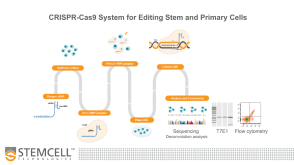
线上讲座Optimized Workflows for High-Efficiency Genome Editing in Stem and Primary Cell Types发布日期: 09/09/2019
1:07:14
线上讲座Optimized Workflows for High-Efficiency Genome Editing in Stem and Primary Cell Types发布日期: 09/09/2019



 沪公网安备31010102008431号