Combined epigenetic therapy with the histone methyltransferase EZH2 inhibitor 3-deazaneplanocin A and the histone deacetylase inhibitor panobinostat against human AML cells.
The polycomb repressive complex (PRC) 2 contains 3 core proteins,EZH2,SUZ12,and EED,in which the SET (suppressor of variegation-enhancer of zeste-trithorax) domain of EZH2 mediates the histone methyltransferase activity. This induces trimethylation of lysine 27 on histone H3,regulates the expression of HOX genes,and promotes proliferation and aggressiveness of neoplastic cells. In this study,we demonstrate that treatment with the S-adenosylhomocysteine hydrolase inhibitor 3-deazaneplanocin A (DZNep) depletes EZH2 levels,and inhibits trimethylation of lysine 27 on histone H3 in the cultured human acute myeloid leukemia (AML) HL-60 and OCI-AML3 cells and in primary AML cells. DZNep treatment induced p16,p21,p27,and FBXO32 while depleting cyclin E and HOXA9 levels. Similar findings were observed after treatment with small interfering RNA to EZH2. In addition,DZNep treatment induced apoptosis in cultured and primary AML cells. Furthermore,compared with treatment with each agent alone,cotreatment with DZNep and the pan-histone deacetylase inhibitor panobinostat caused more depletion of EZH2,induced more apoptosis of AML,but not normal CD34(+) bone marrow progenitor cells,and significantly improved survival of nonobese diabetic/severe combined immunodeficiency mice with HL-60 leukemia. These findings indicate that the combination of DZNep and panobinostat is effective and relatively selective epigenetic therapy against AML cells.
View Publication
产品类型:
产品号#:
72322
72324
产品名:
3-Deazaneplanocin A
3-Deazaneplanocin A
(Jul 2025)
Cell Transplantation 34 2
The safety and efficacy of ultrasound histotripsy and human pluripotent stem cell–derived hepatic spheroid implantation as a potential therapy for treatment of congenital metabolic liver disease: Assessment in an immunocompetent rodent model
Liver disease secondary to an inborn or genetic error of metabolism is a rare group of conditions often associated with chronic ill health and reduced survival. Curative treatment is mainly limited to liver transplantation with major long-term risks. Cell therapy is a promising alternative,but current approaches are ineffective. To develop histotripsy,a non-invasive high-intensity ultrasound procedure for liver tissue mechanical ablation,combined with hepatocyte stem cell implantation as a novel method of reversing liver failure from genetic disease. This study assessed the safety and feasibility of this approach in healthy rodents. Under general anaesthesia,adult rats (n = 12) underwent laparotomy and ultrasound histotripsy to the exposed liver. Around 1 million cells were injected into a single histotripsy cavity in each animal under direct vision (n = 10) with two receiving only histotripsy without cell injection. On completion of cell implant,haemostasis was secured,laparotomy incision closed and the animals recovered. Groups of animals were terminated immediately and after 4 h,8 h,24 h,4 days and 7 days. Liver and vital organs were assessed for procedure-related injuries and evidence of viable implanted cells by histology and immunohistochemistry. All animals successfully recovered,and no complication was observed throughout the study. Created cavities were successfully identified in histological analysis of rat. The presence of human cells was verified using anti-human nuclei antibody confirming successful implantation of liver organoids into decellularised cavities. In this feasibility study,we demonstrated suitability of histotripsy to create decellularised cavities in liver parenchyma. In addition,feasibility of direct transplantation of undissociated liver organoids into the created cavities was demonstrated as a potential approach to treat inborn liver disease by creating nodules of healthy cells capable of performing loss metabolic function. Therapeutic efficacy of this approach will be evaluated in an upcoming study. Graphical Abstract
View Publication
产品类型:
产品号#:
85850
85857
产品名:
mTeSR™1
mTeSR™1
Kadari A et al. ( 2014)
Stem cell research & therapy 5 2 47
Excision of viral reprogramming cassettes by Cre protein transduction enables rapid, robust and efficient derivation of transgene-free human induced pluripotent stem cells.
Integrating viruses represent robust tools for cellular reprogramming; however,the presence of viral transgenes in induced pluripotent stem cells (iPSCs) is deleterious because it holds the risk of insertional mutagenesis leading to malignant transformation. Here,we combine the robustness of lentiviral reprogramming with the efficacy of Cre recombinase protein transduction to derive iPSCs devoid of transgenes. By genome-wide analysis and targeted differentiation towards the cardiomyocyte lineage,we show that transgene-free iPSCs are superior to iPSCs before Cre transduction. Our study provides a simple,rapid and robust protocol for the generation of clinical-grade iPSCs suitable for disease modeling,tissue engineering and cell replacement therapies.
View Publication
产品类型:
产品号#:
85850
85857
产品名:
mTeSR™1
mTeSR™1
Czysz K et al. (FEB 2015)
PLoS ONE 10 2 e0117689
Dmso efficiently down regulates pluripotency genes in human embryonic stem cells during definitive endoderm derivation and increases the proficiency of hepatic differentiation
BACKGROUND Definitive endoderm (DE) is one of the three germ layers which during in vivo vertebrate development gives rise to a variety of organs including liver,lungs,thyroid and pancreas; consequently efficient in vitro initiation of stem cell differentiation to DE cells is a prerequisite for successful cellular specification to subsequent DE-derived cell types [1,2]. In this study we present a novel approach to rapidly and efficiently down regulate pluripotency genes during initiation of differentiation to DE cells by addition of dimethyl sulfoxide (DMSO) to Activin A-based culture medium and report its effects on the downstream differentiation to hepatocyte-like cells. MATERIALS AND METHODS Human embryonic stem cells (hESC) were differentiated to DE using standard methods in medium supplemented with 100ng/ml of Activin A and compared to cultures where DE specification was additionally enhanced with different concentrations of DMSO. DE cells were subsequently primed to generate hepatic-like cells to investigate whether the addition of DMSO during formation of DE improved subsequent expression of hepatic markers. A combination of flow cytometry,real-time quantitative reverse PCR and immunofluorescence was applied throughout the differentiation process to monitor expression of pluripotency (POUF5/OCT4 & NANOG),definitive endoderm (SOX17,CXCR4 & GATA4) and hepatic (AFP & ALB) genes to generate differentiation stage-specific signatures. RESULTS Addition of DMSO to the Activin A-based medium during DE specification resulted in rapid down regulation of the pluripotency genes OCT4 and NANOG,accompanied by an increase expression of the DE genes SOX17,CXCR4 and GATA4. Importantly,the expression level of ALB in DMSO-treated cells was also higher than in cells which were differentiated to the DE stage via standard Activin A treatment.
View Publication
Critical role for PI 3-kinase in the control of erythropoietin-induced erythroid progenitor proliferation.
The production of red blood cells is tightly regulated by erythropoietin (Epo). The phosphoinositide 3-kinase (PI 3-kinase) pathway was previously shown to be activated in response to Epo. We studied the role of this pathway in the control of Epo-induced survival and proliferation of primary human erythroid progenitors. We show that phosphoinositide 3 (PI 3)-kinase associates with 4 tyrosine-phosphorylated proteins in primary human erythroid progenitors,namely insulin receptor substrate-2 (IRS2),Src homology 2 domain-containing inositol 5'-phosphatase (SHIP),Grb2-associated binder-1 (Gab1),and the Epo receptor (EpoR). Using different in vitro systems,we demonstrate that 3 alternative pathways independently lead to Epo-induced activation of PI 3-kinase and phosphorylation of its downstream effectors,Akt,FKHRL1,and P70S6 kinase: through direct association of PI 3-kinase with the last tyrosine residue (Tyr479) of the Epo receptor (EpoR),through recruitment and phosphorylation of Gab proteins via either Tyr343 or Tyr401 of the EpoR,or through phosphorylation of IRS2 adaptor protein. The mitogen-activated protein (MAP) kinase pathway was also activated by Epo in erythroid progenitors,but we found that this process is independent of PI 3-kinase activation. In erythroid progenitors,the functional role of PI 3-kinase was both to prevent apoptosis and to stimulate cell proliferation in response to Epo stimulation. Finally,our results show that PI 3-kinase-mediated proliferation of erythroid progenitors in response to Epo occurs mainly through modulation of the E3 ligase SCF(SKP2),which,in turn,down-regulates p27(Kip1) cyclin-dependent kinase (CDK) inhibitor via proteasome degradation.
View Publication
产品类型:
产品号#:
09500
09600
09650
产品名:
BIT 9500血清替代物
StemSpan™ SFEM
StemSpan™ SFEM
Wang E et al. (AUG 1991)
The Journal of biological chemistry 266 22 14486--90
Inhibition of sphingolipid biosynthesis by fumonisins. Implications for diseases associated with Fusarium moniliforme.
Culture materials and grains contaminated with certain isolates of Fusarium moniliforme cause equine leucoencephalomalacia,porcine pulmonary edema syndrome,and liver cancer in rats. The causative agents are thought to be a family of compounds called fumonisins,which bear considerable structural similarity to the long-chain (sphingoid) base backbones of sphingolipids. Incubation of rat hepatocytes with fumonisins inhibited incorporation of [14C]serine into the sphingosine moiety of cellular sphingolipids with an IC50 of 0.1 microM for fumonisin B1. In contrast,fumonisin B1 increased the amount of the biosynthetic intermediate sphinganine,which suggests that fumonisins inhibit the conversion of [14C]sphinganine to N-acyl-[14C]sphinganines,a step that is thought to precede introduction of the 4,5-trans double bond of sphingosine (Merrill,A.H.,Jr. and Wang,E. (1986) J. Biol. Chem. 261,3764-3769). In agreement with this mechanism,fumonisin B1 inhibited the activity of sphingosine N-acyltransferase (ceramide synthase) in rat liver microsomes with 50% inhibition at approximately 0.1 microM and reduced the conversion of [3H]sphingosine to [3H]ceramide by intact hepatocytes. As far as we are aware,this is the first discovery of a naturally occurring inhibitor of this step of sphingolipid metabolism. These findings suggest that disruption of the de novo pathway of sphingolipid biosynthesis may be a critical event in the diseases that have been associated with consumption of fumonisins.
View Publication


 EasySep™小鼠TIL(CD45)正选试剂盒




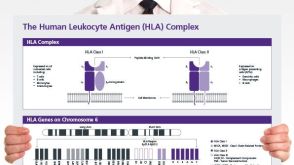 挂图The Human Leukocyte Antigen (HLA) Complex Provides an overview of the human leukocyte antigen (HLA) complex and nomenclature of HLA alleles
 20:24
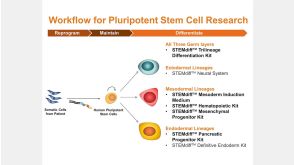
线上讲座STEMdiff™ Kits for Robust and Efficient Differentiation of hPSCs to Multiple Cell Types发布日期: 06/24/2016
20:24
线上讲座STEMdiff™ Kits for Robust and Efficient Differentiation of hPSCs to Multiple Cell Types发布日期: 06/24/2016

 沪公网安备31010102008431号