The Intestine Harbors Functionally Distinct Homeostatic Tissue-Resident and Inflammatory Th17 Cells.
T helper 17 (Th17) cells are pathogenic in many inflammatory diseases,but also support the integrity of the intestinal barrier in a non-inflammatory manner. It is unclear what distinguishes inflammatory Th17 cells elicited by pathogens and tissue-resident homeostatic Th17 cells elicited by commensals. Here,we compared the characteristics of Th17 cells differentiating in response to commensal bacteria (SFB) to those differentiating in response to a pathogen (Citrobacter rodentium). Homeostatic Th17 cells exhibited little plasticity towards expression of inflammatory cytokines,were characterized by a metabolism typical of quiescent or memory T cells,and did not participate in inflammatory processes. In contrast,infection-induced Th17 cells showed extensive plasticity towards pro-inflammatory cytokines,disseminated widely into the periphery,and engaged aerobic glycolysis in addition to oxidative phosphorylation typical for inflammatory effector cells. These findings will help ensure that future therapies directed against inflammatory Th17 cells do not inadvertently damage the resident gut population.
View Publication
产品类型:
产品号#:
19752
19752RF
19052
19052RF
产品名:
EasySep™人CD4+ T细胞富集试剂盒
RoboSep™ 人CD4+ T细胞富集试剂盒含滤芯吸头
C. Onyilagha et al. (jun 2019)
Journal of immunology (Baltimore,Md. : 1950)
NK Cells Are Critical for Optimal Immunity to Experimental Trypanosoma congolense Infection.
NK cells are key innate immune cells that play critical roles in host defense. Although NK cells have been shown to regulate immunity to some infectious diseases,their role in immunity to Trypanosoma congolense has not been investigated. NK cells are vital sources of IFN-gamma and TNF-alpha; two key cytokines that are known to play important roles in resistance to African trypanosomes. In this article,we show that infection with T. congolense leads to increased levels of activated and functional NK cells in multiple tissue compartments. Systemic depletion of NK cells with anti-NK1.1 mAb led to increased parasitemia,which was accompanied by significant reduction in IFN-gamma production by immune cells in the spleens and liver of infected mice. Strikingly,infected NFIL3-/- mice (which genetically lack NK cell development and function) on the normally resistant background were highly susceptible to T. congolense infection. These mice developed fulminating and uncontrolled parasitemia and died significantly earlier (13 ± 1 d) than their wild-type control mice (106 ± 26 d). The enhanced susceptibility of NFIL3-/- mice to infection was accompanied by significantly impaired cytokine (IFN-gamma and TNF-alpha) response by CD3+ T cells in the spleens and liver. Adoptive transfer of NK cells into NFIL3-/- mice before infection rescued them from acute death in a perforin-dependent manner. Collectively,these studies show that NK cells are critical for optimal resistance to T. congolense,and its deficiency leads to enhanced susceptibility in infected mice.
View Publication
产品类型:
产品号#:
19855
19855RF
产品名:
EasySep™小鼠NK细胞分选试剂盒
RoboSep™ 小鼠NK细胞分选试剂盒
M. Romera-Hern\'andez et al. (jun 2019)
Current protocols in immunology 125 1 e73
Identification of Group 2 Innate Lymphoid Cells in Mouse Lung, Liver, Small Intestine, Bone Marrow, and Mediastinal and Mesenteric Lymph Nodes.
Innate lymphoid cells (ILCs) are a heterogeneous family of lymphocytes that populate barrier and non-barrier tissues. ILCs regulate immune responses to pathogens and commensals but also sustain metabolic homeostasis,tissue remodeling after injury and establish dialogue with the nervous system. ILCs rapidly become activated in the absence of adaptive antigen receptors by responding to signaling molecules provided by hematopoietic or non-hematopoietic cells. Here we provide protocols designed for processing the lung,liver,small intestine,bone marrow,mediastinal and mesenteric lymph nodes in order to obtain a purified leukocyte fraction of cells,in which ILC2 enrichment is optimized. In addition,we describe in detail the methodologies used to activate ILC2s and the assays necessary for the detection of their effector cytokines. We highlight the differences in ILC2 characterization within distinct tissues that we have recently identified. {\textcopyright} 2019 by John Wiley Sons,Inc.
View Publication
产品类型:
产品号#:
19842
产品名:
EasySep™小鼠ILC2富集试剂盒
D. Shae et al. (jan 2019)
Nature nanotechnology
Endosomolytic polymersomes increase the activity of cyclic dinucleotide STING agonists to enhance cancer immunotherapy.
Cyclic dinucleotide (CDN) agonists of stimulator of interferon genes (STING) are a promising class of immunotherapeutics that activate innate immunity to increase tumour immunogenicity. However,the efficacy of CDNs is limited by drug delivery barriers,including poor cellular targeting,rapid clearance and inefficient transport to the cytosol where STING is localized. Here,we describe STING-activating nanoparticles (STING-NPs)-rationally designed polymersomes for enhanced cytosolic delivery of the endogenous CDN ligand for STING,2'3' cyclic guanosine monophosphate-adenosine monophosphate (cGAMP). STING-NPs increase the biological potency of cGAMP,enhance STING signalling in the tumour microenvironment and sentinel lymph node,and convert immunosuppressive tumours to immunogenic,tumoricidal microenvironments. This leads to enhanced therapeutic efficacy of cGAMP,inhibition of tumour growth,increased rates of long-term survival,improved response to immune checkpoint blockade and induction of immunological memory that protects against tumour rechallenge. We validate STING-NPs in freshly isolated human melanoma tissue,highlighting their potential to improve clinical outcomes of immunotherapy.
View Publication
产品类型:
产品号#:
19855
19855RF
产品名:
EasySep™小鼠NK细胞分选试剂盒
RoboSep™ 小鼠NK细胞分选试剂盒
K. E. Sivick et al. (dec 2018)
Cell reports 25 11 3074--3085.e5
Magnitude of Therapeutic STING Activation Determines CD8+ T Cell-Mediated Anti-tumor Immunity.
Intratumoral (IT) STING activation results in tumor regression in preclinical models,yet factors dictating the balance between innate and adaptive anti-tumor immunity are unclear. Here,clinical candidate STING agonist ADU-S100 (S100) is used in an IT dosing regimen optimized for adaptive immunity to uncover requirements for a T cell-driven response compatible with checkpoint inhibitors (CPIs). In contrast to high-dose tumor ablative regimens that result in systemic S100 distribution,low-dose immunogenic regimens induce local activation of tumor-specific CD8+ effector T cells that are responsible for durable anti-tumor immunity and can be enhanced with CPIs. Both hematopoietic cell STING expression and signaling through IFNAR are required for tumor-specific T cell activation,and in the context of optimized T cell responses,TNFalpha is dispensable for tumor control. In a poorly immunogenic model,S100 combined with CPIs generates a survival benefit and durable protection. These results provide fundamental mechanistic insights into STING-induced anti-tumor immunity.
View Publication
产品类型:
产品号#:
19853
19853RF
产品名:
EasySep™小鼠CD8+ T细胞分选试剂盒
RoboSep™ 小鼠CD8+ T细胞分选试剂盒
M. E. Stremska et al. (may 2019)
Journal of autoimmunity
IL233, an IL-2-IL-33 hybrid cytokine induces prolonged remission of mouse lupus nephritis by targeting Treg cells as a single therapeutic agent.
Lupus glomerulonephritis (GN) is an autoimmune disease characterized by immune complex-deposition,complement activation and glomerular inflammation. In lupus-prone NZM2328 mice,the occurrence of lupus GN was accompanied by a decrease in Treg cells and an increase in proinflammatory cytokine-producing T cells. Because IL-33 in addition to IL-2 has been shown to be important for Treg cell proliferation and ST2 (IL-33 receptor) positive Treg cells are more potent in suppressor activity,a hybrid cytokine with active domains of IL-2 and IL-33 was generated to target the ST2+ Treg cells as a therapeutic agent to treat lupus GN. Three mouse models were used: spontaneous and Ad-IFNalpha- accelerated lupus GN in NZM2328 and the lymphoproliferative autoimmune GN in MRL/lpr mice. Daily injections of IL233 for 5 days prevented Ad-IFNalpha-induced lupus GN and induced remission of spontaneous lupus GN. The remission was permanent in that no relapses were detected. The remission was accompanied by persistent elevation of Treg cells in the renal lymph nodes. IL233 is more potent than IL-2 and IL-33 either singly or in combination in the treatment of lupus GN. The results of this study support the thesis that IL233 should be considered as a novel agent for treating lupus GN.
View Publication
产品类型:
产品号#:
18783
18783RF
产品名:
EasySep™ 小鼠CD4+CD25+调节性T细胞分选试剂盒 II
RoboSep™ 小鼠CD4+CD25+调节性T细胞分选试剂盒II
W. Wang et al. (may 2019)
Nature 569 7755 270--274
CD8+ T cells regulate tumour ferroptosis during cancer immunotherapy.
Cancer immunotherapy restores or enhances the effector function of CD8+ T cells in the tumour microenvironment1,2. CD8+ T cells activated by cancer immunotherapy clear tumours mainly by inducing cell death through perforin-granzyme and Fas-Fas ligand pathways3,4. Ferroptosis is a form of cell death that differs from apoptosis and results from iron-dependent accumulation of lipid peroxide5,6. Although it has been investigated in vitro7,8,there is emerging evidence that ferroptosis might be implicated in a variety of pathological scenarios9,10. It is unclear whether,and how,ferroptosis is involved in T cell immunity and cancer immunotherapy. Here we show that immunotherapy-activated CD8+ T cells enhance ferroptosis-specific lipid peroxidation in tumour cells,and that increased ferroptosis contributes to the anti-tumour efficacy of immunotherapy. Mechanistically,interferon gamma (IFNgamma) released from CD8+ T cells downregulates the expression of SLC3A2 and SLC7A11,two subunits of the glutamate-cystine antiporter system xc-,impairs the uptake of cystine by tumour cells,and as a consequence,promotes tumour cell lipid peroxidation and ferroptosis. In mouse models,depletion of cystine or cysteine by cyst(e)inase (an engineered enzyme that degrades both cystine and cysteine) in combination with checkpoint blockade synergistically enhanced T cell-mediated anti-tumour immunity and induced ferroptosis in tumour cells. Expression of system xc- was negatively associated,in cancer patients,with CD8+ T cell signature,IFNgamma expression,and patient outcome. Analyses of human transcriptomes before and during nivolumab therapy revealed that clinical benefits correlate with reduced expression of SLC3A2 and increased IFNgamma and CD8. Thus,T cell-promoted tumour ferroptosis is an anti-tumour mechanism,and targeting this pathway in combination with checkpoint blockade is a potential therapeutic approach.
View Publication
产品类型:
产品号#:
17953
17953RF
19853
19853RF
100-0710
产品名:
EasySep™人CD8+ T细胞分选试剂盒
RoboSep™ 人CD8+ T细胞分选试剂盒
EasySep™小鼠CD8+ T细胞分选试剂盒
RoboSep™ 小鼠CD8+ T细胞分选试剂盒
EasySep™人CD8+ T细胞分选试剂盒
T. Yamamoto et al. (apr 2019)
Scientific reports 9 1 5917
STING agonists activate latently infected cells and enhance SIV-specific responses ex vivo in naturally SIV controlled cynomolgus macaques.
To achieve a functional cure for HIV,treatment regimens that eradicate latently HIV-infected cells must be established. For this,many groups have attempted to reactivate latently-infected cells to induce cytopathic effects and/or elicit cytotoxic T lymphocyte (CTL)/NK cell-mediated immune responses to kill these cells. We believe that not only the reactivation of latently-infected cells,but also the induction of strong CTL responses,would be required for this. Here,we used typical immune activators that target pattern recognition receptors (PRRs). For our experimental model,we identified eight SIV-infected cynomolgus monkeys that became natural controllers of viremia. Although plasma viral loads were undetectable,we could measure SIV-DNA by qPCR in peripheral blood mononuclear cells (PBMCs). Using these PBMCs,we screened 10 distinct PRR ligands to measure IFN-alpha and IFN-gamma production. Among these,STING ligands,cGAMP and c-di-AMP,and the TLR7/8 agonist R848 markedly increased cytokine levels. Both R848 and STING ligands could reactivate latently-infected cells in both cynomolgus monkeys and human PBMCs in vitro. Furthermore,c-di-AMP increased the frequency of SIV Gag-specific CD8+ T cells including polyfunctional CD8+ T cells,as compared to that in untreated control or R848-treated cells. Together,STING ligands might be candidates for HIV treatment.
View Publication
产品类型:
产品号#:
19052
19052RF
产品名:
EasySep™人CD4+ T细胞富集试剂盒
RoboSep™ 人CD4+ T细胞富集试剂盒含滤芯吸头
Z. Yan et al. (apr 2019)
JCI insight 5
Deficiency of Socs3 leads to brain-targeted EAE via enhanced neutrophil activation and ROS production.
Dysregulation of the JAK/STAT signaling pathway is associated with Multiple Sclerosis (MS) and its mouse model,Experimental Autoimmune Encephalomyelitis (EAE). Suppressors Of Cytokine Signaling (SOCS) negatively regulate the JAK/STAT pathway. We previously reported a severe,brain-targeted,atypical form of EAE in mice lacking Socs3 in myeloid cells (Socs3DeltaLysM),which is associated with cerebellar neutrophil infiltration. There is emerging evidence that neutrophils are detrimental in the pathology of MS/EAE,however,their exact function is unclear. Here we demonstrate that neutrophils from the cerebellum of Socs3DeltaLysM mice show a hyper-activated phenotype with excessive production of reactive oxygen species (ROS) at the peak of EAE. Neutralization of ROS in vivo delayed the onset and reduced severity of atypical EAE. Mechanistically,Socs3-deficient neutrophils exhibit enhanced STAT3 activation,a hyper-activated phenotype in response to G-CSF,and upon G-CSF priming,increased ROS production. Neutralization of G-CSF in vivo significantly reduced the incidence and severity of the atypical EAE phenotype. Overall,our work elucidates that hypersensitivity of G-CSF/STAT3 signaling in Socs3DeltaLysM mice leads to atypical EAE by enhanced neutrophil activation and increased oxidative stress,which may explain the detrimental role of G-CSF in MS patients.
View Publication
产品类型:
产品号#:
19762
19762RF
产品名:
EasySep™小鼠中性粒细胞富集试剂盒
RoboSep™ 小鼠中性粒细胞富集试剂盒含滤芯吸头
C. Yang et al. (may 2019)
The Journal of experimental medicine 216 5 1182--1198
Thyrotropin aggravates atherosclerosis by promoting macrophage inflammation in plaques.
Subclinical hypothyroidism is associated with cardiovascular diseases,yet the underlying mechanism remains largely unknown. Herein,in a common population (n = 1,103),TSH level was found to be independently correlated with both carotid plaque prevalence and intima-media thickness. Consistently,TSH receptor ablation in ApoE-/- mice attenuated atherogenesis,accompanied by decreased vascular inflammation and macrophage burden in atherosclerotic plaques. These results were also observed in myeloid-specific Tshr-deficient ApoE-/- mice,which indicated macrophages to be a critical target of the proinflammatory and atherogenic effects of TSH. In vitro experiments further revealed that TSH activated MAPKs (ERK1/2,p38alpha,and JNK) and IkappaB/p65 pathways in macrophages and increased inflammatory cytokine production and their recruitment of monocytes. Thus,the present study has elucidated the new mechanisms by which TSH,as an independent risk factor of atherosclerosis,aggravates vascular inflammation and contributes to atherogenesis.
View Publication
产品类型:
产品号#:
17858
17858RF
100-0694
产品名:
EasySep™人CD14正选试剂盒II
RoboSep™ 人CD14正选试剂盒II
EasySep™人CD14正选试剂盒II
专家访谈
Martina Poletti
Modeling Host-Microbe Interactions with Intestinal Organoids


 EasySep™小鼠TIL(CD45)正选试剂盒




 专家访谈Martina Poletti Modeling Host-Microbe Interactions with Intestinal Organoids
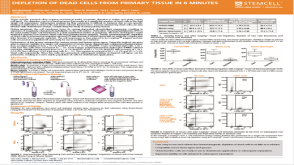 科学海报Depletion of Dead Cells from Primary Tissue in 6 Minutes
 沪公网安备31010102008431号