D. Cabañero et al. (Jun 2025)
The Journal of Headache and Pain 26 1
Cold receptor TRPM8 as a target for migraine-associated pain and affective comorbidities
Genetic variations in the Trpm8 gene that encodes the cold receptor TRPM8 have been linked to protection against polygenic migraine,a disabling condition primarily affecting women. Noteworthy,TRPM8 has been recently found in brain areas related to emotional processing,suggesting an unrecognized role in migraine comorbidities. Here,we use mouse behavioural models to investigate the role of Trpm8 in migraine-related phenotypes. Subsequently,we test the efficacy of rapamycin,a clinically relevant TRPM8 agonist,in these behavioural traits and in human induced pluripotent stem cell (iPSC)-derived sensory neurons. We report that Trpm8 null mice exhibited impulsive and depressive-like behaviours,while also showing frequent pain-like facial expressions detected by an artificial intelligence algorithm. In a nitroglycerin-induced migraine model,Trpm8 knockout mice of both sexes developed anxiety and mechanical hypersensitivity,whereas wild-type females also displayed depressive-like phenotype and hypernociception. Notably,rapamycin alleviated pain-related behaviour through both TRPM8-dependent and independent mechanisms but lacked antidepressant activity,consistent with a peripheral action. The macrolide ionotropically activated TRPM8 signalling in human sensory neurons,emerging as a new candidate for intervention. Together,our findings underscore the potential of TRPM8 for migraine relief and its involvement in affective comorbidities,emphasizing the importance of addressing emotional symptoms to improve clinical outcomes for migraine sufferers,especially in females. The online version contains supplementary material available at 10.1186/s10194-025-02082-4.
View Publication
产品类型:
产品号#:
34811
34815
34821
34825
34850
34860
产品名:
AggreWell™ 800 24孔板,1个
AggreWell™ 800 24孔板,5个
AggreWell™ 800 6孔板,1个
AggreWell™ 800 6孔板,5个
AggreWell™ 800 24孔板启动套装
AggreWell™ 800 6孔板启动套装
T. P. Resende et al. (feb 2020)
Journal of animal science 98 2
Evaluation of swine enteroids as in vitro models for Lawsonia intracellularis infection1,2.
The enteric pathogen Lawsonia intracellularis is one of the main causes of diarrhea and compromised weight gain in pigs worldwide. Traditional cell-line cultures have been used to study L. intracellularis pathogenesis. However,these systems fail to reproduce the epithelial changes observed in the intestines of L. intracellularis-infected pigs,specifically,the changes in intestinal cell constitution and gene expression. A more physiologically accurate and state-of-the-art model is provided by swine enteroids derived from stem cell-containing crypts from healthy pigs. The objective of this study was to verify the feasibility of two-dimensional swine enteroids as in vitro models for L. intracellularis infection. We established both three- and two-dimensional swine enteroid cultures derived from intestinal crypts. The two-dimensional swine enteroids were infected by L. intracellularis in four independent experiments. Enteroid-infected samples were collected 3 and 7 d postinfection for analysis using real-time quantitative PCR and L. intracellularis immunohistochemistry. In this study,we show that L. intracellularis is capable of infecting and replicating intracellularly in two-dimensional swine enteroids derived from ileum.
View Publication
Z. Luo et al. (Oct 2025)
Stem Cells Translational Medicine 14 10
Oligodendrogenic neural progenitors for treatment of chronic compressive cervical spinal cord injury
Chronic compressive cervical spinal cord injury (cCSCI),a debilitating condition,lacks effective treatment options. Addressing this gap,our study introduces a novel rat model of cCSCI developed through spinal cord compression via synthetic polyether sheet implantation,closely mimicking human pathology. We evaluated the model’s fidelity utilizing a comprehensive series of behavioral,electrophysiological,and histological assessments. Our research also explored the therapeutic potential of oligodendrogenic neural progenitor cells (oNPCs) derived from induced pluripotent stem cells. Transplanted oNPCs successfully integrated into the host spinal cord,differentiated into neurons,astrocytes,and oligodendrocytes,and demonstrated a remarkable capacity for enhancing neuroplasticity. Electrophysiological analyses revealed significant improvements in motor evoked potentials and a rectification of the excitability imbalance posttransplantation,indicating substantial recovery of motor circuits. Histological findings complemented these results,showing enhanced remyelination and a reduction in excitatory transmitter expression in the residual gray matter. Functionally,the transplantation of oNPCs led to marked improvements in grip strength,locomotor abilities,and sensory functions,surpassing those seen with standard treatments. This study not only provides a novel and reliable rat model of cCSCI for further research but also highlights the potential of oNPCs as a transformative approach for spinal cord injury therapy,suggesting their significant role in neural regeneration and repair.
View Publication
产品类型:
产品号#:
85850
85857
产品名:
mTeSR™1
mTeSR™1
Fischbach NA et al. (FEB 2005)
Blood 105 4 1456--66
HOXB6 overexpression in murine bone marrow immortalizes a myelomonocytic precursor in vitro and causes hematopoietic stem cell expansion and acute myeloid leukemia in vivo.
The HOX family of homeobox genes plays an important role in normal and malignant hematopoiesis. Dysregulated HOX gene expression profoundly effects the proliferation and differentiation of hematopoietic stem cells (HSCs) and committed progenitors,and aberrant activation of HOX genes is a common event in human myeloid leukemia. HOXB6 is frequently overexpressed in human acute myeloid leukemia (AML). To gain further insight into the role of HOXB6 in hematopoiesis,we overexpressed HOXB6 in murine bone marrow using retrovirus-mediated gene transfer. We also explored structure-function relationships using mutant HOXB6 proteins unable to bind to DNA or a key HOX-binding partner,pre-B-cell leukemia transcription factor-1 (PBX1). Additionally,we investigated the potential cooperative interaction with myeloid ecotropic viral integration site 1 homolog (MEIS1). In vivo,HOXB6 expanded HSCs and myeloid precursors while inhibiting erythropoiesis and lymphopoiesis. Overexpression of HOXB6 resulted in AML with a median latency of 223 days. Coexpression of MEIS1 dramatically shortened the onset of AML. Cytogenetic analysis of a subset of HOXB6-induced AMLs revealed recurrent deletions of chromosome bands 2D-E4,a region frequently deleted in HOXA9-induced AMLs. In vitro,HOXB6 immortalized a factor-dependent myelomonocytic precursor capable of granulocytic and monocytic differentiation. These biologic effects of HOXB6 were largely dependent on DNA binding but independent of direct interaction with PBX1.
View Publication
产品类型:
产品号#:
03434
03444
28600
产品名:
MethoCult™GF M3434
MethoCult™GF M3434
L-Calc™有限稀释软件
Pende D et al. (MAR 2009)
Blood 113 13 3119--29
Anti-leukemia activity of alloreactive NK cells in KIR ligand-mismatched haploidentical HSCT for pediatric patients: evaluation of the functional role of activating KIR and redefinition of inhibitory KIR specificity.
We analyzed 21 children with leukemia receiving haploidentical hematopoietic stem cell transplantation (haplo-HSCT) from killer immunoglobulin (Ig)-like receptors (KIR) ligand-mismatched donors. We showed that,in most transplantation patients,variable proportions of donor-derived alloreactive natural killer (NK) cells displaying anti-leukemia activity were generated and maintained even late after transplantation. This was assessed through analysis of donor KIR genotype,as well as through phenotypic and functional analyses of NK cells,both at the polyclonal and clonal level. Donor-derived KIR2DL1(+) NK cells isolated from the recipient displayed the expected capability of selectively killing C1/C1 target cells,including patient leukemia blasts. Differently,KIR2DL2/3(+) NK cells displayed poor alloreactivity against leukemia cells carrying human leukocyte antigen (HLA) alleles belonging to C2 group. Unexpectedly,this was due to recognition of C2 by KIR2DL2/3,as revealed by receptor blocking experiments and by binding assays of soluble KIR to HLA-C transfectants. Remarkably,however,C2/C2 leukemia blasts were killed by KIR2DL2/3(+) (or by NKG2A(+)) NK cells that coexpressed KIR2DS1. This could be explained by the ability of KIR2DS1 to directly recognize C2 on leukemia cells. A role of the KIR2DS2 activating receptor in leukemia cell lysis could not be demonstrated. Altogether,these results may have important clinical implications for the selection of optimal donors for haplo-HSCT.
View Publication
SFN 2016,Advances in Drug Discovery 2017,iForum 2017
产品号#:
05790
05792
05793
05794
05795
产品名:
BrainPhys™神经元培养基
BrainPhys™神经元培养基和SM1试剂盒
BrainPhys™ 神经元培养基N2-A和SM1试剂盒
BrainPhys™原代神经元试剂盒
BrainPhys™ hPSC 神经元试剂盒
Trzonkowski P et al. (OCT 2009)
Clinical immunology (Orlando,Fla.) 133 1 22--6
First-in-man clinical results of the treatment of patients with graft versus host disease with human ex vivo expanded CD4+CD25+CD127- T regulatory cells.
Here,we describe a procedure and first-in-man clinical effects of adoptive transfer of ex vivo expanded CD4+CD25+CD127- T regulatory cells (Tregs) in the treatment of graft versus host disease (GvHD). The cells were sorted from buffy coats taken from two family donors,expanded ex vivo and transferred to respective recipients who suffered from either acute or chronic GvHD. The therapy allowed for significant alleviation of the symptoms and reduction of pharmacologic immunosuppression in the case of chronic GvHD,while in the case of grade IV acute GvHD it only transiently improved the condition,for the longest time within all immunosuppressants used nonetheless.
View Publication
产品类型:
产品号#:
19052
19052RF
产品名:
EasySep™人CD4+ T细胞富集试剂盒
RoboSep™ 人CD4+ T细胞富集试剂盒含滤芯吸头
Jan M et al. (MAR 2011)
Proceedings of the National Academy of Sciences of the United States of America 108 12 5009--14
Prospective separation of normal and leukemic stem cells based on differential expression of TIM3, a human acute myeloid leukemia stem cell marker.
Hematopoietic tissues in acute myeloid leukemia (AML) patients contain both leukemia stem cells (LSC) and residual normal hematopoietic stem cells (HSC). The ability to prospectively separate residual HSC from LSC would enable important scientific and clinical investigation including the possibility of purged autologous hematopoietic cell transplants. We report here the identification of TIM3 as an AML stem cell surface marker more highly expressed on multiple specimens of AML LSC than on normal bone marrow HSC. TIM3 expression was detected in all cytogenetic subgroups of AML,but was significantly higher in AML-associated with core binding factor translocations or mutations in CEBPA. By assessing engraftment in NOD/SCID/IL2Rγ-null mice,we determined that HSC function resides predominantly in the TIM3-negative fraction of normal bone marrow,whereas LSC function from multiple AML specimens resides predominantly in the TIM3-positive compartment. Significantly,differential TIM3 expression enabled the prospective separation of HSC from LSC in the majority of AML specimens with detectable residual HSC function.
View Publication
产品类型:
产品号#:
04435
04445
产品名:
MethoCult™H4435富集
MethoCult™H4435富集
Gonç et al. ( 2016)
PloS one 11 3 e0150407
Effect of Melatonin in Epithelial Mesenchymal Transition Markers and Invasive Properties of Breast Cancer Stem Cells of Canine and Human Cell Lines.
Cancer stem cells (CSCs) have been associated with metastasis and therapeutic resistance and can be generated via epithelial mesenchymal transition (EMT). Some studies suggest that the hormone melatonin acts in CSCs and may participate in the inhibition of the EMT. The objectives of this study were to evaluate the formation of mammospheres from the canine and human breast cancer cell lines,CMT-U229 and MCF-7,and the effects of melatonin treatment on the modulation of stem cell and EMT molecular markers: OCT4,E-cadherin,N-cadherin and vimentin,as well as on cell viability and invasiveness of the cells from mammospheres. The CMT-U229 and MCF-7 cell lines were subjected to three-dimensional culture in special medium for stem cells. The phenotype of mammospheres was first evaluated by flow cytometry (CD44+/CD24low/- marking). Cell viability was measured by MTT colorimetric assay and the expression of the proteins OCT4,E-cadherin,N-cadherin and vimentin was evaluated by immunofluorescence and quantified by optical densitometry. The analysis of cell migration and invasion was performed in Boyden Chamber. Flow cytometry proved the stem cell phenotype with CD44+/CD24low/- positive marking for both cell lines. Cell viability of CMT-U229 and MCF-7 cells was reduced after treatment with 1mM melatonin for 24 h (Ptextless0.05). Immunofluorescence staining showed increased E-cadherin expression (Ptextless0.05) and decreased expression of OCT4,N-cadherin and vimentin (Ptextless0.05) in both cell lines after treatment with 1 mM melatonin for 24 hours. Moreover,treatment with melatonin was able to reduce cell migration and invasion in both cell lines when compared to control group (Ptextless0.05). Our results demonstrate that melatonin shows an inhibitory role in the viability and invasiveness of breast cancer mammospheres as well as in modulating the expression of proteins related to EMT in breast CSCs,suggesting its potential anti-metastatic role in canine and human breast cancer cell lines.
View Publication
产品类型:
产品号#:
05620
产品名:
MammoCult™人培养基试剂盒
K. S. Tan et al. (aug 2019)
Cells 8 9 986
RNA Sequencing of H3N2 Influenza Virus-Infected Human Nasal Epithelial Cells from Multiple Subjects Reveals Molecular Pathways Associated with Tissue Injury and Complications.
The human nasal epithelium is the primary site of exposure to influenza virus,the initiator of host responses to influenza and the resultant pathologies. Influenza virus may cause serious respiratory infection resulting in major complications,as well as severe impairment of the airways. Here,we elucidated the global transcriptomic changes during H3N2 infection of human nasal epithelial cells from multiple individuals. Using RNA sequencing,we characterized the differentially-expressed genes and pathways associated with changes occurring at the nasal epithelium following infection. We used in vitro differentiated human nasal epithelial cell culture model derived from seven different donors who had no concurrent history of viral infections. Statistical analysis highlighted strong transcriptomic signatures significantly associated with 24 and 48 h after infection,but not at the earlier 8-h time point. In particular,we found that the influenza infection induced in the nasal epithelium early and altered responses in interferon gamma signaling,B-cell signaling,apoptosis,necrosis,smooth muscle proliferation,and metabolic alterations. These molecular events initiated at the infected nasal epithelium may potentially adversely impact the airway,and thus the genes we identified could serve as potential diagnostic biomarkers or therapeutic targets for influenza infection and associated disease management.
View Publication


 EasySep™小鼠TIL(CD45)正选试剂盒




 39:33
线上讲座Quality by Design: Reagents and Support for hPSC-Derived Cell and Gene Therapies发布日期: 08/16/2021
39:33
线上讲座Quality by Design: Reagents and Support for hPSC-Derived Cell and Gene Therapies发布日期: 08/16/2021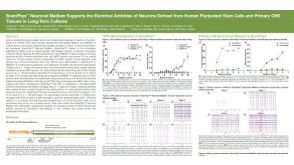 科学海报BrainPhys™ Neuronal Medium Supports the Electrical Activities of Neurons Derived from Human Pluripotent Stem Cells and Primary CNS Tissues in Long-Term Cultures

 沪公网安备31010102008431号