Human respiratory organoids sustained reproducible propagation of human rhinovirus C and elucidation of virus-host interaction
The lack of a robust system to reproducibly propagate HRV-C,a family of viruses refractory to cultivation in standard cell lines,has substantially hindered our understanding of this common respiratory pathogen. We sought to develop an organoid-based system to reproducibly propagate HRV-C,and characterize virus-host interaction using respiratory organoids. We demonstrate that airway organoids sustain serial virus passage with the aid of CYT387-mediated immunosuppression,whereas nasal organoids that more closely simulate the upper airway achieve this without any intervention. Nasal organoids are more susceptible to HRV-C than airway organoids. Intriguingly,upon HRV-C infection,we observe an innate immune response that is stronger in airway organoids than in nasal organoids,which is reproduced in a Poly(I:C) stimulation assay. Treatment with α-CDHR3 and antivirals significantly reduces HRV-C viral growth in airway and nasal organoids. Additionally,an organoid-based immunofluorescence assay is established to titrate HRV-C infectious particles. Collectively,we develop an organoid-based system to reproducibly propagate the poorly cultivable HRV-C,followed by a comprehensive characterization of HRV-C infection and innate immunity in physiologically active respiratory organoids. The organoid-based HRV-C infection model can be extended for developing antiviral strategies. More importantly,our study has opened an avenue for propagating and studying other uncultivable human and animal viruses. Subject terms: Virus-host interactions,Viral pathogenesis,Respiratory tract diseases
View Publication
产品类型:
产品号#:
05001
05021
05022
产品名:
PneumaCult™-ALI 培养基
PneumaCult™-ALI 培养基含12 mm Transwell®插件
PneumaCult™-ALI 培养基含6.5 mm Transwell®插件
Vacca P et al. (DEC 2006)
Blood 108 13 4078--85
Analysis of natural killer cells isolated from human decidua: Evidence that 2B4 (CD244) functions as an inhibitory receptor and blocks NK-cell function.
While during the first trimester of pregnancy natural killer (NK) cells represent the most abundant lymphocyte population in the decidua,their actual function at this site is still debated. In this study we analyzed NK cells isolated from decidual tissue for their surface phenotype and functional capability. We show that decidual NK (dNK) cells express normal surface levels of certain activating receptors,including NKp46,NKG2D,and 2B4,as well as of killer cell immunoglobulin-like receptors (KIRs) and CD94/NKG2A inhibitory receptor. In addition,they are characterized by high levels of cytoplasmic granules despite their CD56(bright) CD16- surface phenotype. Moreover,we provide evidence that in dNK cells,activating NK receptors display normal triggering capability whereas 2B4 functions as an inhibitory receptor. Thus,cross-linking of 2B4 resulted in inhibition of both cytolytic activity and interferon-gamma (IFN-gamma) production. Clonal analysis revealed that,in the majority of dNK cell clones,the 2B4 inhibitory function is related to the deficient expression of signaling lymphocyte activation molecule (SLAM)-associated protein (SAP) mRNA. Moreover,biochemical analysis revealed low levels of SAP in the dNK polyclonal population. This might suggest that dNK cells,although potentially capable of killing,are inhibited in their function when interacting with cells expressing CD48.
View Publication
产品类型:
产品号#:
15025
15065
产品名:
RosetteSep™人NK细胞富集抗体混合物
RosetteSep™人NK细胞富集抗体混合物
Zhu Y et al. ( 2012)
Tumour biology : the journal of the International Society for Oncodevelopmental Biology and Medicine 33 5 1349--1362
Antitumor effect of the mTOR inhibitor everolimus in combination with trastuzumab on human breast cancer stem cells in vitro and in vivo.
This study evaluated the effects of a mammalian target of mTOR inhibitor everolimus alone or in combination with trastuzumab on stem cells from HER2-overexpressing primary breast cancer cells and the BT474 breast cancer cell line in vitro and in vivo. For the in vitro studies,we sorted ESA(+)CD44(+)CD24(-/low) cells as stem cells from primary breast cancer cells and BT474 cells using flow cytometry. The MTT assay was used to quantify the inhibitory effect of the drugs on total cells and stem cells specifically. Stem cell apoptosis,cell cycle distributions,and their tumorigenicity after treatment were investigated by flow cytometry or soft agar colony formation assays. For the in vivo studies,BALB/c mice were injected with BT474 stem cells,and the different treatments were administered. After necropsy,the expression of Ki67,CD31,AKT1,and phospho-AKT (Thr308) was analyzed by immunohistochemistry. For the in vitro studies,Treatment with everolimus resulted in stem cell growth inhibition in a dose-dependent manner. The combination of everolimus with trastuzumab was more effective at inhibiting cell growth (P textless 0.001) and tumorigenicity (P textless 0.001) compared with single-agent therapy. In addition,an increase in G1 cell cycle arrest and an increased population of cells in early apoptosis were seen in the combination treatment group compared with either of the single-agent groups (P textless 0.01). For the in vivo studies,everolimus plus trastuzumab therapy was much more effective at reducing tumor volume in mice compared with either single agent alone (P textless 0.05). Compared with everolimus alone,the combination of everolimus and trastuzumab reduced the expression of Ki67,AKT1,and phospho-AKT (Thr308) (P textless 0.05). We conclude that everolimus has effective inhibitory effects on HER2-overexpressing stem cells in vitro and vivo. Everolimus plus trastuzumab is a rational combination treatment that may be promising in human clinical trials.
View Publication
产品类型:
产品号#:
73122
73124
产品名:
依维莫司
依维莫司
Jung J-H et al. (MAY 2016)
Stem cells and development
CXCR2 Inhibition in Human Pluripotent Stem Cells Induces Predominant Differentiation to Mesoderm and Endoderm through Repression of mTOR, beta-catenin, and hTERT Activities.
On the basis of our previous report verifying that CXCR2 ligands in human placenta-conditioned medium (hPCCM) support human pluripotent stem cell (hPSC) propagation without exogenous bFGF,this study was designed to identify the effect of CXCR2 manipulation on the fate of hPSCs and the underlying mechanism,which had not been previously determined. We observed that CXCR2 inhibition in hPSCs induces predominant differentiation to mesoderm and endoderm with concomitant loss of hPSC characteristics and accompanying decreased expression of mTOR,beta-catenin,and hTERT. These phenomena are recapitulated in hPSCs propagated in conventional culture conditions including bFGF as well as those in hPCCM without exogenous bFGF,suggesting that the action of CXCR2 on hPSCs might not be associated with a bFGF-related mechanism. In addition,the specific CXCR2 ligand GROalpha markedly increased the expression of ectodermal markers in differentiation-committed embryoid bodies derived from hPSCs. This finding suggests that CXCR2 inhibition in hPSCs prohibits the propagation of hPSCs and leads to predominant differentiation to mesoderm and endoderm owing to the blockage of ectodermal differentiation. Taken together,our results indicate that CXCR2 preferentially supports the maintenance of hPSC characteristics as well as facilitates ectodermal differentiation after the commitment to differentiation,and that the mechanism might be associated with mTOR,beta-catenin,and hTERT activities.
View Publication
产品类型:
产品号#:
85850
85857
产品名:
mTeSR™1
mTeSR™1
(Oct 2024)
Viruses 16 10
The HIV-1 vpr R77Q Mutant Induces Apoptosis, G2 Cell Cycle Arrest, and Lower Production of Pro-Inflammatory Cytokines in Human CD4+ T Cells
Acquired immunodeficiency syndrome (AIDS) occurs when HIV depletes CD4+ helper T cells. Some patients develop AIDS slowly or not at all,and are termed long-term non-progressors (LTNP),and while mutations in the HIV-1 Viral Protein R (vpr) gene such as R77Q are associated with LTNP,mechanisms for this correlation are unclear. This study examines the induction of apoptosis,cell cycle arrest,and pro-inflammatory cytokine release in the HUT78 T cell line following infection with replication-competent wild-type strain NL4-3,the R77Q mutant,or a vpr Null mutant. Our results show a significant enhancement of apoptosis and G2 cell cycle arrest in HUT78 cells infected with R77Q,but not with WT NL4-3 or the vpr Null strain. Conversely,HUT78 cells infected with the WT virus show higher levels of necrosis. We also detected lower TNF and IL-6 release after infection with R77Q vs. WT. The apoptotic phenotype was also seen in the CEM cell line and in primary CD4+ T cells. Protein expression of the R77Q vpr variant was low compared to WT vpr,but expression levels alone cannot explain these phenotypes because the Null virus did not show apoptosis or G2 arrest. These results suggest that R77Q triggers a non-inflammatory apoptotic pathway that attenuates inflammation,possibly contributing to LTNP.
View Publication
产品类型:
产品号#:
17852
17852RF
100-0693
产品名:
EasySep™人CD4正选试剂盒II
RoboSep™ 人CD4正选试剂盒II
EasySep™人CD4正选试剂盒II
P. B. Olkhanud et al. (MAY 2011)
Cancer research 71 10 3505--15
Tumor-evoked regulatory B cells promote breast cancer metastasis by converting resting CD4⁺ T cells to T-regulatory cells.
Pulmonary metastasis of breast cancer requires recruitment and expansion of T-regulatory cells (Treg) that promote escape from host protective immune cells. However,it remains unclear precisely how tumors recruit Tregs to support metastatic growth. Here we report the mechanistic involvement of a unique and previously undescribed subset of regulatory B cells. These cells,designated tumor-evoked Bregs (tBreg),phenotypically resemble activated but poorly proliferative mature B2 cells (CD19(+) CD25(High) CD69(High)) that express constitutively active Stat3 and B7-H1(High) CD81(High) CD86(High) CD62L(Low) IgM(Int). Our studies with the mouse 4T1 model of breast cancer indicate that the primary role of tBregs in lung metastases is to induce TGF-$\beta$-dependent conversion of FoxP3(+) Tregs from resting CD4(+) T cells. In the absence of tBregs,4T1 tumors cannot metastasize into the lungs efficiently due to poor Treg conversion. Our findings have important clinical implications,as they suggest that tBregs must be controlled to interrupt the initiation of a key cancer-induced immunosuppressive event that is critical to support cancer metastasis.
View Publication
产品类型:
产品号#:
产品名:
Felgentreff K et al. (JUN 2014)
Proceedings of the National Academy of Sciences of the United States of America 111 24 8889--94
Differential role of nonhomologous end joining factors in the generation, DNA damage response, and myeloid differentiation of human induced pluripotent stem cells.
Nonhomologous end-joining (NHEJ) is a key pathway for efficient repair of DNA double-strand breaks (DSBs) and V(D)J recombination. NHEJ defects in humans cause immunodeficiency and increased cellular sensitivity to ionizing irradiation (IR) and are variably associated with growth retardation,microcephaly,and neurodevelopmental delay. Repair of DNA DSBs is important for reprogramming of somatic cells into induced pluripotent stem cells (iPSCs). To compare the specific contribution of DNA ligase 4 (LIG4),Artemis,and DNA-protein kinase catalytic subunit (PKcs) in this process and to gain insights into phenotypic variability associated with these disorders,we reprogrammed patient-derived fibroblast cell lines with NHEJ defects. Deficiencies of LIG4 and of DNA-PK catalytic activity,but not Artemis deficiency,were associated with markedly reduced reprogramming efficiency,which could be partially rescued by genetic complementation. Moreover,we identified increased genomic instability in LIG4-deficient iPSCs. Cell cycle synchronization revealed a severe defect of DNA repair and a G0/G1 cell cycle arrest,particularly in LIG4- and DNA-PK catalytically deficient iPSCs. Impaired myeloid differentiation was observed in LIG4-,but not Artemis- or DNA-PK-mutated iPSCs. These results indicate a critical importance of the NHEJ pathway for somatic cell reprogramming,with a major role for LIG4 and DNA-PKcs and a minor,if any,for Artemis.
View Publication
产品类型:
产品号#:
07920
07922
85850
85857
产品名:
ACCUTASE™
ACCUTASE™
mTeSR™1
mTeSR™1
Matsuura K et al. (MAR 2015)
Tissue engineering. Part C,Methods 21 3 330--338
Elimination of remaining undifferentiated induced pluripotent stem cells in the process of human cardiac cell sheet fabrication using a methionine-free culture condition.
Cardiac tissue engineering is a promising method for regenerative medicine. Although we have developed human cardiac cell sheets by integration of cell sheet-based tissue engineering and scalable bioreactor culture,the risk of contamination by induced pluripotent stem (iPS) cells in cardiac cell sheets remains unresolved. In the present study,we established a novel culture method to fabricate human cardiac cell sheets with a decreased risk of iPS cell contamination while maintaining viabilities of iPS cell-derived cells,including cardiomyocytes and fibroblasts,using a methionine-free culture condition. When cultured in the methionine-free condition,human iPS cells did not survive without feeder cells and could not proliferate or form colonies on feeder cells or in coculture with cells for cardiac cell sheet fabrication. When iPS cell-derived cells after the cardiac differentiation were transiently cultured in the methionine-free condition,gene expression of OCT3/4 and NANOG was downregulated significantly compared with that in the standard culture condition. Furthermore,in fabricated cardiac cell sheets,spontaneous and synchronous beating was observed in the whole area while maintaining or upregulating the expression of various cardiac and extracellular matrix genes. These findings suggest that human iPS cells are methionine dependent and a methionine-free culture condition for cardiac cell sheet fabrication might reduce the risk of iPS cell contamination.
View Publication
产品类型:
产品号#:
85850
85857
产品名:
mTeSR™1
mTeSR™1
Kamata M et al. (NOV 2010)
Human gene therapy 21 11 1555--67
Generation of human induced pluripotent stem cells bearing an anti-HIV transgene by a lentiviral vector carrying an internal murine leukemia virus promoter.
The recent development of induced pluripotent stem cells (iPSCs) by ectopic expression of defined reprogramming factors offers enormous therapeutic opportunity. To deliver these factors,murine leukemia virus (MLV)-based vectors have been broadly used in the setting of hematopoietic stem cell transplantation. However,MLV vectors have been implicated in malignancy induced by insertional mutagenesis,whereas lentiviral vectors have not. Furthermore,the infectivity of MLV vectors is limited to dividing cells,whereas lentiviral vectors can also transduce nondividing cells. One important characteristic of MLV vectors is a self-silencing property of the promoter element in pluripotent stem cells,allowing temporal transgene expression in a nonpluripotent state before iPSC derivation. Here we test iPSC generation using a novel chimeric vector carrying a mutant MLV promoter internal to a lentiviral vector backbone,thereby containing the useful properties of both types of vectors. Transgene expression of this chimeric vector was highly efficient compared with that of MLV vectors and was silenced specifically in human embryonic stem cells. Human fetal fibroblasts transduced with the vector encoding each factor were efficiently reprogrammed into a pluripotent state,and these iPSCs had potential to differentiate into a variety of cell types. To explore the possibility of iPSCs for gene therapy,we established iPSC clones expressing a short hairpin RNA (shRNA) targeting chemokine receptor 5 (CCR5),the main coreceptor for HIV-1. Using a reporter construct for CCR5 expression,we confirmed that CCR5 shRNA was expressed and specifically knocked down the reporter expression in iPSCs. These data indicate that our chimeric lentiviral vector is a valuable tool for generation of iPSCs and the combination with vectors encoding transgenes allows for rapid establishment of desired genetically engineered iPSC lines.
View Publication


 EasySep™小鼠TIL(CD45)正选试剂盒




 技术手册Human Long-Term Culture-Initiating Cell (LTC-IC) Assay
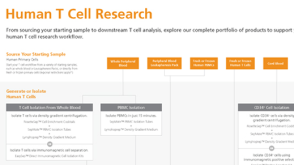 产品手册Human T Cell Research Product Workflow

 沪公网安备31010102008431号