S. Arandjelovic et al. (feb 2019)
Nature immunology 20 2 141--151
A noncanonical role for the engulfment gene ELMO1 in neutrophils that promotes inflammatory arthritis.
Rheumatoid arthritis is characterized by progressive joint inflammation and affects {\~{}}1{\%} of the human population. We noted single-nucleotide polymorphisms (SNPs) in the apoptotic cell-engulfment genes ELMO1,DOCK2,and RAC1 linked to rheumatoid arthritis. As ELMO1 promotes cytoskeletal reorganization during engulfment,we hypothesized that ELMO1 loss would worsen inflammatory arthritis. Surprisingly,Elmo1-deficient mice showed reduced joint inflammation in acute and chronic arthritis models. Genetic and cell-biology studies revealed that ELMO1 associates with receptors linked to neutrophil function in arthritis and regulates activation and early neutrophil recruitment to the joints,without general inhibition of inflammatory responses. Further,neutrophils from the peripheral blood of human donors that carry the SNP in ELMO1 associated with arthritis display increased migratory capacity,whereas ELMO1 knockdown reduces human neutrophil migration to chemokines linked to arthritis. These data identify 'noncanonical' roles for ELMO1 as an important cytoplasmic regulator of specific neutrophil receptors and promoter of arthritis.
View Publication
产品类型:
产品号#:
19762
19762RF
产品名:
EasySep™小鼠中性粒细胞富集试剂盒
RoboSep™ 小鼠中性粒细胞富集试剂盒含滤芯吸头
(Feb 2024)
Nature Communications 15
TREX tetramer disruption alters RNA processing necessary for corticogenesis in THOC6 Intellectual Disability Syndrome
THOC6 variants are the genetic basis of autosomal recessive THOC6 Intellectual Disability Syndrome (TIDS). THOC6 is critical for mammalian Transcription Export complex (TREX) tetramer formation,which is composed of four six-subunit THO monomers. The TREX tetramer facilitates mammalian RNA processing,in addition to the nuclear mRNA export functions of the TREX dimer conserved through yeast. Human and mouse TIDS model systems revealed novel THOC6-dependent,species-specific TREX tetramer functions. Germline biallelic Thoc6 loss-of-function (LOF) variants result in mouse embryonic lethality. Biallelic THOC6 LOF variants reduce the binding affinity of ALYREF to THOC5 without affecting the protein expression of TREX members,implicating impaired TREX tetramer formation. Defects in RNA nuclear export functions were not detected in biallelic THOC6 LOF human neural cells. Instead,mis-splicing was detected in human and mouse neural tissue,revealing novel THOC6-mediated TREX coordination of mRNA processing. We demonstrate that THOC6 is required for key signaling pathways known to regulate the transition from proliferative to neurogenic divisions during human corticogenesis. Together,these findings implicate altered RNA processing in the developmental biology of TIDS neuropathology. THOC6 is required for TREX tetramer formation. Analysis of pathogenic THOC6 variants differentiate the conserved mRNA export functions of TREX dimers and RNA processing functions of TREX tetramers underlying THOC6 Intellectual Disability Syndrome.
View Publication
产品类型:
产品号#:
85850
85857
产品名:
mTeSR™1
mTeSR™1
S. John et al. (jul 2020)
Scientific reports 10 1 11377
Bioluminescence for in vivo detection of cell-type-specific inflammation in a mouse model of uveitis.
This study reports the use of cell-type-specific in vivo bioluminescence to measure intraocular immune cell population dynamics during the course of inflammation in a mouse model of uveitis. Transgenic lines expressing luciferase in inflammatory cell subsets (myeloid cells,T cells,and B cells) were generated and ocular bioluminescence was measured serially for 35 days following uveitis induction. Ocular leukocyte populations were identified using flow cytometry and compared to the ocular bioluminescence profile. Acute inflammation is neutrophilic (75{\%} of ocular CD45 + cells) which is reflected by a significant increase in ocular bioluminescence in one myeloid reporter line on day 2. By day 7,the ocular T cell population increases to 50{\%} of CD45 + cells,leading to a significant increase in ocular bioluminescence in the T cell reporter line. While initially negligible ({\textless} 1{\%} of CD45 + cells),the ocular B cell population increases to {\textgreater} 4{\%} by day 35. This change is reflected by a significant increase in the ocular bioluminescence of the B cell reporter line starting on day 28. Our data demonstrates that cell-type-specific in vivo bioluminescence accurately detects changes in multiple intraocular immune cell populations over time in experimental uveitis. This assay could also be useful in other inflammatory disease models.
View Publication
产品类型:
产品号#:
19851
19851RF
18970
18970RF
19854
19854RF
产品名:
EasySep™小鼠T细胞分选试剂盒
RoboSep™ 小鼠T细胞分选试剂盒
EasySep™小鼠CD11b正选试剂盒II
RoboSep™ 小鼠CD11b正选试剂盒II
EasySep™小鼠B细胞分选试剂盒
RoboSep™ 小鼠B细胞分选试剂盒
W. Zhang et al. (dec 2020)
Bioactive materials 5 4 832--843
An all-silk-derived functional nanosphere matrix for sequential biomolecule delivery and in situ osteochondral regeneration.
Endogenous repair of osteochondral defect is usually limited by the insufficient number of cells in the early stage and incomplete cell differentiation in the later stage. The development of drug delivery systems for sequential release of pro-migratory and pro-chondrogenic molecules to induce endogenous bone marrow-derived mesenchymal stem cells (BMSCs) recruitment and chondrogenic differentiation is highly desirable for in situ osteochondral regeneration. In this study,a novel,all-silk-derived sequential delivery system was fabricated by incorporating the tunable drug-loaded silk fibroin (SF) nanospheres into a SF porous matrix. The loading efficiency and release kinetics of biomolecules depended on the initial SF/polyvinyl alcohol (PVA) concentrations (0.2{\%},1{\%} and 5{\%}) of the nanospheres,as well as the hydrophobicity of the loaded molecules,resulting in controllable and programmed delivery profiles. Our findings indicated that the 5{\%} nanosphere-incorporated matrix showed a rapid release of E7 peptide during the first 120 h,whereas the 0.2{\%} nanosphere-incorporated matrix provided a slow and sustained release of Kartogenin (KGN) longer than 30 days. During in vitro culture of BMSCs,this functional SF matrix incorporated with E7/KGN nanospheres showed good biocompatibility,as well as enhanced BMSCs migration and chondrogenic differentiation through the release of E7 and KGN. Furthermore,when implanted into rabbit osteochondral defect,the SF nanosphere matrix with sequential E7/KGN release promoted the regeneration of both cartilage and subchondral bone. This work not only provided a novel all-silk-derived drug delivery system for sequential release of molecules,but also a functional tissue-engineered scaffold for osteochondral regeneration.
View Publication
Iori AP et al. (JUN 2004)
Bone marrow transplantation 33 11 1097--105
Pre-transplant prognostic factors for patients with high-risk leukemia undergoing an unrelated cord blood transplantation.
From July 1995 to December 2001,42 patients with leukemia aged 1-42 years underwent cord blood transplant (CBT) from unrelated,textless or = 2 antigen HLA mismatched donors. In all,26 patients were in textless or = 2nd complete remission and 16 in more advanced phase. Conditioning regimens,graft-versus-host disease (GVHD) prophylaxis and supportive policy were uniform for all patients. The cumulative incidence of engraftment was 90% (95% CI: 0.78-0.91). The cumulative incidence of III-IV grade acute- and chronic-GVHD was 9% (95% CI: 0.04-0.24) and 35% (95% CI: 0.21-0.60),respectively. The 4-year cumulative incidence of transplant-related mortality (TRM) and relapse was 28% (95% CI: 0.17-0.47) and 25% (95% CI: 0.14-0.45),respectively. The 4-year overall survival (OS),leukemia-free survival (LFS) and event-free survival (EFS) were 45% (95% CI: 0.27-0.63),47% (95% CI: 0.30-0.64) and 46% (95% CI: 0.30-0.62),respectively. In multivariate analysis,the most important factor affecting outcomes was the CFU-GM dose,associated with CMV serology (P=0.003 and 0.04,respectively) in influencing OS and with patient sex (P=0.008 and 0.03,respectively) in influencing LFS. Finally,CFU-GM dose was the only factor that affected EFS significantly (P=0.02). In conclusion,the infused cell dose expressed as in vitro progenitor cell growth is highly predictive of outcomes after an unrelated CBT and should be considered the main parameter in selecting cord blood units for transplant.
View Publication
产品类型:
产品号#:
04437
04447
产品名:
MethoCult™表达
MethoCult™表达
Li J et al. (MAR 2005)
Clinical Cancer Research 11 6 2195--2204
Generation of PRL-3- and PRL-1-specific monoclonal antibodies as potential diagnostic markers for cancer metastases
PURPOSE: The PRL-3 mRNA is consistently elevated in metastatic samples derived from colorectal cancers. We sought to generate a specific PRL-3 monoclonal antibody (mAb) that might serve as a potential diagnostic marker for colorectal cancer metastasis. EXPERIMENTAL DESIGN: PRL-3 is one of three members (PRL-1,PRL-2,and PRL-3) in a unique protein-tyrosine phosphatase family. Because the three PRLs are 76% to 87% identical in their amino acid sequences,it poses a great challenge to obtain mAbs that are specific for respective phosphatase of regenerating liver (PRL) but not for the other two in the family. We screened over 1,400 hybridoma clones to generate mAbs specific to each PRL member. RESULTS: We obtained two hybridoma clones specifically against PRL-3 and another two clones specifically against PRL-1. These antibodies had been evaluated by several critical tests to show their own specificities and applications. Most importantly,the PRL-3 mAbs were assessed on 282 human colorectal tissue samples (121 normal,17 adenomas,and 144 adenocarcinomas). PRL-3 protein was detected in 11% of adenocarcinoma samples. The PRL-3- and PRL-1-specific mAbs were further examined on 204 human multiple cancer tissues. The differential expressions of PRL-3 and PRL-1 confirmed the mAbs' specificity. CONCLUSIONS: Using several approaches,we show that PRL-3- or PRL-1-specific mAbs react only to their respective antigen. The expression of PRL-3 in textgreater10% of primary colorectal cancer samples indicates that PRL-3 may prime the metastatic process. These mAbs will be useful as markers in clinical diagnosis for assessing tumor aggressiveness.
View Publication
产品类型:
产品号#:
03800
03801
03802
03803
03804
03805
03806
产品名:
ClonaCell™-HY 杂交瘤试剂盒
ClonaCell™-HY Medium
ClonaCell™-HY Medium
ClonaCell™-HY Medium
ClonaCell™-HY Medium
ClonaCell™-HY Medium
ClonaCell™-HY PEG (融合)
Hideshima T et al. (OCT 2016)
Proceedings of the National Academy of Sciences of the United States of America
Discovery of selective small-molecule HDAC6 inhibitor for overcoming proteasome inhibitor resistance in multiple myeloma.
Multiple myeloma (MM) has proven clinically susceptible to modulation of pathways of protein homeostasis. Blockade of proteasomal degradation of polyubiquitinated misfolded proteins by the proteasome inhibitor bortezomib (BTZ) achieves responses and prolongs survival in MM,but long-term treatment with BTZ leads to drug-resistant relapse in most patients. In a proof-of-concept study,we previously demonstrated that blocking aggresomal breakdown of polyubiquitinated misfolded proteins with the histone deacetylase 6 (HDAC6) inhibitor tubacin enhances BTZ-induced cytotoxicity in MM cells in vitro. However,these foundational studies were limited by the pharmacologic liabilities of tubacin as a chemical probe with only in vitro utility. Emerging from a focused library synthesis,a potent,selective,and bioavailable HDAC6 inhibitor,WT161,was created to study the mechanism of action of HDAC6 inhibition in MM alone and in combination with BTZ. WT161 in combination with BTZ triggers significant accumulation of polyubiquitinated proteins and cell stress,followed by caspase activation and apoptosis. More importantly,this combination treatment was effective in BTZ-resistant cells and in the presence of bone marrow stromal cells,which have been shown to mediate MM cell drug resistance. The activity of WT161 was confirmed in our human MM cell xenograft mouse model and established the framework for clinical trials of the combination treatment to improve patient outcomes in MM.
View Publication
产品类型:
产品号#:
15129
15169
产品名:
RosetteSep™人多发性骨髓瘤细胞富集抗体混合物
RosetteSep™人多发性骨髓瘤细胞富集抗体混合物
Bravard A et al. (JAN 2015)
Nucleic acids research 43 2 904--16
The prion protein is critical for DNA repair and cell survival after genotoxic stress.
The prion protein (PrP) is highly conserved and ubiquitously expressed,suggesting that it plays an important physiological function. However,despite decades of investigation,this role remains elusive. Here,by using animal and cellular models,we unveil a key role of PrP in the DNA damage response. Exposure of neurons to a genotoxic stress activates PRNP transcription leading to an increased amount of PrP in the nucleus where it interacts with APE1,the major mammalian endonuclease essential for base excision repair,and stimulates its activity. Preventing the induction of PRNP results in accumulation of abasic sites in DNA and impairs cell survival after genotoxic treatment. Brains from Prnp(-/-) mice display a reduced APE1 activity and a defect in the repair of induced DNA damage in vivo. Thus,PrP is required to maintain genomic stability in response to genotoxic stresses.
View Publication
产品类型:
产品号#:
05700
05701
05702
产品名:
NeuroCult™ 基础培养基(小鼠&大鼠)
NeuroCult™ 扩增添加物 (小鼠&大鼠)
NeuroCult™ 扩增试剂盒 (小鼠&大鼠)
Jennifer S et al. (JANUARY 2016)
Cytotherapy 18 1 1-12
Current perspectives on the use of ancillary materials for the manufacture of cellular therapies.
Continued growth in the cell therapy industry and commercialization of cell therapies that successfully advance through clinical trials has led to increased awareness around the need for specialized and complex materials utilized in their manufacture. Ancillary materials (AMs) are components or reagents used during the manufacture of cell therapy products but are not intended to be part of the final products. Commonly,there are limitations in the availability of clinical-grade reagents used as AMs. Furthermore,AMs may affect the efficacy of the cell product and subsequent safety of the cell therapy for the patient. As such,AMs must be carefully selected and appropriately qualified during the cell therapy development process. However,the ongoing evolution of cell therapy research,limited number of clinical trials and registered cell therapy products results in the current absence of specific regulations governing the composition,compliance,and qualification of AMs often leads to confusion by suppliers and users in this field. Here we provide an overview and interpretation of the existing global framework surrounding AM use and investigate some common misunderstandings within the industry,with the aim of facilitating the appropriate selection and qualification of AMs. The key message we wish to emphasize is that in order to most effectively mitigate risk around cell therapy development and patient safety,users must work with their suppliers and regulators to qualify each AM to assess source,purity,identity,safety,and suitability in a given application.
View Publication
Ultra-fast genetically encoded sensor for precise real-time monitoring of physiological and pathophysiological peroxide dynamics
Hydrogen Peroxide (H2O2) is a central oxidant in redox biology due to its pleiotropic role in physiology and pathology. However,real-time monitoring of H2O2 in living cells and tissues remains a challenge. We address this gap with the development of an optogenetic hydRogen perOxide Sensor (oROS),leveraging the bacterial peroxide binding domain OxyR. Previously engineered OxyR-based fluorescent peroxide sensors lack the necessary sensitivity and response speed for effective real-time monitoring. By structurally redesigning the fusion of Escherichia coli (E. coli) ecOxyR with a circularly permutated green fluorescent protein (cpGFP),we created a novel,green-fluorescent peroxide sensor oROS-G. oROS-G exhibits high sensitivity and fast on-and-off kinetics,ideal for monitoring intracellular H2O2 dynamics. We successfully tracked real-time transient and steady-state H2O2 levels in diverse biological systems,including human stem cell-derived neurons and cardiomyocytes,primary neurons and astrocytes,and mouse brain ex vivo and in vivo. These applications demonstrate oROS’s capabilities to monitor H2O2 as a secondary response to pharmacologically induced oxidative stress and when adapting to varying metabolic stress. We showcased the increased oxidative stress in astrocytes via A?-putriscine-MAOB axis,highlighting the sensor’s relevance in validating neurodegenerative disease models. Lastly,we demonstrated acute opioid-induced generation of H2O2 signal in vivo which highlights redox-based mechanisms of GPCR regulation. oROS is a versatile tool,offering a window into the dynamic landscape of H2O2 signaling. This advancement paves the way for a deeper understanding of redox physiology,with significant implications for understanding diseases associated with oxidative stress,such as cancer,neurodegenerative,and cardiovascular diseases.
View Publication


 EasySep™小鼠TIL(CD45)正选试剂盒




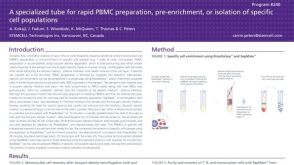 科学海报A Specialized Tube for Rapid PBMC Preparation, Pre-Enrichment, or Isolation of Specific Cell Populations

 沪公网安备31010102008431号