Mehta A et al. (FEB 2013)
Toxicological Sciences 131 2 458--469
Pharmacoelectrophysiology of viral-free induced pluripotent stem cell-derived human cardiomyocytes
Development of pharmaceutical agents for cardiac indication demands elaborate safety screening in which assessing repolarization of cardiac cells remains a critical path in risk evaluations. An efficient platform for evaluating cardiac repolarization in vitro significantly facilitates drug developmental programs. In a proof of principle study,we examined the effect of antiarrhythmogenic drugs (Vaughan Williams class I-IV) and noncardiac active drugs (terfenadine and cisapride) on the repolarization profile of viral-free human-induced pluripotent stem cell-derived cardiomyocytes (hiPSC-CMs). Extracellular field potential (FP) recording using microelectrode arrays demonstrated significant delayed repolarization as prolonged corrected FP durations (cFPDs) by class I (quinidine and flecainide),class III (sotalol and amiodarone),and class IV (verapamil),whereas class II drugs (propranolol and nadolol) had no effects. Consistent with their sodium channel-blocking ability,class I drugs also significantly reduced FPmin and conduction velocity. Although lidocaine (class IB) had no effects on cFPDs,verapamil shortened cFPD and FPmin by 25 and 50%,respectively. Furthermore,verapamil reduced beating frequencies drastically. Importantly,the examined drugs exhibited dose-response curve on prolongation of cFPDs at an effective range that correlated significantly with therapeutic plasma concentrations achieved clinically. Consistent with clinical outcomes,drug-induced arrhythmia of tachycardia and bigeminy-like waveforms by quinidine,flecainide,and sotalol was demonstrated at supraphysiological concentrations. Furthermore,off-target effects of terfenadine and cisapride on cFPD and Na( + ) channel blockage were similarly revealed. These results suggest that hiPSC-CMs may be useful for safety evaluation of cardioactive and noncardiac acting drugs for personalized medicine.
View Publication
产品类型:
产品号#:
85850
85857
产品名:
mTeSR™1
mTeSR™1
D. Loeffler et al. (mar 2022)
Blood 139 13 2011--2023
Asymmetric organelle inheritance predicts human blood stem cell fate.
Understanding human hematopoietic stem cell fate control is important for its improved therapeutic manipulation. Asymmetric cell division,the asymmetric inheritance of factors during division instructing future daughter cell fates,was recently described in mouse blood stem cells. In human blood stem cells,the possible existence of asymmetric cell division remained unclear because of technical challenges in its direct observation. Here,we use long-term quantitative single-cell imaging to show that lysosomes and active mitochondria are asymmetrically inherited in human blood stem cells and that their inheritance is a coordinated,nonrandom process. Furthermore,multiple additional organelles,including autophagosomes,mitophagosomes,autolysosomes,and recycling endosomes,show preferential asymmetric cosegregation with lysosomes. Importantly,asymmetric lysosomal inheritance predicts future asymmetric daughter cell-cycle length,differentiation,and stem cell marker expression,whereas asymmetric inheritance of active mitochondria correlates with daughter metabolic activity. Hence,human hematopoietic stem cell fates are regulated by asymmetric cell division,with both mechanistic evolutionary conservation and differences to the mouse system.
View Publication
Modeling anorexia nervosa: transcriptional insights from human iPSC-derived neurons.
Anorexia nervosa (AN) is a complex and multifactorial disorder occurring predominantly in women. Despite having the highest mortality among psychiatric conditions,it still lacks robust and effective treatment. Disorders such as AN are most likely syndromes with multiple genetic contributions,however,genome-wide studies have been underpowered to reveal associations with this uncommon illness. Here,we generated induced pluripotent stem cells (iPSCs) from adolescent females with AN and unaffected controls. These iPSCs were differentiated into neural cultures and subjected to extensive transcriptome analysis. Within a small cohort of patients who presented for treatment,we identified a novel gene that appears to contribute to AN pathophysiology,TACR1 (tachykinin 1 receptor). The participation of tachykinins in a variety of biological processes and their interactions with other neurotransmitters suggest novel mechanisms for how a disrupted tachykinin system might contribute to AN symptoms. Although TACR1 has been associated with psychiatric conditions,especially anxiety disorders,we believe this report is its first association with AN. Moreover,our human iPSC approach is a proof-of-concept that AN can be modeled in vitro with a full human genetic complement,and represents a new tool for understanding the elusive molecular and cellular mechanisms underlying the disease.
View Publication
产品类型:
产品号#:
85850
85857
产品名:
mTeSR™1
mTeSR™1
Ghaedi M et al. (NOV 2013)
The Journal of clinical investigation 123 11 4950--62
Human iPS cell-derived alveolar epithelium repopulates lung extracellular matrix.
The use of induced pluripotent stem cells (iPSCs) has been postulated to be the most effective strategy for developing patient-specific respiratory epithelial cells,which may be valuable for lung-related cell therapy and lung tissue engineering. We generated a relatively homogeneous population of alveolar epithelial type II (AETII) and type I (AETI) cells from human iPSCs that had phenotypic properties similar to those of mature human AETII and AETI cells. We used these cells to explore whether lung tissue can be regenerated in vitro. Consistent with an AETII phenotype,we found that up to 97% of cells were positive for surfactant protein C,95% for mucin-1,93% for surfactant protein B,and 89% for the epithelial marker CD54. Additionally,exposing induced AETII to a Wnt/β-catenin inhibitor (IWR-1) changed the iPSC-AETII-like phenotype to a predominantly AETI-like phenotype. We found that of induced AET1 cells,more than 90% were positive for type I markers,T1α,and caveolin-1. Acellular lung matrices were prepared from whole rat or human adult lungs treated with decellularization reagents,followed by seeding these matrices with alveolar cells derived from human iPSCs. Under appropriate culture conditions,these progenitor cells adhered to and proliferated within the 3D lung tissue scaffold and displayed markers of differentiated pulmonary epithelium.
View Publication
产品类型:
产品号#:
72562
72564
产品名:
IWR-1-endo
IWR-1-endo
Avery S (SEP 2011)
Current protocols in stem cell biology Chapter 5 Unit5C.1
Generation of inducible shRNAi human embryonic stem cell lines.
This unit describes the generation of tetracycline-inducible short hairpin RNA interference (shRNAi) human embryonic stem cell (hESC) lines. Using this vector-based approach enables stable and long-term expression of target hairpins under the control of doxycycline/tetracycline. Target degradation can be controlled in both a dose- and time-dependent manner that can even be switched off,depending upon the particular requirements of the study.
View Publication
产品类型:
产品号#:
85850
85857
产品名:
mTeSR™1
mTeSR™1
Liu C et al. (MAY 2012)
Molecular biology reports 39 5 5875--81
Co-expression of Oct-4 and Nestin in human breast cancers.
The aim is to investigate the clinical implications of the Oct-4 and Nestin protein in human breast cancers. A total of 346 cases including 26 fresh and 320 paraffin-embedded tumor tissues were selected for characterizing the frequency of CD44(+)CD24(-) tumor cells by flow cytometry and the differential expression of the stem cell-related genes between CD44(+)CD24(-) and non-CD44(+)CD24(-) tumor cells was analyzed by PCR Array and immunofluorescence. In comparison with the non-CD44(+)CD24(-) tumor cells,the CD44(+)CD24(-),particularly for those with high percentage of Oct-4(+) and Nestin(+),tumor cells had higher tumorigenicity by forming mammospheres in vitro. More importantly,42 (13.125%) out of 320 tumor tissues were positive for Oct-4 and Nestin staining. Universal analysis and multivariate analysis revealed that the expression of Oct-4 and Nestin was associated significantly with younger age,pathogenic degrees,lymph node metastasis and triple-negative breast cancer independently (P textless 0.05) as well as shorter survival (P = 0.001). Oct-4 and Nestin were important regulators of the development of breast cancer,and Oct-4 and Nestin may be used as predictors for the prognosis of breast cancers.
View Publication
产品类型:
产品号#:
05620
产品名:
MammoCult™人培养基试剂盒
Dai D-F et al. ( 2017)
Stem cells international 2017 5153625
Mitochondrial Maturation in Human Pluripotent Stem Cell Derived Cardiomyocytes.
Human pluripotent stem cells derived cardiomyocytes (PSC-CMs) have been widely used for disease modeling,drug safety screening,and preclinical cell therapy to regenerate myocardium. Most studies have utilized PSC-CM grown in vitro for a relatively short period after differentiation. These PSC-CMs demonstrated structural,electrophysiological,and mechanical features of primitive cardiomyocytes. A few studies have extended in vitro PSC-CM culture time and reported improved maturation of structural and electromechanical properties. The degree of mitochondrial maturation,however,remains unclear. This study characterized the development of mitochondria during prolonged in vitro culture. PSC-CM demonstrated an improved mitochondrial maturation with prolonged culture,in terms of increased mitochondrial relative abundance,enhanced membrane potential,and increased activity of several mitochondrial respiratory complexes. These are in parallel with the maturation of other cellular components. However,the maturation of mitochondria in PSC-CMs grown for extended in vitro culture exhibits suboptimal maturation when compared with the maturation of mitochondria observed in the human fetal heart during similar time interval.
View Publication
产品类型:
产品号#:
85850
85857
产品名:
mTeSR™1
mTeSR™1
(Apr 2025)
Journal of Inherited Metabolic Disease 48 3
Propionic Acidemia?Induced Proarrhythmic Electrophysiological Alterations in Human iPSC?Derived Cardiomyocytes
Propionic acidemia (PA) is a metabolic disorder caused by a deficiency of the mitochondrial enzyme propionyl-CoA carboxylase (PCC) due to mutations in the PCCA or PCCB genes,which encode the two PCC subunits. PA may lead to several types of cardiomyopathy and has been linked to cardiac electrical abnormalities such as QT interval prolongation,life-threatening arrhythmias,and sudden cardiac death. To gain insights into the mechanisms underlying PA-induced proarrhythmia,we recorded action potentials (APs) and ion currents using whole-cell patch-clamp in ventricular-like induced pluripotent stem cells-derived cardiomyocytes (hiPSC-CMs) from a PA patient carrying two pathogenic mutations in the PCCA gene (p.Cys616_Val633del and p.Gly477Glufs*9) (PCCA cells) and from a healthy subject (healthy cells). In cells driven at 1 Hz,PCC deficiency increased the latency and prolonged the AP duration (APD) measured at 20% of repolarization,without modifying resting membrane potential or AP amplitude. Moreover,delayed afterdepolarizations appeared at the end of the repolarization phase in unstimulated and paced PCCA cells. PCC deficiency significantly reduced peak sodium current (INa) but increased the late INa (INaL) component. In addition,L-type Ca2+ current (ICaL) density was reduced,while the inward and outward density of the Na+/Ca2+ exchanger current (INCX) was increased in PCCA cells compared to healthy ones. In conclusion,our results demonstrate that at the cellular level,PCC deficiency can modify the ion currents controlling cardiac excitability,APD,and intracellular Ca2+ handling,increasing the risk of arrhythmias independently of the progressive late-onset cardiomyopathy induced by PA disease.
View Publication
产品类型:
产品号#:
05020
05025
05027
100-0483
100-0484
100-0276
100-1130
产品名:
STEMdiff™心肌细胞维护试剂盒
STEMdiff™心肌细胞分离试剂盒
STEMdiff™心肌细胞支持培养基
Hausser Scientificᵀᴹ 明线血球计数板
ReLeSR™
mTeSR™ Plus
mTeSR™ Plus
Stanford EA et al. (APR 2016)
Molecular cancer research : MCR
Role for the Aryl Hydrocarbon Receptor and Diverse Ligands In Oral Squamous Cell Carcinoma Migration and Tumorigenesis.
Over 45,000 new cases of oral and pharyngeal cancers are diagnosed and account for over 8,000 deaths a year in the United States. An environmental chemical receptor,the aryl hydrocarbon receptor (AHR),has previously been implicated in oral squamous cell carcinoma (OSCC) initiation as well as in normal tissue-specific stem cell self-renewal. These previous studies inspired the hypothesis that the AHR plays a role in both the acquisition and progression of OSCC,as well as in the formation and maintenance of cancer stem-like cells. To test this hypothesis,AHR activity in two oral squamous cell lines was modulated with AHR prototypic,environmental and bacterial AHR ligands,AHR-specific inhibitors,and phenotypic,genomic and functional characteristics were evaluated. The data demonstrate that: 1) primary OSCC tissue expresses elevated levels of nuclear AHR as compared to normal tissue,2) Ahr mRNA expression is up-regulated in 320 primary OSCC,3) AHR hyper-activation with several ligands,including environmental and bacterial ligands,significantly increases AHR activity,ALDH1 activity,and accelerates cell migration,4) AHR inhibition blocks the rapid migration of OSCC cells and reduces cell chemoresistance,5) AHR knockdown inhibits tumorsphere formation in low adherence conditions,and 6) AHR knockdown inhibits tumor growth and increases overall survival in vivo. These data demonstrate that the AHR plays an important role in development and progression of OSCC,and specifically cancer stem-like cells. Prototypic,environmental and bacterial AHR ligands may exacerbate OSCC by enhancing expression of these properties. IMPLICATIONS This study,for the first time,demonstrates the ability of diverse AHR ligands to regulate AHR activity in oral squamous cell carcinoma cells,as well as regulate several important characteristics of oral cancer stem cells,in vivo and in vitro.
View Publication
产品类型:
产品号#:
05620
产品名:
MammoCult™人培养基试剂盒
Yeo HC et al. (AUG 2016)
Scientific reports 6 31068
Genome-Wide Transcriptome and Binding Sites Analyses Identify Early FOX Expressions for Enhancing Cardiomyogenesis Efficiency of hESC Cultures.
The differentiation efficiency of human embryonic stem cells (hESCs) into heart muscle cells (cardiomyocytes) is highly sensitive to culture conditions. To elucidate the regulatory mechanisms involved,we investigated hESCs grown on three distinct culture platforms: feeder-free Matrigel,mouse embryonic fibroblast feeders,and Matrigel replated on feeders. At the outset,we profiled and quantified their differentiation efficiency,transcriptome,transcription factor binding sites and DNA-methylation. Subsequent genome-wide analyses allowed us to reconstruct the relevant interactome,thereby forming the regulatory basis for implicating the contrasting differentiation efficiency of the culture conditions. We hypothesized that the parental expressions of FOXC1,FOXD1 and FOXQ1 transcription factors (TFs) are correlative with eventual cardiomyogenic outcome. Through WNT induction of the FOX TFs,we observed the co-activation of WNT3 and EOMES which are potent inducers of mesoderm differentiation. The result strengthened our hypothesis on the regulatory role of the FOX TFs in enhancing mesoderm differentiation capacity of hESCs. Importantly,the final proportions of cells expressing cardiac markers were directly correlated to the strength of FOX inductions within 72 hours after initiation of differentiation across different cell lines and protocols. Thus,we affirmed the relationship between early FOX TF expressions and cardiomyogenesis efficiency.
View Publication
产品类型:
产品号#:
85850
85857
产品名:
mTeSR™1
mTeSR™1
Mousa JJ et al. (OCT 2016)
Proceedings of the National Academy of Sciences of the United States of America Oct 17 201609449
Structural basis for nonneutralizing antibody competition at antigenic site II of the respiratory syncytial virus fusion protein.
Palivizumab was the first antiviral monoclonal antibody (mAb) approved for therapeutic use in humans,and remains a prophylactic treatment for infants at risk for severe disease because of respiratory syncytial virus (RSV). Palivizumab is an engineered humanized version of a murine mAb targeting antigenic site II of the RSV fusion (F) protein,a key target in vaccine development. There are limited reported naturally occurring human mAbs to site II; therefore,the structural basis for human antibody recognition of this major antigenic site is poorly understood. Here,we describe a nonneutralizing class of site II-specific mAbs that competed for binding with palivizumab to postfusion RSV F protein. We also describe two classes of site II-specific neutralizing mAbs,one of which escaped competition with nonneutralizing mAbs. An X-ray crystal structure of the neutralizing mAb 14N4 in complex with F protein showed that the binding angle at which human neutralizing mAbs interact with antigenic site II determines whether or not nonneutralizing antibodies compete with their binding. Fine-mapping studies determined that nonneutralizing mAbs that interfere with binding of neutralizing mAbs recognize site II with a pose that facilitates binding to an epitope containing F surface residues on a neighboring protomer. Neutralizing antibodies,like motavizumab and a new mAb designated 3J20 that escape interference by the inhibiting mAbs,avoid such contact by binding at an angle that is shifted away from the nonneutralizing site. Furthermore,binding to rationally and computationally designed site II helix-loop-helix epitope-scaffold vaccines distinguished neutralizing from nonneutralizing site II antibodies.
View Publication


 EasySep™小鼠TIL(CD45)正选试剂盒




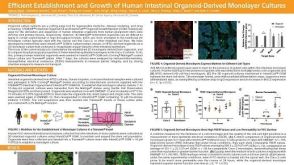 科学海报Efficient Establishment and Growth of Human Intestinal Organoid-Derived Monolayers

 沪公网安备31010102008431号