Mossessova E et al. ( 2003)
Molecular cell 12 6 1403--1411
Crystal structure of ARF1*Sec7 complexed with Brefeldin A and its implications for the guanine nucleotide exchange mechanism.
ARF GTPases are activated by guanine nucleotide exchange factors (GEFs) of the Sec7 family that promote the exchange of GDP for GTP. Brefeldin A (BFA) is a fungal metabolite that binds to the ARF1*GDP*Sec7 complex and blocks GEF activity at an early stage of the reaction,prior to guanine nucleotide release. The crystal structure of the ARF1*GDP*Sec7*BFA complex shows that BFA binds at the protein-protein interface to inhibit conformational changes in ARF1 required for Sec7 to dislodge the GDP molecule. Based on a comparative analysis of the inhibited complex,nucleotide-free ARF1*Sec7 and ARF1*GDP,we suggest that,in addition to forcing nucleotide release,the ARF1-Sec7 binding energy is used to open a cavity on ARF1 to facilitate the rearrangement of hydrophobic core residues between the GDP and GTP conformations. Thus,the Sec7 domain may act as a dual catalyst,facilitating both nucleotide release and conformational switching on ARF proteins.
View Publication
产品类型:
产品号#:
73012
73014
产品名:
Brefeldin A
布雷非德菌素A
Hanson V et al. (OCT 2013)
Tissue antigens 82 4 269--75
Assessment of the purity of isolated cell populations for lineage-specific chimerism monitoring post haematopoietic stem cell transplantation.
Following haematopoietic stem cell transplantation,monitoring the proportion of donor and recipient haematopoiesis in the patient (chimerism) is an influential tool in directing further treatment choices. Short tandem repeat (STR) analysis is a method of chimerism monitoring using DNA isolated from peripheral blood,bone marrow or specific isolated cell lineages such as CD3+ T cells. For lineage-specific STR analysis on cell populations isolated from peripheral blood,a qualitative estimation of the purity of each isolated population is essential for the correct interpretation of the test data. We describe a rapid,inexpensive method for the determination of purity using a simple flow cytometry method. The method described for assessing the purity of sorted CD3+ cells can be applied to any cell population isolated using the same technology. Data obtained were comparable to results from a commercial polymerase chain reaction (PCR)-based method for the assessment of purity (Non-T Genomic Detection Kit,Accumol,Calgary,AB,Canada) (P = 0.59). Of the 303 samples tested by flow cytometry,290 (95.7%) exceeded 90% purity,and 215 (70.95%) were over 99% pure. There were some outlying samples,showing diversity between samples and the unpredictability of purity of isolated cell populations. This flow cytometry method can be easily assimilated into routine testing protocols,allowing purity assessment in multiple-sorted cell populations for lineage-specific chimerism monitoring using a single secondary antibody and giving results comparable to a PCR-based method. As purity of isolated cell lineages is affected by time after venepuncture and storage temperature,assessment of each sample is recommended to give a reliable indication of sample quality and confidence in the interpretation of the results.
View Publication
产品类型:
产品号#:
20119
20155
21000
产品名:
RoboSep™ 吸头组件抛光剂
RoboSep™分选试管套装(9个塑料管+吸头保护器)
RoboSep™- S
Lehnertz B et al. (MAY 2010)
The Journal of experimental medicine 207 5 915--22
Activating and inhibitory functions for the histone lysine methyltransferase G9a in T helper cell differentiation and function.
Accumulating evidence suggests that the regulation of gene expression by histone lysine methylation is crucial for several biological processes. The histone lysine methyltransferase G9a is responsible for the majority of dimethylation of histone H3 at lysine 9 (H3K9me2) and is required for the efficient repression of developmentally regulated genes during embryonic stem cell differentiation. However,whether G9a plays a similar role in adult cells is still unclear. We identify a critical role for G9a in CD4(+) T helper (Th) cell differentiation and function. G9a-deficient Th cells are specifically impaired in their induction of Th2 lineage-specific cytokines IL-4,IL-5,and IL-13 and fail to protect against infection with the intestinal helminth Trichuris muris. Furthermore,G9a-deficient Th cells are characterised by the increased expression of IL-17A,which is associated with a loss of H3K9me2 at the Il17a locus. Collectively,our results establish unpredicted and complex roles for G9a in regulating gene expression during lineage commitment in adult CD4(+) T cells.
View Publication
产品类型:
产品号#:
20119
20155
21000
产品名:
RoboSep™ 吸头组件抛光剂
RoboSep™分选试管套装(9个塑料管+吸头保护器)
RoboSep™- S
Wang L et al. (NOV 2008)
PLoS Biology 6 11 e289
Gamma-Secretase Represents a Therapeutic Target for the Treatment of Invasive Glioma Mediated by the p75 Neurotrophin Receptor
The multifunctional signaling protein p75 neurotrophin receptor (p75(NTR)) is a central regulator and major contributor to the highly invasive nature of malignant gliomas. Here,we show that neurotrophin-dependent regulated intramembrane proteolysis (RIP) of p75(NTR) is required for p75(NTR)-mediated glioma invasion,and identify a previously unnamed process for targeted glioma therapy. Expression of cleavage-resistant chimeras of p75(NTR) or treatment of animals bearing p75(NTR)-positive intracranial tumors with clinically applicable gamma-secretase inhibitors resulted in dramatically decreased glioma invasion and prolonged survival. Importantly,proteolytic processing of p75(NTR) was observed in p75(NTR)-positive patient tumor specimens and brain tumor initiating cells. This work highlights the importance of p75(NTR) as a therapeutic target,suggesting that gamma-secretase inhibitors may have direct clinical application for the treatment of malignant glioma.
View Publication
产品类型:
产品号#:
05750
05751
产品名:
NeuroCult™ NS-A 基础培养基(人)
NeuroCult™ NS-A 扩增试剂盒(人)
J. Zhou et al. (Sep 2025)
Alzheimer's Research & Therapy 17
A novel electric field approach for improving cognitive function through ameliorating cell-specific pathology in P301S tauopathy mice
Alzheimer’s disease (AD) is a devastating neurodegenerative disorder,with no effective treatment currently available. Recently,non-pharmacological therapy,especially gamma frequency stimulation has shown promising therapeutic effects in Alzheimer’s disease (AD) mouse models. Electric field (EF) is a non-invasive biophysical approach for neuronal protection. However,whether EF is beneficial in AD neuropathology remains unknown. In this study,we exposed the P301S tauopathy mouse model to EF at gamma frequency on the head. We demonstrated that EF treatment significantly improved the cognitive impairments in the P301S mice. This was accompanied by reduced tau pathologies,suppressed microglial activation,neuroinflammation and oxidative stress in the tauopathy mouse brain. Moreover,EF treatment induced cell-specific responses in neural cells,with neurons being more susceptible,followed by microglia and oligodendrocytes. EF also had favorable effects on synaptic protein in neurons,inflammatory response and complement signaling in microglia,and myelination in oligodendrocytes. This study provides strong evidence that EF at gamma frequency may have great potential to be a novel therapeutic intervention for P301S by attenuating neuropathology and offering neuroprotection.Supplementary InformationThe online version contains supplementary material available at 10.1186/s13195-025-01859-8.
View Publication
产品类型:
产品号#:
18970
18970RF
产品名:
EasySep™小鼠CD11b正选试剂盒II
RoboSep™ 小鼠CD11b正选试剂盒II
W. Yang et al. (Aug 2025)
Cancers 17 17
A Polyomavirus-Positive Merkel Cell Carcinoma Mouse Model Supports a Unified Origin for Somatic and Germ Cell Cancers
Cancer research has long focused on mutations in normal body cells,but this approach has not produced major breakthroughs for most cancers. Our study explores a different concept that some aggressive cancers may actually arise from early reproductive cells called primordial germ cells,which normally develop into eggs and sperm. We created a new experimental model showing how a virus can transform human primordial germ cell-like cells into virus-positive Merkel cell carcinoma,a rare but deadly skin cancer. This model shows that cancers can emerge through changes in developmental states rather than relying solely on genetic mutations. By linking cancer development to early germ cells,our findings suggest a unifying explanation for both germ cell cancers and body cancers. This new perspective may guide more effective approaches to study,diagnose,and treat cancer by focusing on early human development rather than only DNA mutations and later developmental stages.
View Publication
产品类型:
产品号#:
100-0483
100-0484
产品名:
Hausser Scientificᵀᴹ 明线血球计数板
ReLeSR™
S. Raevens et al. (dec 2019)
Journal of leukocyte biology
Combination of sivelestat and N-acetylcysteine alleviates the inflammatory response and exceeds standard treatment for acetaminophen-induced liver injury.
Hepatocyte death during acetaminophen (APAP) intoxication elicits a reactive inflammatory response,with hepatic recruitment of neutrophils and monocytes,which further aggravates liver injury. Neutrophil elastase (NE),secreted by activated neutrophils,carries degradative and cytotoxic functions and maintains a proinflammatory state. We investigated NE as a therapeutic target in acetaminophen-induced liver injury (AILI). C57BL/6 mice were administered a toxic dose of APAP,2 h prior to receiving the NE inhibitor sivelestat,N-acetylcysteine (NAC),or a combination therapy,and were euthanized after 24 and 48 h. Upon APAP overdose,neutrophils and monocytes infiltrate the injured liver,accompanied by increased levels of NE. Combination therapy of NAC and sivelestat significantly limits liver damage,as evidenced by lower serum transaminase levels and less hepatic necrosis compared to mice that received APAP only,and this to a greater extent than NAC monotherapy. Lower hepatic expression of proinflammatory markers was observed in the combination treatment group,and flow cytometry revealed significantly less monocyte influx in livers from mice treated with the combination therapy,compared to untreated mice and mice treated with NAC only. The potential of NE to induce leukocyte migration was confirmed in vitro. Importantly,sivelestat did not impair hepatic repair. In conclusion,combination of NE inhibition with sivelestat and NAC dampens the inflammatory response and reduces liver damage following APAP overdose. This strategy exceeds the standard of care and might represent a novel therapeutic option for AILI.
View Publication
产品类型:
产品号#:
85415
85420
85450
85460
产品名:
SepMate™-15 (IVD), 100 units
SepMate™-15 (IVD)
SepMate™-50 (IVD)
SepMate™-50 (IVD)
C. Arasa et al. (Dec 2025)
European Journal of Immunology 55 12
Staphylococcal Enterotoxin A Shapes Monocyte Transcription and Macrophage Polarization: Implications for Immune Responses in Infection and Inflammation
Staphylococcal enterotoxins (SE) crosslink the MHC‐II on antigen‐presenting cells (APC) with the T‐cell receptor,inducing a polyclonal T‐cell response. Although APCs are the initial targets of SE and are critical in shaping subsequent T‐cell activation,the effects of SE on APC function remain poorly understood. This study investigates the immunomodulatory effects of staphylococcal enterotoxin A (SEA) on monocytes and their differentiation into monocyte‐derived dendritic cells (moDC) or macrophages (MDM). Transcriptomic analyses of human monocytes via RNA sequencing revealed SEA‐induced enrichment of gene pathways associated with inflammation,infection,and dermatitis,effects that were amplified in the presence of T cells. Phenotypic and functional characterization showed that SEA‐primed monocytes differentiated into MDM with an altered polarization,deviating from classical M1/M2 pathways. SEA‐primed MDM exhibited downregulation of key markers,including HLA‐DR,CD80,CD86,and PD‐L1. Functional assays demonstrated that SEA‐primed MDM pushed hyperinflammatory T‐cell responses,with significantly enhanced proliferation and IFN‐γ secretion. In contrast,following SEA‐priming,moDC retained robust antigen‐presenting capabilities and displayed enhanced expression of molecules involved in T‐cell interactions. These findings provide mechanistic insights into SEA‐mediated immune modulation,illustrating how SEA reprograms MDM functions and amplifies proinflammatory T‐cell responses. This advances our understanding of superantigen‐driven immune interactions,offering a foundation for developing therapeutic strategies to mitigate superantigen‐mediated immune conditions. Staphylococcal enterotoxin A (SEA) alters monocyte differentiation and function,while preserving T cell stimulatory capacity. SEA‐primed macrophages downregulate antigen‐presenting markers yet drive heightened T‐cell proliferation and IFN‐γ secretion. These findings reveal mechanisms of SEA‐mediated immune modulation and superantigen‐driven inflammation.
View Publication
Grimaldi JC et al. (JUN 1999)
Journal of Leukocyte Biology 65 6 846--53
Depletion of eosinophils in mice through the use of antibodies specific for C-C chemokine receptor 3 (CCR3).
We have generated rat monoclonal antibodies specific for the mouse eotaxin receptor,C-C chemokine receptor 3 (CCR3). Several anti-CCR3 mAbs proved to be useful for in vivo depletion of CCR3-expressing cells and immunofluorescent staining. In vivo CCR3 mAbs of the IgG2b isotype substantially depleted blood eosinophil levels in Nippostrongyus brasiliensis-infected mice. Repeated anti-CCR3 mAb treatment in these mice significantly reduced tissue eosinophilia in the lung tissue and bronchoalveolar lavage fluid. Flow cytometry revealed that mCCR3 was expressed on eosinophils but not on stem cells,dendritic cells,or cells from the thymus,lymph node,or spleen of normal mice. Unlike human Th2 cells,mouse Th2 cells did not express detectable levels of CCR3 nor did they give a measurable response to eotaxin. None of the mAbs were antagonists or agonists of CCR3 calcium mobilization. To our knowledge,the antibodies described here are the first mAbs reported to be specific for mouse eosinophils and to be readily applicable for the detection,isolation,and in vivo depletion of eosinophils.
View Publication
产品类型:
产品号#:
03800
03801
03802
03803
03804
03805
03806
产品名:
ClonaCell™-HY 杂交瘤试剂盒
ClonaCell™-HY Medium
ClonaCell™-HY Medium
ClonaCell™-HY Medium
ClonaCell™-HY Medium
ClonaCell™-HY Medium
ClonaCell™-HY PEG (融合)
Deonarain R et al. (NOV 2003)
Proceedings of the National Academy of Sciences of the United States of America 100 23 13453--8
Critical roles for IFN-beta in lymphoid development, myelopoiesis, and tumor development: links to tumor necrosis factor alpha.
We have generated mice null for IFN-beta and report the diverse consequences of IFN-beta for both the innate and adaptive arms of immunity. Despite no abnormalities in the proportional balance of CD4 and CD8 T cell populations in the peripheral blood,thymus,and spleen of IFN-beta-/- mice,activated lymph node and splenic T lymphocytes exhibit enhanced T cell proliferation and decreased tumor necrosis factor alpha production,relative to IFN-beta+/+ mice. Notably,constitutive and induced expression of tumor necrosis factor alpha is reduced in the spleen and bone marrow (BM) macrophages,respectively,of IFN-beta-/- mice. We also observe an altered splenic architecture in IFN-beta-/- mice and a reduction in resident macrophages. We identify a potential defect in B cell maturation in IFN-beta-/- mice,associated with a decrease in B220+ve/high/CD43-ve BM-derived cells and a reduction in BP-1,IgM,and CD23 expression. Circulating IgM-,Mac-1-,and Gr-1-positive cells are also substantially decreased in IFN-beta-/- mice. The decrease in the numbers of circulating macrophages and granulocytes likely reflects defective maturation of primitive BM hematopoiesis in mice,shown by the reduction of colony-forming units,granulocyte-macrophage. We proceeded to evaluate the in vivo growth of malignant cells in the IFN-beta-/- background and give evidence that Lewis lung carcinoma-specific tumor growth is more aggressive in IFN-beta-/- mice. Taken altogether,our data suggest that,in addition to the direct growth-inhibitory effects on tumor cells,IFN-beta is required during different stages of maturation in the development of the immune system.
View Publication
产品类型:
产品号#:
03434
03444
产品名:
MethoCult™GF M3434
MethoCult™GF M3434
Lassailly F et al. (JUL 2010)
Blood 115 26 5347--54
Microenvironmental contaminations" induced by fluorescent lipophilic dyes used for noninvasive in vitro and in vivo cell tracking."
Determining how normal and leukemic stem cells behave in vivo,in a dynamic and noninvasive way,remains a major challenge. Most optical tracking technologies rely on the use of fluorescent or bioluminescent reporter genes,which need to be stably expressed in the cells of interest. Because gene transfer in primary leukemia samples represents a major risk to impair their capability to engraft in a xenogenic context,we evaluated the possibility to use gene transfer-free labeling technologies. The lipophilic dye 3,3,3',3' tetramethylindotricarbocyanine iodide (DiR) was selected among 4 near-infrared (NIR) staining technologies. Unfortunately we report here a massive transfer of the dye occurring toward the neighbor cells both in vivo and in vitro. We further demonstrate that all lipophilic dyes tested in this study (1,1'-dioctadecyl-3,3,3',3'-tetramethylindotricarbocyanine perchlorate [DiI],DiD,DiR,and PKH26) can give rise to microenvironmental contamination,including when used in suboptimal concentration,after extensive washing procedures and in the absence of phagocytosis or marked cell death. This was observed from all cell types tested. Eventually,we show that this microenvironmental contamination is mediated by both direct cell-cell contacts and diffusible microparticles. We conclude that tracking of labeled cells using non-genetically encoded markers should always be accompanied by drastic cross validation using multimodality approaches.
View Publication


 EasySep™小鼠TIL(CD45)正选试剂盒




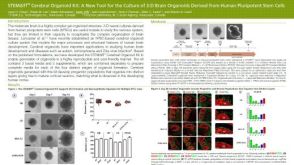 科学海报STEMdiff™ Cerebral Organoid Kit: A New Tool for the Culture of 3D Brain Organoids Derived from hPSCs
 沪公网安备31010102008431号