Achieving the precise targeting of lentiviral vectors (LVs) to specific cell populations is crucial for effective gene therapy,particularly in cancer treatment where the modulation of the tumor microenvironment can enhance anti-tumor immunity. Programmed cell death protein 1 (PD-1) is overexpressed on activated tumor-infiltrating T lymphocytes,including regulatory T cells that suppress immune responses via FOXP3 expression. We developed PD1-targeted LVs by incorporating the anti-PD1 nanobody nb102c3 into receptor-blinded measles virus H and VSV-Gmut glycoproteins. We assessed the retargeting potential of nb102c3 and evaluated transduction efficiency in activated T lymphocytes. FOXP3 expression was suppressed using shRNA delivered by these LVs. Our results demonstrate that PD1-targeted LVs exerted pronounced tropism towards PD1+ cells,enabling the selective transduction of activated T lymphocytes while sparing naive T cells. The suppression of FOXP3 in Tregs reduced their suppressive activity. PD1-targeted glycoprotein H provided greater specificity,whereas the VSV-Gmut,together with the anti-PD1 pseudoreceptor,achieved higher viral titers but was less selective. Our study demonstrates that PD1-targeted LVs may offer a novel strategy to modulate immune responses within the tumor microenvironment with the potential for developing new therapeutic strategies aimed at enhancing anti-tumor immunity.
View Publication
LFA-1 activity state on dendritic cells regulates contact duration with T cells and promotes T-cell priming.
A key event in the successful induction of adaptive immune responses is the antigen-specific activation of T cells by dendritic cells (DCs). Although LFA-1 (lymphocyte function-associated antigen 1) on T cells is considered to be important for antigen-specific T-cell activation,the role for LFA-1 on DCs remains elusive. Using 2 different approaches to activate LFA-1 on DCs,either by deletion of the αL-integrin cytoplasmic GFFKR sequence or by silencing cytohesin-1-interacting protein,we now provide evidence that DCs are able to make use of active LFA-1 and can thereby control the contact duration with naive T cells. Enhanced duration of DC/T-cell interaction correlates inversely with antigen-specific T-cell proliferation,generation of T-helper 1 cells,and immune responses leading to delayed-type hypersensitivity. We could revert normal interaction time and T-cell proliferation to wild-type levels by inhibition of active LFA-1 on DCs. Our data further suggest that cytohesin-1-interacting protein might be responsible for controlling LFA-1 deactivation on mature DCs. In summary,our findings indicate that LFA-1 on DCs needs to be in an inactive state to ensure optimal T-cell activation and suggest that regulation of LFA-1 activity allows DCs to actively control antigen-driven T-cell proliferation and effective immune responses.
View Publication
产品类型:
产品号#:
20119
20155
21000
产品名:
RoboSep™ 吸头组件抛光剂
RoboSep™分选试管套装(9个塑料管+吸头保护器)
RoboSep™- S
Massa MG et al. ( 2016)
PLoS ONE 11 5 e0155274
Multiple sclerosis patient-specific primary neurons differentiated from urinary renal epithelial cells via induced pluripotent stem cells
As multiple sclerosis research progresses,it is pertinent to continue to develop suitable paradigms to allow for ever more sophisticated investigations. Animal models of multiple sclerosis,despite their continuing contributions to the field,may not be the most prudent for every experiment. Indeed,such may be either insufficient to reflect the functional impact of human genetic variations or unsuitable for drug screenings. Thus,we have established a cell- and patient-specific paradigm to provide an in vitro model within which to perform future genetic investigations. Renal proximal tubule epithelial cells were isolated from multiple sclerosis patients' urine and transfected with pluripotency-inducing episomal factors. Subsequent induced pluripotent stem cells were formed into embryoid bodies selective for ectodermal lineage,resulting in neural tube-like rosettes and eventually neural progenitor cells. Differentiation of these precursors into primary neurons was achieved through a regimen of neurotrophic and other factors. These patient-specific primary neurons displayed typical morphology and functionality,also staining positive for mature neuronal markers. The development of such a non-invasive procedure devoid of permanent genetic manipulation during the course of differentiation,in the context of multiple sclerosis,provides an avenue for studies with a greater cell- and human-specific focus,specifically in the context of genetic contributions to neurodegeneration and drug discovery.
View Publication
产品类型:
产品号#:
85850
85857
产品名:
mTeSR™1
mTeSR™1
O. Courtemanche et al. (oct 2022)
Respiratory research 23 1 275
Co-modulation of T cells and B cells enhances the inhibition of inflammation in experimental hypersensitivity pneumonitis.
BACKGROUND Hypersensitivity pneumonitis (HP) is an interstitial lung disease characterized by antigen-triggered neutrophilic exacerbations. Although CD4+ T cells are sufficient for HP pathogenesis,this never translated into efficient T cell-specific therapies. Increasing evidence shows that B cells also play decisive roles in HP. Here,we aimed to further define the respective contributions of B and T cells in subacute experimental HP. METHODS Mice were subjected to a protocol of subacute exposure to the archaeon Methanosphaera stadmanae to induce experimental HP. Using models of adoptive transfers of B cells and T cells in Rag1-deficient mice and of B cell-specific S1P1 deletion,we assessed the importance of B cells in the development of HP by evaluating inflammation in bronchoalveolar lavage fluid. We also aimed to determine if injected antibodies targeting B and/or T cells could alleviate HP exacerbations using a therapeutic course of intervention. RESULTS Even though B cells are not sufficient to induce HP,they strongly potentiate CD4+ T cell-induced HP?‘associated neutrophilic inflammation in the airways. However,the reduction of 85% of lung B cells in mice with a CD19-driven S1P1 deletion does not dampen HP inflammation,suggesting that lung B cells are not necessary in large numbers to sustain local inflammation. Finally,we found that injecting antibodies targeting B cells after experimental HP was induced does not dampen neutrophilic exacerbation. Yet,injection of antibodies directed against B cells and T cells yielded a potent 76% inhibition of neutrophilic accumulation in the lungs. This inhibition occurred despite partial,sometimes mild,depletion of B cells and T cells subsets. CONCLUSIONS Although B cells are required for maximal inflammation in subacute experimental HP,partial reduction of B cells fails to reduce HP-associated inflammation by itself. However,co-modulation of T cells and B cells yields enhanced inhibition of HP exacerbation caused by an antigenic rechallenge.
View Publication
Muthuswamy R et al. (JUL 2008)
Cancer research 68 14 5972--8
Ability of mature dendritic cells to interact with regulatory T cells is imprinted during maturation.
Preferential activation of regulatory T (Treg) cells limits autoimmune tissue damage during chronic immune responses but can also facilitate tumor growth. Here,we show that tissue-produced inflammatory mediators prime maturing dendritic cells (DC) for the differential ability of attracting anti-inflammatory Treg cells. Our data show that prostaglandin E(2) (PGE(2)),a factor overproduced in chronic inflammation and cancer,induces stable Treg-attracting properties in maturing DC,mediated by CCL22. The elevated production of CCL22 by PGE(2)-matured DC persists after the removal of PGE(2) and is further elevated after secondary stimulation of DC in a neutral environment. This PGE(2)-induced overproduction of CCL22 and the resulting attraction of FOXP3(+) Tregs are counteracted by IFN alpha,a mediator of acute inflammation,which also restores the ability of the PGE(2)-exposed DC to secrete the Th1-attracting chemokines: CXCL9,CXCL10,CXCL11,and CCL5. In accordance with these observations,different DCs clinically used as cancer vaccines show different Treg-recruiting abilities,with PGE(2)-matured DC,but not type 1-polarized DC,generated in the presence of type I and type II IFNs,showing high Treg-attracting activity. The current data,showing that the ability of mature DC to interact with Treg cells is predetermined at the stage of DC maturation,pave the way to preferentially target the regulatory versus proinflammatory T cells in autoimmunity and transplantation,as opposed to intracellular infections and cancer.
View Publication
产品类型:
产品号#:
19052
19052RF
产品名:
EasySep™人CD4+ T细胞富集试剂盒
RoboSep™ 人CD4+ T细胞富集试剂盒含滤芯吸头
De Filippis L et al. ( 2016)
Molecular brain 9 1 51
Ethanol-mediated activation of the NLRP3 inflammasome in iPS cells and iPS cells-derived neural progenitor cells.
BACKGROUND Alcohol abuse produces an enormous impact on health,society,and the economy. Currently,there are very limited therapies available,largely due to the poor understanding of mechanisms underlying alcohol use disorders (AUDs) in humans. Oxidative damage of mitochondria and cellular proteins aggravates the progression of neuroinflammation and neurological disorders initiated by alcohol abuse. RESULTS Here we show that ethanol exposure causes neuroinflammation in both human induced pluripotent stem (iPS) cells and human neural progenitor cells (NPCs). Ethanol exposure for 24 hours or 7 days does not affect the proliferation of iPS cells and NPCs,but primes an innate immune-like response by activating the NLR family pyrin domain containing 3 (NLRP3) inflammasome pathway. This leads to an increase of microtubule-associated protein 1A/1B-light chain 3(+) (LC3B(+)) autophagic puncta and impairment of the mitochondrial and lysosomal distribution. In addition,a decrease of mature neurons derived from differentiating NPCs is evident in ethanol pre-exposed compared to control NPCs. Moreover,a second insult of a pro-inflammatory factor in addition to ethanol preexposure enhances innate cellular inflammation in human iPS cells. CONCLUSIONS This study provides strong evidence that neuronal inflammation contributes to the pathophysiology of AUDs through the activation of the inflammasome pathway in human cellular models.
View Publication
产品类型:
产品号#:
85850
85857
产品名:
mTeSR™1
mTeSR™1
Bemark M et al. ( 2016)
Nature communications 7 12698
Limited clonal relatedness between gut IgA plasma cells and memory B cells after oral immunization.
Understanding how memory B cells are induced and relate to long-lived plasma cells is important for vaccine development. Immunity to oral vaccines has been considered short-lived because of a poor ability to develop IgA B-cell memory. Here we demonstrate that long-lived mucosal IgA memory is readily achieved by oral but not systemic immunization in mouse models with NP hapten conjugated with cholera toxin and transfer of B1-8(high)/GFP(+) NP-specific B cells. Unexpectedly,memory B cells are poorly related to long-lived plasma cells and less affinity-matured. They are α4β7-integrin(+)CD73(+)PD-L2(+)CD80(+) and at systemic sites mostly IgM(+),while 80% are IgA(+) in Peyer's patches. On reactivation,most memory B cells in Peyer's patches are GL7(-),but expand in germinal centres and acquire higher affinity and more mutations,demonstrating strong clonal selection. CCR9 expression is found only in Peyer's patches and appears critical for gut homing. Thus,gut mucosal memory possesses unique features not seen after systemic immunization.
View Publication
产品类型:
产品号#:
19854
19854RF
产品名:
EasySep™小鼠B细胞分选试剂盒
RoboSep™ 小鼠B细胞分选试剂盒
S. Fan et al. ( 2019)
NPJ vaccines 4 14
Role of innate lymphoid cells and dendritic cells in intradermal immunization of the enterovirus antigen.
Enterovirus type 71 (EV71) and coxsackievirus A 16 (CA16) are the major pathogens of human hand,foot,and mouth disease (HFMD). In our previous study,intramuscular immunization with the inactivated EV71 vaccine elicited effective immunity,while immunization with the inactivated CA16 vaccine did not. In this report,we focused on innate immune responses elicited by inactivated EV71 and CA16 antigens administered intradermally or intramuscularly. The distributions of the EV71 and CA16 antigens administered intradermally or intramuscularly were not obviously different,but the antigens were detected for a shorter period of time when administered intradermally. The expression levels of NF-kappaB pathway signaling molecules,which were identified as being capable of activating DCs,ILCs,and T cells,were higher in the intradermal group than in the intramuscular group. Antibodies for the EV71 and CA16 antigens colocalized with ILCs and DCs in skin and muscle tissues under fluorescence microscopy. Interestingly,ILC colocalization decreased over time,while DC colocalization increased over time. ELISpot analysis showed that coordination between DCs and ILCs contributed to successful adaptive immunity against vaccine antigens in the skin. EV71 and/or CA16 antigen immunization via the intradermal route was more capable of significantly increasing neutralizing antibody titers and activating specific T cell responses than immunization via the intramuscular route. Furthermore,neonatal mice born to mothers immunized with the EV71 and CA16 antigens were 100{\%} protected against wild-type EV71 or CA16 viral challenge. Together,our results provide new insights into the development of vaccines for HFMD.
View Publication


 EasySep™小鼠TIL(CD45)正选试剂盒




 产品手册Highway1™: High-Purity Sorting of Bacterially-Infected Cells
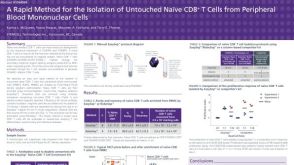 科学海报Cell Isolation to Obtain Untouched Naïve CD8 T Cells from Peripheral Blood Mononuclear Cells (PBMCs)
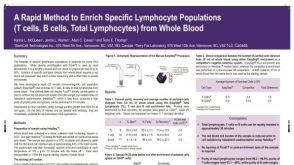 科学海报Cell Enrichment of Specific Lymphocyte Populations (T Cells, B Cells, Total Lymphocytes) from Whole Blood

 沪公网安备31010102008431号