C. Yacoob et al. (JUN 2018)
PLoS pathogens 14 6 e1007120
B cell clonal lineage alterations upon recombinant HIV-1 envelope immunization of rhesus macaques.
Broadly neutralizing HIV-1 antibodies (bNAbs) isolated from infected subjects display protective potential in animal models. Their elicitation by immunization is thus highly desirable. The HIV-1 envelope glycoprotein (Env) is the sole viral target of bnAbs,but is also targeted by binding,non-neutralizing antibodies. Env-based immunogens tested so far in various animal species and humans have elicited binding and autologous neutralizing antibodies but not bNAbs (with a few notable exceptions). The underlying reasons for this are not well understood despite intensive efforts to characterize the binding specificities of the elicited antibodies; mostly by employing serologic methodologies and monoclonal antibody isolation and characterization. These approaches provide limited information on the ontogenies and clonal B cell lineages that expand following Env-immunization. Thus,our current understanding on how the expansion of particular B cell lineages by Env may be linked to the development of non-neutralizing antibodies is limited. Here,in addition to serological analysis,we employed high-throughput BCR sequence analysis from the periphery,lymph nodes and bone marrow,as well as B cell- and antibody-isolation and characterization methods,to compare in great detail the B cell and antibody responses elicited in non-human primates by two forms of the clade C HIV Env 426c: one representing the full length extracellular portion of Env while the other lacking the variable domains 1,2 and 3 and three conserved N-linked glycosylation sites. The two forms were equally immunogenic,but only the latter elicited neutralizing antibodies by stimulating a more restricted expansion of B cells to a narrower set of IGH/IGK/IGL-V genes that represented a small fraction (0.003-0.02{\%}) of total B cells. Our study provides new information on how Env antigenic differences drastically affect the expansion of particular B cell lineages and supports immunogen-design efforts aiming at stimulating the expansion of cells expressing particular B cell receptors.
View Publication
产品类型:
产品号#:
85415
85420
85450
85460
86415
86420
86450
86460
产品名:
SepMate™-15 (IVD), 100 units
SepMate™-15 (IVD)
SepMate™-50 (IVD)
SepMate™-50 (IVD)
SepMate™-15 (RUO), 100 units
SepMate™-15 (RUO)
SepMate™-50 (RUO)
SepMate™-50 (RUO)
P. A. Terhal et al. (may 2019)
European journal of human genetics : EJHG
Biallelic variants in POLR3GL cause endosteal hyperostosis and oligodontia.
RNA polymerase III (Pol III) is an essential 17-subunit complex responsible for the transcription of small housekeeping RNAs such as transfer RNAs and 5S ribosomal RNA. Biallelic variants in four genes (POLR3A,POLR3B,and POLR1C and POLR3K) encoding Pol III subunits have previously been found in individuals with (neuro-) developmental disorders. In this report,we describe three individuals with biallelic variants in POLR3GL,a gene encoding a Pol III subunit that has not been associated with disease before. Using whole exome sequencing in a monozygotic twin and an unrelated individual,we detected homozygous and compound heterozygous POLR3GL splice acceptor site variants. RNA sequencing confirmed the loss of full-length POLR3GL RNA transcripts in blood samples of the individuals. The phenotypes of the described individuals are mainly characterized by axial endosteal hyperostosis,oligodontia,short stature,and mild facial dysmorphisms. These features largely fit within the spectrum of phenotypes caused by previously described biallelic variants in POLR3A,POLR3B,POLR1C,and POLR3K. These findings further expand the spectrum of POLR3-related disorders and implicate that POLR3GL should be included in genetic testing if such disorders are suspected.
View Publication
产品类型:
产品号#:
85415
85420
85450
85460
产品名:
SepMate™-15 (IVD), 100 units
SepMate™-15 (IVD)
SepMate™-50 (IVD)
SepMate™-50 (IVD)
S. Phillips et al. (jun 2020)
Scientific reports 10 1 10152
Vaccination of koalas during antibiotic treatment for Chlamydia-induced cystitis induces an improved antibody response to Chlamydia pecorum.
Chlamydia infection and disease are endemic in free-ranging koalas. Antibiotics remain the front line treatment for Chlamydia in koalas,despite their rates of treatment failure and adverse gut dysbiosis outcomes. A Chlamydia vaccine for koalas has shown promise for replacing antibiotic treatment in mild ocular Chlamydia disease. In more severe disease presentations that require antibiotic intervention,the effect of vaccinating during antibiotic use is not currently known. This study investigated whether a productive immune response could be induced by vaccinating koalas during antibiotic treatment for Chlamydia-induced cystitis. Plasma IgG antibody levels against the C. pecorum major outer membrane protein (MOMP) dropped during antibiotic treatment in both vaccinated and unvaccinated koalas. Post-treatment,IgG levels recovered. The IgG antibodies from naturally-infected,vaccinated koalas recognised a greater proportion of the MOMP protein compared to their naturally-infected,unvaccinated counterparts. Furthermore,peripheral blood mononuclear cell gene expression revealed an up-regulation in genes related to neutrophil degranulation in vaccinated koalas during the first month post-vaccination. These findings show that vaccination of koalas while they are being treated with antibiotics for cystitis can result in the generation of a productive immune response,in the form of increased and expanded IgG production and host response through neutrophil degranulation.
View Publication
产品类型:
产品号#:
85450
85460
产品名:
SepMate™-50 (IVD)
SepMate™-50 (IVD)
S. Raevens et al. (dec 2019)
Journal of leukocyte biology
Combination of sivelestat and N-acetylcysteine alleviates the inflammatory response and exceeds standard treatment for acetaminophen-induced liver injury.
Hepatocyte death during acetaminophen (APAP) intoxication elicits a reactive inflammatory response,with hepatic recruitment of neutrophils and monocytes,which further aggravates liver injury. Neutrophil elastase (NE),secreted by activated neutrophils,carries degradative and cytotoxic functions and maintains a proinflammatory state. We investigated NE as a therapeutic target in acetaminophen-induced liver injury (AILI). C57BL/6 mice were administered a toxic dose of APAP,2 h prior to receiving the NE inhibitor sivelestat,N-acetylcysteine (NAC),or a combination therapy,and were euthanized after 24 and 48 h. Upon APAP overdose,neutrophils and monocytes infiltrate the injured liver,accompanied by increased levels of NE. Combination therapy of NAC and sivelestat significantly limits liver damage,as evidenced by lower serum transaminase levels and less hepatic necrosis compared to mice that received APAP only,and this to a greater extent than NAC monotherapy. Lower hepatic expression of proinflammatory markers was observed in the combination treatment group,and flow cytometry revealed significantly less monocyte influx in livers from mice treated with the combination therapy,compared to untreated mice and mice treated with NAC only. The potential of NE to induce leukocyte migration was confirmed in vitro. Importantly,sivelestat did not impair hepatic repair. In conclusion,combination of NE inhibition with sivelestat and NAC dampens the inflammatory response and reduces liver damage following APAP overdose. This strategy exceeds the standard of care and might represent a novel therapeutic option for AILI.
View Publication
产品类型:
产品号#:
85415
85420
85450
85460
产品名:
SepMate™-15 (IVD), 100 units
SepMate™-15 (IVD)
SepMate™-50 (IVD)
SepMate™-50 (IVD)
P. Tao et al. ( 2020)
Nature 577 7788 109--114
A dominant autoinflammatory disease caused by non-cleavable variants of RIPK1
Activation of RIPK1 controls TNF-mediated apoptosis,necroptosis and inflammatory pathways1. Cleavage of human and mouse RIPK1 after residues D324 and D325,respectively,by caspase-8 separates the RIPK1 kinase domain from the intermediate and death domains. The D325A mutation in mouse RIPK1 leads to embryonic lethality during mouse development2,3. However,the functional importance of blocking caspase-8-mediated cleavage of RIPK1 on RIPK1 activation in humans is unknown. Here we identify two families with variants in RIPK1 (D324V and D324H) that lead to distinct symptoms of recurrent fevers and lymphadenopathy in an autosomal-dominant manner. Impaired cleavage of RIPK1 D324 variants by caspase-8 sensitized patients' peripheral blood mononuclear cells to RIPK1 activation,apoptosis and necroptosis induced by TNF. The patients showed strong RIPK1-dependent activation of inflammatory signalling pathways and overproduction of inflammatory cytokines and chemokines compared with unaffected controls. Furthermore,we show that expression of the RIPK1 mutants D325V or D325H in mouse embryonic fibroblasts confers not only increased sensitivity to RIPK1 activation-mediated apoptosis and necroptosis,but also induction of pro-inflammatory cytokines such as IL-6 and TNF. By contrast,patient-derived fibroblasts showed reduced expression of RIPK1 and downregulated production of reactive oxygen species,resulting in resistance to necroptosis and ferroptosis. Together,these data suggest that human non-cleavable RIPK1 variants promote activation of RIPK1,and lead to an autoinflammatory disease characterized by hypersensitivity to apoptosis and necroptosis and increased inflammatory response in peripheral blood mononuclear cells,as well as a compensatory mechanism to protect against several pro-death stimuli in fibroblasts.
View Publication
产品类型:
产品号#:
85415
85420
85450
85460
产品名:
SepMate™-15 (IVD), 100 units
SepMate™-15 (IVD)
SepMate™-50 (IVD)
SepMate™-50 (IVD)
S. Dhakal et al. ( 2017)
Vaccine 35 8 1124--1131
Polyanhydride nanovaccine against swine influenza virus in pigs.
We have recently demonstrated the effectiveness of an influenza A virus (IAV) subunit vaccine based on biodegradable polyanhydride nanoparticles delivery in mice. In the present study,we evaluated the efficacy of ∼200nm polyanhydride nanoparticles encapsulating inactivated swine influenza A virus (SwIAV) as a vaccine to induce protective immunity against a heterologous IAV challenge in pigs. Nursery pigs were vaccinated intranasally twice with inactivated SwIAV H1N2 (KAg) or polyanhydride nanoparticle-encapsulated KAg (KAg nanovaccine),and efficacy was evaluated against a heterologous zoonotic virulent SwIAV H1N1 challenge. Pigs were monitored for fever daily. Local and systemic antibody responses,antigen-specific proliferation of peripheral blood mononuclear cells,gross and microscopic lung lesions,and virus load in the respiratory tract were compared among the groups of animals. Our pre-challenge results indicated that KAg nanovaccine induced virus-specific lymphocyte proliferation and increased the frequency of CD4+CD8$\alpha$$\alpha$+ T helper and CD8+ cytotoxic T cells in peripheral blood mononuclear cells. KAg nanovaccine-immunized pigs were protected from fever following SwIAV challenge. In addition,pigs immunized with the KAg nanovaccine presented with lower viral antigens in lung sections and had 6 to 8-fold reduction in nasal shedding of SwIAV four days post-challenge compared to control animals. Immunologically,increased IFN-$\gamma$ secreting T lymphocyte populations against both the vaccine and challenge viruses were detected in KAg nanovaccine-immunized pigs compared to the animals immunized with KAg alone. However,in the KAg nanovaccine-immunized pigs,hemagglutination inhibition,IgG and IgA antibody responses,and virus neutralization titers were comparable to that in the animals immunized with KAg alone. Overall,our data indicated that intranasal delivery of polyanhydride-based SwIAV nanovaccine augmented antigen-specific cellular immune response in pigs,with promise to induce cross-protective immunity.
View Publication
产品类型:
产品号#:
85415
85420
85450
85460
86415
86420
86450
86460
产品名:
SepMate™-15 (IVD), 100 units
SepMate™-15 (IVD)
SepMate™-50 (IVD)
SepMate™-50 (IVD)
SepMate™-15 (RUO), 100 units
SepMate™-15 (RUO)
SepMate™-50 (RUO)
SepMate™-50 (RUO)
K. H. Bhatt et al. (oct 2020)
The Journal of experimental medicine 217 10
Profiling HPV-16-specific T cell responses reveals broad antigen reactivities in oropharyngeal cancer patients.
Cellular immunotherapeutics targeting the human papillomavirus (HPV)-16 E6 and E7 proteins have achieved limited success in HPV-positive oropharyngeal cancer (OPC). Here we have conducted proteome-wide profiling of HPV-16-specific T cell responses in a cohort of 66 patients with HPV-associated OPC and 22 healthy individuals. Unexpectedly,HPV-specific T cell responses from OPC patients were not constrained to the E6 and E7 antigens; they also recognized E1,E2,E4,E5,and L1 proteins as dominant targets for virus-specific CD8+ and CD4+ T cells. Multivariate analysis incorporating tumor staging,treatment status,and smoking history revealed that treatment status had the most significant impact on HPV-specific CD8+ and CD4+ T cell immunity. Specifically,the breadth and overall strength of HPV-specific T cell responses were significantly higher before the commencement of curative therapy than after therapy. These data provide the first glimpse of the overall human T cell response to HPV in a clinical setting and offer groundbreaking insight into future development of cellular immunotherapies for HPV-associated OPC patients.
View Publication
产品类型:
产品号#:
85450
85460
产品名:
SepMate™-50 (IVD)
SepMate™-50 (IVD)
J. Zwaag et al. (apr 2020)
Metabolites 10 4
Involvement of Lactate and Pyruvate in the Anti-Inflammatory Effects Exerted by Voluntary Activation of the Sympathetic Nervous System.
We recently demonstrated that the sympathetic nervous system can be voluntarily activated following a training program consisting of cold exposure,breathing exercises,and meditation. This resulted in profound attenuation of the systemic inflammatory response elicited by lipopolysaccharide (LPS) administration. Herein,we assessed whether this training program affects the plasma metabolome and if these changes are linked to the immunomodulatory effects observed. A total of 224 metabolites were identified in plasma obtained from 24 healthy male volunteers at six timepoints,of which 98 were significantly altered following LPS administration. Effects of the training program were most prominent shortly after initiation of the acquired breathing exercises but prior to LPS administration,and point towards increased activation of the Cori cycle. Elevated concentrations of lactate and pyruvate in trained individuals correlated with enhanced levels of anti-inflammatory interleukin (IL)-10. In vitro validation experiments revealed that co-incubation with lactate and pyruvate enhances IL-10 production and attenuates the release of pro-inflammatory IL-1$\beta$ and IL-6 by LPS-stimulated leukocytes. Our results demonstrate that practicing the breathing exercises acquired during the training program results in increased activity of the Cori cycle. Furthermore,this work uncovers an important role of lactate and pyruvate in the anti-inflammatory phenotype observed in trained subjects.
View Publication
产品类型:
产品号#:
85450
85460
产品名:
SepMate™-50 (IVD)
SepMate™-50 (IVD)
K. R. McCarthy et al. (JAN 2018)
Immunity 48 1 174--184.e9
Memory B Cells that Cross-React with Group 1 and Group 2 Influenza A Viruses Are Abundant in Adult Human Repertoires.
Human B cell antigen-receptor (BCR) repertoires reflect repeated exposures to evolving influenza viruses; new exposures update the previously generated B cell memory (Bmem) population. Despite structural similarity of hemagglutinins (HAs) from the two groups of influenza A viruses,cross-reacting antibodies (Abs) are uncommon. We analyzed Bmem compartments in three unrelated,adult donors and found frequent cross-group BCRs,both HA-head directed and non-head directed. Members of a clonal lineage from one donor had a BCR structure similar to that of a previously described Ab,encoded by different gene segments. Comparison showed that both Abs contacted the HA receptor-binding site through long heavy-chain third complementarity determining regions. Affinities of the clonal-lineage BCRs for historical influenza-virus HAs from both group 1 and group 2 viruses suggested that serial responses to seasonal influenza exposures had elicited the lineage and driven affinity maturation. We propose that appropriate immunization regimens might elicit a comparably broad response.
View Publication
产品类型:
产品号#:
85415
85420
85450
85460
86415
86420
86450
86460
产品名:
SepMate™-15 (IVD), 100 units
SepMate™-15 (IVD)
SepMate™-50 (IVD)
SepMate™-50 (IVD)
SepMate™-15 (RUO), 100 units
SepMate™-15 (RUO)
SepMate™-50 (RUO)
SepMate™-50 (RUO)
N. H. Overgaard et al. ( 2015)
Frontiers in genetics 6 286
Establishing the pig as a large animal model for vaccine development against human cancer.
Immunotherapy has increased overall survival of metastatic cancer patients,and cancer antigens are promising vaccine targets. To fulfill the promise,appropriate tailoring of the vaccine formulations to mount in vivo cytotoxic T cell (CTL) responses toward co-delivered cancer antigens is essential. Previous development of therapeutic cancer vaccines has largely been based on studies in mice,and the majority of these candidate vaccines failed to induce therapeutic responses in the subsequent human clinical trials. Given that antigen dose and vaccine volume in pigs are translatable to humans and the porcine immunome is closer related to the human counterpart,we here introduce pigs as a supplementary large animal model for human cancer vaccine development. IDO and RhoC,both important in human cancer development and progression,were used as vaccine targets and 12 pigs were immunized with overlapping 20mer peptides spanning the entire porcine IDO and RhoC sequences formulated in CTL-inducing adjuvants: CAF09,CASAC,Montanide ISA 51 VG,or PBS. Taking advantage of recombinant swine MHC class I molecules (SLAs),the peptide-SLA complex stability was measured for 198 IDO- or RhoC-derived 9-11mer peptides predicted to bind to SLA-1(*)04:01,-1(*)07:02,-2(*)04:01,-2(*)05:02,and/or -3(*)04:01. This identified 89 stable (t½ ≥ 0.5 h) peptide-SLA complexes. By IFN-$\gamma$ release in PBMC cultures we monitored the vaccine-induced peptide-specific CTL responses,and found responses to both IDO- and RhoC-derived peptides across all groups with no adjuvant being superior. These findings support the further use of pigs as a large animal model for vaccine development against human cancer.
View Publication
M. E. Carter-Timofte et al. (MAY 2018)
Genes {\&} Immunity
Mutations in RNA Polymerase III genes and defective DNA sensing in adults with varicella-zoster virus CNS infection
Recently,deficiency in the cytosolic DNA sensor RNA Polymerase III was described in children with severe primary varicella-zoster virus (VZV) infection in the CNS and lungs. In the present study we examined adult patients with VZV CNS infection caused by viral reactivation. By whole exome sequencing we identified mutations in POL III genes in two of eight patients. These mutations were located in the coding regions of the subunits POLR3A and POLR3E. In functional assays,we found impaired expression of antiviral and inflammatory cytokines in response to the POL III agonist Poly(dA:dT) as well as increased viral replication in patient cells compared to controls. Altogether,this study provides significant extension on the current knowledge on susceptibility to VZV infection by demonstrating mutations in POL III genes associated with impaired immunological sensing of AT-rich DNA in adult patients with VZV CNS infection.
View Publication


 EasySep™小鼠TIL(CD45)正选试剂盒




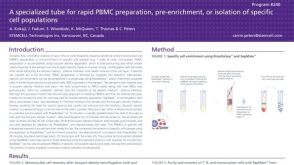 科学海报A Specialized Tube for Rapid PBMC Preparation, Pre-Enrichment, or Isolation of Specific Cell Populations
 沪公网安备31010102008431号