Characterization of mouse lymphohematopoietic stem cells lacking spleen colony-forming activity.
The classical definition of lymphohematopoietic stem cells (LHSC),the most primitive progenitors of all blood cells,requires that they have the capacity for self-renewal and for the long-term production of all blood cell lineages. However,other characteristics of LHSC have been debated. Our previous data suggested that mouse LHSC are very slowly proliferating cells that generate delayed multilineage engraftment,while radioprotection" (rapid engraftment that will prevent early death from radiation-induced marrow aplasia) results from more committed progenitors. Alternatively�
View Publication
Liu H et al. (DEC 2006)
Biomaterials 27 36 6004--14
Three-dimensional culture for expansion and differentiation of mouse embryonic stem cells.
Differentiation of embryonic stem (ES) cells typically requires cell-cell aggregation in the form of embryoid bodies (EBs). This process is not very well controlled and final cell numbers can be limited by EB agglomeration and the inability to drive differentiation towards a desired cell type. This study compares three-dimensional (3D) fibrin culture to conventional two-dimensional (2D) suspension culture and to culture in a semisolid methylcellulose medium solution. Two types of fibrin culture were evaluated,including a PEGylated fibrin gel. PEGylation with a difunctional PEG derivative retarded fibrinogen migration during through sodium dodecyl sulfate-polyacrylamide gel electrophoresis (SDS-PAGE) as a result of crosslinking,similarly,degradation was slowed in the PEGylated gel. ES cell proliferation was higher in both the fibrin and PEGylated fibrin gels versus 2D and methylcellulose controls. FACS analysis and real-time-PCR revealed differences in patterns of differentiation for the various culture systems. Culture in PEGylated fibrin or methylcellulose culture demonstrated features characteristic of less extensive differentiation relative to fibrin and 2D culture as evidenced by the transcription factor Oct-4. Fibrin gels showed gene and protein expression similar to that in 2D culture. Both fibrin and 2D cultures demonstrated statistically greater cell numbers positive for the vascular mesoderm marker,VE-cadherin.
View Publication
产品类型:
产品号#:
06902
06952
00321
00322
00323
00324
00325
产品名:
T. Derakhshan et al. ( 2018)
Stem cells international 2018 2136193
Development of Human Mast Cells from Hematopoietic Stem Cells within a 3D Collagen Matrix: Effect of Stem Cell Media on Mast Cell Generation.
Mast cells (MCs) arise from hematopoietic stem cells (HSCs) that mature within vascularized tissues. Fibroblasts and endothelial cells (ECs) play a role in the maturation of HSCs in the tissues. Due to difficulties in isolating MCs from tissues,large numbers of committed MC precursors can be generated in 2D culture systems with the use of differentiation factors. Since MCs are tissue-resident cells,the development of a 3D tissue-engineered model with ancillary cells that more closely mimics the 3D in vivo microenvironment has greater relevance for MC studies. The goals of this study were to show that MCs can be derived from HSCs within a 3D matrix and to determine a media to support MCs,fibroblasts,and ECs. The results show that HSCs within a collagen matrix cultured in StemSpan media with serum added at the last week yielded a greater number of c-kit+ cells and a greater amount of histamine granules compared to other media tested. Media supplemented with serum were necessary for EC survival,while fibroblasts survived irrespective of serum with higher cell yields in StemSpan. This work demonstrates the development of functional MCs within a 3D collagen matrix using a stem cell media that supports fibroblast and ECs.
View Publication
产品类型:
产品号#:
09600
09650
产品名:
StemSpan™ SFEM
StemSpan™ SFEM
Ibarra I et al. (DEC 2007)
Genes & development 21 24 3238--43
A role for microRNAs in maintenance of mouse mammary epithelial progenitor cells.
microRNA (miRNA) expression profiles are often characteristic of specific cell types. The mouse mammary epithelial cell line,Comma-Dbeta,contains a population of self-renewing progenitor cells that can reconstitute the mammary gland. We purified this population and determined its miRNA signature. Several microRNAs,including miR-205 and miR-22,are highly expressed in mammary progenitor cells,while others,including let-7 and miR-93,are depleted. Let-7 sensors can be used to prospectively enrich self-renewing populations,and enforced let-7 expression induces loss of self-renewing cells from mixed cultures.
View Publication
Eminli S et al. (SEP 2009)
Nature genetics 41 9 968--76
Differentiation stage determines potential of hematopoietic cells for reprogramming into induced pluripotent stem cells.
The reprogramming of somatic cells into induced pluripotent stem (iPS) cells upon overexpression of the transcription factors Oct4,Sox2,Klf4 and cMyc is inefficient. It has been assumed that the somatic differentiation state provides a barrier for efficient reprogramming; however,direct evidence for this notion is lacking. Here,we tested the potential of mouse hematopoietic cells at different stages of differentiation to be reprogrammed into iPS cells. We show that hematopoietic stem and progenitor cells give rise to iPS cells up to 300 times more efficiently than terminally differentiated B and T cells do,yielding reprogramming efficiencies of up to 28%. Our data provide evidence that the differentiation stage of the starting cell has a critical influence on the efficiency of reprogramming into iPS cells. Moreover,we identify hematopoietic progenitors as an attractive cell type for applications of iPS cell technology in research and therapy.
View Publication
产品类型:
产品号#:
02690
05850
05857
05870
05875
09600
09650
85850
85857
85870
85875
70008
70008.1
70008.2
70008.3
70008.4
70008.5
70008.6
200-0002
200-0001
200-0000
产品名:
StemSpan™ CC100
StemSpan™ SFEM
StemSpan™ SFEM
mTeSR™1
mTeSR™1
冻存的人脐带血CD34+细胞
冻存的人脐带血CD34+细胞
冻存的人脐带血CD34+细胞
冻存的人脐带血CD34+细胞
冻存的人脐带血CD34+细胞
冻存的人脐带血CD34+细胞
冻存的人脐带血CD34+细胞
冻存的人脐带血CD34+细胞
冻存的人脐带血CD34+细胞
Aguila JR et al. (JUL 2011)
Blood 118 3 576--85
SALL4 is a robust stimulator for the expansion of hematopoietic stem cells.
HSCs are rare cells that have the unique ability to self-renew and differentiate into cells of all hematopoietic lineages. The lack of donors and current inability to rapidly and efficiently expand HSCs are roadblocks in the development of successful cell therapies. Thus,the challenge of ex vivo human HSC expansion remains a fertile and critically important area of investigation. Here,we show that either SALL4A- or SALL4B-transduced human HSCs obtained from the mobilized peripheral blood are capable of rapid and efficient expansion ex vivo by textgreater10 000-fold for both CD34(+)/CD38(-) and CD34(+)/CD38(+) cells in the presence of appropriate cytokines. We found that these cells retained hematopoietic precursor cell immunophenotypes and morphology as well as normal in vitro or vivo potential for differentiation. The SALL4-mediated expansion was associated with enhanced stem cell engraftment and long-term repopulation capacity in vivo. Also,we demonstrated that constitutive expression of SALL4 inhibited granulocytic differentiation and permitted expansion of undifferentiated cells in 32D myeloid progenitors. Furthermore,a TAT-SALL4B fusion rapidly expanded CD34(+) cells,and it is thus feasible to translate this study into the clinical setting. Our findings provide a new avenue for investigating mechanisms of stem cell self-renewal and achieving clinically significant expansion of human HSCs.
View Publication
Haddad EA et al. (SEP 2009)
Journal of immunology (Baltimore,Md. : 1950) 183 6 3608--15
An accessory role for B cells in the IL-12-induced activation of resting mouse NK cells.
IL-12 is a potent proinflammatory cytokine. The effects of IL-12 are thought to be mediated by IFN-gamma production by NK,NKT,and T cells. In this study,we show that although IL-12 stimulates NK and NK1.1(+) T cells in bulk mouse splenocytes,it does not significantly stimulate purified NK cells,indicating that other cells are required. IL-12 stimulates T cell-deficient spleen cells and those depleted of macrophages. Unexpectedly,the depletion of dendritic cells also has little effect on the stimulation of spleen cells with IL-12. In contrast,B cell depletion almost completely inhibits IL-12-induced IFN-gamma production and B cell-deficient spleen cells are poorly stimulated with IL-12. Furthermore,purified NK cells are stimulated with IL-12 in the presence of purified B cells. Thus,B cells are necessary and also sufficient for the stimulation of purified NK cells with IL-12. Whereas spleen cells from IL-18-deficient mice are not stimulated with IL-12,NK cells purified from IL-18-deficient mice are stimulated with IL-12 in the presence of wild-type (WT) B cells,and WT NK cells are not stimulated with IL-12 in the presence of IL-18-deficient B cells. Cell contact between B and NK cells is also required for IL-12-induced IFN-gamma production. Finally,B cell-deficient mice injected with IL-12 produce significantly less IFN-gamma and IL-18 in the sera than WT mice do. Thus,stimulation of NK cells with IL-12 requires B cell cooperation in vitro as well as in vivo.
View Publication


 EasySep™小鼠TIL(CD45)正选试剂盒




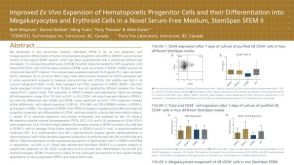 科学海报Improved Ex Vivo Expansion of Hematopoietic Progenitor Cells from Cord Blood in a Novel Serum and Animal Component Free Medium
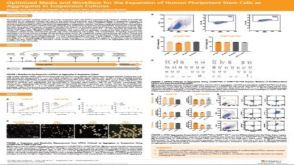 科学海报Optimized Media and Workflow for the Expansion of Human Pluripotent Stem Cells as Aggregates in Suspension Cultures

 沪公网安备31010102008431号