Influence of donor–recipient sex on engraftment of normal and leukemia stem cells in xenotransplantation
AbstractImmunodeficient mouse models are widely used for the assessment of human normal and leukemic stem cells. Despite the advancements over the years,reproducibility,as well as the differences in the engraftment of human cells in recipient mice remains to be fully resolved. Here,we used various immunodeficient mouse models to characterize the effect of donor–recipient sex on the engraftment of the human leukemic and healthy cells. Donor human cells and recipient immunodeficient mice demonstrate sex‐specific engraftment levels with significant differences observed in the lineage output of normal CD34+ hematopoietic stem and progenitor cells upon xenotransplantation. Intriguingly,human female donor cells display heightened sensitivity to the recipient mice's gender,influencing their proliferation and resulting in significantly increased engraftment in female recipient mice. Our study underscores the intricate interplay taking place between donor and recipient characteristics,shedding light on important considerations for future studies,particularly in the context of pre‐clinical research.
View Publication
产品类型:
产品号#:
17856
100-0105
17856RF
100-1569
100-0108
100-0109
100-0107
产品名:
EasySep™人CD34正选试剂盒 II
EasySep™ Release人CD45正选试剂盒
EasySep™人CD34正选试剂盒 II
EasySep™人CD34正选试剂盒 II
RoboSep™ Release人CD45正选试剂盒
用于人源化小鼠的RoboSep™ Release 人CD45正选试剂盒
用于人源化小鼠的EasySep™ Release 人CD45正选试剂盒
(Jun 2024)
Molecular Therapy. Nucleic Acids 35 3
Enhancing natural killer cells proliferation and cytotoxicity using imidazole-based lipid nanoparticles encapsulating interleukin-2 mRNA
mRNA applications have undergone unprecedented applications—from vaccination to cell therapy. Natural killer (NK) cells are recognized to have a significant potential in immunotherapy. NK-based cell therapy has drawn attention as allogenic graft with a minimal graft-versus-host risk leading to easier off-the-shelf production. NK cells can be engineered with either viral vectors or electroporation,involving high costs,risks,and toxicity,emphasizing the need for alternative way as mRNA technology. We successfully developed,screened,and optimized novel lipid-based platforms based on imidazole lipids. Formulations are produced by microfluidic mixing and exhibit a size of approximately 100 nm with a polydispersity index of less than 0.2. They are able to transfect NK-92 cells,KHYG-1 cells,and primary NK cells with high efficiency without cytotoxicity,while Lipofectamine Messenger Max and D-Lin-MC3 lipid nanoparticle-based formulations do not. Moreover,the translation of non-modified mRNA was higher and more stable in time compared with a modified one. Remarkably,the delivery of therapeutically relevant interleukin 2 mRNA resulted in extended viability together with preserved activation markers and cytotoxic ability of both NK cell lines and primary NK cells. Altogether,our platforms feature all prerequisites needed for the successful deployment of NK-based therapeutic strategies. Graphical abstract Pichon and colleagues developed imidazole lipids-based mRNA platforms very efficient to transfect both NK-92 cells,KHYG-1 cells and primary NK cells without cytotoxicity. They succeeded to replace IL-2 protein by IL-2 mRNA transfection and obtained NK cells with extended viability with preserved biomarkers and full functionalities to kill target cells.
View Publication
产品类型:
产品号#:
05150
19055
19055RF
产品名:
MyeloCult™H5100
EasySep™人NK细胞富集试剂盒
RoboSep™ 人NK细胞富集试剂盒含滤芯吸头
S. Zuo et al. (Jul 2024)
Nature Communications 15
C-JUN overexpressing CAR-T cells in acute myeloid leukemia: preclinical characterization and phase I trial
Chimeric antigen receptor (CAR) T cells show suboptimal efficacy in acute myeloid leukemia (AML). We find that CAR T cells exposed to myeloid leukemia show impaired activation and cytolytic function,accompanied by impaired antigen receptor downstream calcium,ZAP70,ERK,and C-JUN signaling,compared to those exposed to B-cell leukemia. These defects are caused in part by the high expression of CD155 by AML. Overexpressing C-JUN,but not other antigen receptor downstream components,maximally restores anti-tumor function. C-JUN overexpression increases costimulatory molecules and cytokines through reinvigoration of ERK or transcriptional activation,independent of anti-exhaustion. We conduct an open-label,non-randomized,single-arm,phase I trial of C-JUN-overexpressing CAR-T in AML ( NCT04835519 ) with safety and efficacy as primary and secondary endpoints,respectively. Of the four patients treated,one has grade 4 (dose-limiting toxicity) and three have grade 1–2 cytokine release syndrome. Two patients have no detectable bone marrow blasts and one patient has blast reduction after treatment. Thus,overexpressing C-JUN endows CAR-T efficacy in AML. Subject terms: Translational research,Leukaemia
View Publication
产品类型:
产品号#:
100-0784
100-0956
10971
10981
10991
产品名:
ImmunoCult™ 人CD3/CD28 T细胞激活剂
ImmunoCult™ XF培养基
ImmunoCult™ 人CD3/CD28 T细胞激活剂
ImmunoCult™ XF 人T细胞扩增培养基,500 mL
ImmunoCult™ 人CD3/CD28 T细胞激活剂
S. Peltonen et al. (Nov 2024)
Fluids and Barriers of the CNS 21 1
Mutated LRRK2 induces a reactive phenotype and alters migration in human iPSC-derived pericyte-like cells
Pericytes play a crucial role in controlling inflammation and vascular functions in the central nervous system,which are disrupted in Parkinson’s disease (PD). Still,there is a lack of studies on the impact of pericytes on neurodegenerative diseases,and their involvement in the pathology of PD is unclear. Our objective was to investigate the molecular and functional differences between healthy pericytes and pericytes with the LRRK2 G2019S mutation,which is one of the most common mutations associated with PD. Our study employed pericyte-like cells obtained from induced pluripotent stem cells produced from PD patients with the LRRK2 G2019S mutation as well as from healthy individuals. We examined the gene expression profiles of the cells and analyzed how the alterations reflect on their functionality. We have shown differences in the expression of genes related to inflammation and angiogenesis. Furthermore,we observe modified migration speed in PD pericyte-like cells as well as enhanced secretion of inflammatory mediators,such as soluble VCAM-1 and MCP-1,in these pericyte-like cells following exposure to proinflammatory stimuli. In summary,our findings support the notion that pericytes play a role in the inflammatory and vascular changes observed in PD. Further investigation of pericytes could provide valuable insight into understanding the pathogenesis of PD. The online version contains supplementary material available at 10.1186/s12987-024-00592-y.
View Publication
产品类型:
产品号#:
05270
05275
产品名:
STEMdiff™ APEL™2 培养基
STEMdiff™ APEL™2 培养基
O. Drummond-Guy et al. (Mar 2025)
Frontiers in Oncology 15
Polysialic acid is upregulated on activated immune cells and negatively regulates anticancer immune activity
Suppression of anticancer immune function is a key driver of tumorigenesis. Identifying molecular pathways that inhibit anticancer immunity is critical for developing novel immunotherapeutics. One such molecule that has recently been identified is the carbohydrate polysialic acid (polySia),whose expression is dramatically upregulated on both cancer cells and immune cells in breast cancer patient tissues. The role of polySia in the anticancer immune response,however,remains incompletely understood. In this study,we profile polySia expression on both healthy primary immune cells and on infiltrating immune cells in the tumour microenvironment (TME). These studies reveal polySia expression on multiple immune cell subsets in patient breast tumors. We find that stimulation of primary T-cells and macrophages in vitro induces a significant upregulation of polySia expression. We subsequently show that polySia is appended to a range of different carrier proteins within these immune cells. Finally,we find that selective removal of polySia can significantly potentiate killing of breast cancer cells by innate immune cells. These studies implicate polySia as a significant negative regulator of anticancer immunity.
View Publication
产品类型:
产品号#:
100-0956
10981
产品名:
ImmunoCult™ XF培养基
ImmunoCult™ XF 人T细胞扩增培养基,500 mL
G. Y. Lee et al. (Apr 2025)
BMC Research Notes 18 2
Comprehensive single-cell RNA-sequencing study of Tollip deficiency effect in IL-13-stimulated human airway epithelial cells
Toll-interacting protein (Tollip) suppresses excessive pro-inflammatory signaling,but its function in airway epithelial responses to IL-13,a key mediator in allergic diseases,remains unclear. This study investigates Tollip knockdown (TKD) effects in primary human airway epithelial cells using single-cell RNA sequencing,providing the first single-cell analysis of TKD and the first exploring its interaction with IL-13. IL-13 treatment upregulated key genes,including SPDEF,MUC5AC,POSTN,ALOX15,and CCL26,confirming IL-13’s effects and validating our methods. IL-13 reduced TNF-α signaling and epithelial-mesenchymal transition in certain cell types,suggesting a dual role in promoting type 2 inflammation while suppressing Th1-driven inflammation. Tollip deficiency alone significantly amplified TNF-α signaling and inflammatory pathways in goblet,club,and suprabasal cells. Comparisons between TKDIL13 vs IL13 and TKD vs CTR revealed that IL-13 does not substantially alter Tollip deficiency response in most cell types,reinforcing findings in TKD vs CTR. Tollip deficiency alters the response to IL-13 in a cell-type-specific manner,strongly downregulating TNF-α signaling in goblet cells but only weakly in basal and club cells. Tollip deficiency enhances IL-13’s suppression of Th1 inflammatory responses in goblet cells. These novel insights in Tollip-IL-13 interactions offer potential therapeutic targets for asthma and related diseases. The online version contains supplementary material available at 10.1186/s13104-025-07255-7.
View Publication
产品类型:
产品号#:
05001
05021
05022
产品名:
PneumaCult™-ALI 培养基
PneumaCult™-ALI 培养基含12 mm Transwell®插件
PneumaCult™-ALI 培养基含6.5 mm Transwell®插件
J. Cheng et al. (Feb 2026)
Cell Reports Medicine 7 2
Efficacy and safety of autologous CD5-KO anti-CD5 CAR-T cells in relapsed/refractory CD5+ hematological malignancies
Chimeric antigen receptor (CAR)-T cell therapy targeting antigens shared with normal T cells requires genetic modifications to prevent fratricide. This phase 1 trial evaluates autologous CD5-targeting CAR-T cells with CD5 gene deletion (CT125A) in seven patients with relapsed/refractory CD5+ hematologic malignancies. The overall response rate is 85.7%,including four complete responses. All patients experience cytokine release syndrome (six grade 1–2,one grade 3),and two patients develop immune effector cell-associated neurotoxicity syndrome. The most common grade ≥3 adverse events are cytopenia and infection,with unique observations of rash and autoimmune-related events. Post-infusion immunophenotyping shows persistent depletion of CD5+ T cells and CD19+ B cells,with reduced CD4/CD8 ratios. The human CD5 knockin murine model reveals skin lesions without significant vital organ involvement. These findings demonstrate CT125A’s therapeutic potential in CD5+ malignancies while highlighting the need for safety optimization. The trial has been registered at ClinicalTrials.gov (NCT04767308). Graphical abstract Highlights•CT125A achieves 85.7% response rate in relapsed/refractory CD5+ malignancies•CD5 gene deletion prevents fratricide and enhances CAR-T cell persistence•Prolonged CD5+ T cell aplasia associates with infections and autoimmune events•Mouse model reveals on-target,off-tumor effects primarily affecting skin tissue Cheng et al. report a phase 1 trial of autologous CD5-targeting CAR-T cells with CD5 gene deletion (CT125A) in seven patients with relapsed/refractory CD5+ malignancies. CT125A achieves an 85.7% response rate but causes prolonged immunosuppression,infections,and autoimmune events,highlighting the need for safety optimization strategies.
View Publication
产品类型:
产品号#:
19851
19851RF
产品名:
EasySep™小鼠T细胞分选试剂盒
RoboSep™ 小鼠T细胞分选试剂盒
(Jul 2025)
Cell Transplantation 34 2
The safety and efficacy of ultrasound histotripsy and human pluripotent stem cell–derived hepatic spheroid implantation as a potential therapy for treatment of congenital metabolic liver disease: Assessment in an immunocompetent rodent model
Liver disease secondary to an inborn or genetic error of metabolism is a rare group of conditions often associated with chronic ill health and reduced survival. Curative treatment is mainly limited to liver transplantation with major long-term risks. Cell therapy is a promising alternative,but current approaches are ineffective. To develop histotripsy,a non-invasive high-intensity ultrasound procedure for liver tissue mechanical ablation,combined with hepatocyte stem cell implantation as a novel method of reversing liver failure from genetic disease. This study assessed the safety and feasibility of this approach in healthy rodents. Under general anaesthesia,adult rats (n = 12) underwent laparotomy and ultrasound histotripsy to the exposed liver. Around 1 million cells were injected into a single histotripsy cavity in each animal under direct vision (n = 10) with two receiving only histotripsy without cell injection. On completion of cell implant,haemostasis was secured,laparotomy incision closed and the animals recovered. Groups of animals were terminated immediately and after 4 h,8 h,24 h,4 days and 7 days. Liver and vital organs were assessed for procedure-related injuries and evidence of viable implanted cells by histology and immunohistochemistry. All animals successfully recovered,and no complication was observed throughout the study. Created cavities were successfully identified in histological analysis of rat. The presence of human cells was verified using anti-human nuclei antibody confirming successful implantation of liver organoids into decellularised cavities. In this feasibility study,we demonstrated suitability of histotripsy to create decellularised cavities in liver parenchyma. In addition,feasibility of direct transplantation of undissociated liver organoids into the created cavities was demonstrated as a potential approach to treat inborn liver disease by creating nodules of healthy cells capable of performing loss metabolic function. Therapeutic efficacy of this approach will be evaluated in an upcoming study. Graphical Abstract
View Publication
Miyoshi H et al. (JAN 1999)
Science (New York,N.Y.) 283 5402 682--6
Transduction of human CD34+ cells that mediate long-term engraftment of NOD/SCID mice by HIV vectors.
Efficient gene transfer into human hematopoietic stem cells (HSCs) is an important goal in the study of the hematopoietic system as well as for gene therapy of hematopoietic disorders. A lentiviral vector based on the human immunodeficiency virus (HIV) was able to transduce human CD34+ cells capable of stable,long-term reconstitution of nonobese diabetic/severe combined immunodeficient (NOD/SCID) mice. High-efficiency transduction occurred in the absence of cytokine stimulation and resulted in transgene expression in multiple lineages of human hematopoietic cells for up to 22 weeks after transplantation.
View Publication
产品类型:
产品号#:
09500
产品名:
BIT 9500血清替代物
Hwang GH et al. (DEC 2017)
Journal of cellular physiology 232 12 3384--3395
Purification of small molecule-induced cardiomyocytes from human induced pluripotent stem cells using a reporter system.
In order to realize the practical use of human pluripotent stem cell (hPSC)-derived cardiomyocytes for the purpose of clinical use or cardiovascular research,the generation of large numbers of highly purified cardiomyocytes should be achieved. Here,we show an efficient method for cardiac differentiation of human induced pluripotent stem cells (hiPSCs) in chemically defined conditions and purification of hiPSC-derived cardiomyocytes using a reporter system. Regulation of the Wnt/β-catenin signaling pathway is implicated in the induction of the cardiac differentiation of hPSCs. We increased cardiac differentiation efficiency of hiPSCs in chemically defined conditions through combined treatment with XAV939,a tankyrase inhibitor and IWP2,a porcupine inhibitor and optimized concentrations. Although cardiac differentiation efficiency was high (>80%),it was difficult to suppress differentiation into non-cardiac cells,Therefore,we applied a lentiviral reporter system,wherein green fluorescence protein (GFP) and Zeocin-resistant gene are driven by promoter activation of a gene (TNNT2) encoding cardiac troponin T (cTnT),a cardiac-specific protein,to exclude non-cardiomyocytes from differentiated cell populations. We transduced this reporter construct into differentiated cells using a lentiviral vector and then obtained highly purified hiPSC-derived cardiomyocytes by treatment with the lowest effective dose of Zeocin. We significantly increased transgenic efficiency through manipulation of the cells in which the differentiated cells were simultaneously infected with virus and re-plated after single-cell dissociation. Purified cells specifically expressed GFP,cTnT,displayed typical properties of cardiomyocytes. This study provides an efficient strategy for obtaining large quantities of highly purified hPSC-derived cardiomyocytes for application in regenerative medicine and biomedical research.
View Publication


 EasySep™小鼠TIL(CD45)正选试剂盒




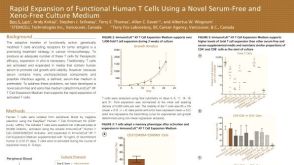 科学海报Rapid Expansion of Functional Human T Cells Using a Novel Serum-Free and Xeno-Free Culture Medium

 沪公网安备31010102008431号