Tolerance to Haemophilus influenzae infection in human epithelial cells: Insights from a primary cell-based model
Haemophilus influenzae is a human respiratory pathogen and inhabits the human respiratory tract as its only niche. Despite this,the molecular mechanisms that allow H . influenzae to establish persistent infections of human epithelia are not well understood. Here,we have investigated how H . influenzae adapts to the host environment and triggers the host immune response using a human primary cell-based infection model that closely resembles human nasal epithelia (NHNE). Physiological assays combined with dualRNAseq revealed that NHNE from five healthy donors all responded to H . influenzae infection with an initial,‘unproductive’ inflammatory response that included a strong hypoxia signature but did not produce pro-inflammatory cytokines. Subsequently,an apparent tolerance to large extracellular and intraepithelial burdens of H . influenzae developed,with NHNE transcriptional profiles resembling the pre-infection state. This occurred in parallel with the development of intraepithelial bacterial populations,and appears to involve interruption of NFκB signalling. This is the first time that large-scale,persistence-promoting immunomodulatory effects of H . influenzae during infection have been observed,and we were able to demonstrate that only infections with live,but not heat-killed H . influenzae led to immunomodulation and reduced expression of NFκB-controlled cytokines such as IL-1β,IL-36γ and TNFα. Interestingly,NHNE were able to re-activate pro-inflammatory responses towards the end of the 14-day infection,resulting in release of IL-8 and TNFα. In addition to providing first molecular insights into mechanisms enabling persistence of H . influenzae in the host,our data further indicate the presence of infection stage-specific gene expression modules,highlighting fundamental similarities between immune responses in NHNE and canonical immune cells,which merit further investigation.
View Publication
产品类型:
产品号#:
05001
05008
05021
05022
产品名:
PneumaCult™-ALI 培养基
PneumaCult™交货中
PneumaCult™-ALI 培养基含12 mm Transwell®插件
PneumaCult™-ALI 培养基含6.5 mm Transwell®插件
S. Inada et al. (Sep 2024)
Stem Cell Research & Therapy 15
Sex-related differences in efficacy of bone marrow-derived high aldehyde dehydrogenase activity cells against pulmonary fibrosis
Although bone marrow-derived cells with high aldehyde dehydrogenase activity (ALDH br ) have shown therapeutic potential against various diseases in animal studies,clinical trials have failed to show concurrent findings. We aimed to clarify the optimal conditions for the efficacy of ALDH br cells by using a murine bleomycin-induced pulmonary fibrosis model. We intravenously transferred male or female donor C57BL/6 mice-derived ALDH br cells into recipient C57BL/6 mice under various conditions,and used mCherry-expressing mice as a donor to trace the transferred ALDH br cells. Pulmonary fibrosis improved significantly when (1) female-derived,not male-derived,and (2) lineage (Lin)-negative,not lineage-positive,ALDH br cells were transferred during the (3) fibrotic,not inflammatory,phase. Consistent with the RNA-sequencing results,female-derived Lin − /ALDH br cells were more resistant to oxidative stress than male-derived cells in vitro,and transferred female-derived Lin − /ALDH br cells were more viable than male-derived cells in the fibrotic lung. The mechanism underlying the antifibrotic effects of Lin − /ALDH br cells was strongly associated with reduction of oxidative stress. Our results indicated that Lin − /ALDH br cell therapy could ameliorate pulmonary fibrosis by reducing oxidative stress and suggested that their efficacy was mediated by sex-related differences. Thus,sex-awareness strategies may be important for clinical application of bone marrow ALDH br cells as a therapeutic tool. The online version contains supplementary material available at 10.1186/s13287-024-03933-8.
View Publication
产品类型:
产品号#:
01700
产品名:
ALDEFLUOR™ 试剂盒
Q. Zhou et al. (May 2025)
Cells 14 9
Targeting ATF5, CEBPB, and CEBPD with Cell-Penetrating Dpep Sensitizes Tumor Cells to NK-92MI Cell Cytotoxicity
Natural killer (NK) cells are an important innate defense against malignancies,and exogenous sources of NK cells have been developed as anti-cancer agents. Nevertheless,the apparent limitations of NK cells in clearing cancers have suggested that their efficacy might be augmented by combination with other treatments. We have developed cell-penetrating peptides that target the transcription factors ATF5,CEBPB,and CEBPD and that promote apoptotic cancer cell death both in vitro and in vivo without apparent toxicity to non-transformed cells. We report here that one such peptide,Dpep,significantly sensitizes a variety of tumor cell types to the cytotoxic activity of the NK cell line,NK-92MI. Such sensitization requires pre-exposure of tumor cells to Dpep and does not appear due to effects of Dpep on NK cells themselves. Our findings suggest that Dpep acts in this context to lower the apoptotic threshold of tumor cells to NK cell toxicity. Additionally,while Dpep pre-treatment does not prevent tumor cells from causing NK cell “inactivation”,it sensitizes cancer cells to repeated rounds of exposure to fresh NK cells. These findings thus indicate that Dpep pre-treatment is an effective strategy to sensitize cancer cells to the cytotoxic actions of NK cells.
View Publication
产品类型:
产品号#:
05150
产品名:
MyeloCult™H5100
F. Z. Asumda et al. (Jun 2025)
Frontiers in Cell and Developmental Biology 13 7768
Comparative analysis of small molecule and growth factor-derived human induced pluripotent stem cell-derived hepatocyte-like cells
The growth factor and small molecule protocol are the two primary approaches for generating human induced pluripotent stem cell-derived hepatocyte-like cells (iPSC-HLCs). We compared the efficacy of the growth factor and small molecule protocols across fifteen different human iPSC lines. Morphological assessment,relative quantification of gene expression,protein expression and proteomic studies were carried out. HLCs derived from the growth factor protocol displayed mature hepatocyte morphological features including a raised,polygonal shape with well-defined refractile borders,granular cytoplasm with lipid droplets and/or vacuoles with multiple spherical nuclei or a large centrally located nucleus; significantly elevated hepatocyte gene and protein expression including AFP,HNF4A,ALBUMIN,and proteomic and metabolic features that are more aligned with a mature phenotype. HLCs derived from the small molecule protocol showed a dedifferentiated,proliferative phenotype that is more akin to liver tumor-derived cell lines. These experimental results suggest that HLCs derived from growth factors are better suited for studies of metabolism,biotransformation,and viral infection.
View Publication
产品类型:
产品号#:
100-0483
100-0484
产品名:
Hausser Scientificᵀᴹ 明线血球计数板
ReLeSR™
Y. Cao et al. ( 2020)
Cell 182 1 73--84.e16
Potent Neutralizing Antibodies against SARS-CoV-2 Identified by High-Throughput Single-Cell Sequencing of Convalescent Patients' B Cells.
The COVID-19 pandemic urgently needs therapeutic and prophylactic interventions. Here,we report the rapid identification of SARS-CoV-2-neutralizing antibodies by high-throughput single-cell RNA and VDJ sequencing of antigen-enriched B cells from 60 convalescent patients. From 8,558 antigen-binding IgG1+ clonotypes,14 potent neutralizing antibodies were identified,with the most potent one,BD-368-2,exhibiting an IC50 of 1.2 and 15 ng/mL against pseudotyped and authentic SARS-CoV-2,respectively. BD-368-2 also displayed strong therapeutic and prophylactic efficacy in SARS-CoV-2-infected hACE2-transgenic mice. Additionally,the 3.8 {\AA} cryo-EM structure of a neutralizing antibody in complex with the spike-ectodomain trimer revealed the antibody's epitope overlaps with the ACE2 binding site. Moreover,we demonstrated that SARS-CoV-2-neutralizing antibodies could be directly selected based on similarities of their predicted CDR3H structures to those of SARS-CoV-neutralizing antibodies. Altogether,we showed that human neutralizing antibodies could be efficiently discovered by high-throughput single B cell sequencing in response to pandemic infectious diseases.
View Publication
产品类型:
产品号#:
19054
19054RF
17864
产品名:
EasySep™人B细胞富集试剂盒
RoboSep™ 人B细胞富集试剂盒含滤芯吸头
EasySep™ 人记忆B细胞分选试剂盒
Z. Xing et al. (jun 2020)
Polymers 12 7
Altered Surface Hydrophilicity on Copolymer Scaffolds Stimulate the Osteogenic Differentiation of Human Mesenchymal Stem Cells.
BACKGROUND Recent studies have suggested that both poly(l-lactide-co-1,5-dioxepan-2-one) (or poly(LLA-co-DXO)) and poly(l-lactide-co-$\epsilon$-caprolactone) (or poly(LLA-co-CL)) porous scaffolds are good candidates for use as biodegradable scaffold materials in the field of tissue engineering; meanwhile,their surface properties,such as hydrophilicity,need to be further improved. METHODS We applied several different concentrations of the surfactant Tween 80 to tune the hydrophilicity of both materials. Moreover,the modification was applied not only in the form of solid scaffold as a film but also a porous scaffold. To investigate the potential application for tissue engineering,human bone marrow mesenchymal stem cells (hMSCs) were chosen to test the effect of hydrophilicity on cell attachment,proliferation,and differentiation. First,the cellular cytotoxicity of the extracted medium from modified scaffolds was investigated on HaCaT cells. Then,hMSCs were seeded on the scaffolds or films to evaluate cell attachment,proliferation,and osteogenic differentiation. The results indicated a significant increasing of wettability with the addition of Tween 80,and the hMSCs showed delayed attachment and spreading. PCR results indicated that the differentiation of hMSCs was stimulated,and several osteogenesis related genes were up-regulated in the 3{\%} Tween 80 group. Poly(LLA-co-CL) with 3{\%} Tween 80 showed an increased messenger Ribonucleic acid (mRNA) level of late-stage markers such as osteocalcin (OC) and key transcription factor as runt related gene 2 (Runx2). CONCLUSION A high hydrophilic scaffold may speed up the osteogenic differentiation for bone tissue engineering.
View Publication
产品类型:
产品号#:
05465
产品名:
MesenCult™ 成骨细胞分化试剂盒 (人)
Z. G. Chen et al. (jul 2019)
BMC infectious diseases 19 1 622
Upregulation of cell-surface mucin MUC15 in human nasal epithelial cells upon influenza A virus infection.
BACKGROUND Cell-surface mucins are expressed in apical epithelial cells of the respiratory tract,and contribute a crucial part of the innate immune system. Despite anti-inflammatory or antiviral functions being revealed for certain cell-surface mucins such as MUC1,the roles of other mucins are still poorly understood,especially in viral infections. METHODS To further identify mucins significant in influenza infection,we screened the expression of mucins in human nasal epithelial cells infected by H3N2 influenza A virus. RESULTS We found that the expression of MUC15 was significantly upregulated upon infection,and specific only to active infection. While MUC15 did not interact with virus particles or reduce viral replication directly,positive correlations were observed between MUC15 and inflammatory factors in response to viral infection. Given that the upregulation of MUC15 was only triggered late into infection when immune factors (including cytokines,chemokines,EGFR and phosphorylated ERK) started to peak and plateau,MUC15 may potentially serve an immunomodulatory function later during influenza viral infection. CONCLUSIONS Our study revealed that MUC15 was one of the few cell-surface mucins induced during influenza infection. While MUC15 did not interact directly with influenza virus,we showed that its increase coincides with the peak of immune activation and thus MUC15 may serve an immunomodulatory role during influenza infection.
View Publication
PD-L1 on dendritic cells attenuates T cell activation and regulates response to immune checkpoint blockade.
Immune checkpoint blockade therapies have shown clinical promise in a variety of cancers,but how tumor-infiltrating T cells are activated remains unclear. In this study,we explore the functions of PD-L1 on dendritic cells (DCs),which highly express PD-L1. We observe that PD-L1 on DC plays a critical role in limiting T cell responses. Type 1 conventional DCs are essential for PD-L1 blockade and they upregulate PD-L1 upon antigen uptake. Upregulation of PD-L1 on DC is mediated by type II interferon. While DCs are the major antigen presenting cells for cross-presenting tumor antigens to T cells,subsequent PD-L1 upregulation protects them from killing by cytotoxic T lymphocytes,yet dampens the antitumor responses. Blocking PD-L1 in established tumors promotes re-activation of tumor-infiltrating T cells for tumor control. Our study identifies a critical and dynamic role of PD-L1 on DC,which needs to be harnessed for better invigoration of antitumor immune responses.
View Publication
mDYRK3 kinase is expressed selectively in late erythroid progenitor cells and attenuates colony-forming unit-erythroid development.
DYRKs are a new subfamily of dual-specificity kinases that was originally discovered on the basis of homology to Yak1,an inhibitor of cell cycle progression in yeast. At present,mDYRK-3 and mDYRK-2 have been cloned,and mDYRK-3 has been characterized with respect to kinase activity,expression among tissues and hematopoietic cells,and possible function during erythropoiesis. In sequence,mDYRK-3 diverges markedly in noncatalytic domains from mDYRK-2 and mDYRK-1a,but is 91.3% identical overall to hDYRK-3. Catalytically,mDYRK-3 readily phosphorylated myelin basic protein (but not histone 2B) and also appeared to autophosphorylate in vitro. Expression of mDYRK-1a,mDYRK-2,and mDYRK-3 was high in testes,but unlike mDYRK1a and mDYRK 2,mDYRK-3 was not expressed at appreciable levels in other tissues examined. Among hematopoietic cells,however,mDYRK-3 expression was selectively elevated in erythroid cell lines and primary pro-erythroid cells. In developmentally synchronized erythroid progenitor cells,expression peaked sharply following exposure to erythropoietin plus stem cell factor (SCF) (but not SCF alone),and in situ hybridizations of sectioned embryos revealed selective expression of mDYRK-3 in fetal liver. Interestingly,antisense oligonucleotides to mDYRK-3 were shown to significantly and specifically enhance colony-forming unit-erythroid colony formation. Thus,it is proposed that mDYRK-3 kinase functions as a lineage-restricted,stage-specific suppressor of red cell development. (Blood. 2001;97:901-910)
View Publication
产品类型:
产品号#:
04971
04902
04901
04963
04962
产品名:
MegaCult™-C细胞因子完整试剂盒
胶原蛋白溶液
MegaCult™-C细胞因子培养基
双室载玻片试剂盒
MegaCult™-C cfu染色试剂盒
M. Drukker et al. (may 2012)
Nature biotechnology 30 6 531--42
Isolation of primitive endoderm, mesoderm, vascular endothelial and trophoblast progenitors from human pluripotent stem cells.
To identify early populations of committed progenitors derived from human embryonic stem cells (hESCs),we screened self-renewing,BMP4-treated and retinoic acid-treated cultures with >400 antibodies recognizing cell-surface antigens. Sorting of >30 subpopulations followed by transcriptional analysis of developmental genes identified four distinct candidate progenitor groups. Subsets detected in self-renewing cultures,including CXCR4(+) cells,expressed primitive endoderm genes. Expression of Cxcr4 in primitive endoderm was confirmed in visceral endoderm of mouse embryos. BMP4-induced progenitors exhibited gene signatures of mesoderm,trophoblast and vascular endothelium,suggesting correspondence to gastrulation-stage primitive streak,chorion and allantois precursors,respectively. Functional studies in vitro and in vivo confirmed that ROR2(+) cells produce mesoderm progeny,APA(+) cells generate syncytiotrophoblasts and CD87(+) cells give rise to vasculature. The same progenitor classes emerged during the differentiation of human induced pluripotent stem cells (hiPSCs). These markers and progenitors provide tools for purifying human tissue-regenerating progenitors and for studying the commitment of pluripotent stem cells to lineage progenitors.
View Publication


 EasySep™小鼠TIL(CD45)正选试剂盒




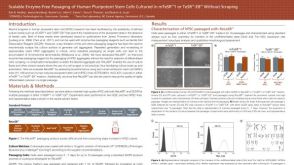 科学海报Scalable Enzyme-Free Passaging of Human Pluripotent Stem Cells Cultured in mTeSR™1 or TeSR™-E8™ Without Scraping
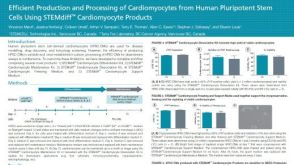 科学海报Efficient Production and Processing of Cardiomyocytes from Human Pluripotent Stem Cells Using STEMdiff™ Cardiomyocyte Products
 沪公网安备31010102008431号