A. J. Hoogendijk et al. (nov 2019)
Cell reports 29 8 2505--2519.e4
Dynamic Transcriptome-Proteome Correlation Networks Reveal Human Myeloid Differentiation and Neutrophil-Specific Programming.
Human neutrophilic granulocytes form the largest pool of innate immune cells for host defense against bacterial and fungal pathogens. The dynamic changes that accompany the metamorphosis from a proliferating myeloid progenitor cell in the bone marrow into a mature non-dividing polymorphonuclear blood cell have remained poorly defined. Using mass spectrometry-based quantitative proteomics combined with transcriptomic data,we report on the dynamic changes of five developmental stages in the bone marrow and blood. Integration of transcriptomes and proteome unveils highly dynamic and differential interactions between RNA and protein kinetics during human neutrophil development,which can be linked to functional maturation of typical end-stage blood neutrophil killing activities.
View Publication
Endothelial extracellular vesicles enhance vascular self-assembly in engineered human cardiac tissues
AbstractThe fabrication of complex and stable vasculature in engineered cardiac tissues represents a significant hurdle towards building physiologically relevant models of the heart. Here,we implemented a 3D model of cardiac vasculogenesis,incorporating endothelial cells (EC),stromal cells,and human induced pluripotent stem cell (iPSC)-derived cardiomyocytes (CM) in a fibrin hydrogel. The presence of CMs disrupted vessel formation in 3D tissues,resulting in the upregulation of endothelial activation markers and altered extracellular vesicle (EV) signaling in engineered tissues as determined by the proteomic analysis of culture supernatant. miRNA sequencing of CM- and EC-secreted EVs highlighted key EV-miRNAs that were postulated to play differing roles in cardiac vasculogenesis,including the let-7 family and miR-126-3p in EC-EVs. In the absence of CMs,the supplementation of CM-EVs to EC monolayers attenuated EC migration and proliferation and resulted in shorter and more discontinuous self-assembling vessels when applied to 3D vascular tissues. In contrast,supplementation of EC-EVs to the tissue culture media of 3D vascularized cardiac tissues mitigated some of the deleterious effects of CMs on vascular self-assembly,enhancing the average length and continuity of vessel tubes that formed in the presence of CMs. Direct transfection validated the effects of the key EC-EV miRNAs let-7b-5p and miR-126-3p in improving the maintenance of continuous vascular networks. EC-EV supplementation to biofabricated cardiac tissues and microfluidic devices resulted in tissue vascularization,illustrating the use of this approach in the engineering of enhanced,perfusable,microfluidic models of the myocardium.
View Publication
产品类型:
产品号#:
100-0276
100-1130
产品名:
mTeSR™ Plus
mTeSR™ Plus
M. Sarchi et al. (Jun 2024)
Blood Cancer Discovery 5 5
Mis-splicing of Mitotic Regulators Sensitizes SF3B1-Mutated Human HSCs to CHK1 Inhibition
Precise gene editing uncovers mis-splicing of BUBR1 and CDC27 in human SF3B1-mutant HSPCs,leading to activation of mitotic checkpoint and rendering the cells sensitive to CHK1 inhibitor prexasertib.
View Publication
Differential Responses of Human iPSC-Derived Microglia to Stimulation with Diverse Inflammogens
Human microglia are central regulators and actors in brain infections and neuro-inflammatory pathologies. However,access to such cells is limited,and studies systematically mapping the spectrum of their inflammatory states are scarce. Here,we generated microglia-like cells (MGLCs) from human induced pluripotent stem cells and characterized them as a robust,accessible model system for studying inflammatory activation. We validated lineage identity through transcriptome profiling,revealing selective upregulation of microglial signature genes and enrichment of microglia/macrophage-related gene sets. MGLCs displayed distinct morphologies and produced stimulus- and time-dependent cytokine secretion profiles upon exposure to diverse inflammatory stimuli,including pro-inflammatory cytokines (TNFα,interferon-γ) and agonists of the Toll-like receptors TLR2 (FSL-1),TLR3 (Poly(I:C)),TLR4 (lipopolysaccharide,LPS),and TLR7 (imiquimod). Transcriptome profiling and bioinformatics analysis revealed distinct activation signatures. Functional assays demonstrated stimulus-specific engagement of NFκB and JAK-STAT signaling pathways. The shared NFκB nuclear translocation response of TLR ligands and TNFα was reflected in overlapping transcriptome profiles: they shared modules (e.g.,oxidative stress response and TNFα-related signaling) identified by weighted gene co-expression network analysis. Finally,the potential consequences of microglia activation for neighboring cells were studied on the example of microglia-astrocyte crosstalk. The capacity of MGLC supernatants to stimulate astrocytes was measured by quantifying astrocytic NFκB translocation. MGLCs stimulated with FSL-1,LPS,or Poly(I:C) indirectly activated astrocytes via a strictly TNFα-dependent mechanism,highlighting the role of soluble mediators in the signal propagation. Altogether,this platform enables a dissection of microglia activation states and multi-parametric characterization of subsequent neuroinflammation.
View Publication
Booth L et al. (AUG 2015)
Journal of cellular physiology 230 8 1982--98
OSU-03012 and Viagra Treatment Inhibits the Activity of Multiple Chaperone Proteins and Disrupts the Blood-Brain Barrier: Implications for Anti-Cancer Therapies.
We examined the interaction between OSU-03012 (also called AR-12) with phosphodiesterase 5 (PDE5) inhibitors to determine the role of the chaperone glucose-regulated protein (GRP78)/BiP/HSPA5 in the cellular response. Sildenafil (Viagra) interacted in a greater than additive fashion with OSU-03012 to kill stem-like GBM cells. Treatment of cells with OSU-03012/sildenafil: abolished the expression of multiple oncogenic growth factor receptors and plasma membrane drug efflux pumps and caused a rapid degradation of GRP78 and other HSP70 and HSP90 family chaperone proteins. Decreased expression of plasma membrane receptors and drug efflux pumps was dependent upon enhanced PERK-eIF2α-ATF4-CHOP signaling and was blocked by GRP78 over-expression. In vivo OSU-03012/sildenafil was more efficacious than treatment with celecoxib and sildenafil at killing tumor cells without damaging normal tissues and in parallel reduced expression of ABCB1 and ABCG2 in the normal brain. The combination of OSU-03012/sildenafil synergized with low concentrations of sorafenib to kill tumor cells,and with lapatinib to kill ERBB1 over-expressing tumor cells. In multiplex assays on plasma and human tumor tissue from an OSU-03012/sildenafil treated mouse,we noted a profound reduction in uPA signaling and identified FGF and JAK1/2 as response biomarkers for potentially suppressing the killing response. Inhibition of FGFR signaling and to a lesser extent JAK1/2 signaling profoundly enhanced OSU-03012/sildenafil lethality.
View Publication
产品类型:
产品号#:
05750
05751
产品名:
NeuroCult™ NS-A 基础培养基(人)
NeuroCult™ NS-A 扩增试剂盒(人)
(Mar 2024)
Biology Open 13 3
Deterministic nuclear reprogramming of mammalian nuclei to a totipotency-like state by Amphibian meiotic oocytes for stem cell therapy in humans
ABSTRACTThe ultimate aim of nuclear reprogramming is to provide stem cells or differentiated cells from unrelated cell types as a cell source for regenerative medicine. A popular route towards this is transcription factor induction,and an alternative way is an original procedure of transplanting a single somatic cell nucleus to an unfertilized egg. A third route is to transplant hundreds of cell nuclei into the germinal vesicle (GV) of a non-dividing Amphibian meiotic oocyte,which leads to the activation of silent genes in 24 h and robustly induces a totipotency-like state in almost all transplanted cells. We apply this third route for potential therapeutic use and describe a procedure by which the differentiated states of cells can be reversed so that totipotency and pluripotency gene expression are regained. Differentiated cells are exposed to GV extracts and are reprogrammed to form embryoid bodies,which shows the maintenance of stemness and could be induced to follow new directions of differentiation. We conclude that much of the reprogramming effect of eggs is already present in meiotic oocytes and does not require cell division or selection of dividing cells. Reprogrammed cells by oocytes could serve as replacements for defective adult cells in humans. Summary: Stem cell therapy has shed light on incurable diseases. We describe a novel method for cell reprogramming and provide personalized stem cell sources for stem cell therapies.
View Publication
产品类型:
产品号#:
85850
85857
产品名:
mTeSR™1
mTeSR™1
V. Cesarini et al. (aug 2019)
Scientific reports 9 1 12206
Regulation of PDE5 expression in human aorta and thoracic aortic aneurysms.
Aneurysms and dissections affecting thoracic aorta are associated with smooth muscle cell (SMC) dysfunction. NO/cGMP signaling pathway in smooth muscle cells has been shown to be affected in sporadic thoracic aortic aneurysms. We analyzed the mRNA levels of PDE5,a cGMP-hydrolyzing enzyme highly expressed in aortic SMCs,that regulates arterious vascular tone by lowering cGMP levels. We found that aortic tissue obtained from Marfan,tricuspid and bicuspid thoracic aneurysms expressed lower levels of PDE5 mRNA compared to control aortas. In particular,we found that affected aortas showed lower levels of all the PDE5A isoforms,compared to control aortas. Transfection of vascular SMCs (VSMCs) with NOTCH3 activated domain (NICD3) induced the expression of PDE5A1 and A3 protein isoforms,but not that of the corresponding mRNAs. VSMC stimulation with GSNO,a nitric oxide analogue or with 8-br-cGMP,but not with 8-br-cAMP,up-regulated PDE5 and NOTCH-3 protein levels,indicating a negative feedback loop to protect the arterial wall from excessive relaxation. Finally,we found that PDE5 is expressed early during human aorta development,suggesting that if loss of function mutations of PDE5 occur,they might potentially affect aortic wall development.
View Publication
产品类型:
产品号#:
04961
产品名:
MegaCult™-C胶原蛋白和细胞因子培养基
(Jul 2025)
Bio-protocol 15 13
Derivation and Culture of Enriched Phrenic-Like Motor Neurons From Human iPSCs
The fatal motor neuron (MN) disease amyotrophic lateral sclerosis (ALS) is characterized by progressive degeneration of the phrenic MNs (phMNs) controlling the activity of the diaphragm,leading to death by respiratory failure. Human experimental models to study phMNs are lacking,hindering the understanding of the mechanisms of phMN degeneration in ALS. Here,we describe a protocol to derive phrenic-like MNs from human induced pluripotent stem cells (hiPSC-phMNs) within 30 days. During spinal cord development,phMNs emerge from specific MN progenitors located in the dorsalmost MN progenitor (pMN) domain at cervical levels,under the control of a ventral-to-dorsal gradient of Sonic hedgehog (SHH) signaling and a rostro-caudal gradient of retinoic acid (RA). The method presented here uses optimized concentrations of RA and the SHH agonist purmorphamine,followed by fluorescence-activated cell sorting (FACS) of the resulting MN progenitor cells (MNPCs) based on a cell-surface protein (IGDCC3) enriched in hiPSC-phMNs. The resulting cultures are highly enriched in MNs expressing typical phMN markers. This protocol enables the generation of hiPSC-phMNs and is highly reproducible using several hiPSC lines,offering a disease-relevant system to study mechanisms of respiratory MN dysfunction. While the protocol has been validated in the context of ALS research,it can be adopted to study human phrenic MNs in other research fields where these neurons are of interest.
View Publication
产品类型:
产品号#:
85850
85857
产品名:
mTeSR™1
mTeSR™1
(Mar 2024)
Nature Cell Biology 26 3
Distinct pathways drive anterior hypoblast specification in the implanting human embryo
Development requires coordinated interactions between the epiblast,which generates the embryo proper; the trophectoderm,which generates the placenta; and the hypoblast,which forms both the anterior signalling centre and the yolk sac. These interactions remain poorly understood in human embryogenesis because mechanistic studies have only recently become possible. Here we examine signalling interactions post-implantation using human embryos and stem cell models of the epiblast and hypoblast. We find anterior hypoblast specification is NODAL dependent,as in the mouse. However,while BMP inhibits anterior signalling centre specification in the mouse,it is essential for its maintenance in human. We also find contrasting requirements for BMP in the naive pre-implantation epiblast of mouse and human embryos. Finally,we show that NOTCH signalling is important for human epiblast survival. Our findings of conserved and species-specific factors that drive these early stages of embryonic development highlight the strengths of comparative species studies. Weatherbee,Weberling,Gantner et al. find contrasting requirements for BMP in the anterior signalling centre and pre-implantation epiblast between mice and humans. They further find that NOTCH may be indispensable for human epiblast survival.
View Publication


 EasySep™小鼠TIL(CD45)正选试剂盒




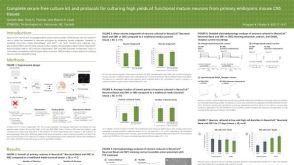 科学海报Complete Serum-Free Culture Kit and Protocols for Culturing High Yields of Functional Mature Neurons from Primary Embryonic Mouse CNS Tissues


 沪公网安备31010102008431号