Avitabile D et al. (MAY 2011)
American journal of physiology. Heart and circulatory physiology 300 5 H1875--84
Human cord blood CD34+ progenitor cells acquire functional cardiac properties through a cell fusion process.
The efficacy of cardiac repair by stem cell administration relies on a successful functional integration of injected cells into the host myocardium. Safety concerns have been raised about the possibility that stem cells may induce foci of arrhythmia in the ischemic myocardium. In a previous work (36),we showed that human cord blood CD34(+) cells,when cocultured on neonatal mouse cardiomyocytes,exhibit excitation-contraction coupling features similar to those of cardiomyocytes,even though no human genes were upregulated. The aims of the present work are to investigate whether human CD34(+) cells,isolated after 1 wk of coculture with neonatal ventricular myocytes,possess molecular and functional properties of cardiomyocytes and to discriminate,using a reporter gene system,whether cardiac differentiation derives from a (trans)differentiation or a cell fusion process. Umbilical cord blood CD34(+) cells were isolated by a magnetic cell sorting method,transduced with a lentiviral vector carrying the enhanced green fluorescent protein (EGFP) gene,and seeded onto primary cultures of spontaneously beating rat neonatal cardiomyocytes. Cocultured EGFP(+)/CD34(+)-derived cells were analyzed for their electrophysiological features at different time points. After 1 wk in coculture,EGFP(+) cells,in contact with cardiomyocytes,were spontaneously contracting and had a maximum diastolic potential (MDP) of -53.1 mV,while those that remained isolated from the surrounding myocytes did not contract and had a depolarized resting potential of -11.4 mV. Cells were then resuspended and cultured at low density to identify EGFP(+) progenitor cell derivatives. Under these conditions,we observed single EGFP(+) beating cells that had acquired an hyperpolarization-activated current typical of neonatal cardiomyocytes (EGFP(+) cells,-2.24 ± 0.89 pA/pF; myocytes,-1.99 ± 0.63 pA/pF,at -125 mV). To discriminate between cell autonomous differentiation and fusion,EGFP(+)/CD34(+) cells were cocultured with cardiac myocytes infected with a red fluorescence protein-lentiviral vector; under these conditions we found that 100% of EGFP(+) cells were also red fluorescent protein positive,suggesting cell fusion as the mechanism by which cardiac functional features are acquired.
View Publication
产品类型:
产品号#:
09600
09650
产品名:
StemSpan™ SFEM
StemSpan™ SFEM
Seibler P et al. (APR 2011)
The Journal of neuroscience : the official journal of the Society for Neuroscience 31 16 5970--6
Mitochondrial Parkin recruitment is impaired in neurons derived from mutant PINK1 induced pluripotent stem cells.
Genetic Parkinson disease (PD) has been associated with mutations in PINK1,a gene encoding a mitochondrial kinase implicated in the regulation of mitochondrial degradation. While the studies so far examined PINK1 function in non-neuronal systems or through PINK1 knockdown approaches,there is an imperative to examine the role of endogenous PINK1 in appropriate human-derived and biologically relevant cell models. Here we report the generation of induced pluripotent stem (iPS) cells from skin fibroblasts taken from three PD patients with nonsense (c.1366CtextgreaterT; p.Q456X) or missense (c.509TtextgreaterG; p.V170G) mutations in the PINK1 gene. These cells were differentiated into dopaminergic neurons that upon mitochondrial depolarization showed impaired recruitment of lentivirally expressed Parkin to mitochondria,increased mitochondrial copy number,and upregulation of PGC-1α,an important regulator of mitochondrial biogenesis. Importantly,these alterations were corrected by lentiviral expression of wild-type PINK1 in mutant iPS cell-derived PINK1 neurons. In conclusion,our studies suggest that fibroblasts from genetic PD can be reprogrammed and differentiated into neurons. These neurons exhibit distinct phenotypes that should be amenable to further mechanistic studies in this relevant biological context.
View Publication
产品类型:
产品号#:
36254
85850
85857
产品名:
DMEM/F-12 with 15 mM HEPES
mTeSR™1
mTeSR™1
Meziane EK et al. (JUL 2011)
Journal of cell science 124 Pt 13 2175--86
Knockdown of Fbxo7 reveals its regulatory role in proliferation and differentiation of haematopoietic precursor cells.
Fbxo7 is an unusual F-box protein because most of its interacting proteins are not substrates for ubiquitin-mediated degradation. Fbxo7 directly binds p27 and Cdk6,enhances the level of cyclin D-Cdk6 complexes,and its overexpression causes Cdk6-dependent transformation of immortalised fibroblasts. Here,we test the ability of Fbxo7 to transform haematopoietic pro-B (Ba/F3) cells which,unexpectedly,it was unable to do despite high levels of Cdk6. Instead,reduction of Fbxo7 expression increased proliferation,decreased cell size and shortened G1 phase. Analysis of cell cycle regulators showed that cells had decreased levels of p27,and increased levels of S phase cyclins and Cdk2 activity. Also,Fbxo7 protein levels correlated inversely with those of CD43,suggesting direct regulation of its expression and,therefore,of B cell maturation. Alterations to Cdk6 protein levels did not affect the cell cycle,indicating that Cdk6 is neither rate-limiting nor essential in Ba/F3 cells; however,decreased expression of Cdk6 also enhanced levels of CD43,indicating that expression of CD43 is independent of cell cycle regulation. The physiological effect of reduced levels of Fbxo7 was assessed by creating a transgenic mouse with a LacZ insertion into the Fbxo7 locus. Homozygous Fbxo7(LacZ) mice showed significantly increased pro-B cell and pro-erythroblast populations,consistent with Fbxo7 having an anti-proliferative function and/or a role in promoting maturation of precursor cells.
View Publication
产品类型:
产品号#:
03234
产品名:
MethoCult™M3234
Jebbett NJ et al. (SEP 2013)
NeuroToxicology 38 91--100
Low level methylmercury enhances CNTF-evoked STAT3 signaling and glial differentiation in cultured cortical progenitor cells
Although many previous investigations have studied how mercury compounds cause cell death,sub-cytotoxic levels may affect mechanisms essential for the proper development of the nervous system. The present study investigates whether low doses of methylmercury (MeHg) and mercury chloride (HgCl2) can modulate the activity of JAK/STAT signaling,a pathway that promotes gliogenesis. We report that sub-cytotoxic doses of MeHg enhance ciliary neurotrophic factor (CNTF) evoked STAT3 phosphorylation in human SH-SY5Y neuroblastoma and mouse cortical neural progenitor cells (NPCs). This effect is specific for MeHg,since HgCl2 fails to enhance JAK/STAT signaling. Exposing NPCs to these low doses of MeHg (30-300nM) enhances CNTF-induced expression of STAT3-target genes such as glial fibrillary acidic protein (GFAP) and suppressors of cytokine signaling 3 (SOCS3),and increases the proportion of cells expressing GFAP following 2 days of differentiation. Higher,near-cytotoxic concentrations of MeHg and HgCl2 inhibit STAT3 phosphorylation and lead to increased production of superoxide. Lower concentrations of MeHg effective in enhancing JAK/STAT signaling (30nM) do not result in a detectable increase in superoxide nor increased expression of the oxidant-responsive genes,heme oxygenase 1,heat shock protein A5 and sirtuin 1. These findings suggest that low concentrations of MeHg inappropriately enhance STAT3 phosphorylation and glial differentiation,and that the mechanism causing this enhancement is distinct from the reactive oxygen species-associated cell death observed at higher concentrations of MeHg and HgCl2.
View Publication
S. Yang et al. ( 2019)
Stem cells international 2019 1351860
Promoting Osteogenic Differentiation of Human Adipose-Derived Stem Cells by Altering the Expression of Exosomal miRNA.
Human adipose-derived stem cells (ADSCs) can release exosomes; however,their specific functions remain elusive. In this study,we verified that exosomes derived from osteogenically differentiated ADSCs can promote osteogenic differentiation of ADSCs. Furthermore,in order to investigate the importance of exosomal microRNAs (miRNAs) in osteogenic differentiation of ADSCs,we used microarray assays to analyze the expression profiles of exosomal miRNAs derived from undifferentiated as well as osteogenically differentiated ADSCs; 201 miRNAs were upregulated and 33 miRNAs were downregulated between the two types of exosomes. Additionally,bioinformatic analyses,which included gene ontology analyses,pathway analysis,and miRNA-mRNA-network investigations,were performed. The results of these analyses revealed that the differentially expressed exosomal miRNAs participate in multiple biological processes,such as gene expression,synthesis of biomolecules,cell development,differentiation,and signal transduction,among others. Moreover,we found that these differentially expressed exosomal miRNAs connect osteogenic differentiation to processes such as axon guidance,MAPK signaling,and Wnt signaling. To the best of our knowledge,this is the first study to identify and characterize exosomal miRNAs derived from osteogenically differentiated ADSCs. This study confirms that alterations in the expression of exosomal miRNAs can promote osteogenic differentiation of ADSCs,which also provides the foundation for further research on the regulatory functions of exosomal miRNAs in the context of ADSC osteogenesis.
View Publication
产品类型:
产品号#:
05412
05455
产品名:
MesenCult™ 脂肪分化试剂盒 (人)
MesenCult™-ACF软骨细胞分化试剂盒
J. Yun et al. (Jan 2023)
Nature communications 14 156
Senescent cells perturb intestinal stem cell differentiation through Ptk7 induced noncanonical Wnt and YAP signaling.
Cellular senescence and the senescence-associated secretory phenotype (SASP) are implicated in aging and age-related disease,and SASP-related inflammation is thought to contribute to tissue dysfunction in aging and diseased animals. However,whether and how SASP factors influence the regenerative capacity of tissues remains unclear. Here,using intestinal organoids as a model of tissue regeneration,we show that SASP factors released by senescent fibroblasts deregulate stem cell activity and differentiation and ultimately impair crypt formation. We identify the secreted N-terminal domain of Ptk7 as a key component of the SASP that activates non-canonical Wnt / Ca2+ signaling through FZD7 in intestinal stem cells (ISCs). Changes in cytosolic [Ca2+] elicited by Ptk7 promote nuclear translocation of YAP and induce expression of YAP/TEAD target genes,impairing symmetry breaking and stem cell differentiation. Our study discovers secreted Ptk7 as a factor released by senescent cells and provides insight into the mechanism by which cellular senescence contributes to tissue dysfunction in aging and disease.
View Publication
产品类型:
产品号#:
06005
产品名:
IntestiCult™ 肠道类器官生长培养基 (小鼠)
K. A. Hilliard et al. ( 2022)
Frontiers in immunology 13 1007022
Expansion of a novel population of NK cells with low ribosome expression in juvenile dermatomyositis.
Juvenile dermatomyositis (JDM) is a pediatric autoimmune disease associated with characteristic rash and proximal muscle weakness. To gain insight into differential lymphocyte gene expression in JDM,peripheral blood mononuclear cells from 4 new-onset JDM patients and 4 healthy controls were sorted into highly enriched lymphocyte populations for RNAseq analysis. NK cells from JDM patients had substantially greater differentially expressed genes (273) than T (57) and B (33) cells. Upregulated genes were associated with the innate immune response and cell cycle,while downregulated genes were associated with decreased ribosomal RNA. Suppressed ribosomal RNA in JDM NK cells was validated by measuring transcription and phosphorylation levels. We confirmed a population of low ribosome expressing NK cells in healthy adults and children. This population of low ribosome NK cells was substantially expanded in 6 treatment-na{\{i}}ve JDM patients and was associated with decreased NK cell degranulation. The enrichment of this NK low ribosome population was completely abrogated in JDM patients with quiescent disease. Together these data suggest NK cells are highly activated in new-onset JDM patients with an increased population of low ribosome expressing NK cells which correlates with decreased NK cell function and resolved with control of active disease."
View Publication
产品类型:
产品号#:
19055
19055RF
产品名:
EasySep™人NK细胞富集试剂盒
RoboSep™ 人NK细胞富集试剂盒含滤芯吸头
H. Ise et al. ( 2019)
Stem cells international 2019 4341286
Improved Isolation of Mesenchymal Stem Cells Based on Interactions between N-Acetylglucosamine-Bearing Polymers and Cell-Surface Vimentin.
Mesenchymal stem cells (MSCs) in bone marrow and adipose tissues are expected to be effective tools for regenerative medicine to treat various diseases. To obtain MSCs that possess both high differentiation and tissue regenerative potential,it is necessary to establish an isolation system that does not require long-term culture. It has previously been reported that the cytoskeletal protein vimentin,expressed on the surfaces of multiple cell types,possesses N-acetylglucosamine- (GlcNAc-) binding activity. Therefore,we tried to exploit this interaction to efficiently isolate MSCs from rat bone marrow cells using GlcNAc-bearing polymer-coated dishes. Cells isolated by this method were identified as MSCs because they were CD34-,CD45-,and CD11b/c-negative and CD90-,CD29-,CD44-,CD54-,CD73-,and CD105-positive. Osteoblast,adipocyte,and chondrocyte differentiation was observed in these cells. In total,yields of rat MSCs were threefold to fourfold higher using GlcNAc-bearing polymer-coated dishes than yields using conventional tissue-culture dishes. Interestingly,MSCs isolated with GlcNAc-bearing polymer-coated dishes strongly expressed CD106,whereas those isolated with conventional tissue-culture dishes had low CD106 expression. Moreover,senescence-associated $\beta$-galactosidase activity in MSCs from GlcNAc-bearing polymer-coated dishes was lower than that in MSCs from tissue-culture dishes. These results establish an improved isolation method for high-quality MSCs.
View Publication
产品类型:
产品号#:
06005
产品名:
IntestiCult™ 肠道类器官生长培养基 (小鼠)
(Aug 2024)
Nature Communications 15
Huntington’s disease cellular phenotypes are rescued non-cell autonomously by healthy cells in mosaic telencephalic organoids
Huntington’s disease (HD) causes selective degeneration of striatal and cortical neurons,resulting in cell mosaicism of coexisting still functional and dysfunctional cells. The impact of non-cell autonomous mechanisms between these cellular states is poorly understood. Here we generated telencephalic organoids with healthy or HD cells,grown separately or as mosaics of the two genotypes. Single-cell RNA sequencing revealed neurodevelopmental abnormalities in the ventral fate acquisition of HD organoids,confirmed by cytoarchitectural and transcriptional defects leading to fewer GABAergic neurons,while dorsal populations showed milder phenotypes mainly in maturation trajectory. Healthy cells in mosaic organoids restored HD cell identity,trajectories,synaptic density,and communication pathways upon cell-cell contact,while showing no significant alterations when grown with HD cells. These findings highlight cell-type-specific alterations in HD and beneficial non-cell autonomous effects of healthy cells,emphasizing the therapeutic potential of modulating cell-cell communication in disease progression and treatment. Mosaic organoids where pathological and healthy cells are grown together,reveal the rescue of phenotypes in pathological cells due to communication with healthy cells without harming them,as demonstrated by single-cell RNA-sequencing data.
View Publication
产品类型:
产品号#:
100-0483
100-0484
85850
85857
产品名:
Hausser Scientificᵀᴹ 明线血球计数板
ReLeSR™
mTeSR™1
mTeSR™1
(Aug 2025)
Scientific Reports 15
Miniaturized scalable arrayed CRISPR screening in primary cells enables discovery at the single donor resolution
High-efficiency gene editing in primary human cells is critical for advancing therapeutic development and functional genomics,yet conventional electroporation platforms often require high cell input and are poorly suited to parallelized experiments. Here we introduce a next-generation digital microfluidics (DMF) electroporation platform that enables high-throughput,low-input genome engineering using discrete droplets manipulated on a planar electrode array. The system supports 48 independently programmable reaction sites and integrates seamlessly with laboratory automation,allowing efficient delivery of CRISPR-Cas9 RNPs and mRNA cargo into as few as 3,000 primary human cells per condition. The platform was validated across diverse primary human cell types and cargo modalities,demonstrating efficient delivery of various cargo,with high rates of transfection,gene knockout via non-homologous end joining,and precise knock-in through homology-directed repair. To showcase its utility in functional genomics,we applied the platform to an arrayed CRISPR-Cas9 screen in chronically stimulated human CD4⁺ T cells,identifying novel regulators of exhaustion,including epigenetic and transcriptional modulators. These findings establish our DMF-based electroporation platform as a powerful tool for miniaturized genome engineering in rare or precious cell populations and provide a scalable framework for high-content genetic screening in primary human cells.Supplementary InformationThe online version contains supplementary material available at 10.1038/s41598-025-13532-z.
View Publication
产品类型:
产品号#:
100-0784
100-0956
10971
10981
10991
19051
19051RF
产品名:
ImmunoCult™ 人CD3/CD28 T细胞激活剂
ImmunoCult™ XF培养基
ImmunoCult™ 人CD3/CD28 T细胞激活剂
ImmunoCult™ XF 人T细胞扩增培养基,500 mL
ImmunoCult™ 人CD3/CD28 T细胞激活剂
EasySep™人T细胞富集试剂盒
RoboSep™ 人T细胞富集试剂盒含滤芯吸头
S. Hiura et al. (Sep 2025)
Scientific Reports 15
Selective agonists of KIR and NKG2A to evade missing self response of natural killer cells
Immune rejection is one of the most serious challenges in allogeneic transplantation,including allogeneic induced pluripotent stem cell (allo-iPSC)-derived cell therapy. Beta-2-Microglobulin gene-knockout,human leukocyte antigen (HLA) class I-deficient iPSCs can evade immune rejection by host T cells,which occurs due to HLA mismatches. However,natural killer (NK) cells recognize HLA class Ⅰ-deficient cells and reject them,which is known as the missing-self response. Introducing chimeric HLA-E protein to HLA class Ⅰ-deficient iPSCs suppresses the missing-self response of NK cells expressing the inhibitory receptor NKG2A; however,technology to suppress NKG2A-negative NK cells is still required. Here,we developed novel agonists for the other inhibitory receptor,killer immunoglobulin receptor (KIR),on NK cells. We found that antibodies that bind to activating KIR enhance NK cell activation and developed selective agonists for inhibitory KIRs (KIR2DL1,KIR2DL2/3,and KIR3DL1). Introducing these selective inhibitory KIR agonists on T cells and HLA class Ⅰ-deficient iPSCs allowed them to evade immune rejection by NK cells. Additionally,we identified an NKG2A-selective agonist as an alternative to chimeric HLA-E,which stimulates the activating receptor NKG2C. This technology enhances immune tolerance in allo-iPSCs and facilitates the development of various iPSC-derived regenerative medicines. The online version contains supplementary material available at 10.1038/s41598-025-18394-z. Subject terms: Allotransplantation,NK cells
View Publication


 EasySep™小鼠TIL(CD45)正选试剂盒




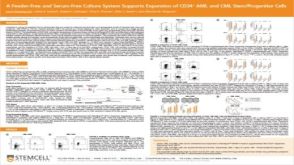 科学海报A Feeder-Free and Serum-Free Culture System Supports Expansion of CD34+ AML and CML Stem/Progenitor Cells
 沪公网安备31010102008431号