Experimental autoimmune uveoretinitis (EAU) is a mouse model of human autoimmune uveitis marked by ocular autoantigen-specific regulatory immunity in the spleen. The melanocortin 5 receptor (MC5r) and adenosine 2 A receptor (A2Ar) are required for induction of post-EAU regulatory T cells (Tregs) which provide resistance to EAU. We show that blocking the PD-1/PD-L1 pathway prevented suppression of EAU by post-EAU Tregs. A2Ar induction of PD-1+FoxP3+ Tregs in uveitis patients was similar compared to healthy controls,but was significantly reduced with melanocortin stimulation. Further,lower body mass index correlated with responsiveness to stimulation of this pathway. These observations indicate an importance of the PD-1/PD-L1 pathway to provide resistance to relapsing uveitis and shows a reduced capacity of uveitis patients to induce Tregs when stimulated through melanocortin receptors,but that it is possible to bypass this part of the pathway through direct stimulation of A2Ar.
View Publication
产品类型:
产品号#:
10970
10990
15021
15061
产品名:
ImmunoCult™ 人CD3/CD28/CD2 T细胞激活剂
ImmunoCult™ 人CD3/CD28/CD2 T细胞激活剂
RosetteSep™人T细胞富集抗体混合物
RosetteSep™人T细胞富集抗体混合物
A. M. Herreno-Pachón et al. (May 2025)
International Journal of Molecular Sciences 26 9
Mucopolysaccharidosis (MPS) IVA is a bone-affecting lysosomal storage disease (LSD) caused by impaired degradation of the glycosaminoglycans (GAGs) keratan sulfate (KS) and chondroitin 6-sulfate (C6S) due to deficient N-acetylgalactosamine-6-sulfatase (GALNS) enzyme activity. Previously,we successfully developed and validated a CRISPR/nCas9-based gene therapy (GT) to insert an expression cassette at the AAVS1 and ROSA26 loci in human MPS IVA fibroblasts and MPS IVA mice,respectively. In this study,we have extended our approach to evaluate the effectiveness of our CRISPR/nCas9-based GT in editing human CD34+ cells to mediate cross-correction of MPS IVA fibroblasts. CD34+ cells were electroporated with the CRISPR/nCas9 system,targeting the AAVS1 locus. The nCas9-mediated on-target donor template insertion,and the stemness of the CRISPR/nCas-edited CD34+ cells was evaluated. Additionally,MPS IVA fibroblasts were co-cultured with CRISPR/nCas-edited CD34+ cells to assess cross-correction. CRISPR/nCas9-based gene editing did not affect the stemness of CD34+ cells but did lead to supraphysiological levels of the GALNS enzyme. Upon co-culture,MPS IVA fibroblasts displayed a significant increase in the GALNS enzyme activity along with lysosomal mass reduction,pro-oxidant profile amelioration,mitochondrial mass recovery,and pro-apoptotic and pro-inflammatory profile improvement. These results show the potential of our CRISPR/nCas9-based GT to edit CD34+ cells to mediate cross-correction.
View Publication
产品类型:
产品号#:
09600
09605
09650
09655
产品名:
StemSpan™ SFEM
StemSpan™ SFEM II
StemSpan™ SFEM
StemSpan™ SFEM II
Z. Liu et al. (nov 2020)
Cell 183 4 1117--1133.e19
Detecting Tumor Antigen-Specific T Cells via Interaction-Dependent Fucosyl-Biotinylation.
Re-activation and clonal expansion of tumor-specific antigen (TSA)-reactive T cells are critical to the success of checkpoint blockade and adoptive transfer of tumor-infiltrating lymphocyte (TIL)-based therapies. There are no reliable markers to specifically identify the repertoire of TSA-reactive T cells due to their heterogeneous composition. We introduce FucoID as a general platform to detect endogenous antigen-specific T cells for studying their biology. Through this interaction-dependent labeling approach,intratumoral TSA-reactive CD4+,CD8+ T cells,and TSA-suppressive CD4+ T cells can be detected and separated from bystander T cells based on their cell-surface enzymatic fucosyl-biotinylation. Compared to bystander TILs,TSA-reactive TILs possess a distinct T cell receptor (TCR) repertoire and unique gene features. Although exhibiting a dysfunctional phenotype,TSA-reactive CD8+ TILs possess substantial capabilities of proliferation and tumor-specific killing. Featuring genetic manipulation-free procedures and a quick turnover cycle,FucoID should have the potential of accelerating the pace of personalized cancer treatment.
View Publication
产品类型:
产品号#:
17858
19853
17858RF
100-0694
19853RF
产品名:
EasySep™人CD14正选试剂盒II
EasySep™小鼠CD8+ T细胞分选试剂盒
RoboSep™ 人CD14正选试剂盒II
EasySep™人CD14正选试剂盒II
RoboSep™ 小鼠CD8+ T细胞分选试剂盒
Chen C et al. (AUG 2013)
Journal of Neurochemistry 126 3 318--330
Inhibition of neuronal nitric oxide synthase activity promotes migration of human-induced pluripotent stem cell-derived neural stem cells toward cancer cells
The breakthrough in derivation of human-induced pluripotent stem cells (hiPSCs) provides an approach that may help overcome ethical and allergenic challenges posed in numerous medical applications involving human cells,including neural stem/progenitor cells (NSCs). Considering the great potential of NSCs in targeted cancer gene therapy,we investigated in this study the tumor tropism of hiPSC-derived NSCs and attempted to enhance the tropism by manipulation of biological activities of proteins that are involved in regulating the migration of NSCs toward cancer cells. We first demonstrated that hiPSC-NSCs displayed tropism for both glioblastoma cells and breast cancer cells in vitro and in vivo. We then compared gene expression profiles between migratory and non-migratory hiPSC-NSCs toward these cancer cells and observed that the gene encoding neuronal nitric oxide synthase (nNOS) was down-regulated in migratory hiPSC-NSCs. Using nNOS inhibitors and nNOS siRNAs,we demonstrated that this protein is a relevant regulator in controlling migration of hiPSC-NSCs toward cancer cells,and that inhibition of its activity or down-regulation of its expression can sensitize poorly migratory NSCs and be used to improve their tumor tropism. These findings suggest a novel application of nNOS inhibitors in neural stem cell-mediated cancer therapy.
View Publication
产品类型:
产品号#:
85850
85857
产品名:
mTeSR™1
mTeSR™1
L. Yu et al. ( 2019)
Nanotoxicology 13 10 1409--1421
Oral administration of hydroxylated-graphene quantum dots induces intestinal injury accompanying the loss of intestinal stem cells and proliferative progenitor cells.
Graphene quantum dots (GQDs) have gained significant attention in various biomedical applications. The physicochemical properties of these nanoparticles,including toxic effects,are largely determined by their surface modifications. Previous studies have demonstrated high in vitro cytotoxicity of the hydroxylated GQDs (OH-GQDs). The focus of this study was on the intestinal toxicity of OH-GQDs. Briefly,C57BL/6J mice were given daily oral gavage of 0.05,0.5 or 5 mg/kg OH-GQD for 7 days,and the indices of intestinal damage were evaluated. Higher doses of the OH-GQDs caused significant intestinal injuries,such as enhanced intestinal permeability,shortened villi and crypt loss. The number of Lgr5+ intestinal stem cells also decreased dramatically upon OH-GQDs exposure,which also inhibited the Ki67+ proliferative progenitor cells. In addition,an increased number of crypt cells harboring the oxidized DNA base 8-OHdG and $\gamma$H2AX foci were also detected in the intestines of OH-GQD-treated mice. Mechanistically,the OH-GQDs up-regulated both total and phosphorylated p53. Consistent with this,the average number of TUNEL+ and cleaved caspase-3+ apoptotic intestinal epithelial cells were significantly increased after OH-GQDs treatment. Finally,a 3-dimensional organoid culture was established using isolated crypts,and OH-GQDs treatment significantly reduced the size of the surviving intestinal organoids. Taken together,the intestinal toxicity of the OH-GQDs should be taken into account during biomedical applications.
View Publication
产品类型:
产品号#:
86415
86420
产品名:
SepMate™-15 (RUO), 100 units
SepMate™-15 (RUO)
Kim et al. (Oct 2025)
Scientific Reports 15
Attenuation of natural killer cell cytotoxicity by interaction between NKp30 of NK cells and dipeptidase 1 of colon cancer cells
Natural killer (NK) cells play a crucial role in immune surveillance by recognizing and eliminating tumor cells. However,tumors employ various mechanisms to evade NK cell-mediated immunity. NKp30 is a potent activating receptor on NK cells,but its function can be inhibited by specific ligands secreted by cancer cells. Here,we identified dipeptidase 1 (DPEP1) as a novel ligand for NKp30 in KM12C colon cancer cells,using co-immunoprecipitation,confocal microscopy,and flow cytometry. We examined how the DPEP1–NKp30 interaction affects NK cell activity and found that NK cytotoxicity increased in KM12C cells with DPEP1 knockdown but was significantly reduced in HCT116 cells overexpressing DPEP1. We further demonstrated that DPEP1 is secreted via extracellular vesicles and that its interaction with NKp30 suppressed the expression and secretion of perforin 1,granzyme B,CD107a,and interferon-γ in NK92 cells. In a xenograft mouse model treated with NK92 cells,tumors derived from HCT116/DPEP1 cells were significantly larger than those from HCT116/mock cells. Using peripheral blood-derived human NK cells,we confirmed that DPEP1 inhibited both cytotoxicity and granzyme B secretion. These findings suggest that disrupting the DPEP1–NKp30 interaction may enhance NK cell-mediated cytotoxicity and represent a novel therapeutic strategy for cancer immunotherapy. The online version contains supplementary material available at 10.1038/s41598-025-18475-z.
View Publication
产品类型:
产品号#:
100-0711
100-0712
100-0714
100-0715
产品名:
ImmunoCult™ 人NK扩增组套
ImmunoCult™ 人NK细胞基础培养基
ImmunoCult™ 人NK细胞扩增包被材料
ImmunoCult™ 人NK细胞扩增添加物
Dunford JE et al. ( 2001)
The Journal of pharmacology and experimental therapeutics 296 2 235--242
Structure-activity relationships for inhibition of farnesyl diphosphate synthase in vitro and inhibition of bone resorption in vivo by nitrogen-containing bisphosphonates.
It has long been known that small changes to the structure of the R(2) side chain of nitrogen-containing bisphosphonates can dramatically affect their potency for inhibiting bone resorption in vitro and in vivo,although the reason for these differences in antiresorptive potency have not been explained at the level of a pharmacological target. Recently,several nitrogen-containing bisphosphonates were found to inhibit osteoclast-mediated bone resorption in vitro by inhibiting farnesyl diphosphate synthase,thereby preventing protein prenylation in osteoclasts. In this study,we examined the potency of a wider range of nitrogen-containing bisphosphonates,including the highly potent,heterocycle-containing zoledronic acid and minodronate (YM-529). We found a clear correlation between the ability to inhibit farnesyl diphosphate synthase in vitro,to inhibit protein prenylation in cell-free extracts and in purified osteoclasts in vitro,and to inhibit bone resorption in vivo. The activity of recombinant human farnesyl diphosphate synthase was inhibited at concentrations textgreater or = 1 nM zoledronic acid or minodronate,the order of potency (zoledronic acid approximately equal to minodronate textgreater risedronate textgreater ibandronate textgreater incadronate textgreater alendronate textgreater pamidronate) closely matching the order of antiresorptive potency. Furthermore,minor changes to the structure of the R(2) side chain of heterocycle-containing bisphosphonates,giving rise to less potent inhibitors of bone resorption in vivo,also caused a reduction in potency up to approximately 300-fold for inhibition of farnesyl diphosphate synthase in vitro. These data indicate that farnesyl diphosphate synthase is the major pharmacological target of these drugs in vivo,and that small changes to the structure of the R(2) side chain alter antiresorptive potency by affecting the ability to inhibit farnesyl diphosphate synthase.
View Publication
Suto A et al. (JUN 2008)
The Journal of experimental medicine 205 6 1369--79
Development and characterization of IL-21-producing CD4+ T cells.
It has recently been shown that interleukin (IL)-21 is produced by Th17 cells,functions as an autocrine growth factor for Th17 cells,and plays critical roles in autoimmune diseases. In this study,we investigated the differentiation and characteristics of IL-21-producing CD4(+) T cells by intracellular staining. Unexpectedly,we found that under Th17-polarizing conditions,the majority of IL-21-producing CD4(+) T cells did not produce IL-17A and -17F. We also found that IL-6 and -21 potently induced the development of IL-21-producing CD4(+) T cells without the induction of IL-4,IFN-gamma,IL-17A,or IL-17F production. On the other hand,TGF-beta inhibited IL-6- and IL-21-induced development of IL-21-producing CD4(+) T cells. IL-2 enhanced the development of IL-21-producing CD4(+) T cells under Th17-polarizing conditions. Finally,IL-21-producing CD4(+) T cells exhibited a stable phenotype of IL-21 production in the presence of IL-6,but retained the potential to produce IL-4 under Th2-polarizing conditions and IL-17A under Th17-polarizing conditions. These results suggest that IL-21-producing CD4(+) T cells exhibit distinct characteristics from Th17 cells and develop preferentially in an IL-6-rich environment devoid of TGF-beta,and that IL-21 functions as an autocrine growth factor for IL-21-producing CD4(+) T cells.
View Publication
产品类型:
产品号#:
20119
20155
21000
产品名:
RoboSep™ 吸头组件抛光剂
RoboSep™分选试管套装(9个塑料管+吸头保护器)
RoboSep™- S
West FD et al. (AUG 2010)
Stem cells and development 19 8 1211--1220
Porcine induced pluripotent stem cells produce chimeric offspring.
Ethical and moral issues rule out the use of human induced pluripotent stem cells (iPSCs) in chimera studies that would determine the full extent of their reprogrammed state,instead relying on less rigorous assays such as teratoma formation and differentiated cell types. To date,only mouse iPSC lines are known to be truly pluripotent. However,initial mouse iPSC lines failed to form chimeric offspring,but did generate teratomas and differentiated embryoid bodies,and thus these specific iPSC lines were not completely reprogrammed or truly pluripotent. Therefore,there is a need to address whether the reprogramming factors and process used eventually to generate chimeric mice are universal and sufficient to generate reprogrammed iPSC that contribute to chimeric offspring in additional species. Here we show that porcine mesenchymal stem cells transduced with 6 human reprogramming factors (POU5F1,SOX2,NANOG,KLF4,LIN28,and C-MYC) injected into preimplantation-stage embryos contributed to multiple tissue types spanning all 3 germ layers in 8 of 10 fetuses. The chimerism rate was high,85.3% or 29 of 34 live offspring were chimeras based on skin and tail biopsies harvested from 2- to 5-day-old pigs. The creation of pluripotent porcine iPSCs capable of generating chimeric offspring introduces numerous opportunities to study the facets significantly affecting cell therapies,genetic engineering,and other aspects of stem cell and developmental biology.
View Publication


 EasySep™小鼠TIL(CD45)正选试剂盒




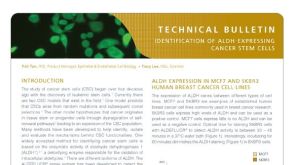 技术公告Identification of ALDH-Expressing Cancer Stem Cells Using ALDEFLUOR™
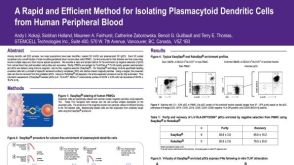 科学海报Isolation of Plasmacytoid Dendritic Cells from Peripheral Blood
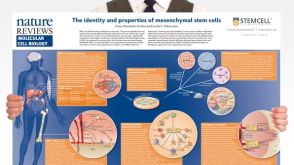 挂图The Identity and Properties of Mesenchymal Stem Cells Overview of MSC expansion, differentiation, immunoregulatory properties and therapeutic potential
 沪公网安备31010102008431号