Monocyte?Platelet Aggregates Are Major Source of BDNF after Bacterial Stimulation of Human Peripheral Blood Immune Cells
ABSTRACTThe gut microbiota and the immune system are closely connected,influencing early?life brain development. Brain?derived neurotrophic factor (BDNF),crucial for neuronal development,has been demonstrated to be produced by certain immune cells. However,the modulation of BDNF during bacterial antigen and metabolite challenge remains elusive. We investigate the effects of bacterial?derived antigens and metabolites on BDNF secretion in human PBMCs. Although BDNF levels were altered during stimulation,a specific cellular origin of BDNF within PBMCs was indeterminate. Positive magnetic separation of monocytes eliminated both the stimulant?induced BDNF secretion and reduced monocyte?platelet aggregates. Conversely,elevated platelet counts significantly increased BDNF levels,indicating that platelets,when interacting with monocytes and exposed to bacterial antigens,are likely the dominant source of BDNF in PBMC cultures. As previously described,platelets are a crucial source of circulating peripheral blood BDNF. Our findings emphasize the importance of the interplay between immune?blood cell complexes during microbial stimulation in regulating BDNF levels. This highlights the necessity of investigating such interactions to better understand the early?life gut?brain axis. Bacterial antigens primarily induce BDNF release from platelets interacting with monocytes in PBMCs. This interplay underscores how immune?blood cell complexes shape BDNF levels which may impact early human development.
View Publication
产品类型:
产品号#:
100-0276
100-1130
85850
85857
产品名:
mTeSR™ Plus
mTeSR™ Plus
mTeSR™1
mTeSR™1
(Jan 2025)
Nature Immunology 26 1
Antigen experience history directs distinct functional states of CD8+ CAR T cells during the antileukemia response
Although chimeric antigen receptor (CAR) T cells are effective against B-lineage malignancies,post-CAR relapse is common,and efficacy in other tumors is limited. These challenges may be addressed through rational manipulations to control CAR T cell function. Here we examine the impact of cognate T cell antigen experience on subsequent CD8+ CAR T cell activity. Prior antigen encounter resulted in superior effector function against leukemia expressing low target antigen density at the expense of reduced proliferative capacity and susceptibility to dysfunction at limiting CAR doses. Distinctive temporal transcriptomic and epigenetic profiles in naive-derived and memory-derived CAR T cells identified RUNX family transcription factors as potential targets to augment the function of naive-derived CD8+ CAR T cells. RUNX2 overexpression enhanced antitumor efficacy of mouse CAR T cells,dependent on prior cell state,and heightened human CAR T cell functions. Our data demonstrate that prior antigen experience of CAR T cells determines functional attributes and amenability to transcription factor-mediated functional enhancement. Here,Fry and colleagues examine the impact of antigen experience on subsequent CD8+ CAR T cell activity during the antileukemia response and show that RUNX2 overexpression enhances antitumor activity of these cells.
View Publication
产品类型:
产品号#:
19051
19051RF
产品名:
EasySep™人T细胞富集试剂盒
RoboSep™ 人T细胞富集试剂盒含滤芯吸头
(Jul 2025)
Frontiers in Pharmacology 16
Calycosin suppresses the activating effect of granulocyte-macrophage-colony-stimulating factor-producing T helper cells on macrophages in experimental atherosclerosis
BackgroundT cells are contributors to atherosclerosis pathogenesis. Granulocyte-macrophage-colony-stimulating factor (GM-CSF)-producing T helper (ThGM) cells,a specialized helper T cell subset that highly expresses GM-CSF but lacks other helper T cell markers,could exacerbate atherosclerosis development. Calycosin has been reported to suppress atherosclerosis progression. However,the effect of calycosin on ThGM cells is unknown. This study was designed to test the calycosin-induced impact on the pro-atherosclerotic function of ThGM cells in a mouse atherosclerosis model.MethodsApolipoprotein E knockout (ApoE−/−) mice were fed a high-fat diet and calycosin. The phenotype and cytokine expression of aortic ThGM cells were assessed by flow cytometry. Calycosin-derived influences on ThGM cell differentiation,proliferation,and function were determined by flow cytometry,quantitative RT-PCR,Immunoblotting,gene silencing assays,and co-culture with macrophages.ResultsAortic ThGM cell frequency was attenuated after calycosin administration. Live aortic ThGM cells,phenotypically featuring CD4+CCR6−CCR8−CXCR3−CCR10+,showed slower proliferation and weaker macrophage-activating capability in calycosin-treated mice. Besides,calycosin repressed in vitro ThGM cell differentiation and subsequently impaired ThGM cell-mediated macrophage activation,oxidized low-density lipoprotein (Ox-LDL) uptake,and foam cell formation. Importantly,calycosin upregulated nuclear receptor subfamily 4 group A member 3 (NR4A3) in ThGM cells. NR4A3 silencing partially restored the function of calycosin-treated ThGM cells.ConclusionCalycosin inhibits ThGM cell activity to suppress ThGM-cell-mediated activation of pro-atherosclerotic macrophages to ultimately ameliorate atherosclerosis progression. Therefore,we revealed a novel mechanism by which calycosin protects against atherosclerosis.
View Publication
产品类型:
产品号#:
100-0659
产品名:
EasySep™ 小鼠F4/80正选试剂盒
(Oct 2024)
eBioMedicine 109 1
Homology-independent targeted insertion-mediated derivation of M1-biased macrophages harbouring Megf10 and CD3? from human pluripotent stem cells
SummaryBackgroundMacrophages engineered with chimeric antigen receptors (CAR) are suitable for immunotherapy based on their immunomodulatory activity and ability to infiltrate solid tumours. However,the production and application of genetically edited,highly effective,and mass-produced CAR-modified macrophages (CAR-Ms) are challenging.MethodsHere,we used homology-independent targeted insertion (HITI) for site-directed CAR integration into the safe-harbour region of human pluripotent stem cells (hPSCs). This approach,together with a simple differentiation protocol,produced stable and highly effective CAR-Ms without heterogeneity.FindingsThese engineered cells phagocytosed cancer cells,leading to significant inhibition of cancer-cell proliferation in vitro and in vivo. Furthermore,the engineered CARs,which incorporated a combination of CD3? and Megf10 (referred to as FRP5M?),markedly enhanced the antitumour effect of CAR-Ms by promoting M1,but not M2,polarisation. FRP5M? promoted M1 polarisation via nuclear factor kappa B (NF-?B),ERK,and STAT1 signalling,and concurrently inhibited STAT3 signalling even under M2 conditions. These features of CAR-Ms modulated the tumour microenvironment by activating inflammatory signalling,inducing M1 polarisation of bystander non-CAR macrophages,and enhancing the infiltration of T cells in cancer spheroids.InterpretationOur findings suggest that CAR-Ms have promise as immunotherapeutics. In conclusion,the guided insertion of CAR containing CD3? and Megf10 domains is an effective strategy for the immunotherapy of solid tumours.FundingThis work was supported by KRIBB Research Initiative Program Grant (KGM4562431,KGM5282423) and a Korean Fund for Regenerative Medicine (KFRM) grant funded by the Korean government (Ministry of Science and ICT,10.13039/501100003625Ministry of Health and Welfare) (22A0304L1-01).
View Publication
Trotta R et al. (SEP 2008)
Journal of immunology (Baltimore,Md. : 1950) 181 6 3784--92
TGF-beta utilizes SMAD3 to inhibit CD16-mediated IFN-gamma production and antibody-dependent cellular cytotoxicity in human NK cells.
TGF-beta can be a potent suppressor of lymphocyte effector cell functions and can mediate these effects via distinct molecular pathways. The role of TGF-beta in regulating CD16-mediated NK cell IFN-gamma production and antibody-dependent cellular cytotoxicity (ADCC) is unclear,as are the signaling pathways that may be utilized. Treatment of primary human NK cells with TGF-beta inhibited IFN-gamma production induced by CD16 activation with or without IL-12 or IL-2,and it did so without affecting the phosphorylation/activation of MAP kinases ERK and p38,as well as STAT4. TGF-beta treatment induced SMAD3 phosphorylation,and ectopic overexpression of SMAD3 resulted in a significant decrease in IFN-gamma gene expression following CD16 activation with or without IL-12 or IL-2. Likewise,NK cells obtained from smad3(-/-) mice produced more IFN-gamma in response to CD16 activation plus IL-12 when compared with NK cells obtained from wild-type mice. Coactivation of human NK cells via CD16 and IL-12 induced expression of T-BET,the positive regulator of IFN-gamma,and T-BET was suppressed by TGF-beta and by SMAD3 overexpression. An extended treatment of primary NK cells with TGF-beta was required to inhibit ADCC,and it did so by inhibiting granzyme A and granzyme B expression. This effect was accentuated in cells overexpressing SMAD3. Collectively,our results indicate that TGF-beta inhibits CD16-mediated human NK cell IFN-gamma production and ADCC,and these effects are mediated via SMAD3.
View Publication
产品类型:
产品号#:
15025
15065
产品名:
RosetteSep™人NK细胞富集抗体混合物
RosetteSep™人NK细胞富集抗体混合物
Li W et al. (JAN 2009)
Cell stem cell 4 1 16--9
Generation of rat and human induced pluripotent stem cells by combining genetic reprogramming and chemical inhibitors.
Jounaidi Y et al. (NOV 2017)
Cancer research 77 21 5938--5951
Tethering IL2 to Its Receptor IL2Rβ Enhances Antitumor Activity and Expansion of Natural Killer NK92 Cells.
IL2 is an immunostimulatory cytokine for key immune cells including T cells and natural killer (NK) cells. Systemic IL2 supplementation could enhance NK-mediated immunity in a variety of diseases ranging from neoplasms to viral infection. However,its systemic use is restricted by its serious side effects and limited efficacy due to activation of T regulatory cells (Tregs). IL2 signaling is mediated through interactions with a multi-subunit receptor complex containing IL2Rα,IL2Rβ,and IL2Rγ. Adult natural killer (NK) cells express only IL2Rβ and IL2Rγ subunits and are therefore relatively insensitive to IL2. To overcome these limitations,we created a novel chimeric IL2-IL2Rβ fusion protein of IL2 and its receptor IL2Rβ joined via a peptide linker (CIRB). NK92 cells expressing CIRB (NK92CIRB) were highly activated and expanded indefinitely without exogenous IL2. When compared with an IL2-secreting NK92 cell line,NK92CIRB were more activated,cytotoxic,and resistant to growth inhibition. Direct contact with cancer cells enhanced the cytotoxic character of NK92CIRB cells,which displayed superior in vivo antitumor effects in mice. Overall,our results showed how tethering IL2 to its receptor IL2Rβ eliminates the need for IL2Rα and IL2Rβ,offering a new tool to selectively activate and empower immune therapy. Cancer Res; 77(21); 5938-51. textcopyright2017 AACR.
View Publication
产品类型:
产品号#:
15025
15065
产品名:
RosetteSep™人NK细胞富集抗体混合物
RosetteSep™人NK细胞富集抗体混合物
Maire C et al. (JAN 2014)
STEM CELLS 32 1 313--326
Pten Loss in Olig2 Expressing Neural Progenitor Cells and Oligodendrocytes Leads to Interneuron Dysplasia and Leukodystrophy
Therapeutic modulation of phosphatidylinositol 3-kinase (PI3K)/PTEN signaling is currently being explored for multiple neurological indications including brain tumors and seizure disorders associated with cortical malformations. The effects of PI3K/PTEN signaling are highly cell context dependent but the function of this pathway in specific subsets of neural stem/progenitor cells generating oligodendroglial lineage cells has not been fully studied. To address this,we created Olig2-cre:Pten(fl/fl) mice that showed a unique pattern of Pten loss and PI3K activation in Olig2-lineage cells. Olig2-cre:Pten(fl/fl) animals progressively developed central nervous system white matter hypermyelination by 3 weeks of age leading to later onset leukodystrophy,chronic neurodegeneration,and death by 9 months. In contrast,during immediate postnatal development,oligodendroglia were unaffected but abnormal and accelerated differentiation of lateral subventricular zone stem cells produced calretinin-positive interneuron dysplasia. Neural stem cells isolated from Olig2-cre:Pten(fl/fl) mice also exhibited accelerated differentiation and proliferation into calretinin-positive interneurons and oligodendrocytes indicating such effects are cell autonomous. Opposition of the pathway by treatment of human primary neural progenitor cells (NPCs) with the PI3K inhibitor,NVP-BKM120,blocked in vitro differentiation of neurons and oligodendroglia indicating PI3K/PTEN effects on NPCs can be bidirectional. In summary,our results suggest Pten is a developmental rheostat regulating interneuron and oligodendroglial differentiation and support testing of PI3K modulating drugs as treatment for developmental and myelination disorders. However,such agents may need to be administered at ages that minimize potential effects on early stem/progenitor cell development.
View Publication
产品类型:
产品号#:
05700
05701
05702
05750
05751
产品名:
NeuroCult™ 基础培养基(小鼠&大鼠)
NeuroCult™ 扩增添加物 (小鼠&大鼠)
NeuroCult™ 扩增试剂盒 (小鼠&大鼠)
NeuroCult™ NS-A 基础培养基(人)
NeuroCult™ NS-A 扩增试剂盒(人)
Maricque BB et al. (FEB 2017)
Nucleic acids research 45 4 e16
A genome-integrated massively parallel reporter assay reveals DNA sequence determinants of cis-regulatory activity in neural cells.
Recent large-scale genomics efforts to characterize the cis-regulatory sequences that orchestrate genome-wide expression patterns have produced impressive catalogues of putative regulatory elements. Most of these sequences have not been functionally tested,and our limited understanding of the non-coding genome prevents us from predicting which sequences are bona fide cis-regulatory elements. Recently,massively parallel reporter assays (MPRAs) have been deployed to measure the activity of putative cis-regulatory sequences in several biological contexts,each with specific advantages and distinct limitations. We developed LV-MPRA,a novel lentiviral-based,massively parallel reporter gene assay,to study the function of genome-integrated regulatory elements in any mammalian cell type; thus,making it possible to apply MPRAs in more biologically relevant contexts. We measured the activity of 2,600 sequences in U87 glioblastoma cells and human neural progenitor cells (hNPCs) and explored how regulatory activity is encoded in DNA sequence. We demonstrate that LV-MPRA can be applied to estimate the effects of local DNA sequence and regional chromatin on regulatory activity. Our data reveal that primary DNA sequence features,such as GC content and dinucleotide composition,accurately distinguish sequences with high activity from sequences with low activity in a full chromosomal context,and may also function in combination with different transcription factor binding sites to determine cell type specificity. We conclude that LV-MPRA will be an important tool for identifying cis-regulatory elements and stimulating new understanding about how the non-coding genome encodes information.
View Publication
产品类型:
产品号#:
05833
05835
05839
产品名:
STEMdiff™神经前体细胞培养基
STEMdiff™ 神经诱导培养基
STEMdiff™ 神经诱导培养基
Kitajima K et al. (JAN 2016)
Experimental hematology 44 1 10--68
GSK3$\$ activates the CDX/HOX pathway and promotes hemogenic endothelial progenitor differentiation from human pluripotent stem cells.
WNT/$\$-CATENIN signaling promotes the hematopoietic/endothelial differentiation of human embryonic stem cells and human induced pluripotent stem cells (hiPSCs). The transient addition of a GSK3$\$ (GSKi) has been found to facilitate in vitro endothelial cell differentiation from hESCs/hiPSCs. Because hematopoietic and endothelial cells are derived from common progenitors (hemogenic endothelial progenitors [HEPs]),we examined the effect of transient GSKi treatment on hematopoietic cell differentiation from hiPSCs. We found that transient GSKi treatment at the start of hiPSC differentiation induction altered the gene expression profile of the cells. Multiple CDX/HOX genes,which are expressed in the posterior mesoderm of developing embryos,were significantly upregulated by GSKi treatment. Further,inclusion of the GSKi in a serum- and stroma-free culture with chemically defined medium efficiently induced HEPs,and the HEPs gave rise to various lineages of hematopoietic and endothelial cells. Therefore,transient WNT/$\$-CATENIN signaling triggers activation of the CDX/HOX pathway,which in turn confers hemogenic posterior mesoderm identity to differentiating hiPSCs. These data enhance our understanding of human embryonic hematopoietic/endothelial cell development and provide a novel in vitro system for inducing the differentiation of hematopoietic cells from hiPSCs.
View Publication


 EasySep™小鼠TIL(CD45)正选试剂盒




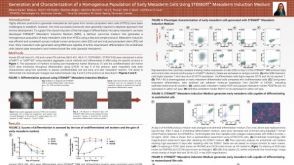 科学海报Generation and Characterization of a Homogenous Population of Early Mesoderm Cells Using STEMdiff Mesoderm Induction Medium

 沪公网安备31010102008431号